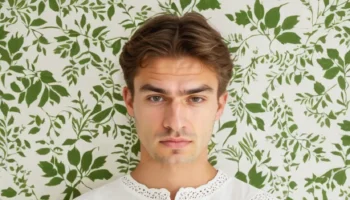
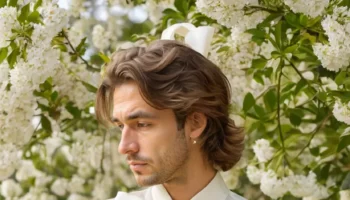
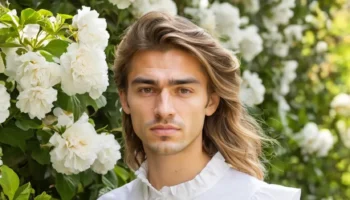
Lace Details for men: Delicate, Feminine & Beautifully Styled
Lace has always carried a quiet kind of power in fashion. It whispers rather than shouts, revealing and concealing at once, tracing patterns of flowers and vines across the body like a second skin made of air. For generations, lace was locked into a narrow definition of femininity, appearing almost exclusively in bridal gowns, lingerie, and the wardrobes of women who wanted to feel ornamental. But fashion has always been restless, and over the past few years, lace details for men outfits have emerged as one of the most compelling expressions of modern masculine style. Designers, stylists, and everyday dressers have begun to rediscover the beauty of needlework, scalloped edges, and sheer botanical patterns on male bodies, and the results are nothing short of breathtaking.
This gallery explores the delicate, feminine, and beautifully styled world of men in lace. From soft ivory blouses with floral patterns to dramatic black lace tops with geometric motifs, the images ahead showcase how lace can transform a wardrobe, reshape a silhouette, and invite a new kind of vulnerability into menswear. Whether you are curious, inspired, or already building your own collection of lace pieces, this article is a visual and written guide to one of fashion’s most enchanting details.
The Language of Lace: What This Detail Communicates in Fashion
Every fabric tells a story, and lace speaks in one of the most poetic dialects in fashion. Historically, lace was a symbol of status and refinement. Handmade bobbin lace required hundreds of hours of skilled work, making it a marker of wealth in European courts, worn by both men and women across the 16th and 17th centuries. Kings wore lace at their cuffs and collars, and noblemen decorated their jabots with cascades of intricate needlework. It is only in relatively recent history that lace became culturally coded as exclusively feminine, and that shift is now being gently undone.
When a man wears lace today, he is stepping into a long, layered conversation about gender, beauty, and self-expression. Lace communicates softness without weakness. It suggests intentionality, because no one chooses a lace blouse by accident. The fabric demands care in how it is worn, what it is paired with, and how the body moves within it. There is something almost ceremonial about putting on a lace garment, a quiet acknowledgment that the day will involve being seen.
Lace also communicates openness. The sheerness of the fabric, the way light passes through tiny floral patterns, the scalloped edges that curve instead of cut sharply, all of these details read as an invitation to tenderness. In a fashion landscape that often prizes hardness, armor, and stoicism in menswear, lace offers a radically different proposition. It says: I am allowed to be delicate. I am allowed to be seen. I am allowed to be beautiful in a way that has nothing to do with strength. For many men exploring feminine lace fashion for men, this is precisely the emotional doorway that the fabric opens.
Lace Trim vs Full Lace – Two Different Levels of Drama
When you begin exploring lace details for men outfits, one of the first decisions you will encounter is whether to go with lace trim or a full lace garment. These two approaches offer very different emotional registers, and understanding the difference helps you build a wardrobe that feels intentional rather than costume-like.
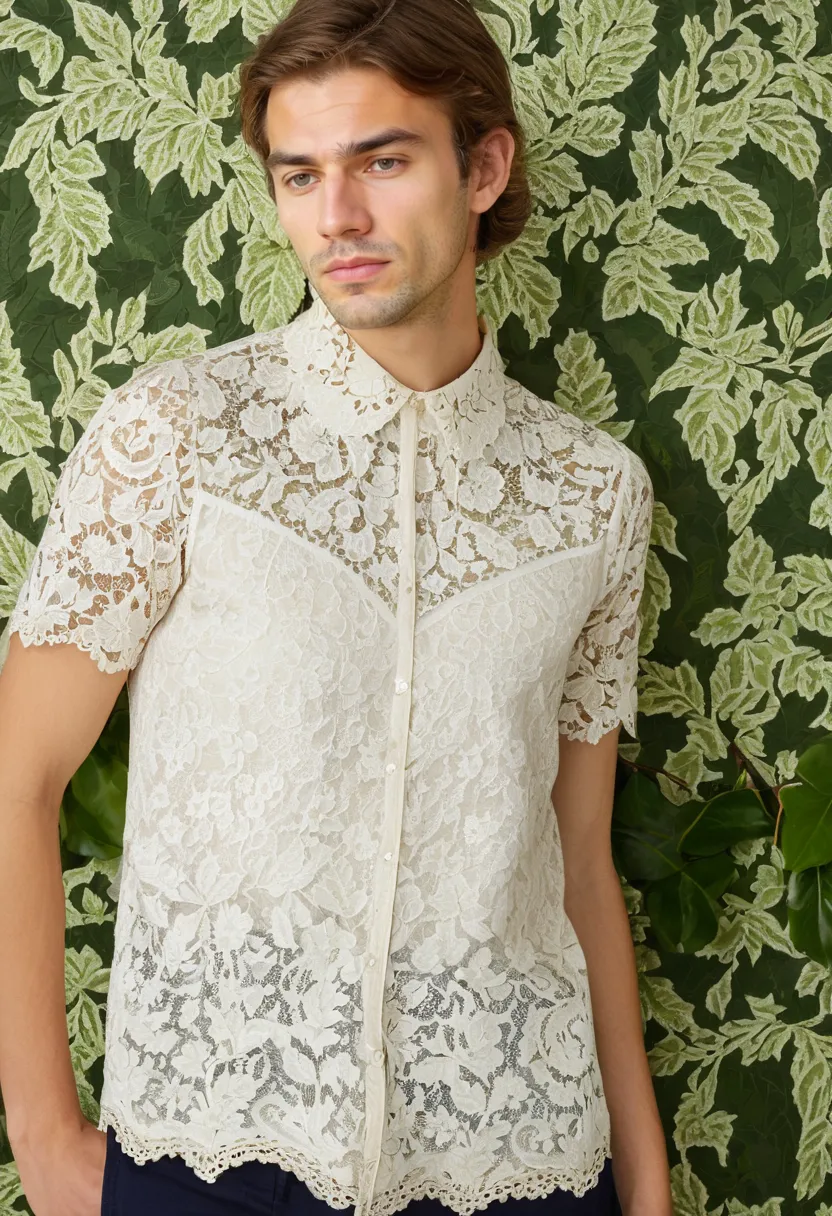
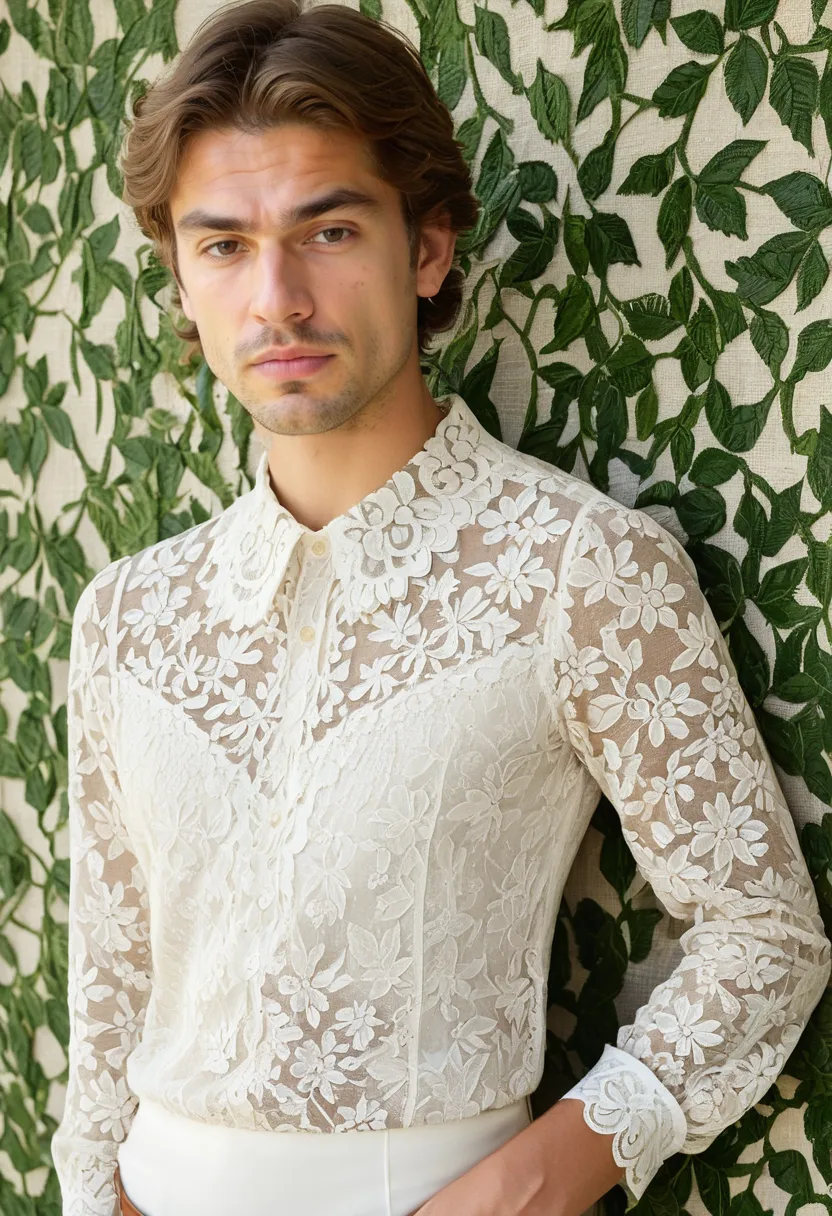
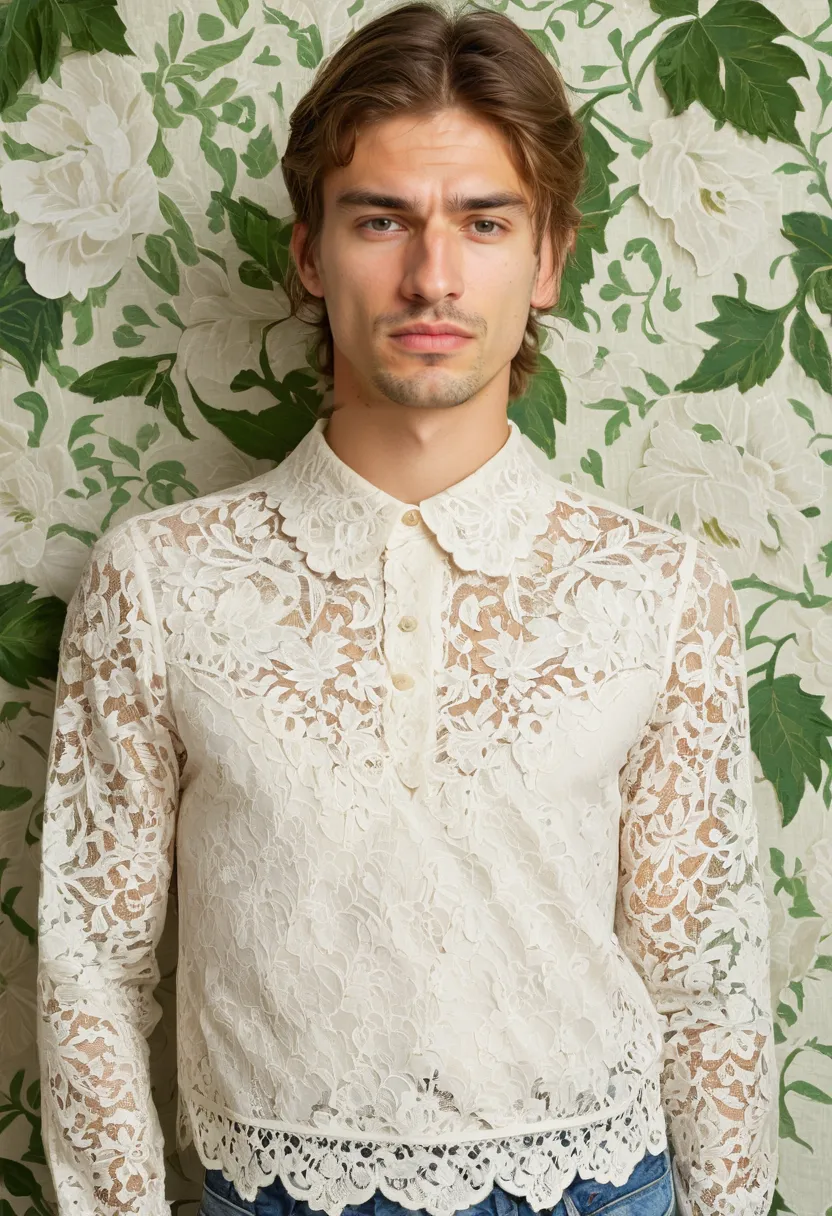
Lace trim is the gentler introduction. A touch of lace at the cuff, a panel down the placket of a shirt, a scalloped edge at the hem of a tunic, these are small accents that add a feminine note without committing the entire garment to the fabric. Lace trim works beautifully for men who want to explore the texture gradually, or who prefer outfits where lace feels like a whispered secret rather than a declaration. Trim details are also easier to integrate into daily wardrobes because they layer naturally with denim, trousers, and structured jackets.
Full lace, on the other hand, is a commitment to the language of the fabric. The ivory blouse pictured above is a perfect example: intricate floral lace covers the entire garment, the semi-sheer fabric reveals soft shadows of the body beneath, and the scalloped hem and collar curl gently around the edges. The lace itself is slightly stiff, holding its shape, with a delicate raised texture that catches the light in three dimensions. Against a green leaf wall, the ivory tones glow, and the floral motifs seem to echo the foliage behind them. This is lace as statement, lace as poetry, lace as the entire subject of the outfit rather than a supporting detail. Full lace looks demand confidence, but they reward it generously with a silhouette that feels both romantic and quietly powerful.
men Wearing Lace Tops: A Gallery of Delicate Looks
There is a particular magic in seeing men wearing lace tops, a quiet reordering of expectations that happens the moment the fabric touches the shoulders. Lace changes posture. It invites a slower kind of movement, a more aware way of inhabiting the body. The gallery below captures that shift in its most refined form.
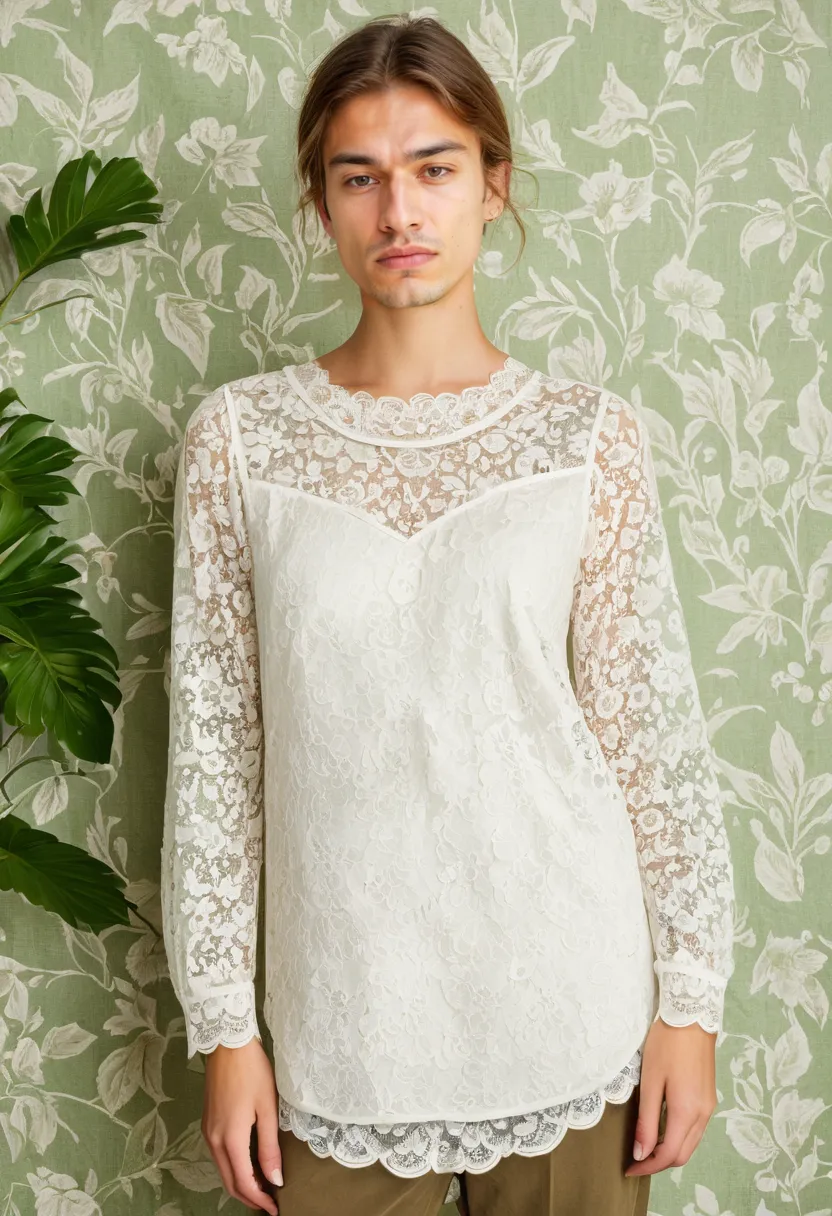
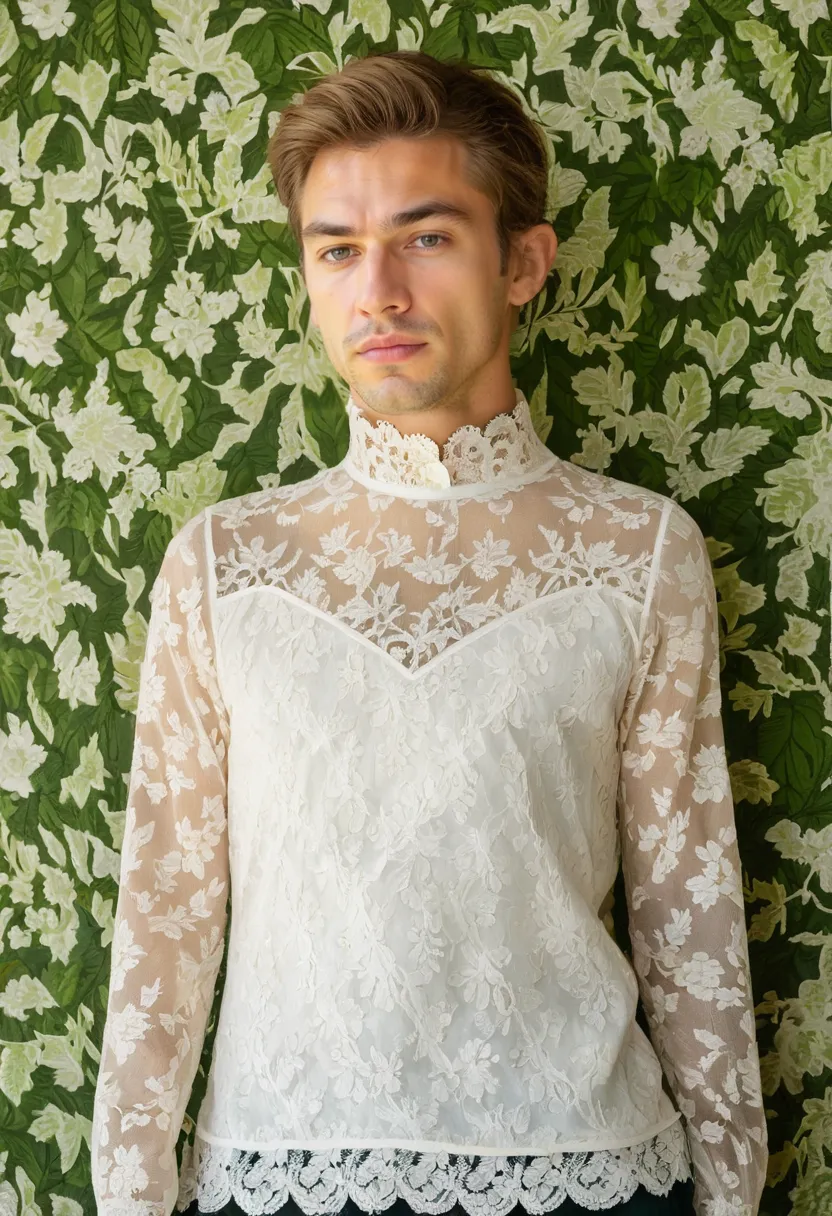
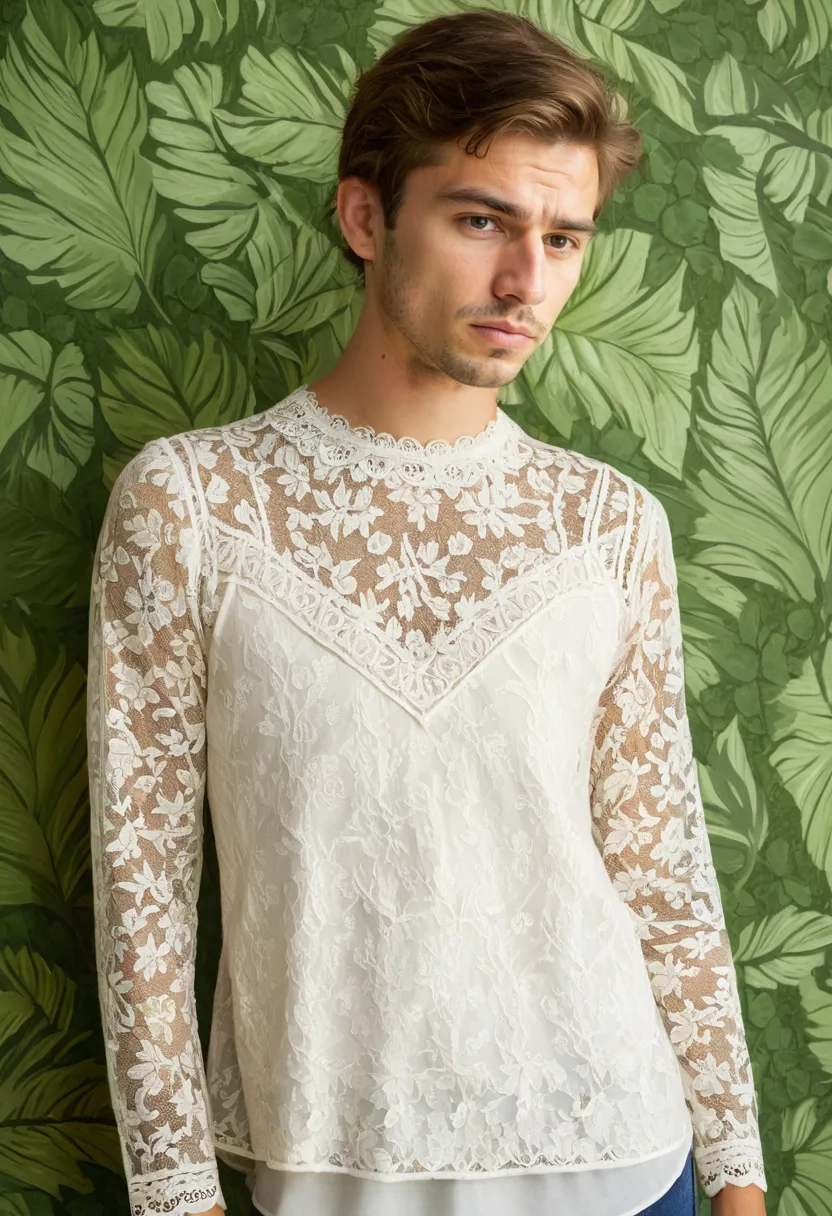
In these images, the ivory lace blouse drapes softly around the torso, with intricate floral patterns unfurling across the sheer fabric. The lace is layered over a soft slip, which gives the garment a tonal depth and prevents the sheerness from overwhelming the composition. Scalloped edges trace the neckline and hem, creating gentle curves that soften the geometry of the body. The long sleeves, made of the same lace as the body of the blouse, extend the pattern down to the wrists, where the fabric tapers into another scalloped edge that frames the hands like petals.
What makes these looks feel genuinely delicate rather than costume-like is the fine three-dimensional texture of the fabric. Good lace is never flat. It rises and falls, with raised floral motifs creating tiny shadows across the surface. When light moves across the garment, the whole blouse seems to breathe. Against the green leaf wall background, the ivory reads as warm and alive, almost vegetal itself, as if the lace flowers might be cousins to the leaves behind them.
For men building their first lace wardrobe, this type of blouse is an excellent starting point. It is feminine without being performative, romantic without being theatrical. Paired with tailored trousers, a soft skirt, or even relaxed jeans, it can slip into many different contexts while always maintaining its quiet sense of occasion.
How Lace Details Work Across Different Skin Tones
One of the most beautiful aspects of lace is how differently it behaves against different skin tones. Because lace is often sheer or semi-sheer, the skin underneath becomes part of the color story of the garment. This means the same lace blouse can look warm and glowing on one person and cool and ethereal on another, which is part of why shopping for lace is such a personal journey.
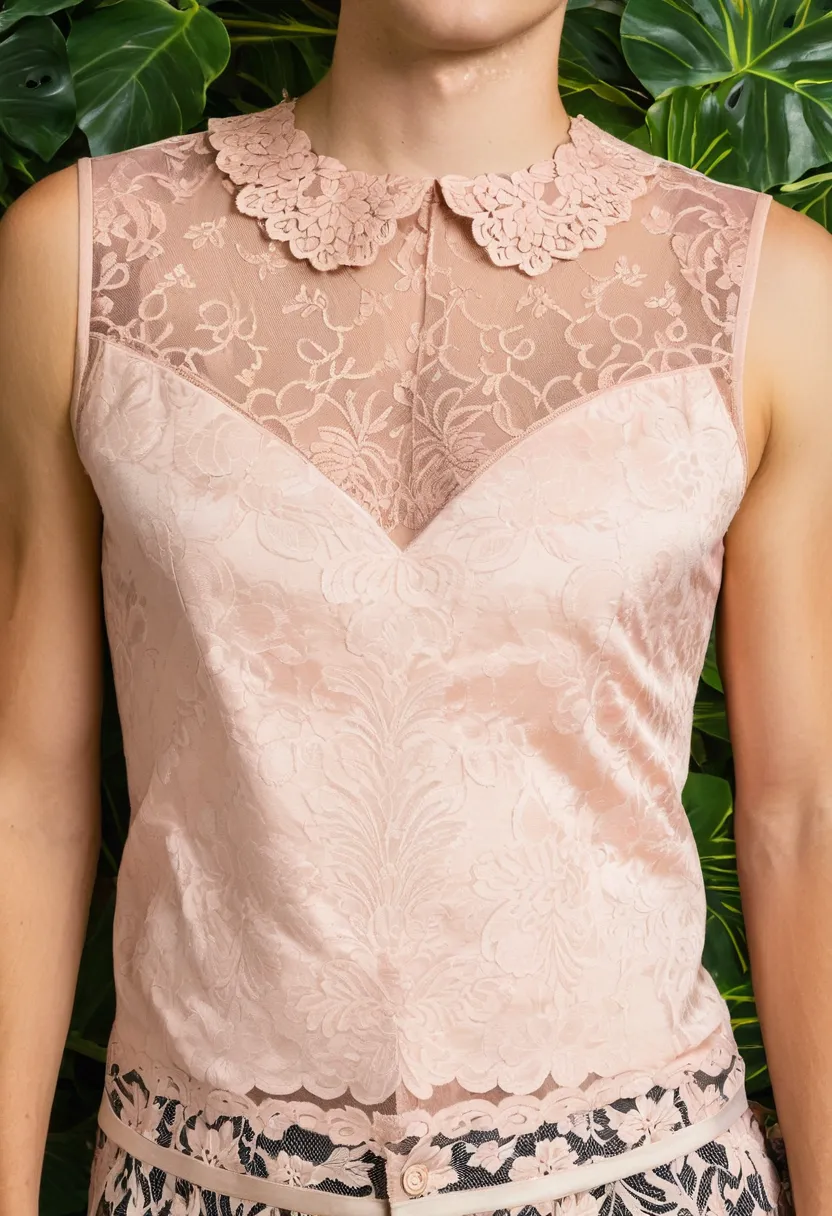
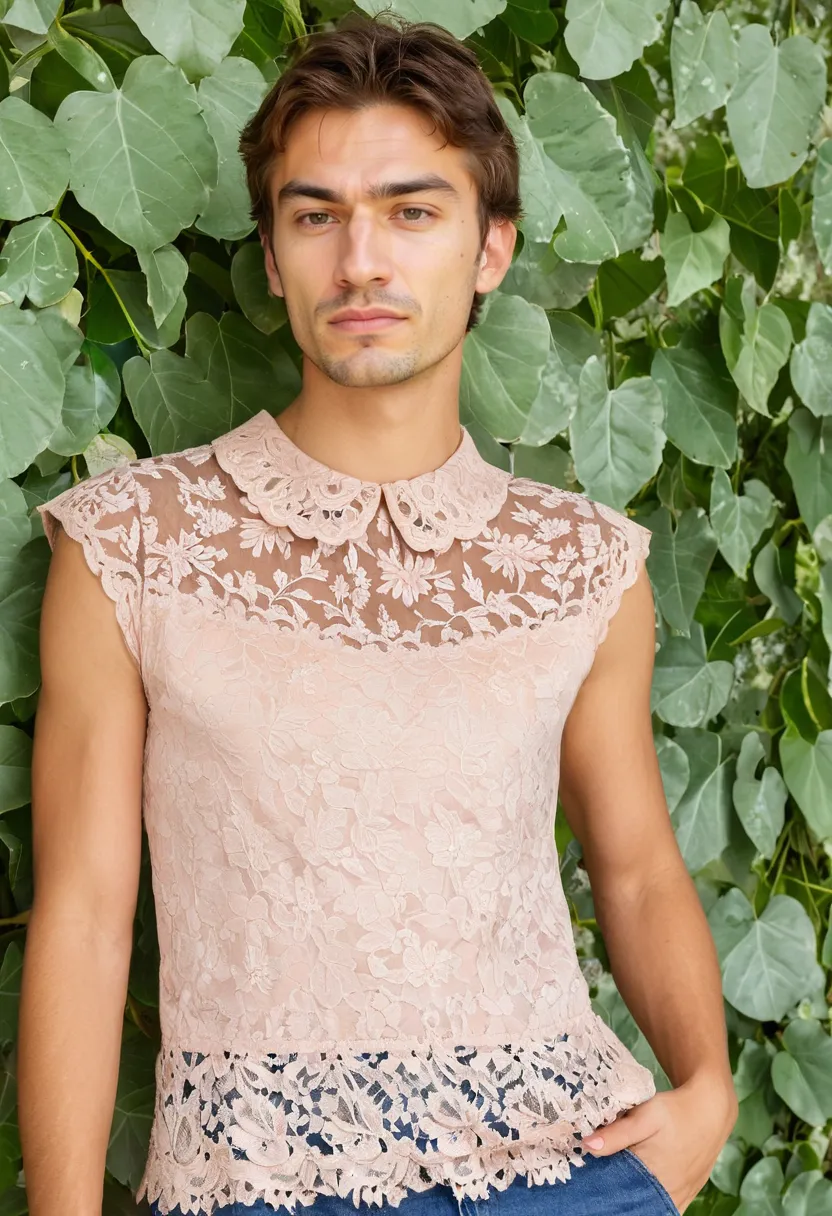
The blush pink lace-overlay blouse shown above demonstrates this beautifully. The garment layers sheer floral lace over a satin lining in the same pink tone, creating a fitted silhouette that hugs the body without losing its softness. The scalloped lace collar curves gently around the neck, and the contrast between the delicate sheer lace exterior and the solid inner fabric gives the blouse depth and dimension. Against the green leaf wall, the blush pink reads as both warm and dreamy.
For men with warm, golden, or olive undertones, blush pink and ivory lace tend to blend beautifully, creating a harmonious effect where the garment almost melts into the skin. For cooler, porcelain skin, black and white lace often create dramatic contrast, with every intricate pattern standing out in sharp relief. Deeper skin tones carry lace with particular richness, allowing the tiny raised motifs to catch light in a way that makes the whole garment feel luminous. White lace against dark skin is especially striking, turning the fabric into something almost sculptural.
The key principle is that lace works best when the wearer chooses colors that create an intentional relationship with their skin. That might mean matching tones for a seamless, romantic look, or contrasting tones for bold, graphic impact. Neither is more correct. What matters is that you see yourself in the mirror and feel the kind of recognition that only well-chosen clothing can give.
Styling Lace Outfits: What Goes Underneath and What Goes Over
Lace is rarely worn alone. Because of its sheerness and delicacy, lace almost always enters into conversation with other garments, and the art of styling lace lies in choosing those conversation partners wisely. Both what goes underneath and what goes over the lace can completely change the mood of the outfit.
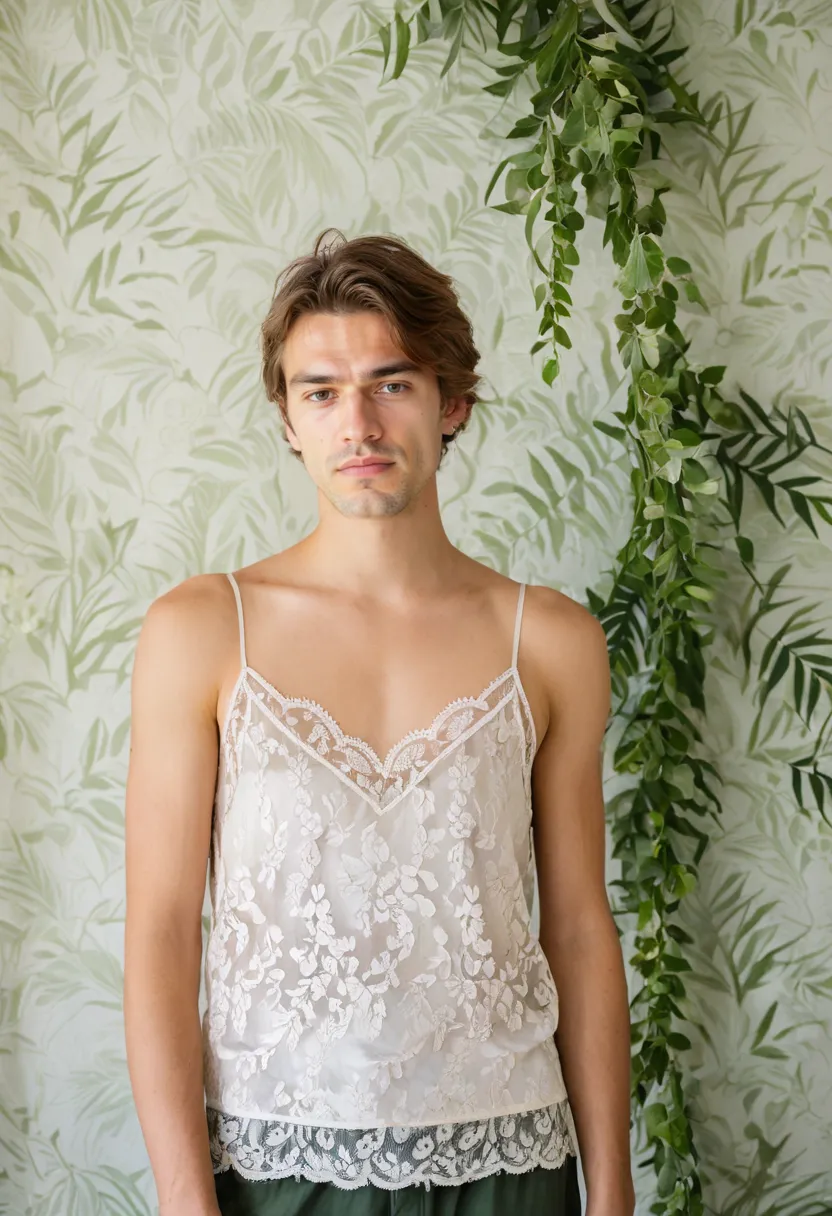
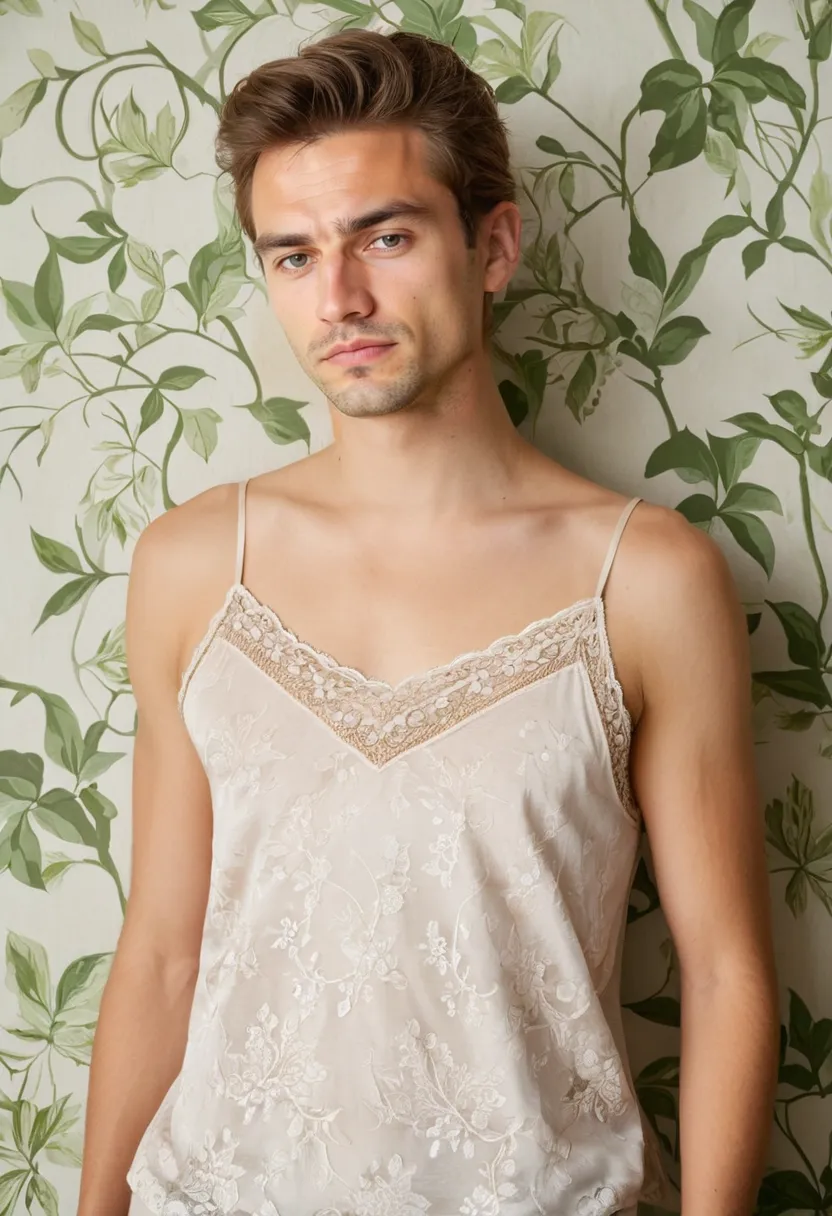
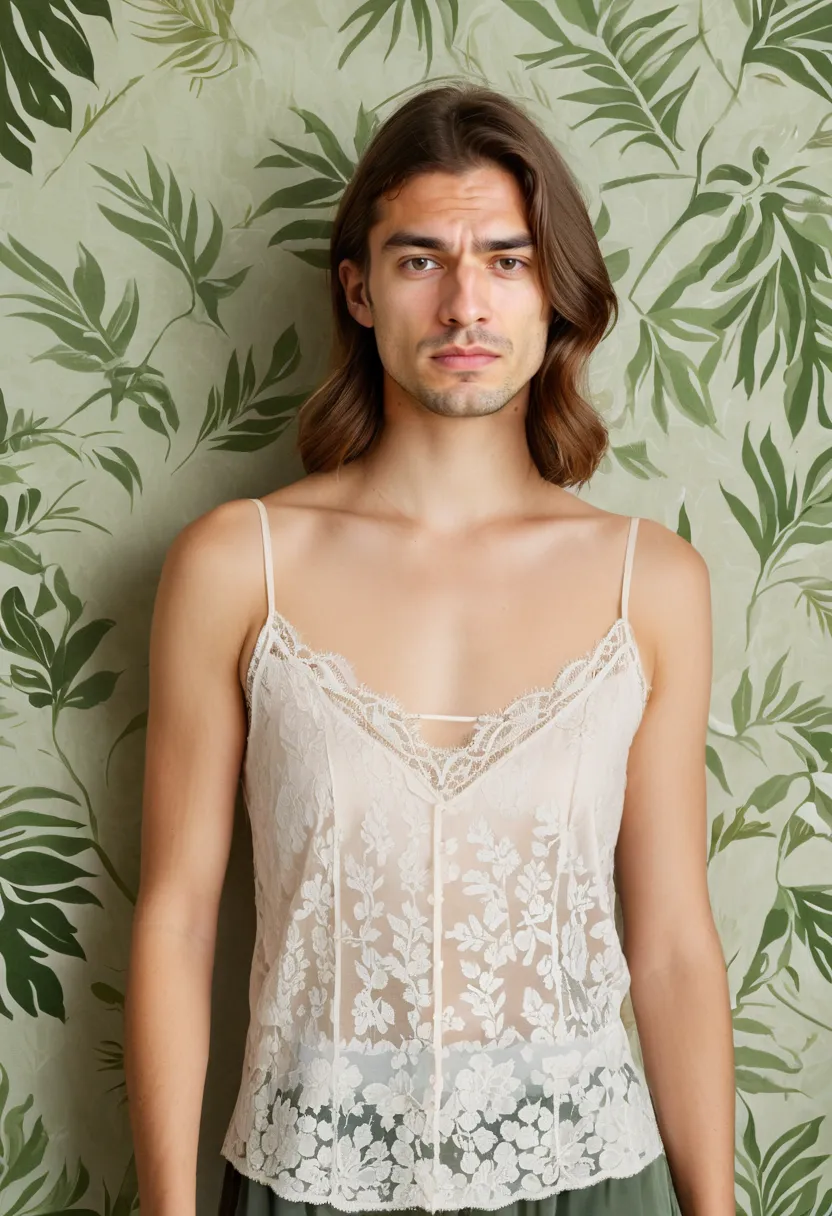
The images above show a masterclass in layering. A sheer white lace blouse with an intricate botanical pattern sits over a soft silk camisole in pale blush, and the tonal contrast between the two layers creates something that feels both romantic and carefully considered. The white lace reads more softly because the blush underneath warms the entire garment, while the slightly raised pattern of the lace casts faint shadows on the silk. The effect is dimensional, almost painterly.
For underlayers, silk camisoles are a classic choice because silk moves and breathes with the body, and its natural sheen complements the matte delicacy of lace. Cotton tank tops work too, particularly for more casual looks, while nude-toned slips can create an almost invisible foundation that lets the lace pattern take center stage. The underlayer is your chance to control how sheer the final look reads, from almost opaque to deeply revealing.
Overlayers offer a different set of possibilities. A structured blazer over a lace blouse creates a striking tension between softness and tailoring, perfect for events where you want to feel dressed up without losing the feminine touch. A long cardigan adds coziness and makes lace feel wearable for everyday life. A leather or denim jacket introduces contrast and roughness that makes the lace seem even more delicate by comparison. For lace blouse looks men can wear to more formal occasions, consider pairing with wide-leg trousers in silk or wool for a head-to-toe study in texture.
Color Choices for Lace: White, Blush, Black & Beyond
Color is where lace truly comes into its own as a fashion statement. The three classic lace colors, white, blush, and black, each carry their own distinct personality, and understanding how they work will help you choose pieces that match the mood you want to embody.
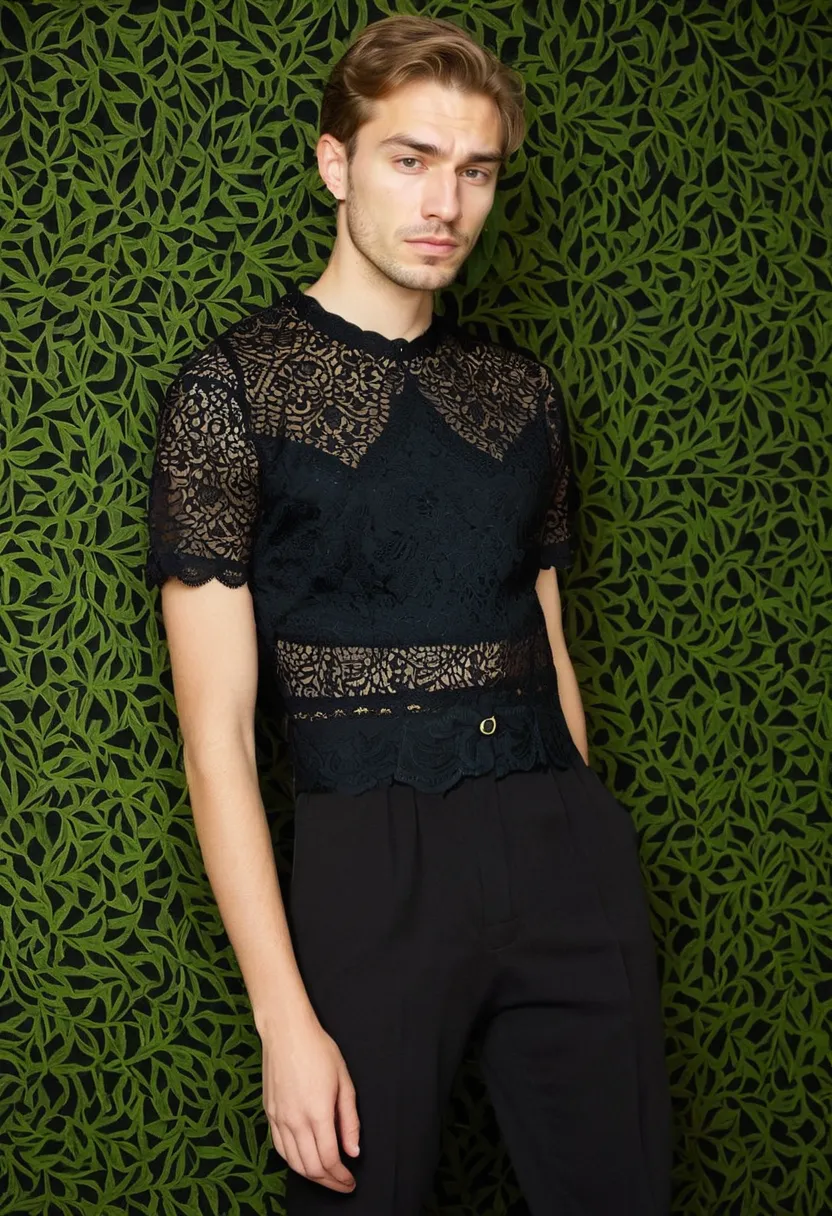
White lace is the most traditional choice, carrying associations with bridal wear, purity, and delicate romance. On men, white lace reads as soft and luminous, often creating a near-angelic quality. It pairs beautifully with almost anything, from faded jeans to formal trousers, and it photographs particularly well in natural light. White lace is the place to start if you want a garment that feels timeless.
Blush lace introduces warmth and a more contemporary sensuality. Because blush is closer to many skin tones, it creates an intimate, almost lingerie-like quality even in outerwear. Blush lace works especially well in spring and summer, where the soft color complements sunlight and greenery. It is the color of quiet confidence, of someone who knows they are wearing something beautiful but feels no need to overperform it.
Black lace, as shown in the image above, is an entirely different animal. The black lace blouse features a bold contrast between dark lace and pale skin, with an intricate geometric pattern rather than the floral motifs common in lighter lace. The fitted cut and scalloped hem at the waist give the garment a sleek, dramatic silhouette. The fabric is semi-sheer with a dense ornate motif that creates visual weight without bulk. Black lace is gothic, theatrical, and deeply glamorous. It transforms the wearer into someone who seems to belong to a different era, or perhaps several eras at once.
Beyond these three classics, lace also comes in deeper colors like burgundy, emerald, navy, and even soft pastels like lavender and mint. Each offers its own mood. Burgundy lace feels wintry and luxurious. Emerald lace feels enchanted, almost mythological. Navy lace offers subtlety for men who want lace in their wardrobe without the drama of white or black. Exploring these colors is one of the great pleasures of building a lace collection.
Lace is not just a fabric. It is a philosophy, a way of saying yes to softness, to ornament, to the ancient human love of beautiful things made slowly by hand. For men discovering the joy of lace details in their outfits, the journey often begins with a single piece, a single trim, a single moment of recognition in the mirror. From there, it unfolds like the pattern of the lace itself, growing more intricate and more personal with each new garment. Whether you gravitate toward full ivory blouses with scalloped hems, layered blush looks over silk camisoles, or dramatic black lace with geometric motifs, the fabric will meet you where you are. All you have to do is let it in. In a world that often asks men to be hard, lace asks them to be beautiful, and that, too, is a kind of strength.
Author: Emma. Photos: Alex Neuron. The material was prepared with the assistance of AI and has undergone quality review.