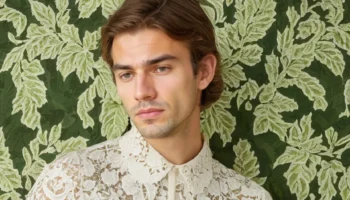
Lace Trim Tops for men: Delicate Feminine Details, Beautifully Styled
Lace trim is one of those design details that transforms an ordinary garment into something quietly special. For men exploring softer, more feminine styling, lace-edged tops offer a gentle entry point — they retain the familiar shape of a shirt or blouse while introducing a delicate ornamental border that catches the light and the eye. The beauty of lace trim lies in its restraint: it doesn’t overwhelm the garment, but rather frames it. A scalloped edge at the cuff, a narrow ribbon of floral lace along the hem, a fine border at the collar — these small accents carry an enormous amount of visual softness. In this gallery, we explore how lace trim appears on men’s tops, how it changes in relation to color and context, and how to style these pieces in ways that feel considered and wearable. From pure ivory blouses to dusty blue cotton with contrasting white lace, the images that follow demonstrate just how versatile and beautiful this detail can be.
Lace Trim Explained: The Difference Between Edge and Excess
Understanding lace trim begins with understanding what it is not. A full lace garment is constructed entirely from openwork textile — sheer, elaborate, and unmistakably ornate. Lace trim, by contrast, is a border. It lives at the edges of a garment, framing the body of plain fabric rather than replacing it. This distinction matters enormously when it comes to styling lace trim tops men can actually wear in everyday life. The trim is the accent; the main fabric does the heavy lifting.
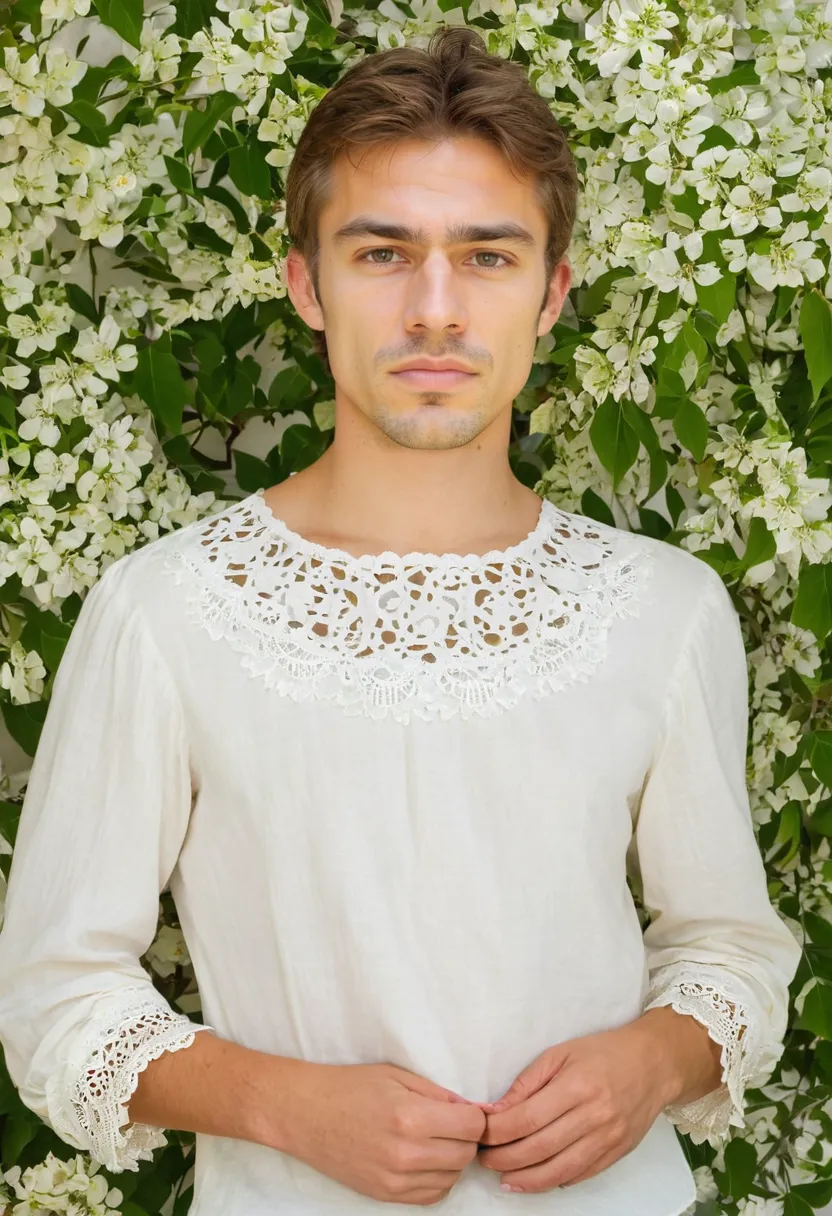
Consider the blouse shown here: a clean, plain white cotton body with narrow, intricate lace applied only at the neckline and cuff edges. The lace itself has a scalloped finish, curling gently along the outer edge with a pattern fine enough to read as delicate rather than busy. The contrast between the smooth, unadorned cotton and the ornate lace border is precisely what makes the garment feel balanced. Too much lace and the piece tips into costume territory. Too little and the detail disappears. The sweet spot — a narrow, well-crafted trim on a simple ground — is where feminine elegance lives.
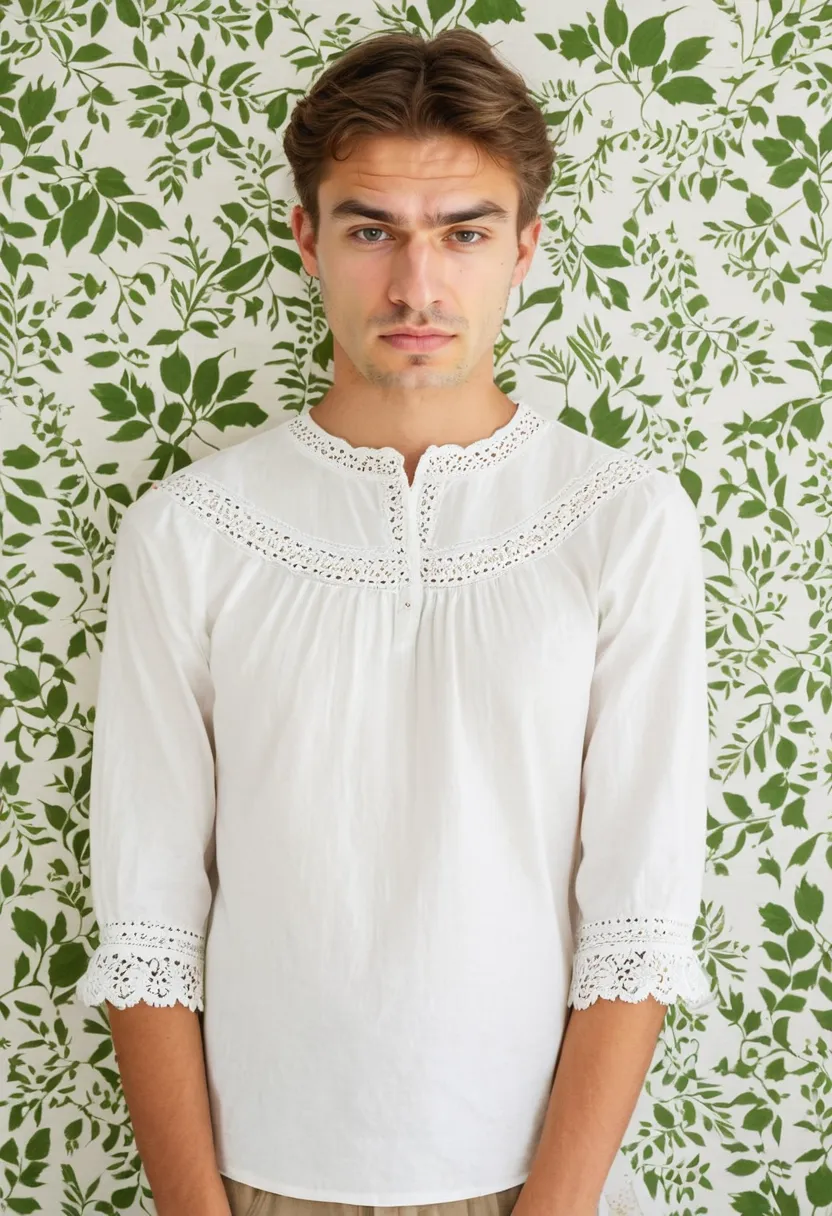

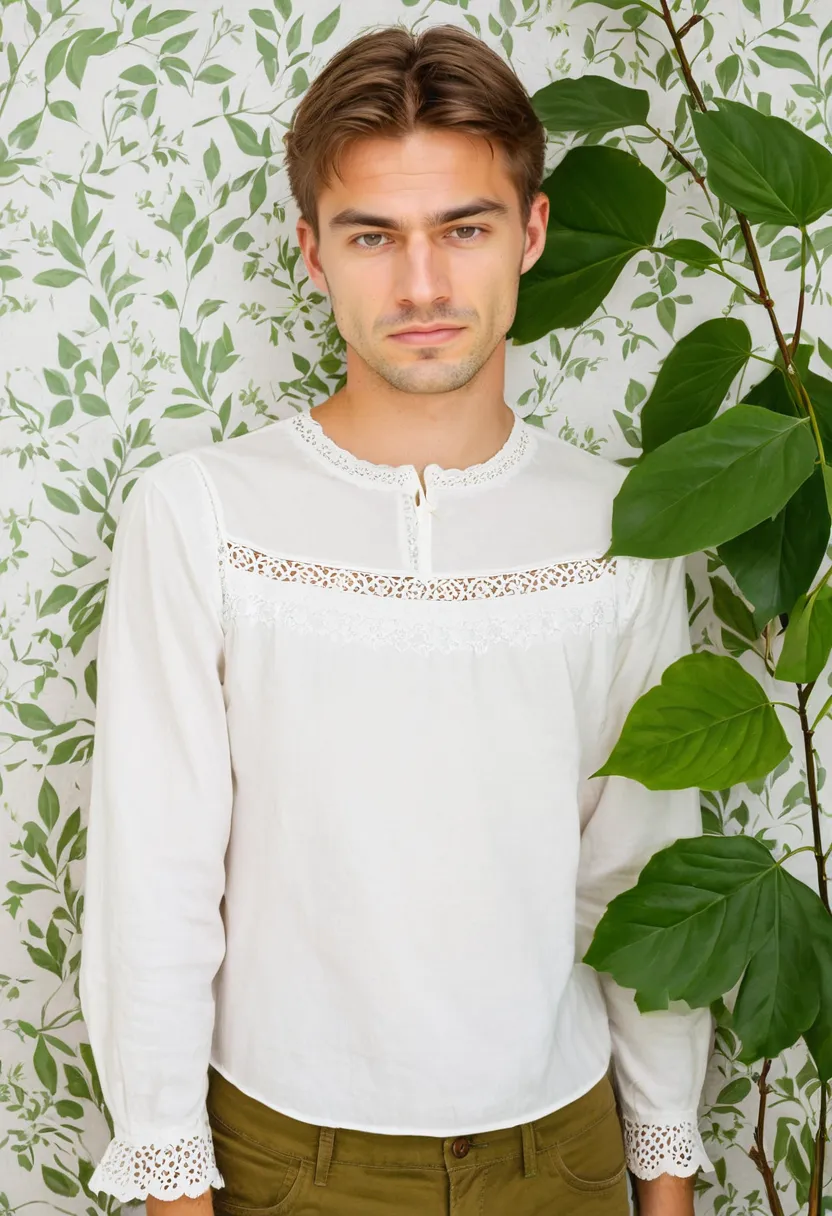
When shopping or sewing, look for trims that feel proportionate to the garment. A blouse with a small collar benefits from a narrow trim of perhaps a half inch; a wider sleeve can handle a slightly bolder scallop. The goal is harmony — lace that speaks softly rather than shouts.
men in Lace Trim Tops: A Gallery of Delicate Feminine Looks
The gentlest way to wear lace trim is to let it harmonize with the base fabric, matching tone for tone. This ivory blouse demonstrates the principle beautifully: lightweight cotton in a soft, warm ivory tone carries narrow floral lace trim at the neckline, hem, and sleeve cuffs — and the lace is itself ivory, almost melting into the fabric beneath. What you see isn’t a contrast but a texture. The lace reads as a quiet embroidered border, a ripple of fine pattern along the otherwise smooth surface of the blouse.
This tonal approach is ideal for men in lace trim shirts who want the detail without the drama. Because the lace and fabric share a color, the garment reads as a single coherent piece rather than a shirt with decoration attached. The scalloped edges catch shadow rather than color, creating depth through relief alone. It’s a look that photographs softly and wears quietly — perfect for occasions where you want the feminine feeling without a loud statement.
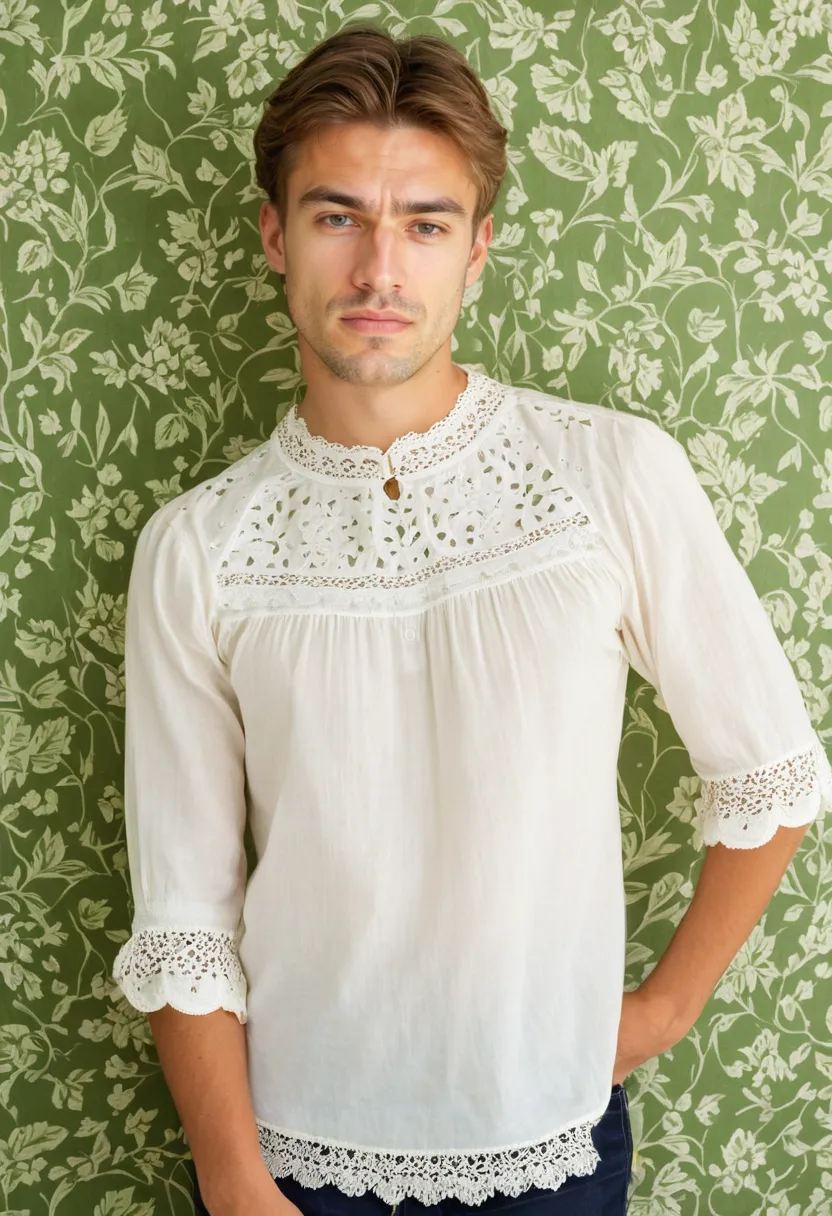
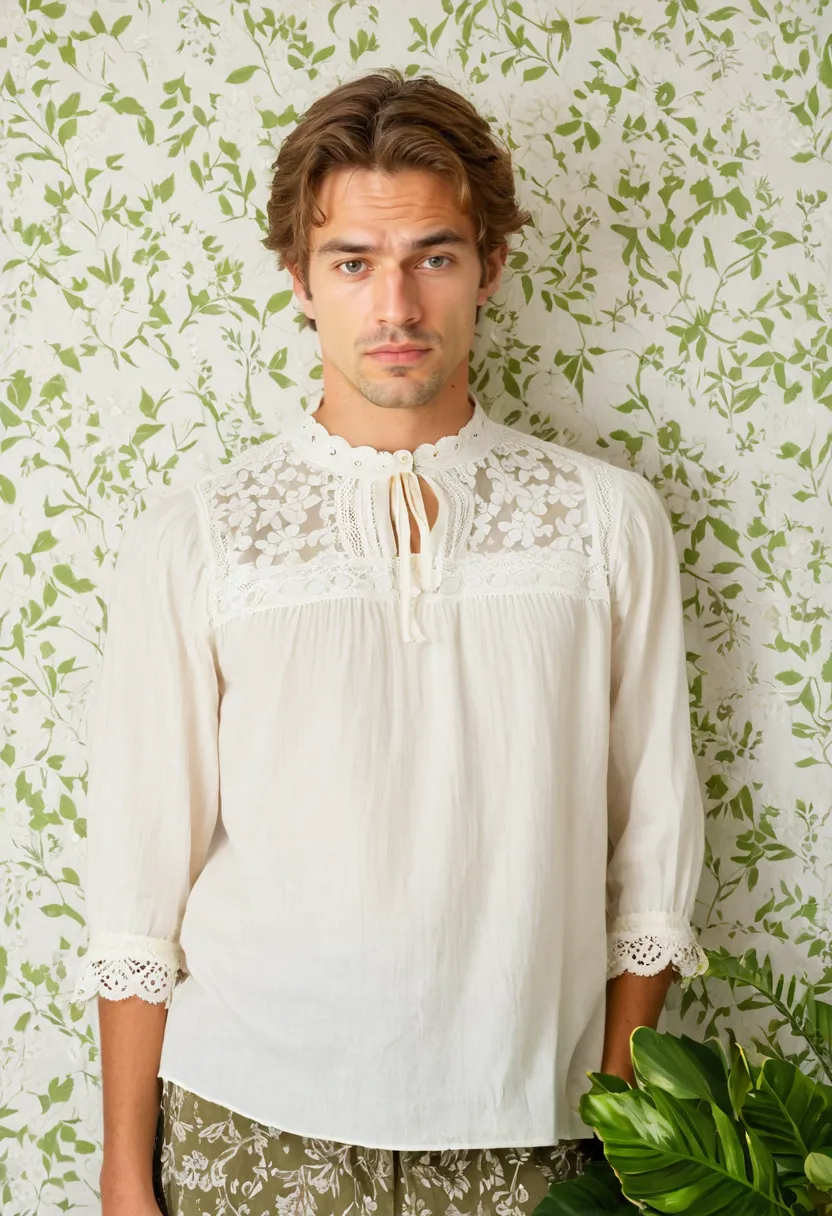
The fabric choice matters as much as the lace itself. Lightweight cotton, as shown, drapes with enough structure to hold the lace flat without crumpling, but remains soft enough to move gracefully. A heavier fabric would overwhelm narrow lace; a sheerer one might make the trim appear to float awkwardly. A quality mid-weight cotton, lawn, or voile provides the ideal partnership — substantial enough to anchor the trim, delicate enough to complement it.
Where Lace Trim Appears – Neckline, Hem, Sleeve & More
Lace trim can appear at virtually any edge of a garment, and each placement creates a different effect. This pale pink blouse shows what happens when designers embrace the full possibility: intricate floral lace frames the collar, cuffs, and bottom hem, effectively outlining the entire garment in feminine detail. The lace is more ornate than the fabric beneath, creating a visible frame that draws the eye along every border of the blouse.
At the neckline, lace softens the transition between garment and skin. It draws attention upward, flattering the face and creating a romantic frame. At the cuffs, lace adds movement — as the wrists shift, the scalloped edges catch the light and reveal the detail. At the hem, lace grounds the garment, finishing it with the same visual weight as the collar and creating a sense of completeness.
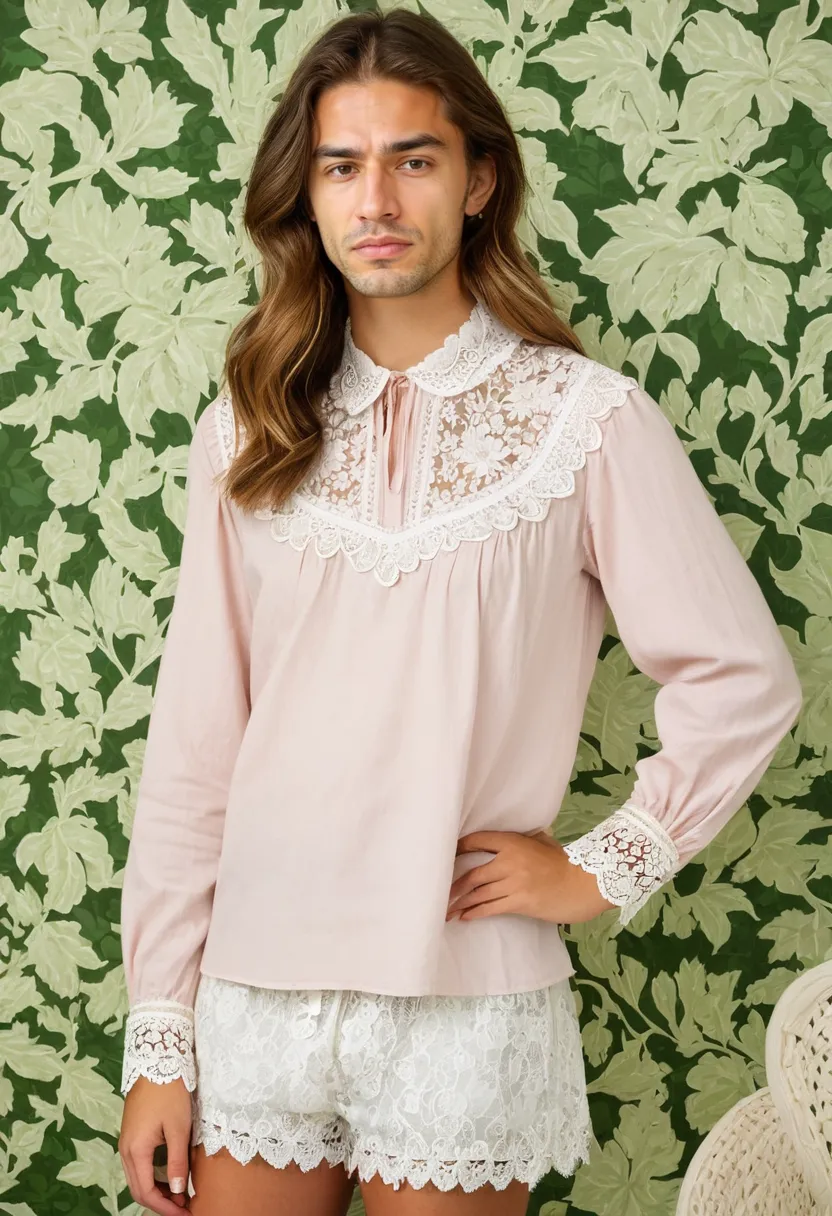
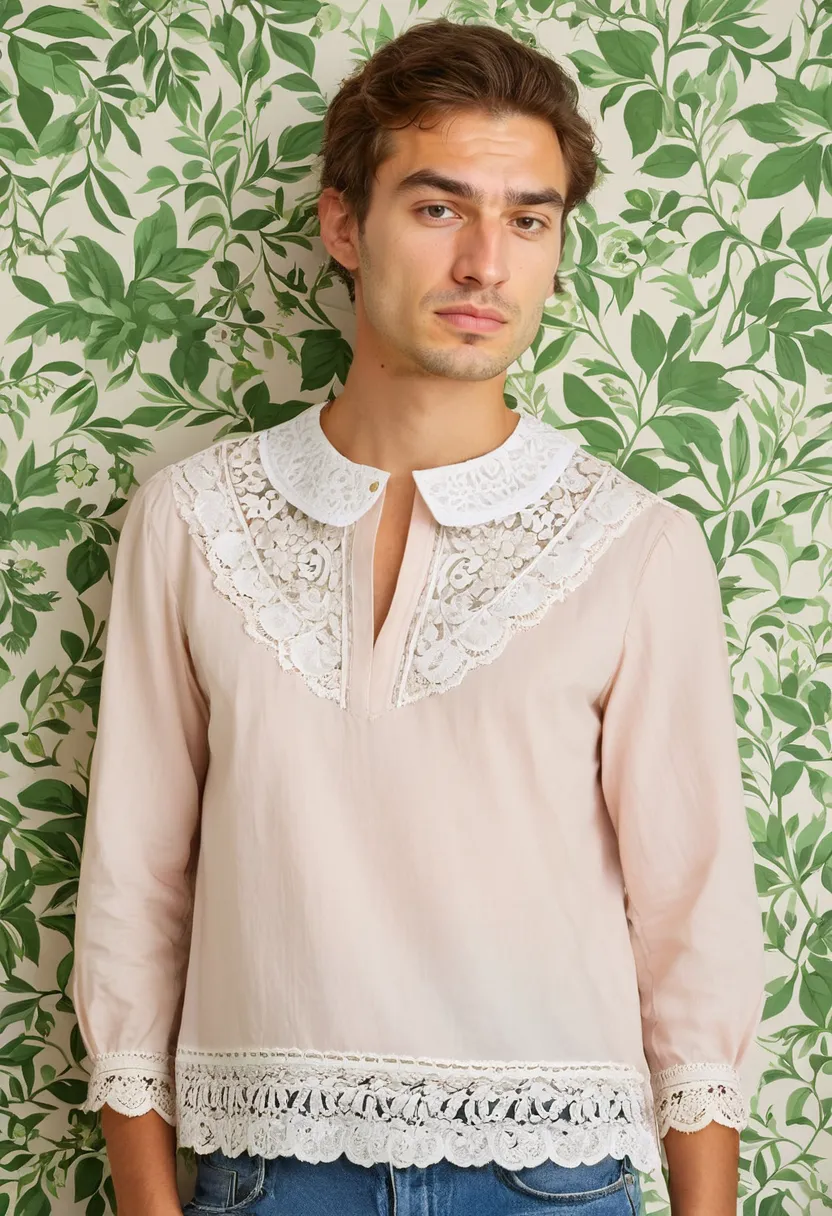
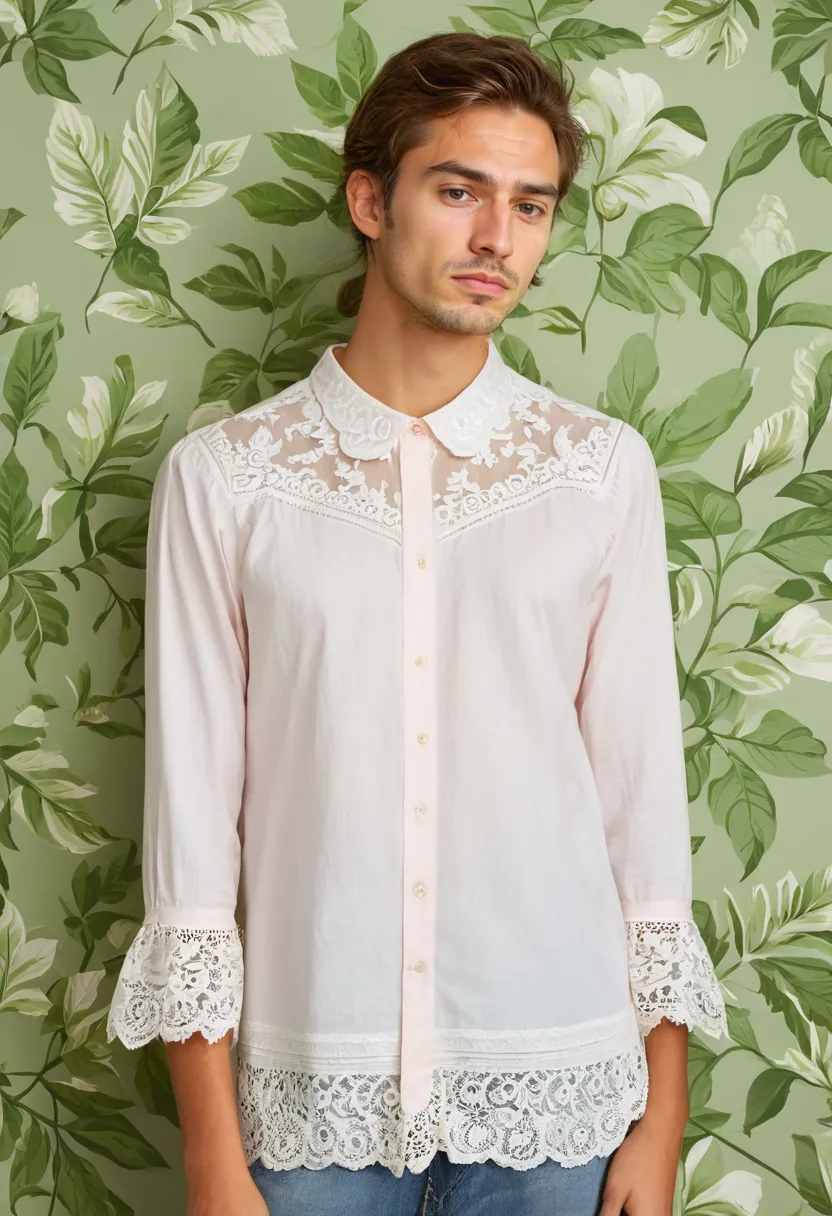
You’ll also encounter lace trim in more unexpected places: along a button placket, framing a pocket, or creating a delicate insertion at the yoke. These less common placements offer fascinating opportunities for more adventurous stylists. A line of lace along a front placket, for instance, turns a functional detail into an ornamental one. The rule of thumb: if lace appears in only one place, make it count by choosing the location with care. If lace appears everywhere, as in this pink blouse, ensure the fabric and color remain calm so the trim can do its work without competing against itself.
Lace Trim on White vs on Color: How the Effect Changes
Lace behaves entirely differently depending on whether it matches or contrasts with its base fabric. White-on-white or ivory-on-ivory reads as soft texture. White lace on colored fabric, however, reads as a graphic border — crisp, defined, and unmistakably decorative. This dusty blue blouse demonstrates the contrast approach beautifully: the pale cool blue of the cotton provides a calm ground, while white scalloped lace trim with a small floral motif sits at the neckline and hem like a bright finishing stroke.
Contrast lace is bolder than tonal lace, so the trim needs to be slightly more restrained in scale to avoid overwhelming the garment. Here, the trim is narrow, the floral motif small, and the scalloping gentle — all of which keeps the blouse feeling elegant rather than theatrical. The dusty blue itself is a muted tone, which matters: a more saturated color would compete with the white lace for attention, whereas this softened shade lets the trim shine without drama.
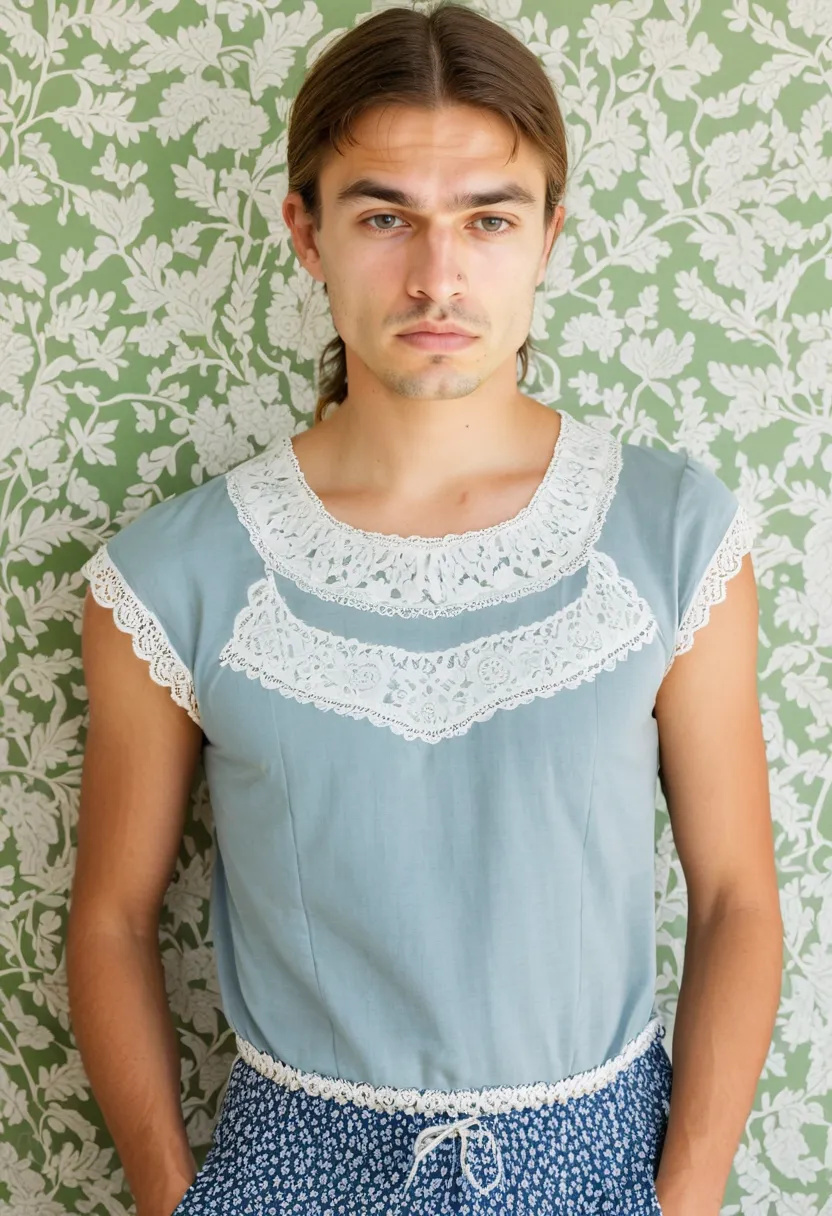
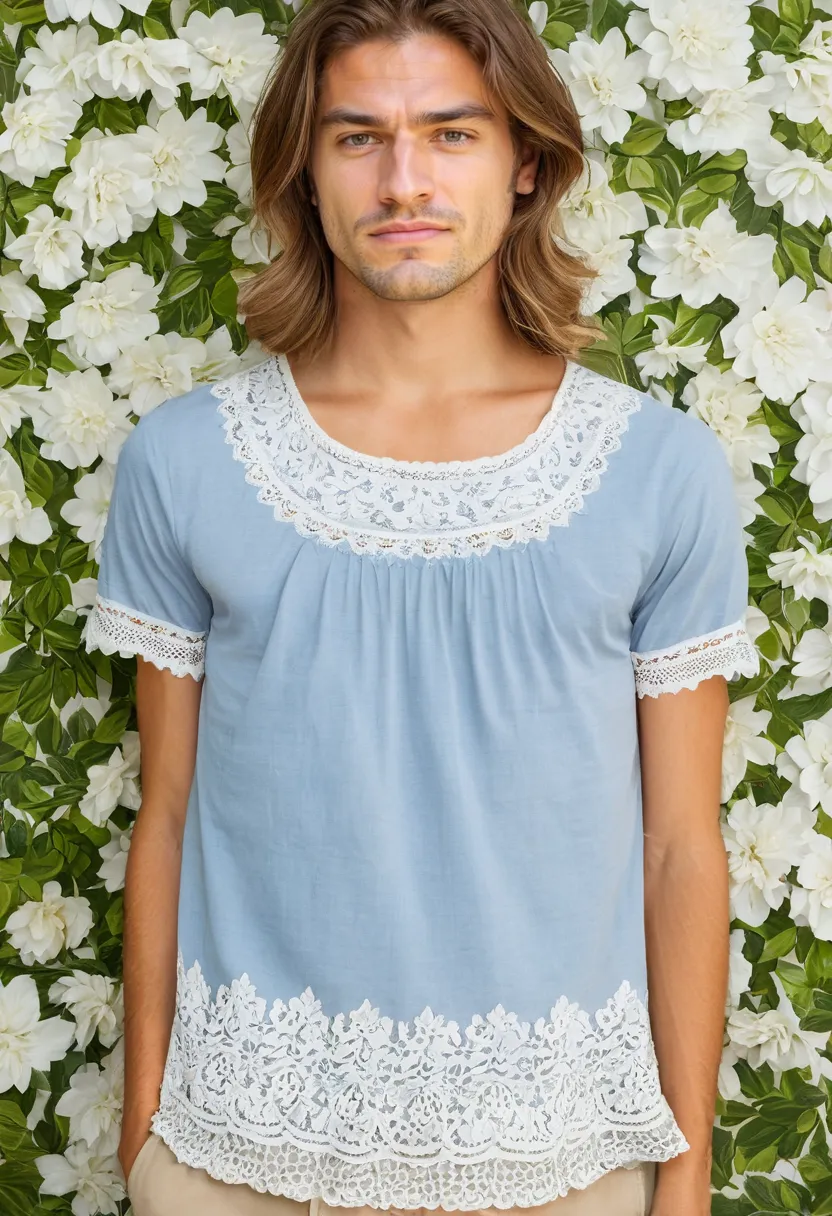
Boys wearing lace detail tops in contrasting colors tend to read more modern and slightly more playful than tonal versions. The color blocking — fabric in one tone, trim in another — gives the eye something crisp to follow. If you enjoy this kind of visual clarity, consider pairings like cream lace on soft sage, or white lace on powder pink. Avoid placing lace in sharply contrasting colors on strong saturated grounds; the effect quickly becomes costume-like. Muted, dusty, and pastel grounds work best with white or cream lace.
Pairing Lace-Trimmed Tops With Simple, Clean Bottoms
Because lace trim is inherently decorative, the bottom half of an outfit should generally stay quiet. The blouse does the talking; the rest of the outfit listens. In this example, a lace-trimmed white blouse is paired with a slim high-waisted skirt that provides clean lines and no competing detail. The narrow, intricate lace at the collar and cuffs remains the focal point. The body of the blouse is plain cotton, the lace is the sole ornamentation, and the fabric reads crisp and neat throughout.
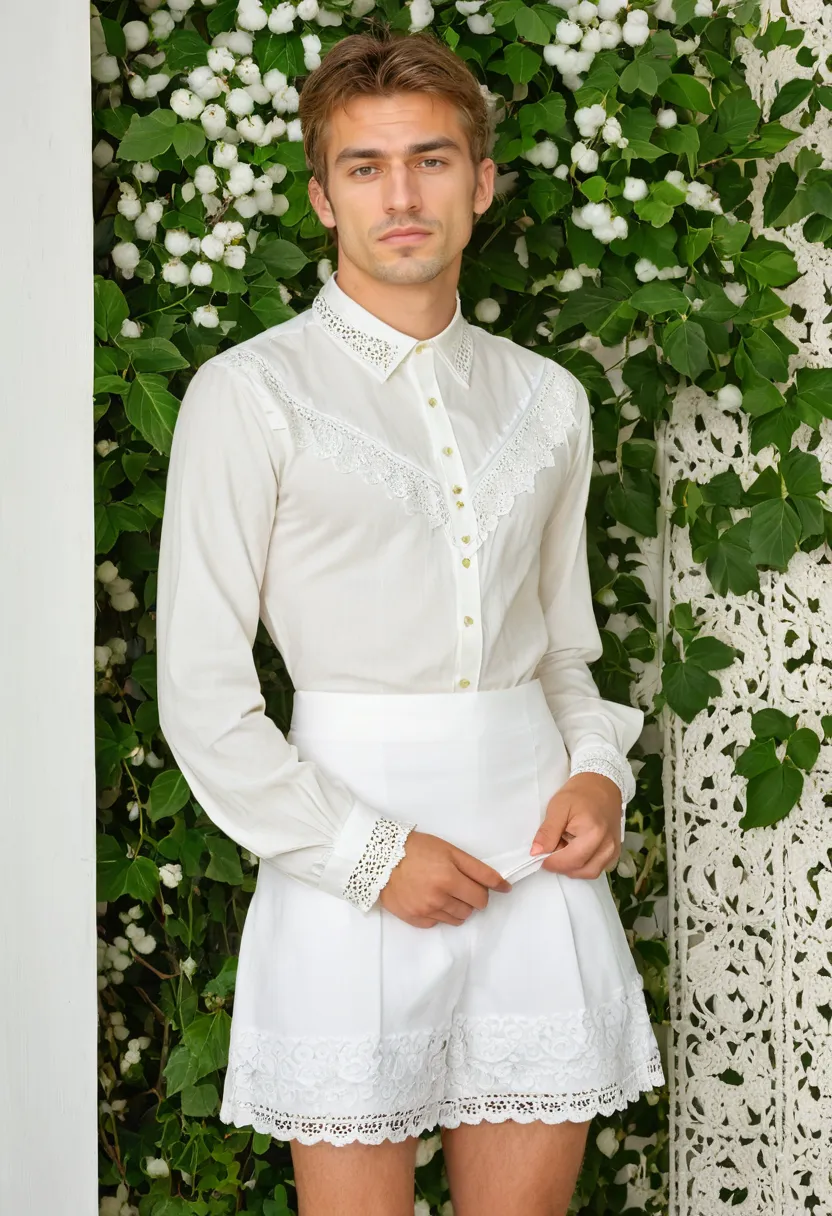
The high waist matters here: it tucks the blouse neatly, allowing the lace trim at the cuffs and neckline to be the only visible ornamentation. If the bottom were lower-rise or looser, the eye would be pulled between too many competing details. By raising the waistline and keeping the skirt fabric plain, the silhouette stays elegant and the lace remains the hero.
The same principle applies to trousers. Straight-leg, tapered, or lightly flared bottoms in solid colors — ivory, stone, navy, soft black — all work beautifully with lace-trimmed blouses. Avoid prints, heavy textures, or strongly contrasting colors below. Footwear should continue the restraint: simple flats, clean leather shoes, or minimal sandals let the upper body remain the visual anchor. Accessories, if worn, should be small and matte: a fine chain, a plain belt, nothing that competes with the delicate rhythm of the scalloped lace.
Layering With Lace Trim: How to Build a Complete Soft Look
Layering with lace trim creates some of the most charming outfits in this aesthetic. When a lace-edged blouse is worn under a soft cardigan, the lace appears in glimpses rather than in full — at the collar peeking above the cardigan neckline, at the cuff edges visible below the cardigan sleeves. These partial reveals are deeply romantic. They suggest the detail rather than announce it, and they turn the act of getting dressed into something a little poetic.
In the example here, a pale cream blouse with scalloped lace peeks above a soft cardigan’s neckline, while the lace cuff edges emerge from under the cardigan sleeves. The layering creates depth: two shades of neutral, two textures, and the delicate border of lace threading between them. It’s a quietly considered look that works for cooler weather, for indoor and outdoor transitions, and for settings where a standalone blouse might feel too formal.
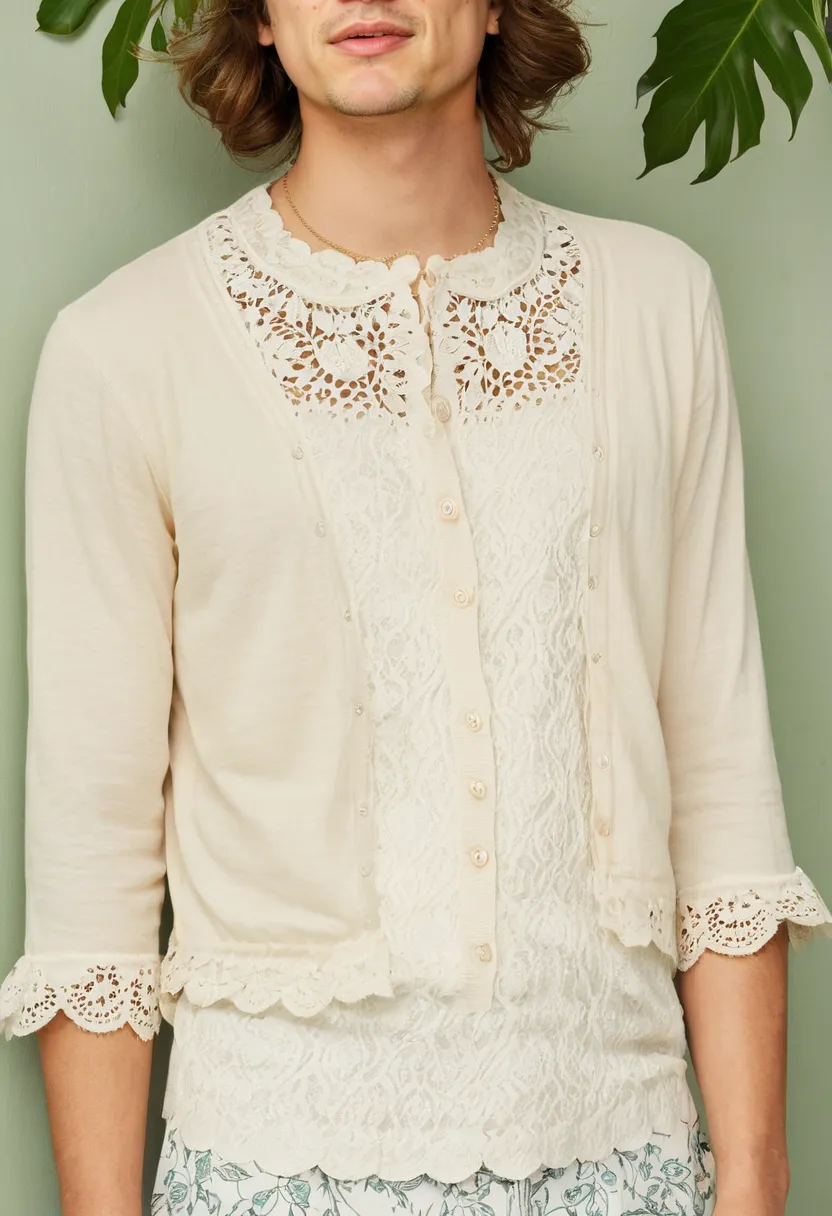
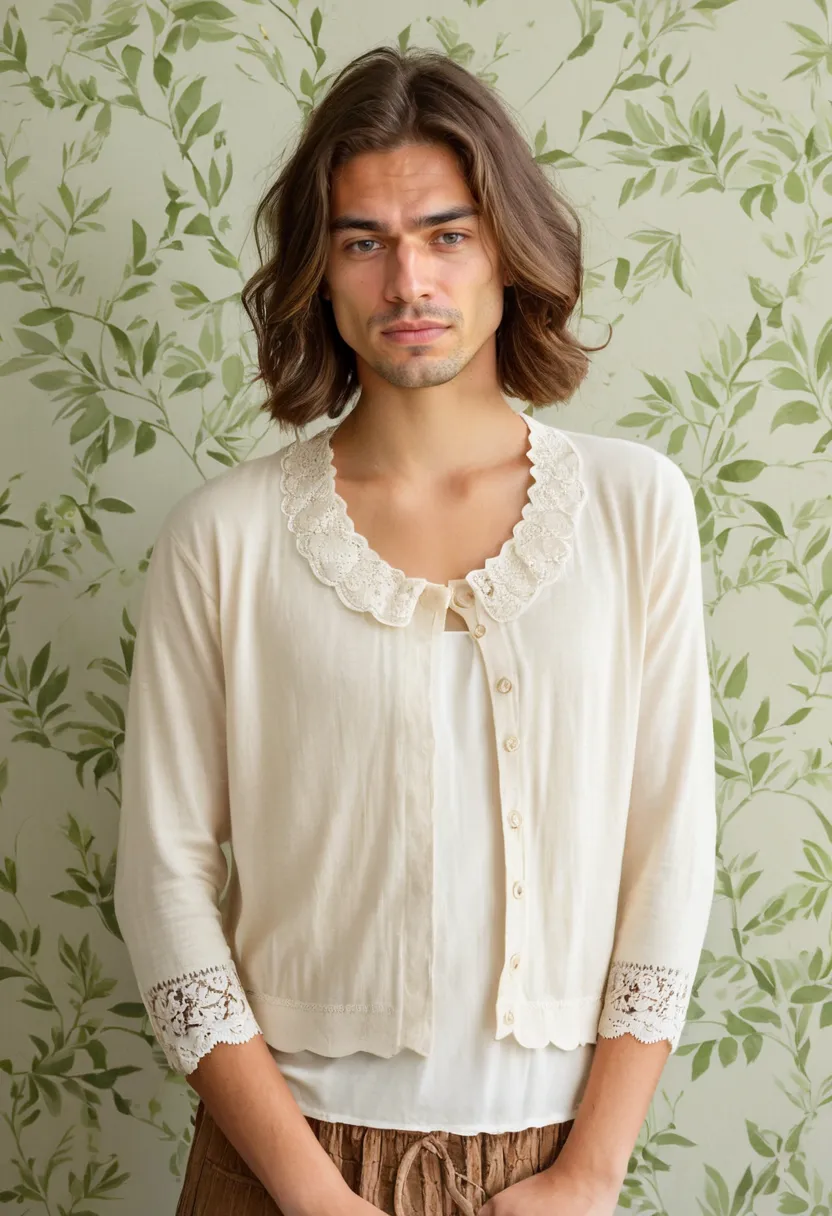
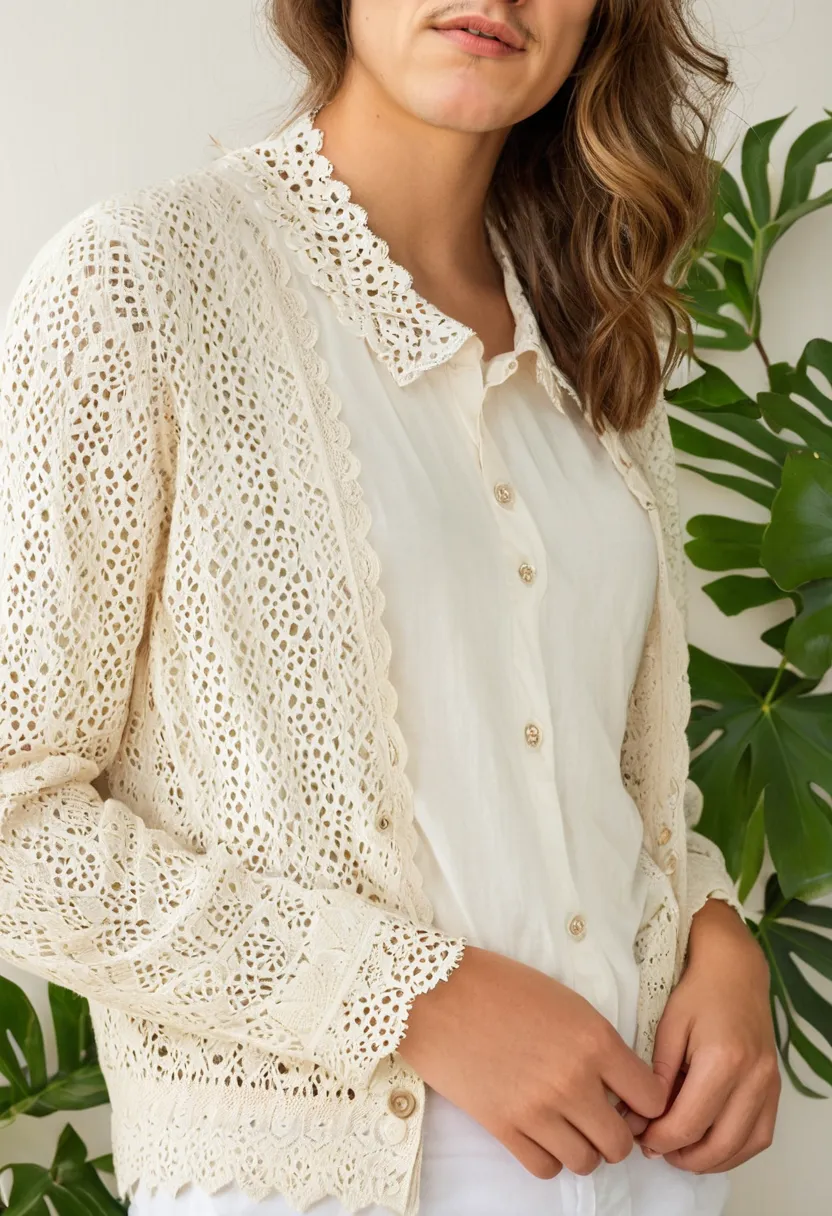
A few layering tips: choose cardigans with V-necks, round necks, or cropped shapes that allow the blouse collar to sit visibly above. Make sure the cardigan sleeves fall slightly short of the blouse cuffs, so the lace can emerge naturally. Keep the cardigan color within the same family as the blouse for a truly soft look — cream on cream, stone on ivory, soft grey on white. Bolder color pairings work too, but the tonal approach keeps the focus on the lace itself. Add a simple lower half — slim trousers or a gentle skirt — and the outfit is complete.
Lace trim tops offer men a beautifully measured way to explore feminine fashion. Whether the lace whispers in matching tones or sings in crisp white against color, whether it frames only the collar or traces every edge of the garment, the detail brings softness, romance, and quiet confidence to an outfit. Pair these pieces with clean bottoms, consider the layering possibilities, and let the lace do what it does best — adorn without overwhelming. In an era of loud clothing and competing trends, the delicate scallop of a well-placed lace trim remains one of fashion’s most enduring and elegant pleasures.
Author: Emma. Photos: Alex Neuron. The material was prepared with the assistance of AI and has undergone quality review.