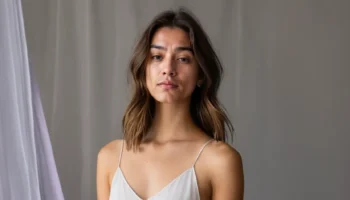
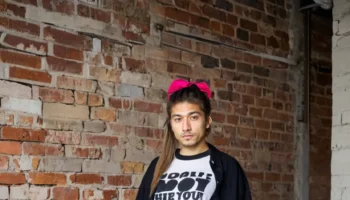
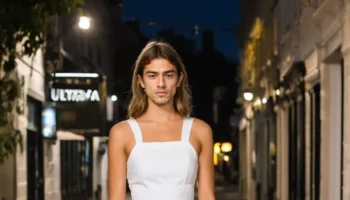
Unisex Fashion Looks for Men: Shared Wardrobe, Unique Style
There’s a quiet revolution happening in menswear, and it isn’t loud, flashy, or built on shock value. It’s the slow, deliberate rise of unisex fashion — clothing designed without gendered assumptions, crafted from fabrics and silhouettes that work equally well on anyone who chooses to wear them. For men, this shift isn’t about abandoning masculinity or performing some new identity. It’s about rediscovering the freedom of a wardrobe that prioritizes fit, fabric, and feeling over arbitrary rules. Unisex fashion looks for men today are some of the most quietly sophisticated outfits you’ll find — grounded, versatile, and deeply personal. Whether it’s an oversized cotton tee worn with straight-leg chinos or a crisp poplin shirt tucked into soft grey trousers, the appeal lies in how effortless it all feels. This is fashion that trusts the wearer. And once you understand how to work with it, the results speak for themselves.
What ‘Unisex’ Actually Means in Fashion – And What It Doesn’t
The word “unisex” gets thrown around casually, but in fashion, it carries specific weight. Unisex clothing is designed to be worn regardless of gender — meaning the cut, proportions, and construction aren’t engineered around male or female bodies specifically. It’s not the same as androgynous styling, which actively blurs or blends gendered signifiers. And it’s not the same as genderless or gender-neutral fashion, though those terms often overlap. Unisex, at its core, is about neutrality of design. A well-made cotton tee, a straight-leg trouser, a crewneck sweater — these have always quietly lived in unisex territory.
What unisex fashion isn’t: it isn’t a costume, and it isn’t a statement piece by default. Men in unisex fashion aren’t necessarily making political claims or aesthetic declarations. Many are simply buying the shirt that fits best, regardless of which section of the store it was hanging in. That’s the shift — the idea that “men’s” and “women’s” labels are marketing conventions, not absolute categories. A linen overshirt made in a boxy cut works on a broad range of bodies. A cashmere turtleneck doesn’t change its character based on who wears it.
Understanding this distinction matters because it reframes the whole conversation. Shared wardrobe concepts for men aren’t about borrowing or crossing lines — they’re about recognizing that lines were never as firm as marketing suggested. The most interesting unisex style looks for men feel natural because they were never trying to prove anything in the first place. They’re just clothes, well-made, worn confidently, and chosen because they work.
Gallery: Unisex Fashion Looks for Men That Feel Genuinely Stylish
The strongest unisex fashion looks for men rely on two things: exceptional fabric and considered proportion. Take a simple outfit built around an oversized white t-shirt in soft cotton jersey paired with straight-leg chinos in warm beige. On paper, it reads minimal. In practice, it’s an object lesson in how restraint creates presence. The cotton jersey drapes without clinging, the chinos sit relaxed at the ankle, and the tonal neutrality — warm beige against crisp white — feels calm rather than empty. Against an empty night street with wet pavement catching light, the outfit has atmosphere without trying for it.
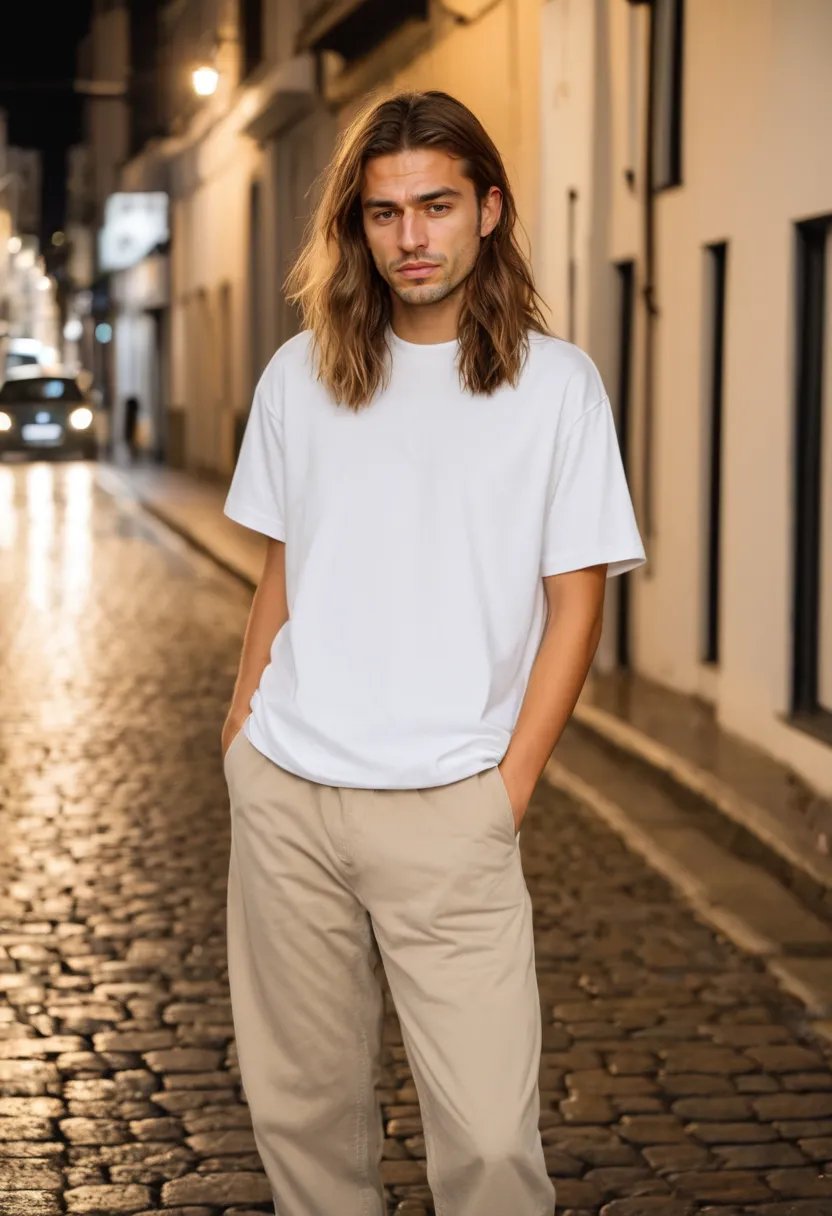
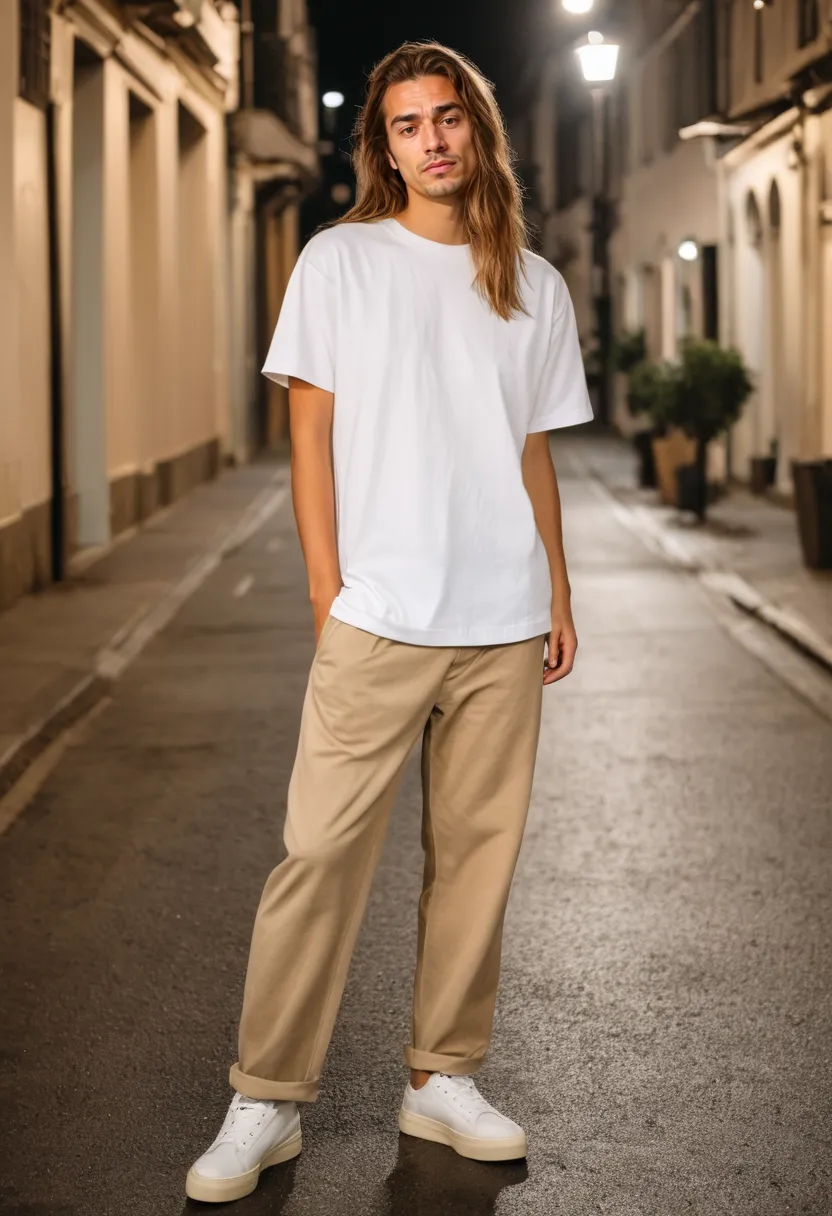
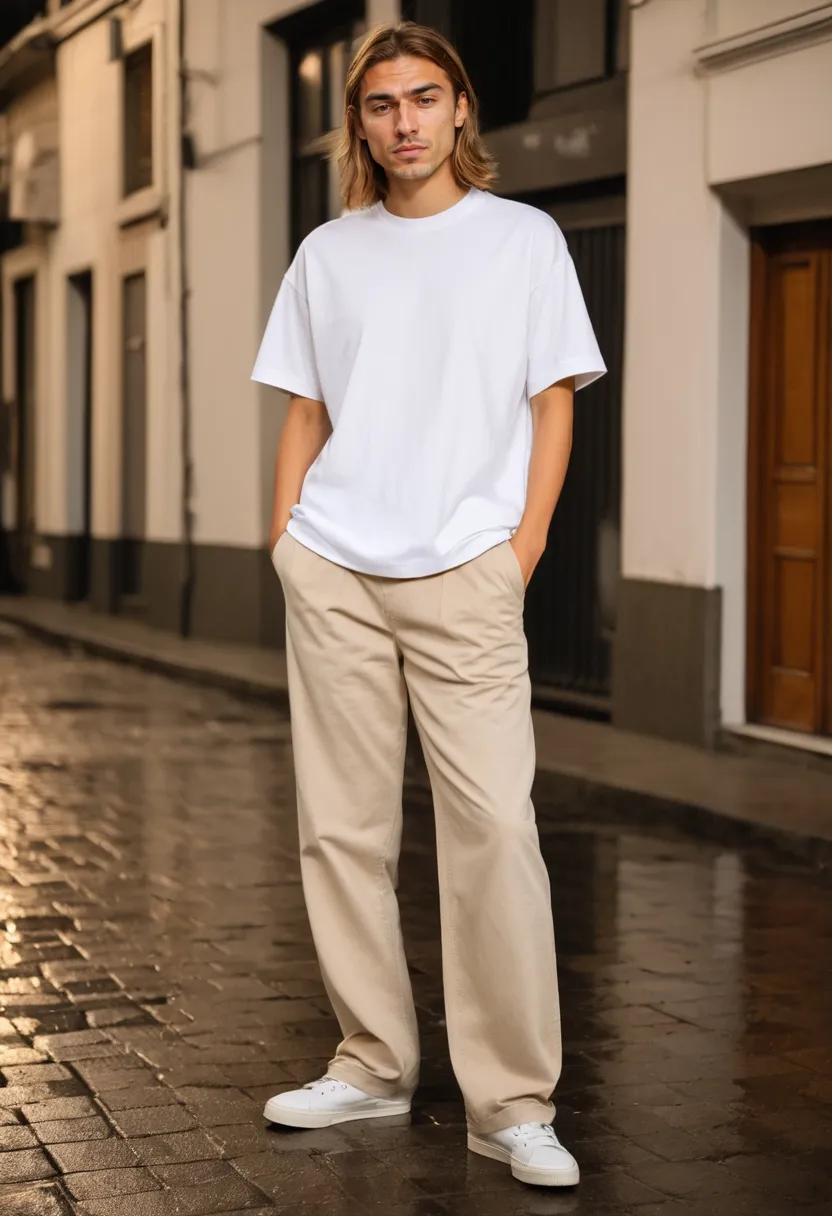
What makes this kind of look succeed is its refusal to overstate itself. There’s no visible branding, no layered statement pieces, no attempt to perform. The clothing is the point, and the fabrics do the talking. Soft cotton jersey has a particular quality when oversized — it moves, settles, and sits differently than a fitted tee, giving the silhouette a gentle architecture rather than a tight one. The straight-leg chino, cut clean through the thigh and leg, provides the counterweight. Together they create an outfit that works on virtually any frame.
This is the quiet appeal of unisex fashion for men: you don’t need to try hard. You need to choose well. The palette stays neutral — cream, beige, bone, soft grey, muted olive — and the fabrics stay honest. Cotton, linen, wool, a good knit. When you strip the wardrobe down to these essentials, the resulting looks feel contemporary without being trendy, and personal without being performative.
Key Unisex Pieces That Work Effortlessly for Boys
If you’re building a genuinely unisex-leaning wardrobe, certain pieces do disproportionate work. The classic white button-down in crisp cotton poplin is probably the most underrated. Worn with relaxed straight-leg trousers in soft grey, it forms one of the most universally flattering outfits in modern menswear — and it reads equally well on anyone. The poplin has a slight structure to it, holding its shape through the collar and placket without stiffness. The soft grey trousers offer a clean vertical line, balancing the crispness of the shirt with a quieter neutral.
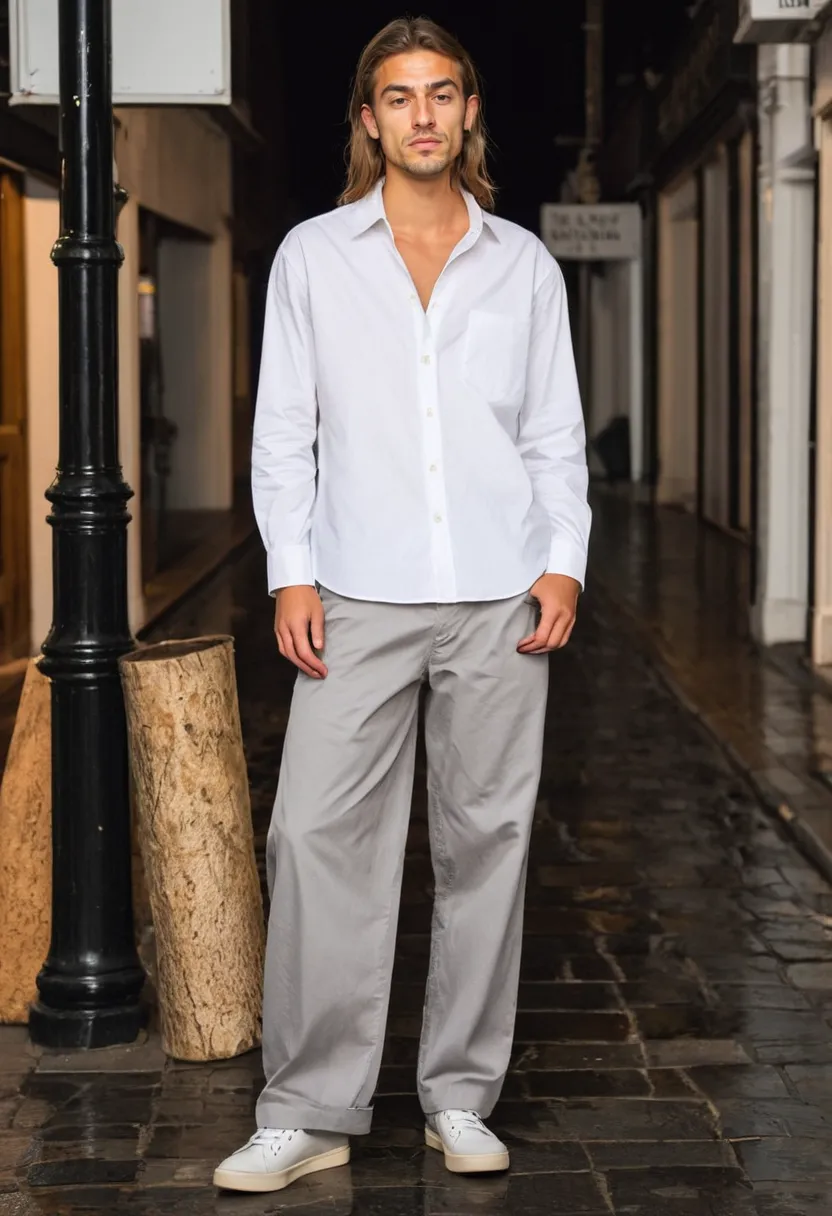
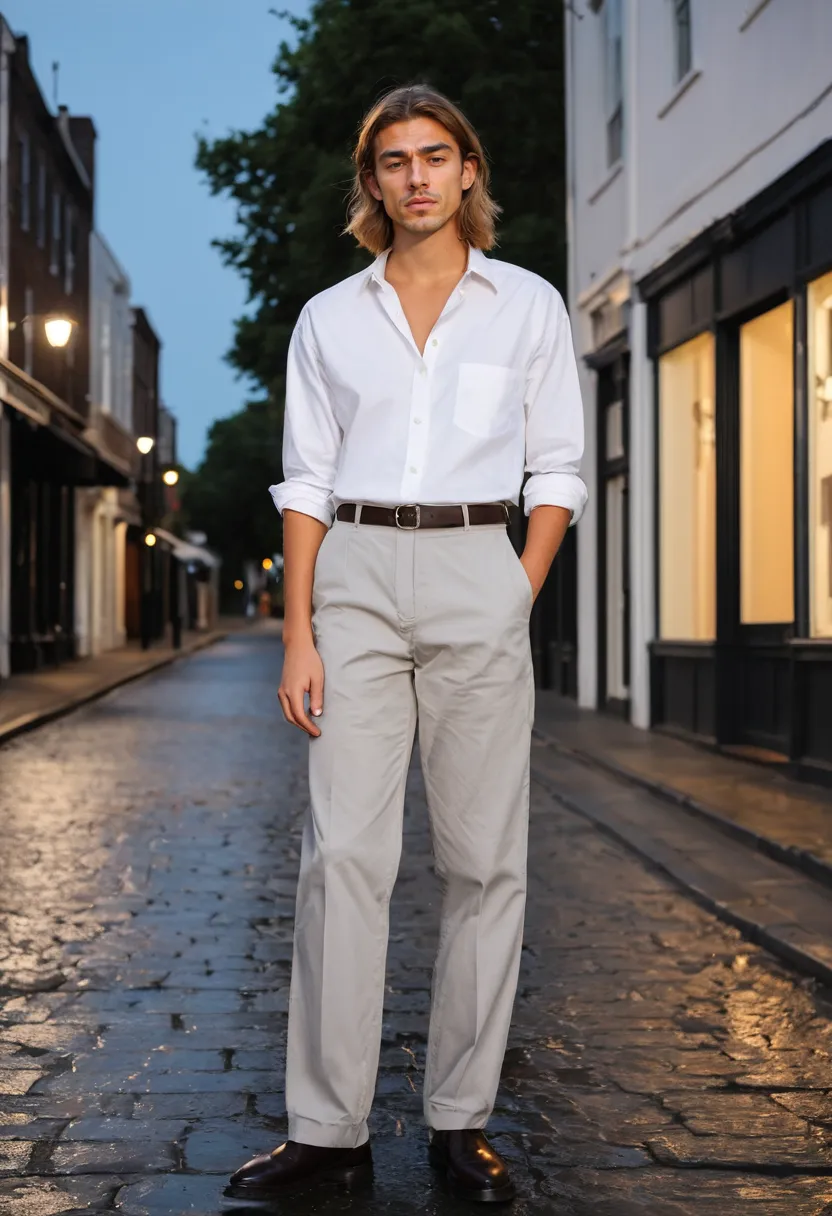
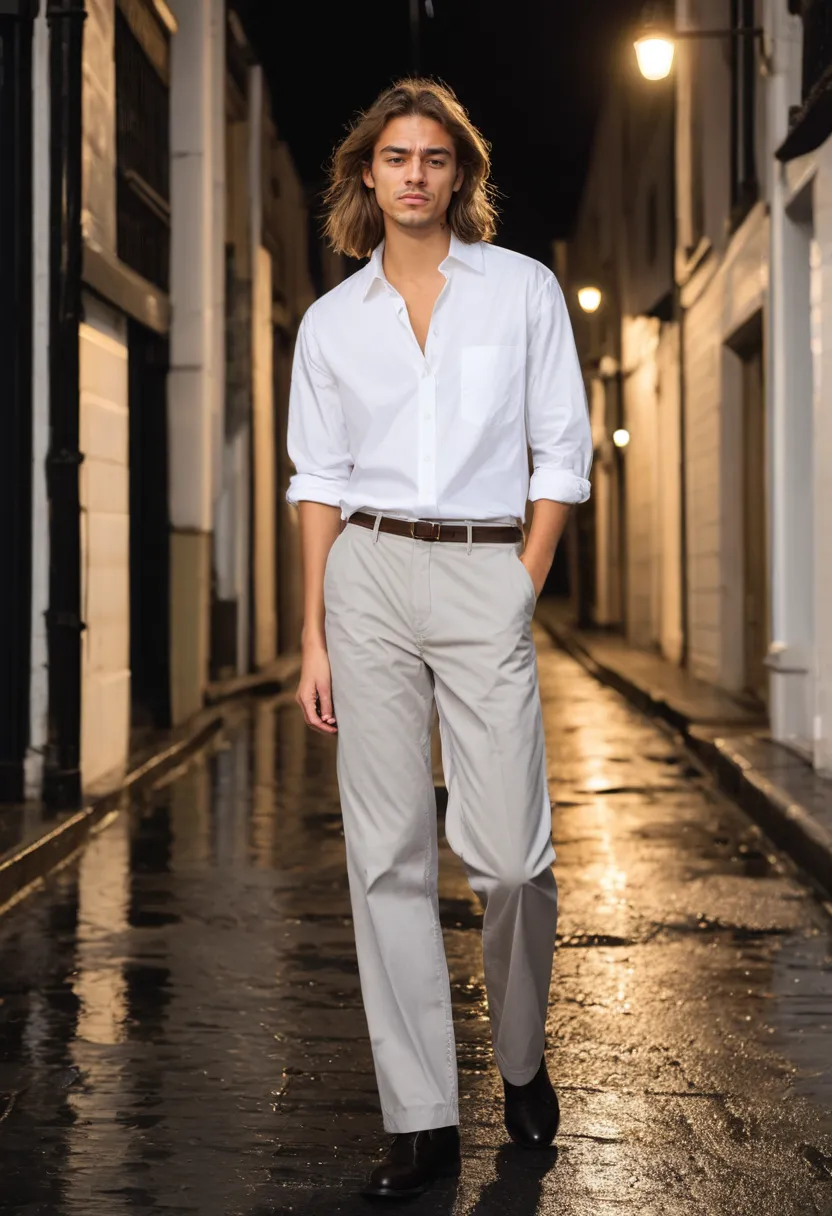
Beyond the poplin shirt, the foundational unisex wardrobe includes a handful of reliable shapes. A boxy crewneck sweater in undyed wool or cotton. A lightweight overshirt in linen or washed cotton. Straight-leg or wide-leg trousers in natural fibers. A black or charcoal turtleneck. A simple trench or mac coat. These aren’t revolutionary pieces individually — but chosen carefully and worn together, they create a system that’s remarkably flexible.
The trick is focusing on quality construction and generous-but-considered proportions. Unisex pieces tend to be cut slightly roomier than traditional menswear, which means they accommodate a wider range of bodies and styling choices. A sweater that sits just past the hip instead of snug at the waist. A trouser that breaks cleanly at the ankle rather than tapering aggressively. These small adjustments add up to clothing that feels relaxed without looking sloppy.
For boys and men just starting to explore this territory, the best entry point is almost always fabric-led. Start with a single piece you love the feel of — a heavy cotton tee, a soft wool knit, a pair of well-cut linen trousers — and build outward from there. You’ll find that once you prioritize how clothes feel against your body and how they move, the gendered marketing fades into irrelevance. What’s left is a wardrobe of pieces that genuinely work for you.
How Unisex Fashion Intersects With Feminine Man Style
There’s an adjacent territory to unisex fashion worth understanding: the more expressive realm where men explicitly incorporate pieces traditionally coded as feminine. This isn’t the same as unisex dressing, but the two intersect in interesting ways. Consider a look built around an oversized linen shirt in pale cream worn with a flowing midi skirt. The linen shirt is menswear-coded through its cut and fabric — structured shoulders, boxy body, substantial collar. The skirt is traditionally feminine. Together, they create a dialogue between the two registers rather than erasing either one.
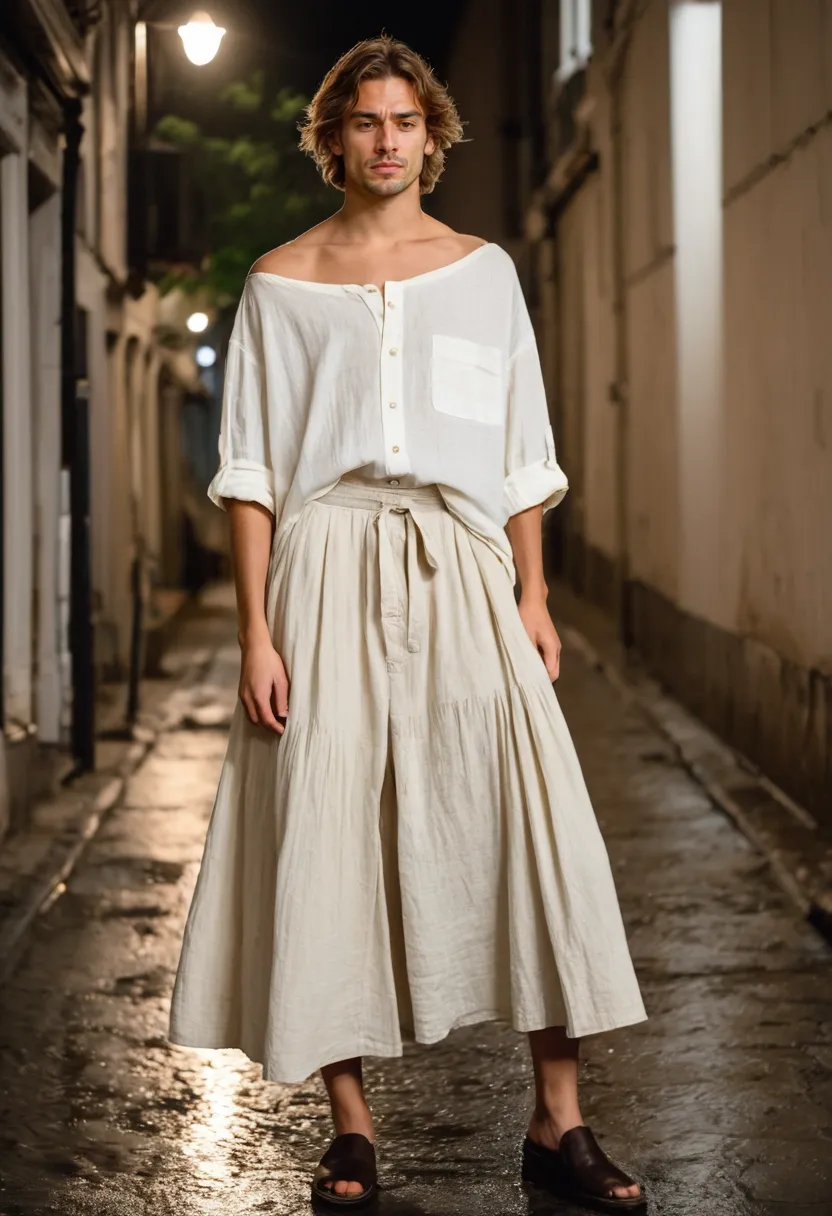
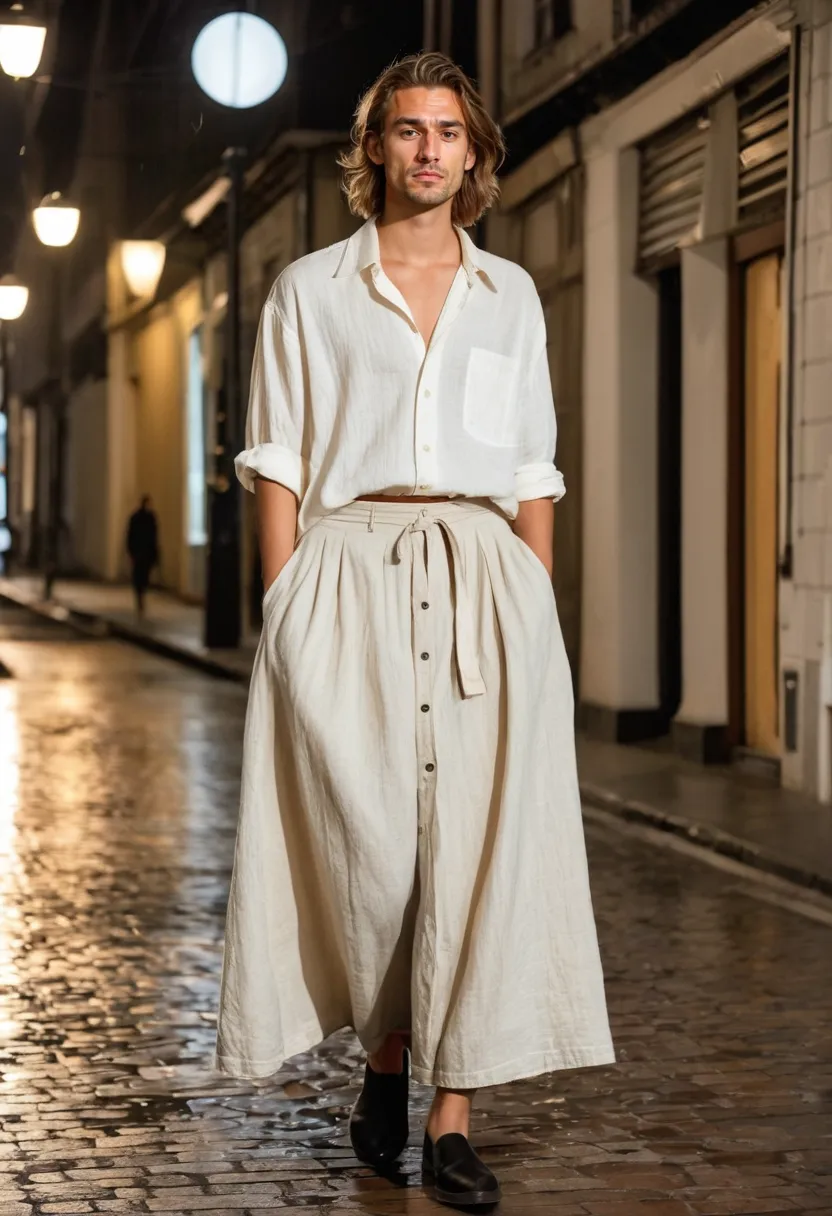
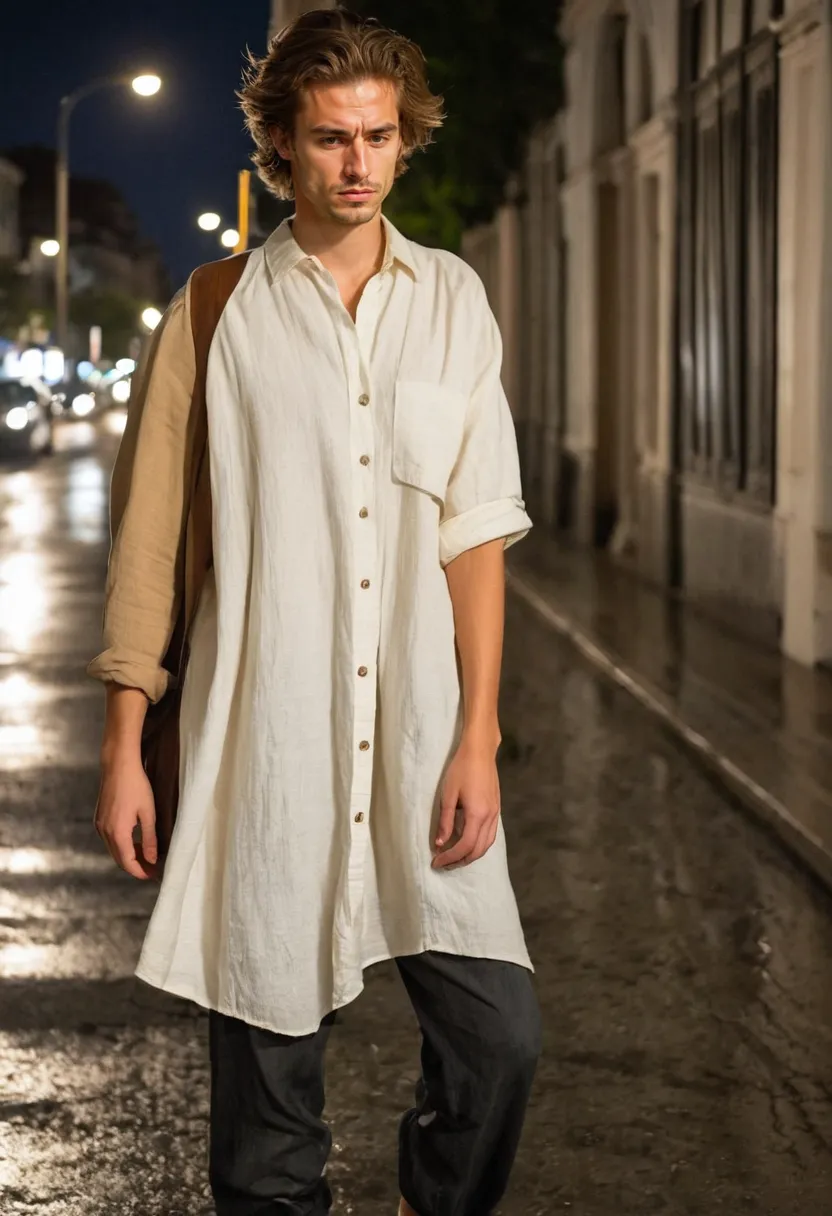
What makes this kind of outfit work rather than feel costumey is the consistency of tone. The cream linen shirt and the flowing skirt share a palette and a tactile quality — both soft, both slightly weighty, both respecting the body without clinging. The contrast isn’t in color or intensity; it’s in silhouette and history. That’s a sophisticated kind of dressing, and it requires a different skill set than pure unisex styling.
Unisex fashion, by contrast, tends to avoid that explicit contrast. It stays in a neutral register. But the two approaches inform each other. Men who understand unisex dressing — the importance of proportion, the primacy of fabric, the value of a restrained palette — are better equipped to experiment with more traditionally feminine pieces when the mood calls for it. The skills transfer. You learn to read a garment by its construction rather than its category, and suddenly a lot more of the wardrobe opens up.
For many men exploring this territory, the progression is natural. They start with unisex basics, develop confidence in their eye for cut and material, and eventually find themselves drawn to pieces that sit outside the traditional menswear canon entirely. A soft blouse in silk crepe. A long pleated skirt in wool. A jacket with a more dramatic shoulder line. Whether or not any individual man takes that step, understanding the relationship between unisex and expressive styling makes you a more thoughtful dresser overall.
Building a Unisex-Leaning Wardrobe That Reflects Personal Style
Building a wardrobe around unisex principles doesn’t mean buying all new clothes. It means shifting the logic behind what you choose. Instead of asking whether a piece is “men’s” or “women’s,” you ask whether the fit, fabric, and silhouette actually suit you. That question cuts through most marketing noise and leaves you with a much clearer set of choices. A good example of what this looks like in practice: tailored cream trousers paired with a soft pastel knit top. The trousers are precise — clean fabric, sharp line through the leg, a subtle taper at the ankle. The knit is the opposite — soft, textured, gently loose. The contrast between precision and softness is what makes the outfit feel composed rather than plain.
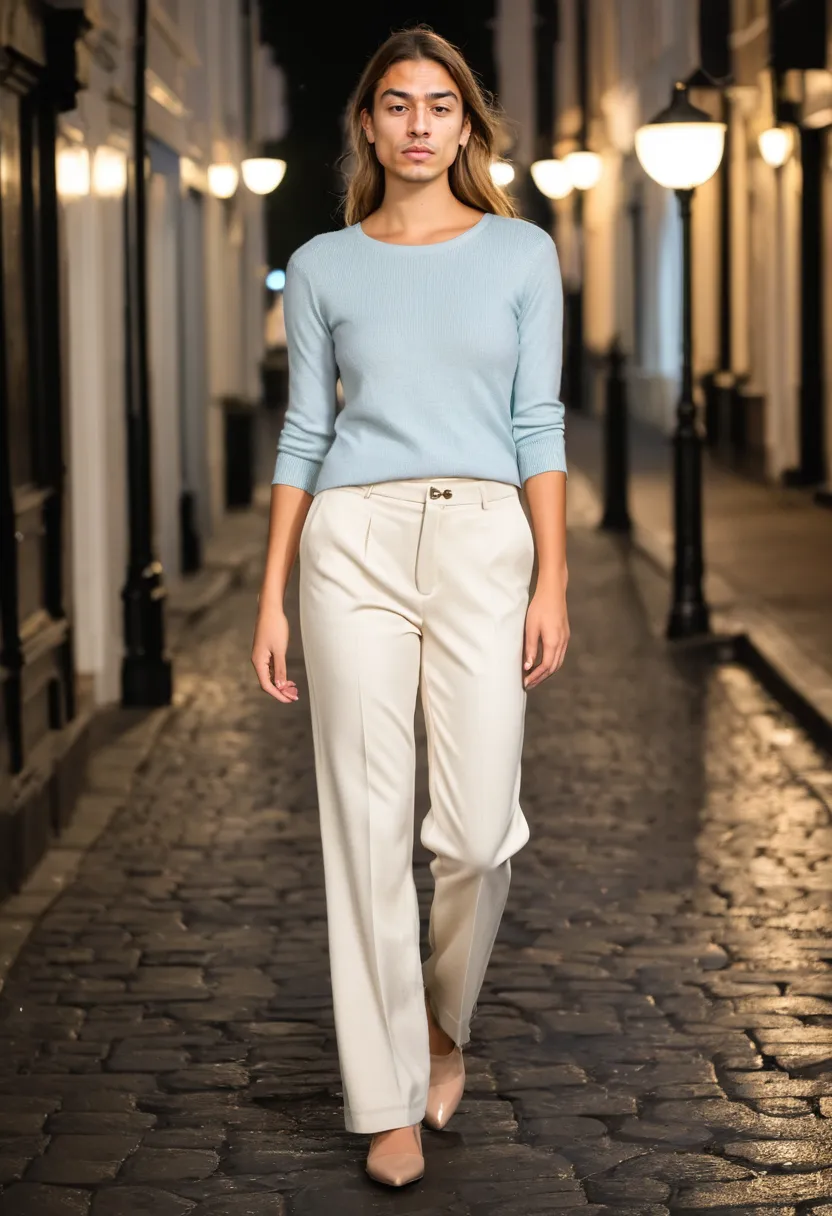
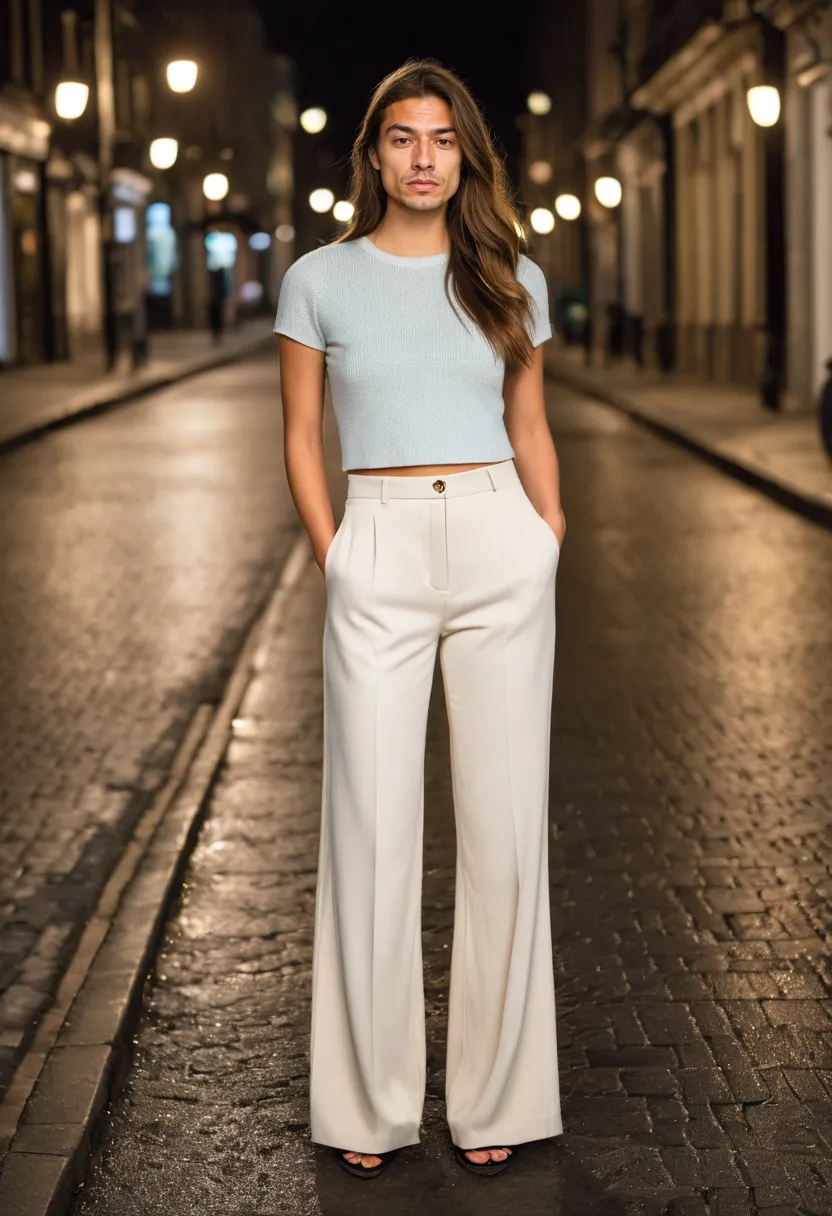
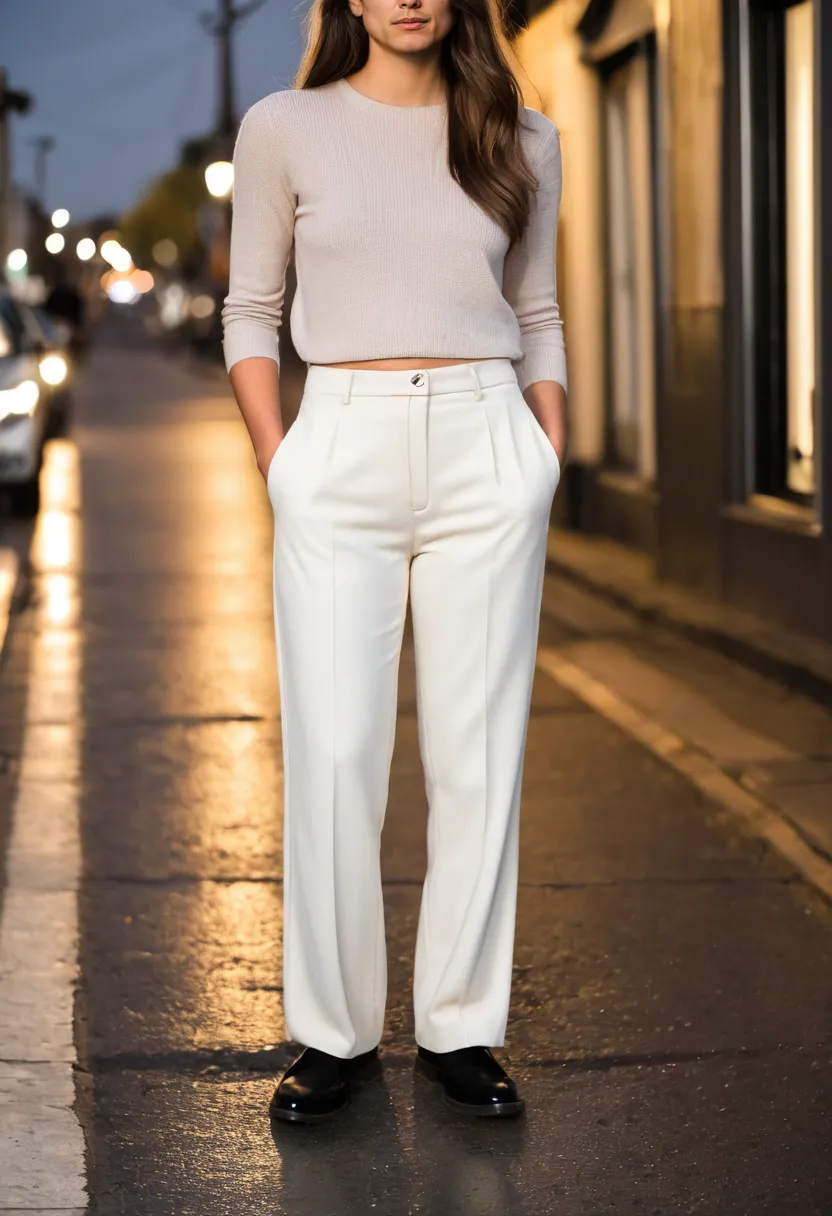
When you build a shared wardrobe around this kind of thinking, a few principles help. First, commit to a limited palette. Neutrals — cream, beige, grey, navy, black, olive — form the core, with soft pastels or muted tones as accents. A tight palette means nearly everything works with everything else, which is the real luxury of a considered wardrobe. Second, prioritize natural fibers: cotton, linen, wool, silk, cashmere. They age better, feel better, and carry a quality that synthetics can’t replicate. Third, think in terms of layers and silhouettes rather than outfits. A good overshirt can anchor a dozen different looks. A pair of excellent trousers is worth twice as much as two mediocre pairs.
It also helps to resist the urge to over-accessorize. Unisex dressing rewards simplicity. A leather watch, a quiet chain, good shoes, maybe a scarf. Anything more tends to muddy the visual logic. The clothing is doing the work — your job is to stay out of its way. Over time, this approach builds a wardrobe that’s genuinely yours, independent of seasonal trends or passing aesthetic fads. You end up with clothes you actually love wearing, in combinations that feel inevitable once you put them together.
The deeper payoff is that your style starts to feel more honest. You stop performing a version of masculinity dictated by what the menswear department happens to stock this season, and you start dressing according to what actually looks and feels right to you. That’s a quieter kind of confidence — but it shows.
Unisex fashion looks for men aren’t about erasing identity or fitting into a category. They’re about clearing away the assumptions that tell us certain fabrics, cuts, or colors belong to certain people. When you strip those assumptions away, what remains is simpler and more interesting: well-made clothes, chosen for how they fit and feel, worn with the confidence that comes from knowing they’re genuinely yours. Whether you’re easing in with a cotton tee and chinos or pushing further into more expressive territory, the principles stay the same. Trust the fabric. Respect the proportion. Keep the palette clean. And above all, wear what actually works for you — not what a label or a department suggests you should.
Author: Emma. Photos: Alex Neuron. The material was prepared with the assistance of AI and has undergone quality review.