Cottagecore Outfits for Men: Rustic, Romantic & Softly Feminine
There’s something quietly revolutionary about a man in a linen dress standing in a sun-dappled field, or a boy in a smocked blouse kneading bread on a wooden countertop. Cottagecore, the aesthetic that swept social media during the early 2020s and has since matured into a lasting style movement, has increasingly opened its arms to masculine interpretation. What began as a predominantly feminine vision of rural romance — hand-baked pies, wildflower bouquets, and pinafore dresses — has become a space where men and boys are exploring softness, slowness, and a gentler way of dressing. Cottagecore outfits for men are no longer a niche curiosity; they are part of a broader cultural shift that welcomes rustic feminine fashion into everyone’s wardrobe, regardless of gender. In this lookbook, we’ll wander through the textures, silhouettes, and styling tricks that make this aesthetic so enchanting, and explore how anyone can embrace the soft, storybook quality of cottagecore.
The Cottagecore Aesthetic Explained: Romantic, Rural and Soft
Cottagecore, at its heart, is a visual love letter to idealized country living. It draws from the pastoral paintings of the nineteenth century, the pages of children’s storybooks, and the textures of grandmother’s linen cupboard. The aesthetic celebrates a slower pace of life — the rhythm of the seasons, the satisfaction of mending a garment by hand, the beauty of imperfect, handmade things. Unlike the glossy minimalism that has dominated fashion for the past decade, cottagecore invites softness, texture, and a kind of gentle sentimentality back into our daily dress.
For men, this aesthetic offers something particularly interesting. The last few generations of menswear have been remarkably constrained — predominantly structured, dark, and geometric. Cottagecore represents a radical softening. It welcomes men into a world of puffed sleeves, gathered waists, ditsy floral prints, and the quiet dignity of natural linen. It asks men to consider that tenderness, romance, and prettiness are not qualities to be avoided but aesthetics to be enjoyed.
The core values of cottagecore translate easily regardless of who is wearing it: a love of natural materials, a preference for handmade or artisanal details, an embrace of floral and botanical motifs, and a commitment to silhouettes that feel comfortable, free, and a little bit nostalgic. It’s an aesthetic that has as much to do with feeling as it does with fashion — the feeling of being outdoors in a meadow, of candlelight through a linen curtain, of fresh bread cooling on a windowsill. When a man chooses to dress in cottagecore, he’s stepping into a story, and that story belongs to him just as much as to anyone else.
Men in Cottagecore Outfits: A Lookbook of Rustic Feminine Style
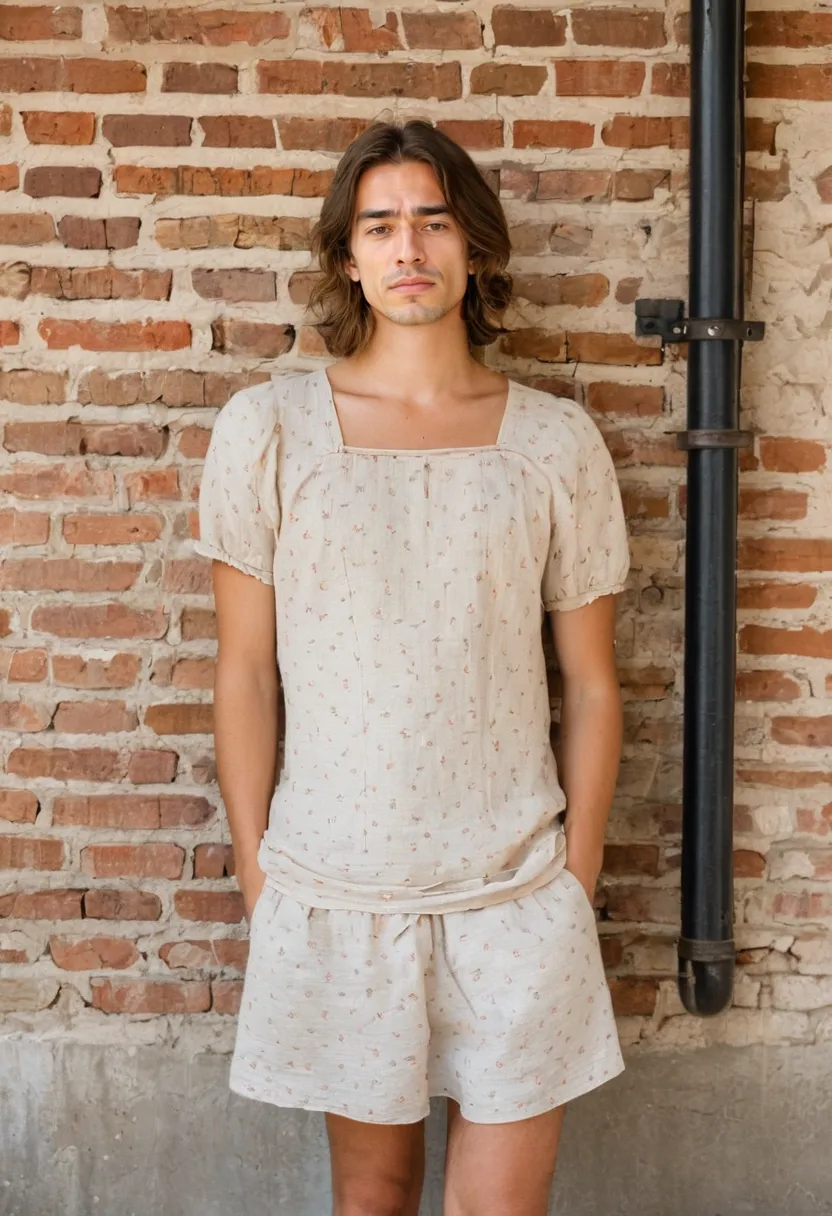
The centerpiece of this lookbook is a silhouette that perfectly captures the dialogue between masculine frame and feminine detailing. Picture a cream linen dress, its surface scattered with small pink flowers — a print so delicate it reads almost like a watercolor from a distance. The fabric itself tells half the story: natural linen with that unmistakable visible texture, the gentle irregularity of weave that marks it as something real, organic, and lived-in. There is no polish here, no synthetic sheen — only the honest surface of a fiber that has been worn and washed and will continue to soften with time.
The dress features puffed sleeves gathered at the shoulder and cinched with elastic cuffs, creating a balloon-like shape that softens the line of the arm. At the waist, gentle gathers draw the fabric in, then release it again into a skirt that moves with the wearer. On a masculine frame, this silhouette becomes something genuinely new — neither a costume nor a compromise, but a fresh interpretation of what a man’s wardrobe might look like.
What makes this look work is the confidence of its context. Photographed against a raw industrial loft with exposed brick, the romantic garment gains an interesting counterpoint. The rough brick and cool concrete throw the softness of the linen into sharp relief. It’s a reminder that cottagecore doesn’t have to be staged in a meadow — the aesthetic lives inside the garment itself, and travels wherever the wearer goes. A man in a floral linen dress on a city street is every bit as cottagecore as one in a wheat field, perhaps more so, because he carries the pastoral spirit with him into the concrete world.
Key Cottagecore Pieces for Boys: Smocks, Florals and Linen
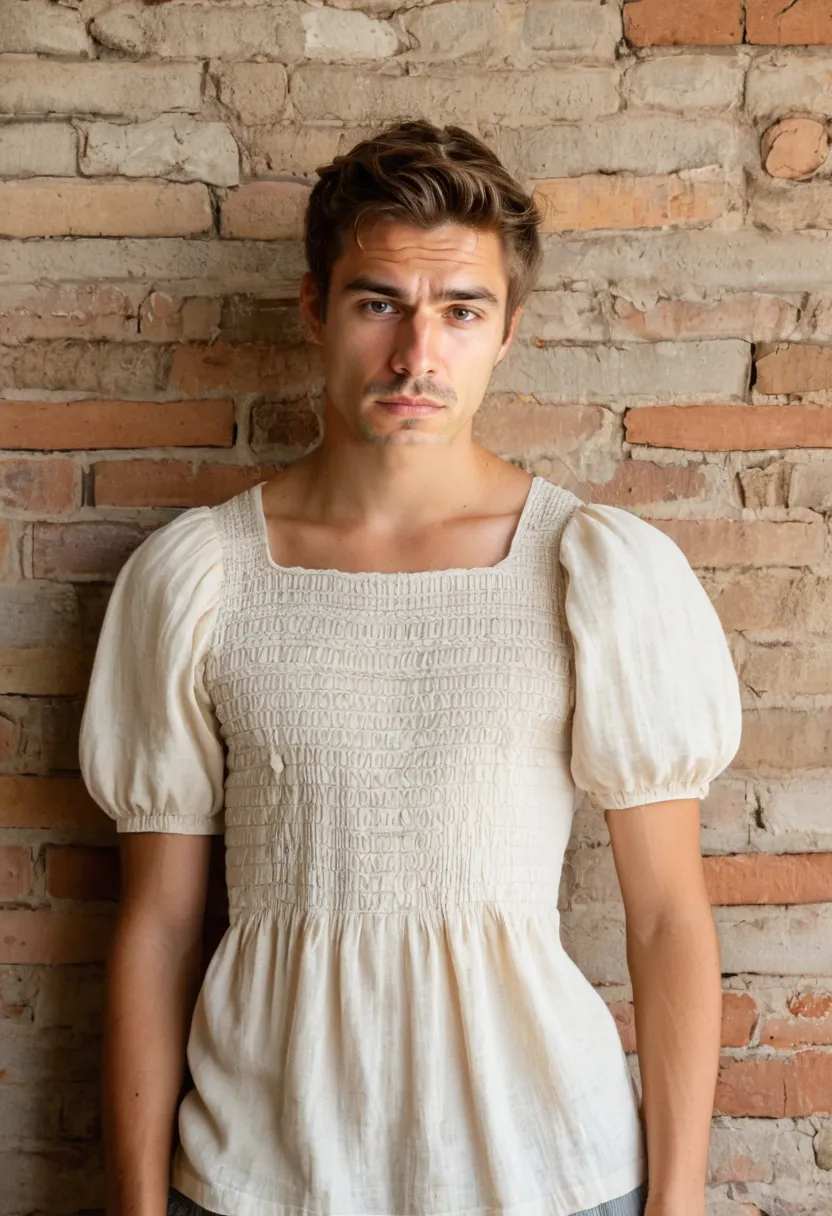
If you were to build a cottagecore wardrobe from scratch, certain pieces would form the non-negotiable foundation. Chief among them is the smocked blouse — a garment whose roots stretch back to English agricultural workers of the eighteenth and nineteenth centuries, who wore smocks as durable, protective overgarments. Today, the smock has been reclaimed as a symbol of soft, handcrafted beauty. The version shown here, in pale cream linen, demonstrates exactly why.
The hand-smocked bodice creates a textured front panel — tiny pleats gathered and held in place with decorative embroidery, forming a honeycomb-like surface that catches light and shadow differently as the wearer moves. Smocking is one of the oldest decorative sewing techniques in Europe, and it carries with it centuries of quiet, domestic labor. To wear it is to wear history.
The wide puff sleeves complete the silhouette, ballooning out from the smocked yoke before tapering to the wrist. On a boy, this garment strikes a delicate balance between Victorian romance and rural practicality. The natural linen fabric, with its honest texture, refuses to be fussy. It looks as though it would be entirely comfortable in a kitchen, a garden, or a library.
Beyond the smocked blouse, a cottagecore wardrobe for men and boys should include: a loose linen shirt with pearl buttons; a floral-print prairie dress for more dramatic moments; a pinafore apron in small-print cotton; a cream or oatmeal cardigan with wooden buttons; wide-legged linen trousers; and a few camisoles or underlayers in raw cotton. None of these pieces are gendered in any meaningful way — they are simply garments made of beautiful materials in beautiful shapes. The idea is to build slowly, to choose pieces that feel like they could have existed a hundred years ago and will still feel relevant a hundred years from now.
The Cottagecore Color Story: Earth Tones, Cream and Dusty Florals
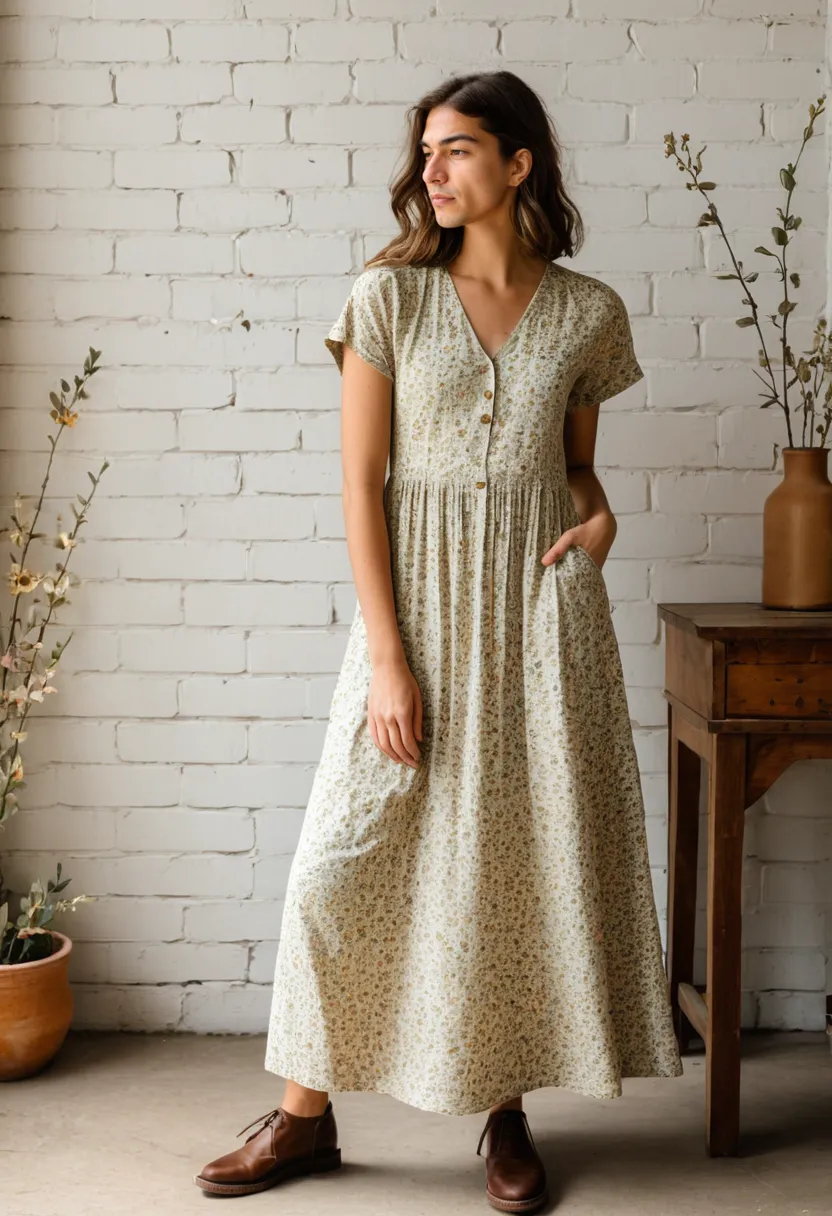
Color is where cottagecore truly distinguishes itself from other romantic aesthetics. Rather than leaning on bright pastels or saturated jewel tones, cottagecore favors a palette that looks as though it has been faded by sun and time — earth tones, creams, dusty pinks, muted sage greens, soft ochres, and the warm browns of old wood and weathered leather. These are colors you find in the natural world, in plaster walls, in dried herbs hanging from a beam.
The dress shown here is a beautiful example of this color philosophy in action. Set against a cream linen base, the floral print is rendered in soft ochre and sage green — colors that read as organic, almost as though the print were made from plant dyes rather than modern pigments. There’s nothing clamoring for attention. The relaxed fit of the dress allows the fabric to fall naturally, and the warm, organic quality of the linen catches light in a way that synthetic fabrics simply cannot replicate.
For men exploring cottagecore, the color palette is often the easiest entry point. You don’t have to start with a dress or a smock — you can begin simply by swapping out your cool greys and crisp whites for cream, oatmeal, mushroom, moss, and terracotta. These colors are forgiving, flattering to most skin tones, and they mix endlessly with one another. A cream linen shirt with dusty sage trousers. A soft ochre cardigan over a white camisole. Brown leather boots with a mushroom-colored apron.
The key principle is this: avoid anything that looks too new, too bright, or too synthetic. Cottagecore colors should feel like they have lived a little. If you’re choosing a floral print, look for those that appear faded or hand-drawn rather than sharp and digital. Small, irregular, ditsy prints almost always succeed where large, bold patterns can feel theatrical. The goal is a wardrobe that looks as though it belongs to someone who has been collecting beautiful things for years.
Layering in Cottagecore Style: Aprons, Cardigans and Underskirts
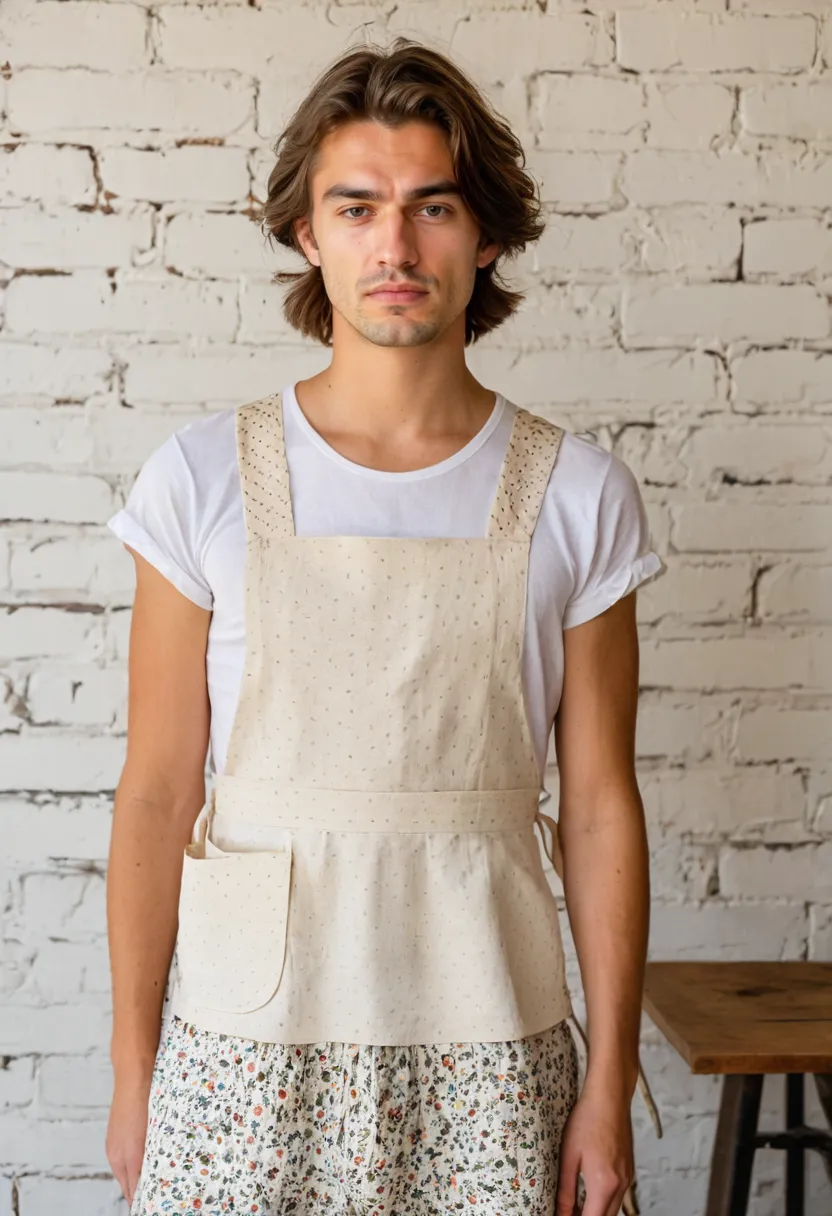
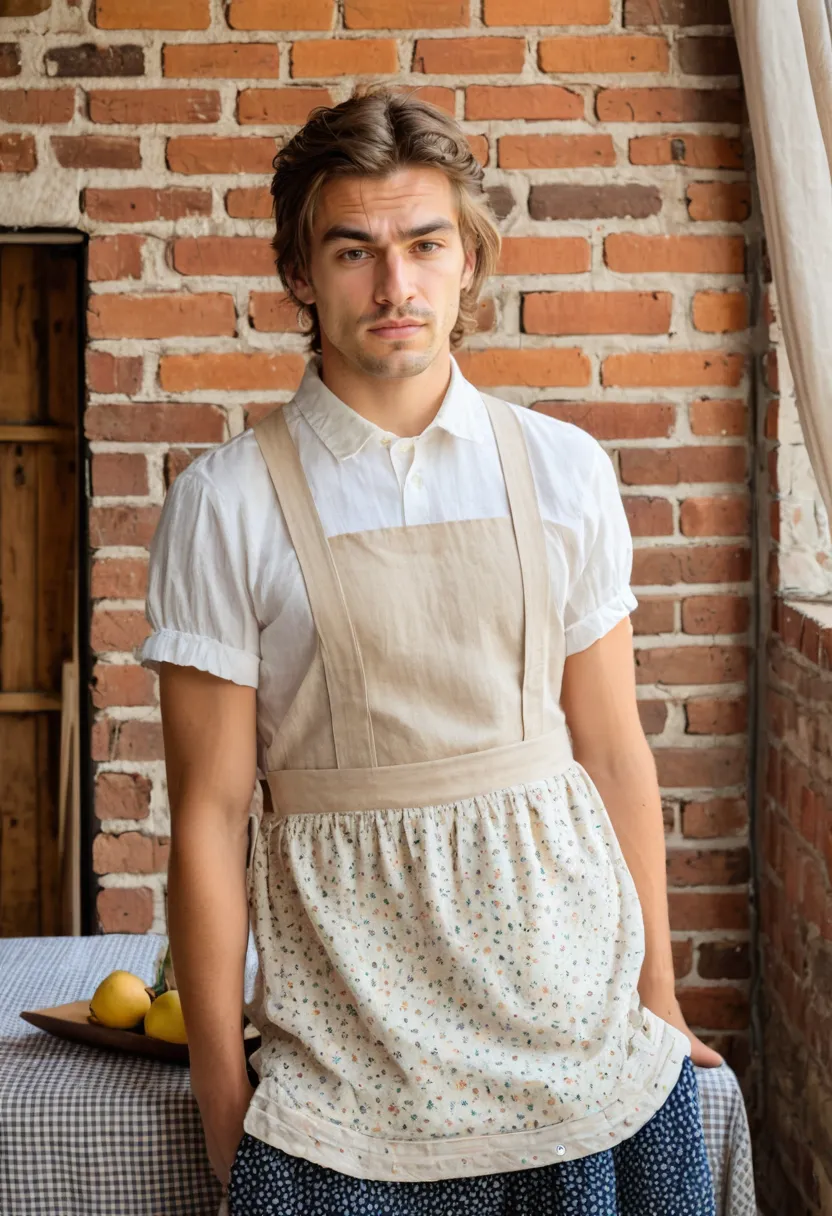
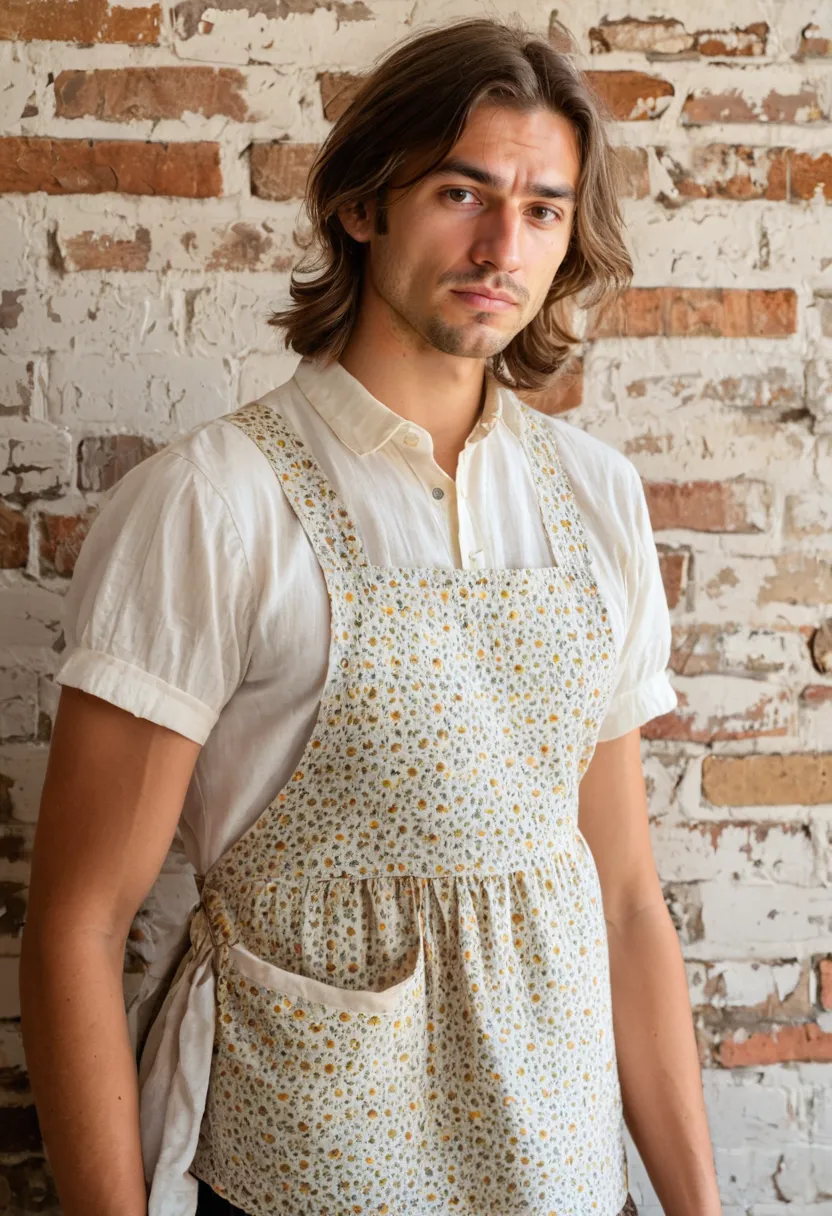
Layering is where cottagecore truly comes alive. The aesthetic rewards a certain thoughtful accumulation — a blouse beneath a pinafore, a pinafore over a petticoat, a cardigan over it all when the evening cools. Each layer adds texture, history, and visual richness to the outfit, creating that lived-in, storybook quality that defines the style.
The look featured here demonstrates the possibilities beautifully. A cream linen blouse provides the soft, neutral foundation. Over it, a floral cotton pinafore apron in a small ditsy print adds pattern, structure, and a suggestion of rural domesticity. The pinafore’s straps cross at the back, a detail that feels distinctly practical and old-fashioned, as though the garment were designed for actually doing something — gathering apples, kneading dough, tending a garden — rather than merely being looked at.
The pinafore apron is one of the most versatile pieces in a cottagecore wardrobe. It can be worn over a blouse, a dress, a long-sleeved tee, or even a knit sweater. In warmer months, pair it with a linen camisole underneath. In cooler weather, layer it over a chunky cream cardigan. The silhouette adapts to whatever sits beneath it, making the pinafore one of the most economical pieces you can invest in.
Other layering pieces worth exploring include: the oatmeal cardigan with wooden or horn buttons, which can be thrown over nearly any outfit for instant warmth and romance; the underskirt or petticoat, which can peek out from beneath a shorter dress to add a suggestion of Victorian volume; the linen scarf or kerchief, which can be tied around the neck or the hair; and the waistcoat, which when rendered in a soft cream linen or a small floral print becomes a distinctly cottagecore piece.
The trick to successful layering is texture variation. Combine smooth cotton with nubby linen, with finely knitted wool, with a slightly rougher woven fabric. This interplay of surfaces is what gives cottagecore outfits their depth. Avoid layering too many similar textures together, or the look will fall flat.
Shoes and Accessories That Feel at Home in the Cottagecore World
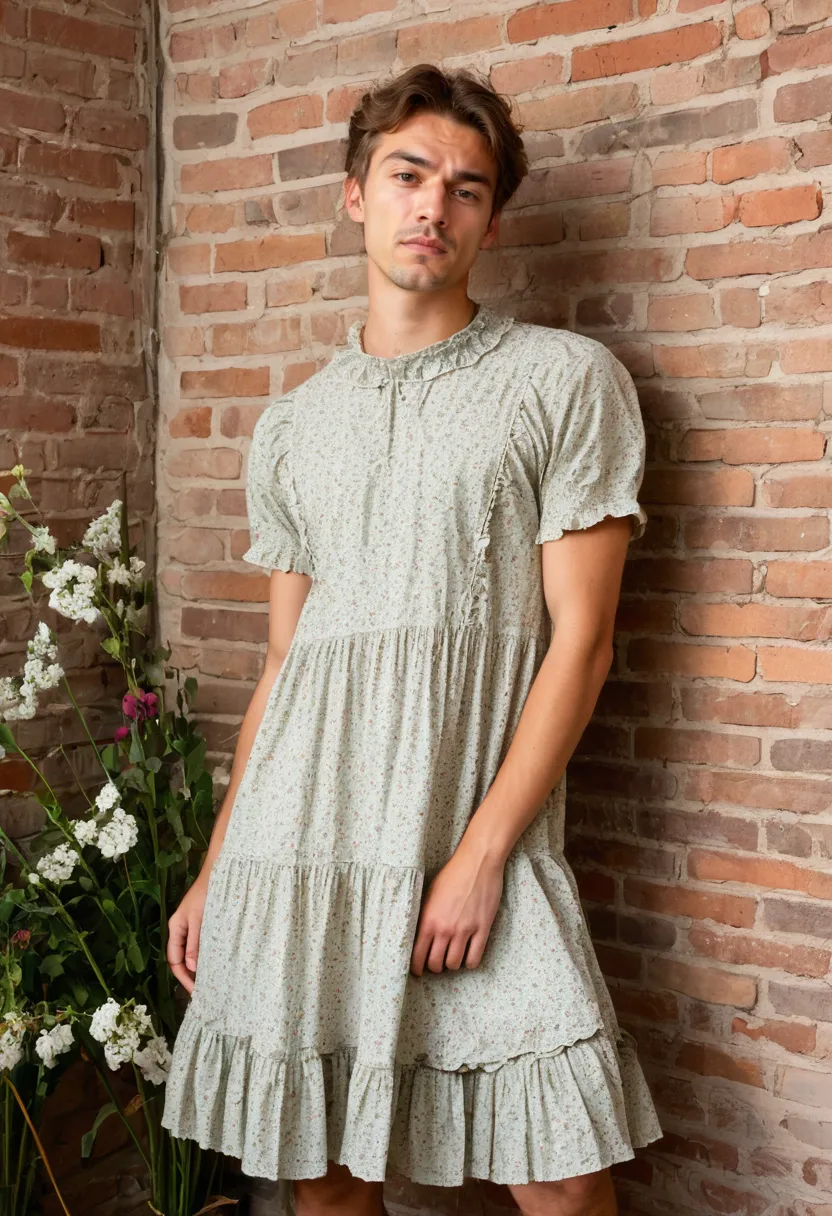
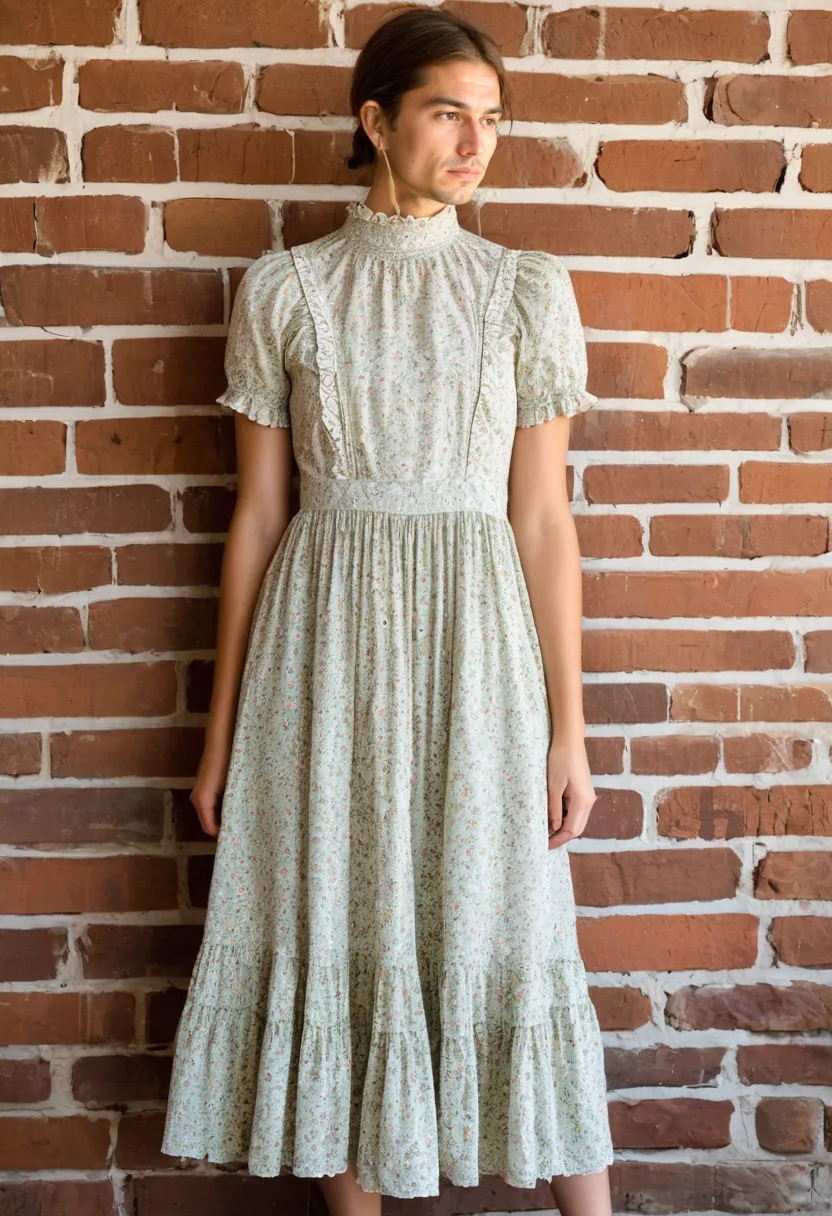
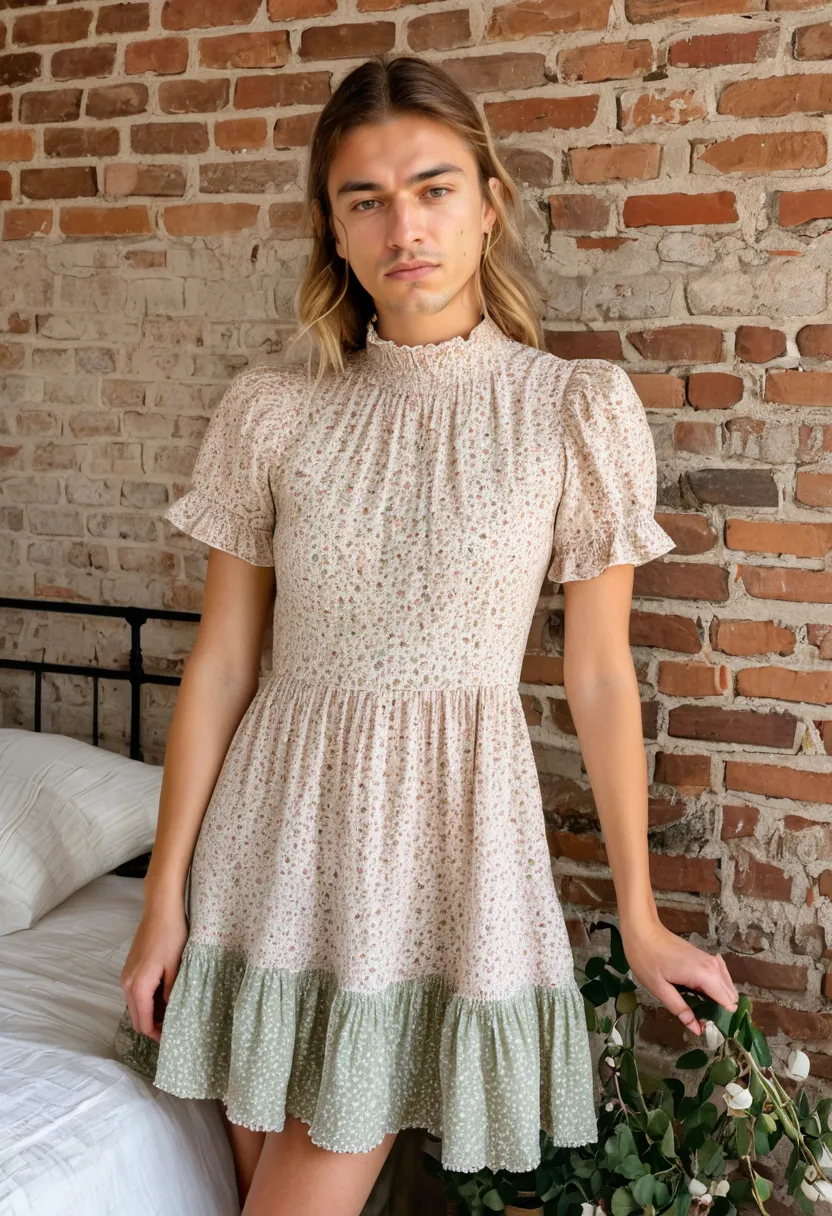
A full cottagecore look — like the floral prairie dress shown here, with its ruffled hem, high collar, and delicate lace at the neckline — demands accessories that don’t break the spell. This is a garment that speaks the language of the 1880s: the small floral print in dusty rose and sage, the softness of the cotton, the careful detail of the ruffle and the lace. Paired with the wrong shoes, the whole look would collapse into costume. With the right ones, it becomes something genuinely wearable and modern.
The golden rule for cottagecore footwear is natural materials and aged finishes. Leather boots in warm brown, laced high on the ankle, are perhaps the most iconic choice. They add a suggestion of practicality to any dress or skirt and ground the romance in something earthbound. Look for boots with wooden heels, hand-stitched detailing, or the slightly scuffed patina of genuine wear. A brand-new, glossy boot will fight the aesthetic. A pair that looks inherited from a grandparent will enhance it.
Beyond boots, other cottagecore-appropriate footwear includes: simple leather sandals for summer, ideally in tan or brown; canvas espadrilles with jute soles; Mary Jane flats in muted colors; and simple ballet slippers in cream or blush. Avoid anything shiny, sporty, or overtly modern. Sneakers, in general, are difficult to reconcile with the aesthetic, though a plain canvas plimsoll in a neutral color can occasionally work for a more casual daytime look.
Accessories should echo the same philosophy. A woven straw basket instead of a handbag. A simple silver locket on a long chain. A linen handkerchief folded into a pocket. A wide-brimmed straw hat for sunny days. Pressed flowers tucked behind an ear. Thin gold rings, ideally antique or with a slightly tarnished quality. Ribbons tied loosely around the wrist or woven through the hair. The accessories should feel found rather than bought — as though each piece has its own small history.
Avoid anything plastic, anything mirror-bright, anything that clearly belongs to the twenty-first century. Cottagecore accessories reach backward in time, borrowing from the nineteenth century and the early twentieth. They should feel like treasures rather than purchases.
How to Style a Cottagecore Look for Real Everyday Wear
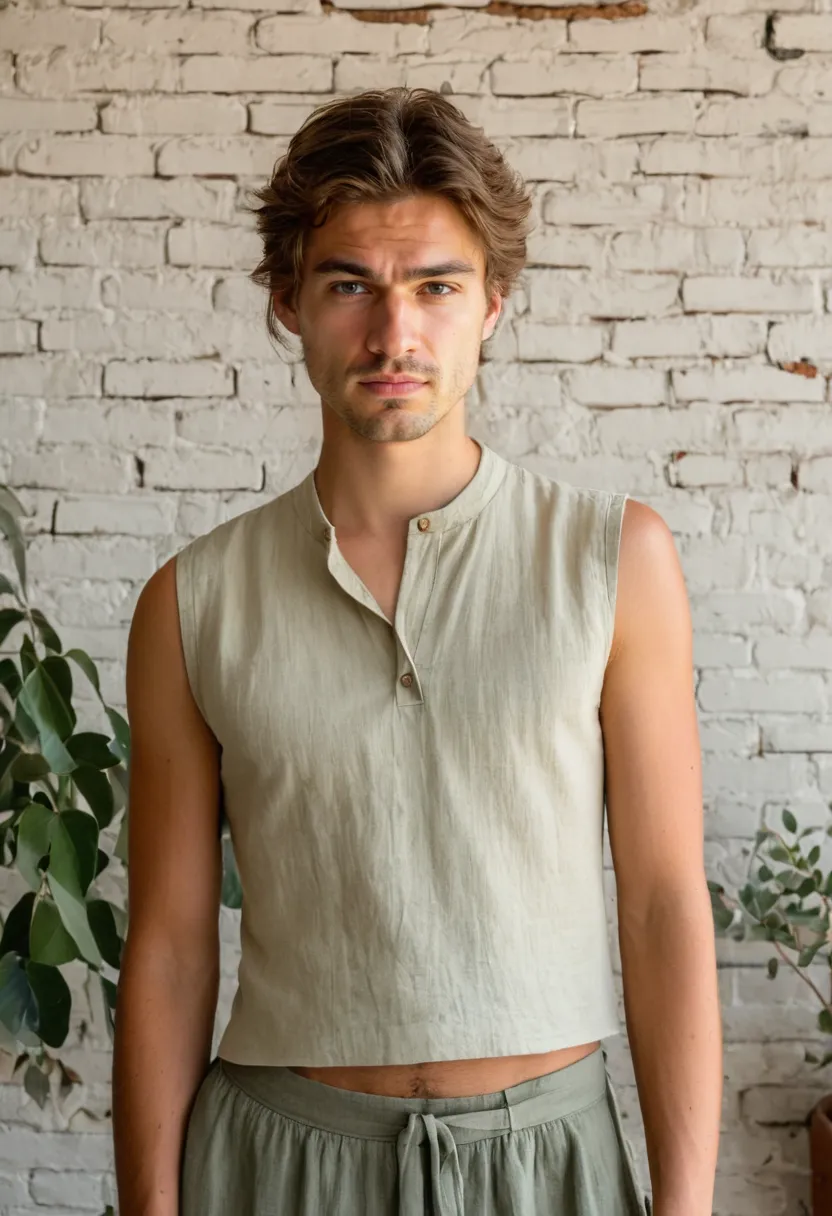
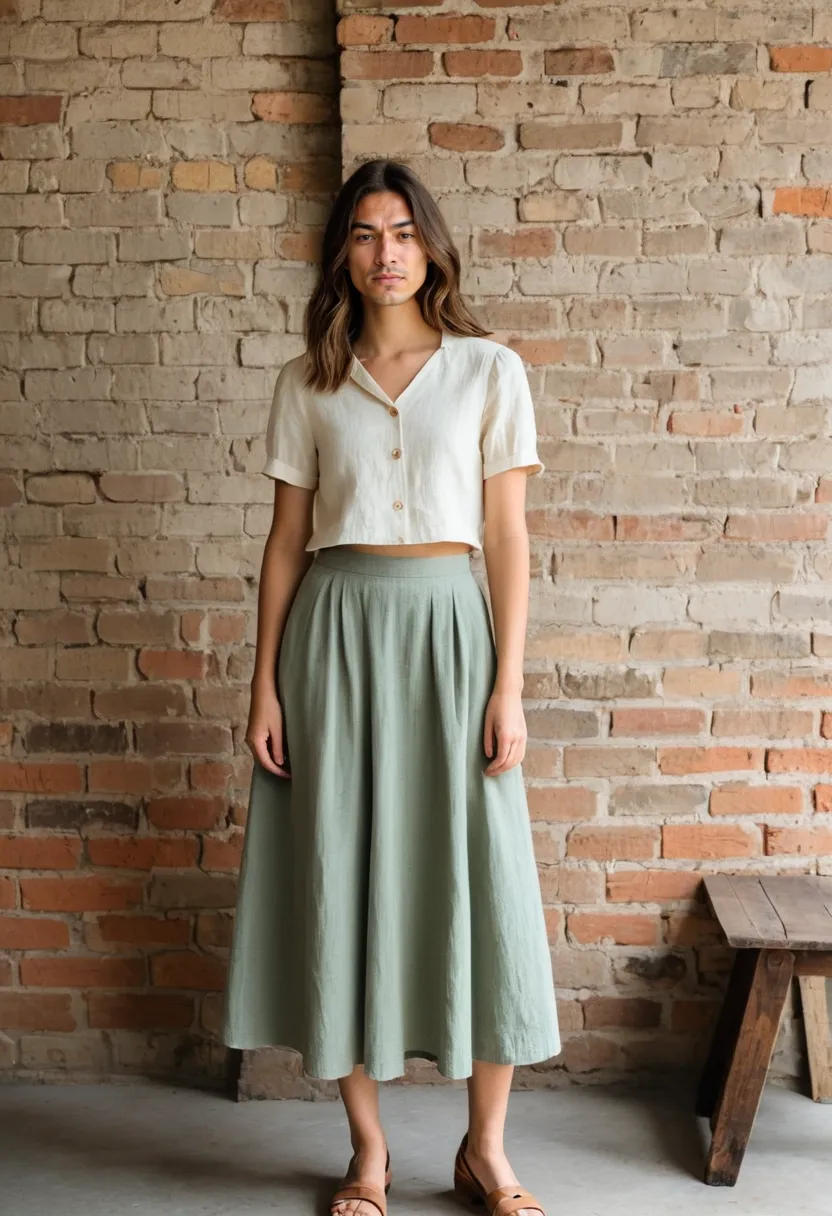
For all the romance of full prairie dresses and elaborate layered looks, cottagecore in its most wearable form is actually quite simple. The everyday version is captured perfectly in the outfit shown here: a simple cream linen blouse paired with an A-line midi skirt in dusty sage green. No ruffles, no lace, no elaborate smocking — just two beautifully chosen pieces in natural fabrics and muted colors. This is the foundation that makes cottagecore sustainable as a daily style rather than a costume for special occasions.
The trick to wearing cottagecore in real life is to commit to the fabrics and colors rather than the more theatrical elements. You don’t need a floor-length dress to dress cottagecore. A loose cream linen shirt, tucked into a pair of soft brown trousers, with leather boots — that’s a cottagecore outfit. An oatmeal knit sweater over a simple white camisole with a flowing midi skirt — that’s a cottagecore outfit too. The aesthetic lives in the materials, the palette, and the silhouette, not in the presence or absence of any single dramatic piece.
For men and boys just beginning to explore this style, start by auditing what you already own. Anything in cream, oatmeal, sage, ochre, dusty rose, or warm brown can probably be incorporated. Anything in natural linen, cotton, or wool fits the aesthetic. Build slowly from there. Add one piece at a time — perhaps beginning with a linen shirt, then a cardigan, then eventually a pinafore or a smocked blouse as your confidence grows.
Consider also the context of your life. Cottagecore doesn’t require you to live in the countryside. It doesn’t require you to bake bread or keep bees. You can wear a linen smock to an office if your workplace allows, or to a coffee shop, or on the subway. The aesthetic works because it brings softness into whatever environment you inhabit. A cottagecore outfit in an industrial loft or a city street, as our photographs show, has a particular kind of power — it creates its own pastoral world, no meadow required.
Be patient with your wardrobe and with yourself. Cottagecore is fundamentally anti-fast-fashion. It favors pieces that are made slowly, chosen slowly, and worn for years. Resist the urge to buy an entire cottagecore wardrobe in a single online order. Instead, collect pieces you genuinely love over months and seasons, pieces that will become part of your story.
Cottagecore outfits for men represent something more than a passing trend. They represent a willingness to reconsider what masculinity can look like, what comfort can feel like, and what beauty we want to carry with us through our days. Whether you choose to wear a full floral prairie dress or simply swap your usual shirt for one in natural linen, you are participating in a gentler vision of fashion — one that values texture over polish, patience over speed, and softness over severity. In a world that often feels too fast, too hard, and too loud, that choice feels not only fashionable but quietly radical. Step into the cottage, in whatever form it takes for you.
Author: Emma. Photos: Alex Neuron. The material was prepared with the assistance of AI and has undergone quality review.