Flowy Skirts for men: Movement, Femininity & Effortless Style
There is something utterly captivating about a skirt that moves. Not just shifts or sways, but truly moves—catching the wind, rippling with each step, lifting and falling like water. For men who have discovered the quiet joy of wearing flowy skirts, that movement becomes more than a detail. It becomes the entire point. A flowy skirt is not simply a garment; it is a choreography, a conversation between fabric and body, a soft rebellion against the stiffness of conventional menswear. In recent years, more men have embraced flowy skirts as a way to explore softness, femininity, and a kind of effortless elegance that tailored trousers could never quite offer. This lookbook celebrates that movement—the chiffon that drifts, the linen that breathes, the layers that separate and float—and considers how men wearing flowy skirts are rewriting the visual language of modern fashion. Whether you are curious about trying your first skirt or looking to refine your existing wardrobe, what follows is an inspiration guide to soft, flowing, beautifully feminine style.
Movement as Aesthetic: Why Flowy Skirts Photograph So Beautifully
Photographers have long understood that flowy skirts are dream material. Structured clothing holds its shape regardless of the wearer—it is static, predictable, defined. But a flowy skirt is alive. It responds to every gust of wind, every step forward, every turn of the body. This responsiveness is what makes it photograph so beautifully. The fabric catches light differently as it moves, creating highlights and shadows that change from moment to moment. Sheer layers overlap and separate, producing a visual depth that static garments cannot match.
For men wearing flowy skirts, this photographic quality adds an extra layer of meaning. In a culture where masculine fashion is often associated with rigidity—sharp shoulders, crisp lines, hard edges—the soft billowing of a long skirt becomes quietly radical. It tells a different story about the body beneath it, one of fluidity and grace rather than containment. A man standing on a beach in a floor-grazing chiffon skirt is not simply wearing clothing; he is participating in a visual poem.
The best flowy-skirt photography tends to embrace natural elements. Wind, water, open skies, and overcast light all flatter sheer and lightweight fabrics. Cloudy weather in particular creates a soft, diffused illumination that highlights the translucent quality of chiffon without harsh shadows. Coastal settings add a sense of vastness and romance, allowing the skirt to be the focal point without competing visual noise. Understanding these conditions helps anyone—model or everyday wearer—capture the full magic of a flowing silhouette.
men Wearing Flowy Skirts: A Lookbook of Soft Feminine Style
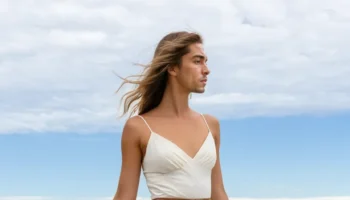
The archetypal flowy skirt look is deceptively simple. Picture a man in a long flowing skirt made of pale ivory chiffon, multiple layers of sheer fabric creating a depth that shifts as he moves. The hem grazes the floor, the waistband sits smooth and fitted, and with every step the fabric billows and floats. The layers separate softly as the skirt sways, offering glimpses of translucence and then closing again into a single column of cloud-like white. Set against a cloudy sky and the sea, the effect is almost ethereal—less an outfit than an atmosphere.
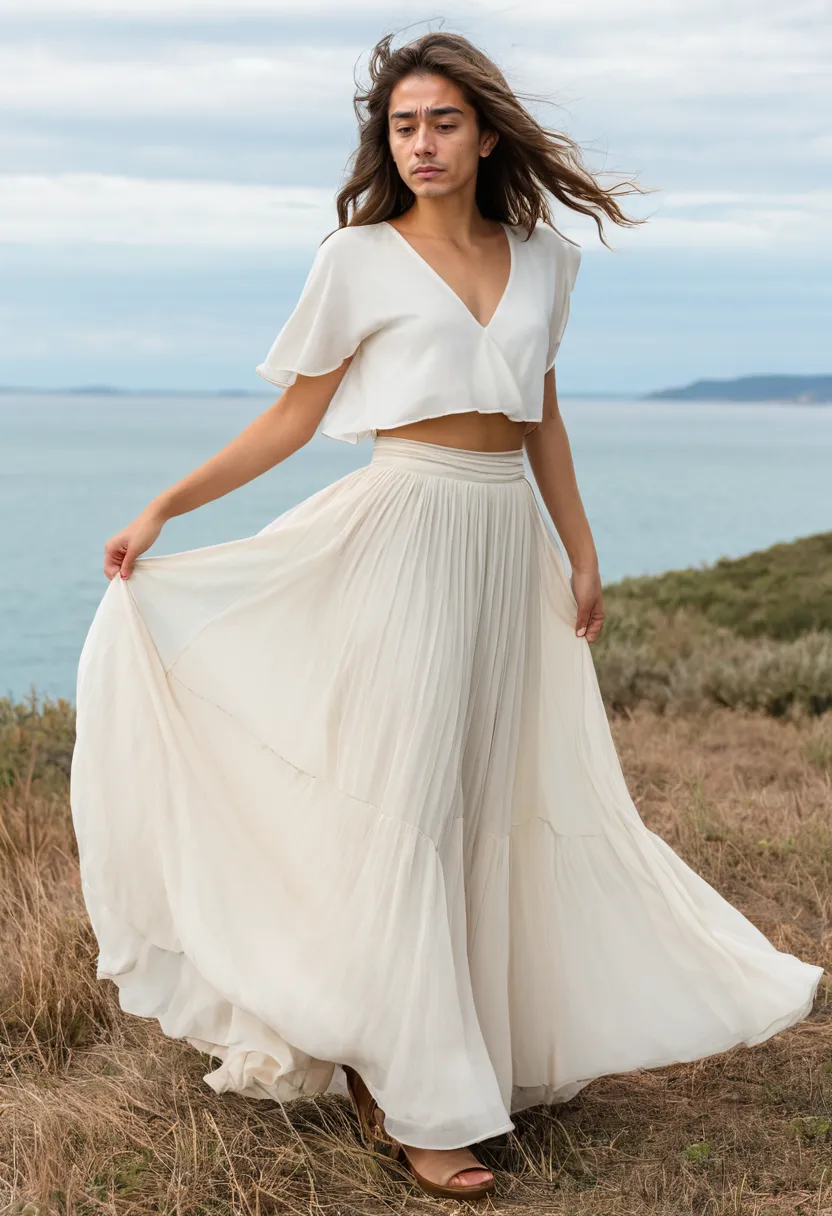
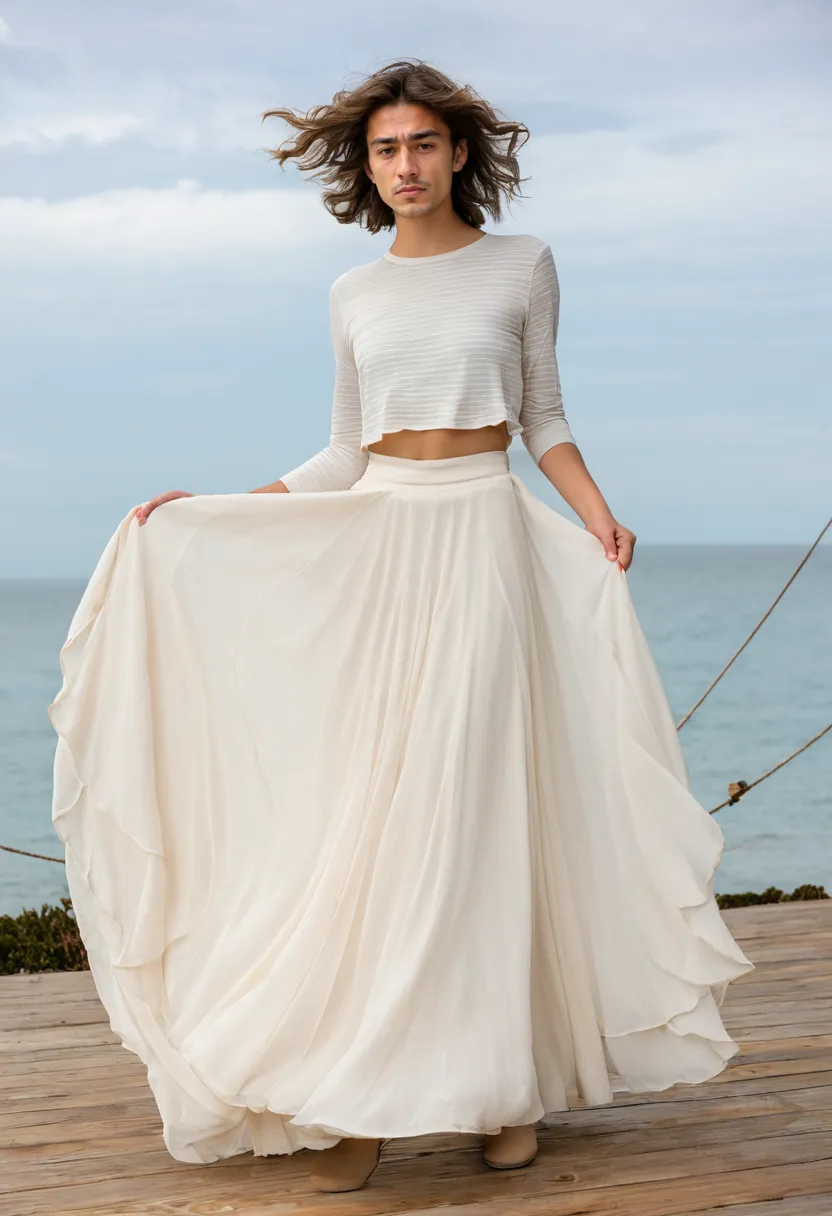
What makes this look so compelling for men is precisely its softness. The ivory is neutral but not cold; it is warm, almost candlelit. The layers allow the skirt to move independently, each tier catching the wind at a slightly different moment. The fitted waistband provides structure, anchoring the silhouette so that the volume of the skirt feels intentional rather than overwhelming.
Soft flowy skirt men fashion is increasingly finding its place not only on runways and in editorial shoots but also in everyday wardrobes. Men who once hesitated to try a skirt often describe the first wearing as surprisingly natural—liberating, even. The fabric moves with the body rather than against it, allowing for a sense of physical freedom that jeans and trousers rarely provide. For photography and for living, this softness is the signature of the modern flowy-skirt aesthetic.
The Best Fabrics for Maximum Flow: Chiffon, Linen & Beyond
Fabric is everything when it comes to flow. A skirt cut in stiff cotton or heavy denim will hang, but it will not float. For true movement, the fabric must be light enough to respond to air itself. Chiffon is the gold standard: ultra-lightweight, slightly sheer, and capable of moving at the slightest breath. A flowy maxi skirt in soft chiffon, built with a full wide silhouette and multiple layers, can swirl and lift dramatically with even the smallest motion. An elasticated waistband further enhances the freedom of movement, letting the fabric gather and release naturally around the body.
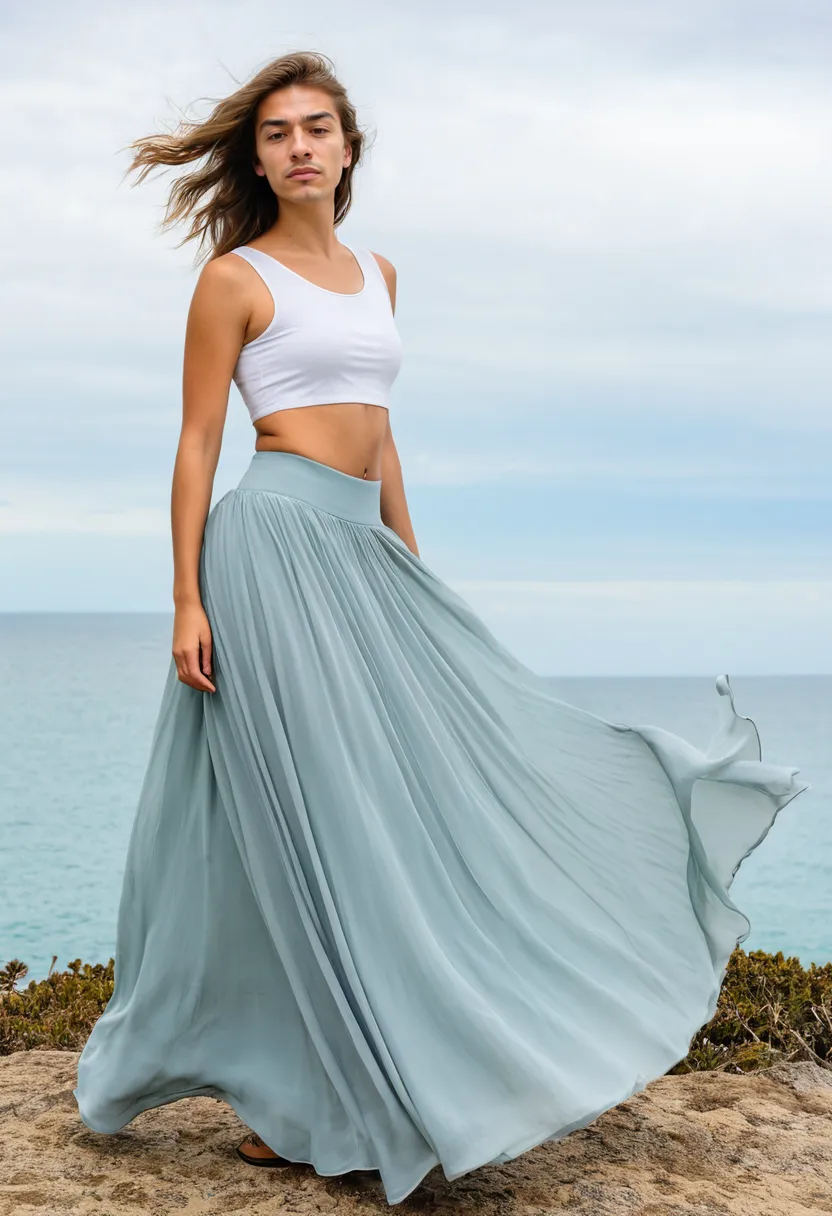
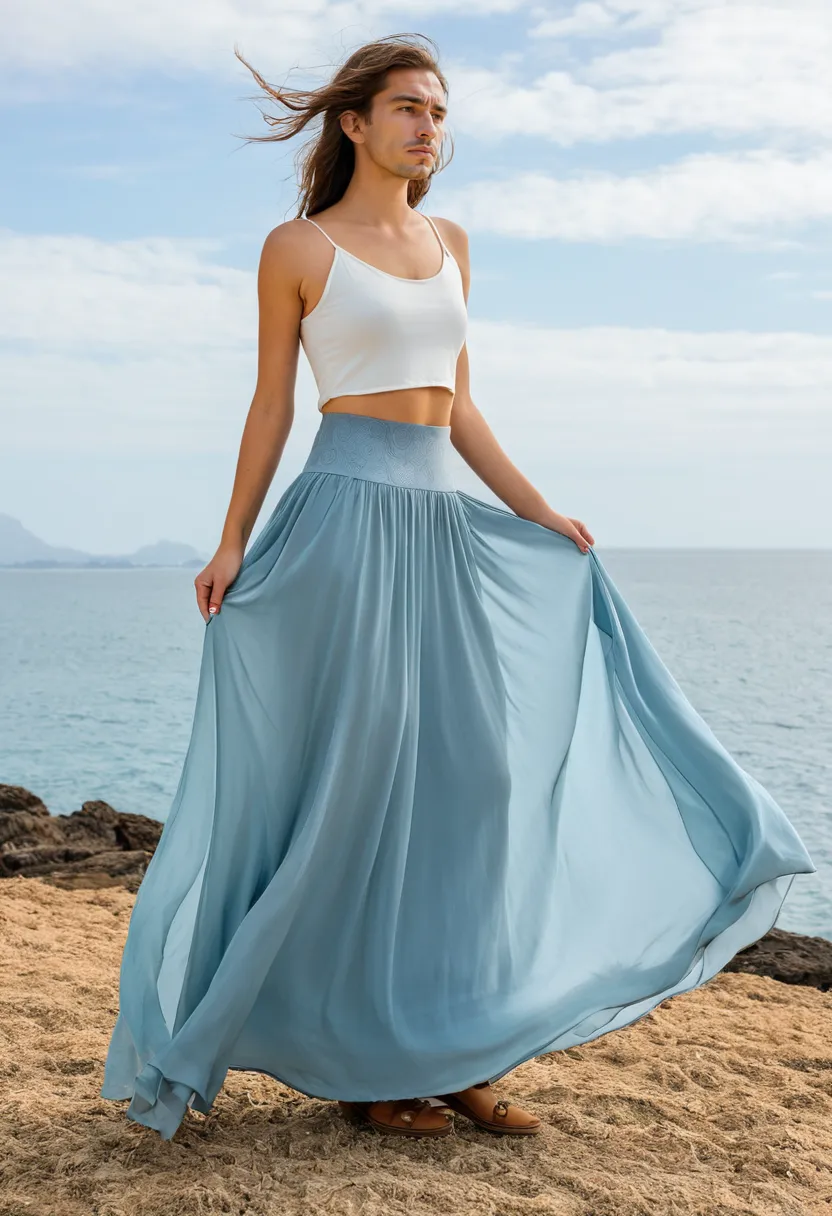
Beyond chiffon, there are many fabrics worth exploring. Linen offers a different kind of flow—less ethereal, more grounded. It has a natural drape that softens beautifully with wear, and its slight texture reads as relaxed and sun-drenched. Linen skirts are ideal for summer and for men who want flow without overt sheerness. Silk crepe, viscose, rayon, and tencel blends all offer varying degrees of weight and fluidity. Silk georgette is another favorite, bridging the gap between chiffon’s lightness and a slightly more substantial hand.
The key is to consider what kind of movement you want. Ultra-light chiffon will lift in the wind and create dramatic shapes. Linen will drape and sway more gently, with a softer, more sculptural flow. Heavier silks will fall in elegant columns rather than float. Trying on fabrics in person—feeling them move around your legs—is the best way to understand which ones will give you the aesthetic you want. For maximum photographic impact, nothing quite beats a sheer chiffon in motion, but for daily wear, a linen maxi can offer flow with practicality.
Skirt Length and How It Changes the Whole Mood of an Outfit
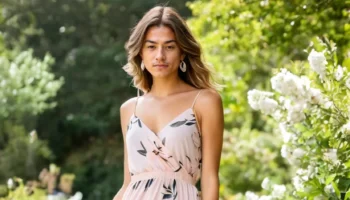
Length is one of the most underappreciated variables in skirt styling. A floor-length maxi reads as romantic, ceremonial, almost historical. A midi skirt, ending below the knee, carries a different energy entirely—more modern, more everyday, often more playful. Consider a man wearing a midi flowy skirt in soft dusty rose, its hem falling just below the knee in an A-line silhouette with generous fabric volume. The lightweight fabric has a slight crinkle texture that catches the light, and the skirt sways and ripples with each step. The effect is elegant without being formal, feminine without being costume-like.
Midi skirts are often the most versatile starting point for men new to flowy styles. They reveal the lower leg and the shoes, grounding the outfit in visual familiarity, while still offering plenty of movement and volume through the body of the skirt. The dusty rose color is a particularly welcoming shade—soft and warm without being saccharine, and surprisingly complementary to a wide range of skin tones.
Maxi skirts, by contrast, create a continuous line from waist to floor. They are more dramatic, more enveloping, and can feel more protective. The full length allows for extraordinary movement when the fabric is light enough. Mini skirts introduce yet another register—sharper, more graphic, more modern—but are less often associated with the flowy aesthetic since shorter hems inherently have less fabric to move.
Choosing a length is ultimately about mood. Ask yourself what you want to feel wearing the skirt. Grand and cinematic? Go long. Breezy and easy? Midi. The skirt will meet you where you are.
What to Wear on Top: Balancing a Flowing Skirt With the Right Blouse
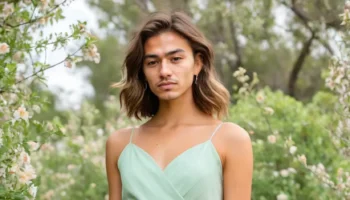
Once you have chosen your skirt, the question of the top becomes crucial. Because a flowy skirt carries so much volume, most successful outfits introduce some kind of contrast above the waist. A classic approach is the fitted crop top. Picture a man in a wide flowing skirt paired with a snug, cropped top—the skirt in pale sage green lightweight fabric with generous volume, the waistband sitting at the natural waist, and the fitted top tucked in or ending just at the waistband. The contrast between the close-fitting top and the billowing skirt creates a beautifully balanced silhouette.
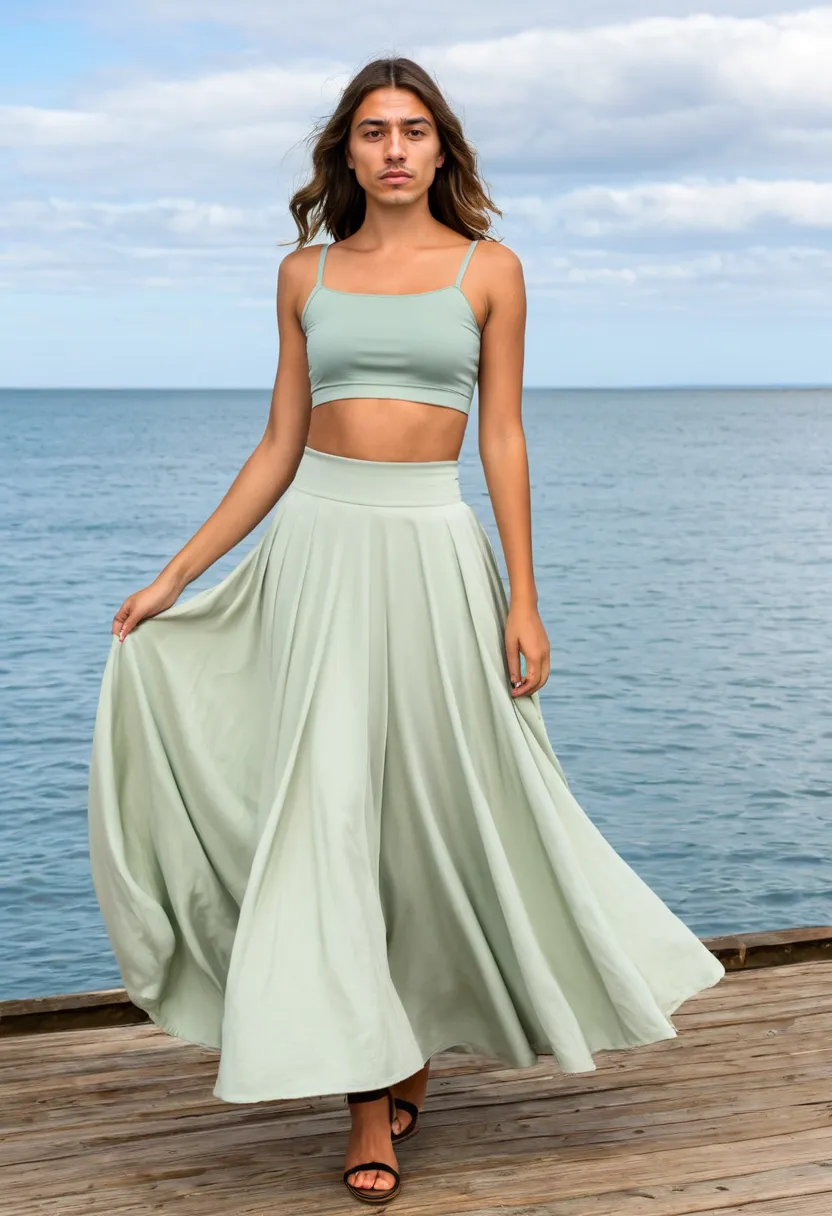
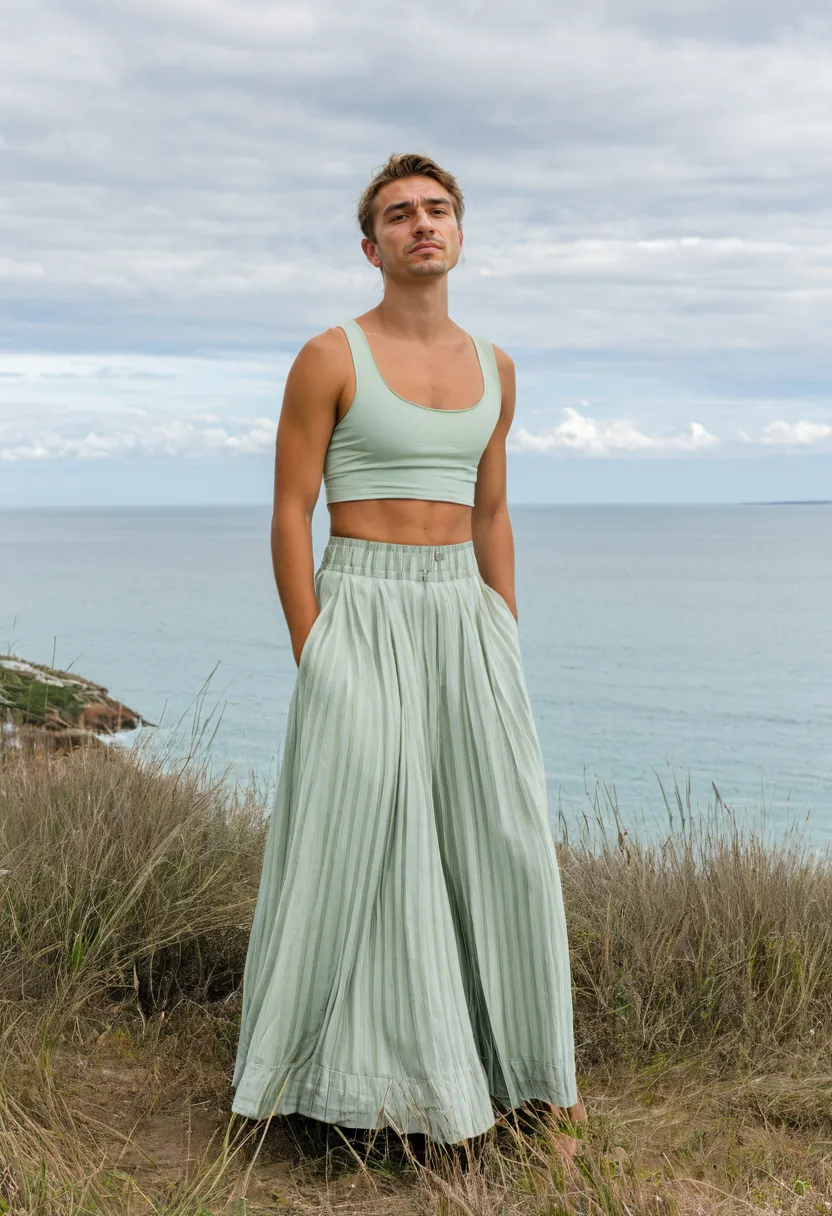
This proportional logic—fitted on top, full on bottom—has been used in womenswear for generations, and it works equally well for men. It emphasizes the waist, lengthens the torso, and lets the skirt take center stage without fighting for attention. A fitted knit, a tucked-in blouse, a sleek camisole, or a simple ribbed tank all serve this purpose.
Alternatively, you can lean into softness on both halves. A loose linen shirt, half-tucked, paired with a maxi skirt creates a relaxed, almost bohemian silhouette. Oversized button-downs can be knotted at the waist to add shape. Sheer blouses in complementary tones can echo the transparency of chiffon skirts, creating a head-to-toe ethereal look.
Color coordination matters too. Pale sage, ivory, blush, and dusty rose all live in the same soft palette and can be mixed confidently. For bolder looks, introduce a contrasting top in a deeper tone—terracotta, navy, or olive—while keeping the skirt in a lighter shade. The skirt should usually remain the visual hero, with the top playing a supporting role.
Flowy Skirts in Motion: Styling Tips for Walking and Photography
Wearing a flowy skirt well is partly about the clothes and partly about how you move in them. The most striking images of men dressed in flowy skirts almost always capture motion. Picture a man mid-twirl, layers of lightweight chiffon in soft blush fanning out dramatically from the waist, the fabric in full flight creating a wide circular silhouette, sheer layers separating and floating at different heights. That image does not happen by accident—it happens because the wearer has leaned into the physicality of the skirt.
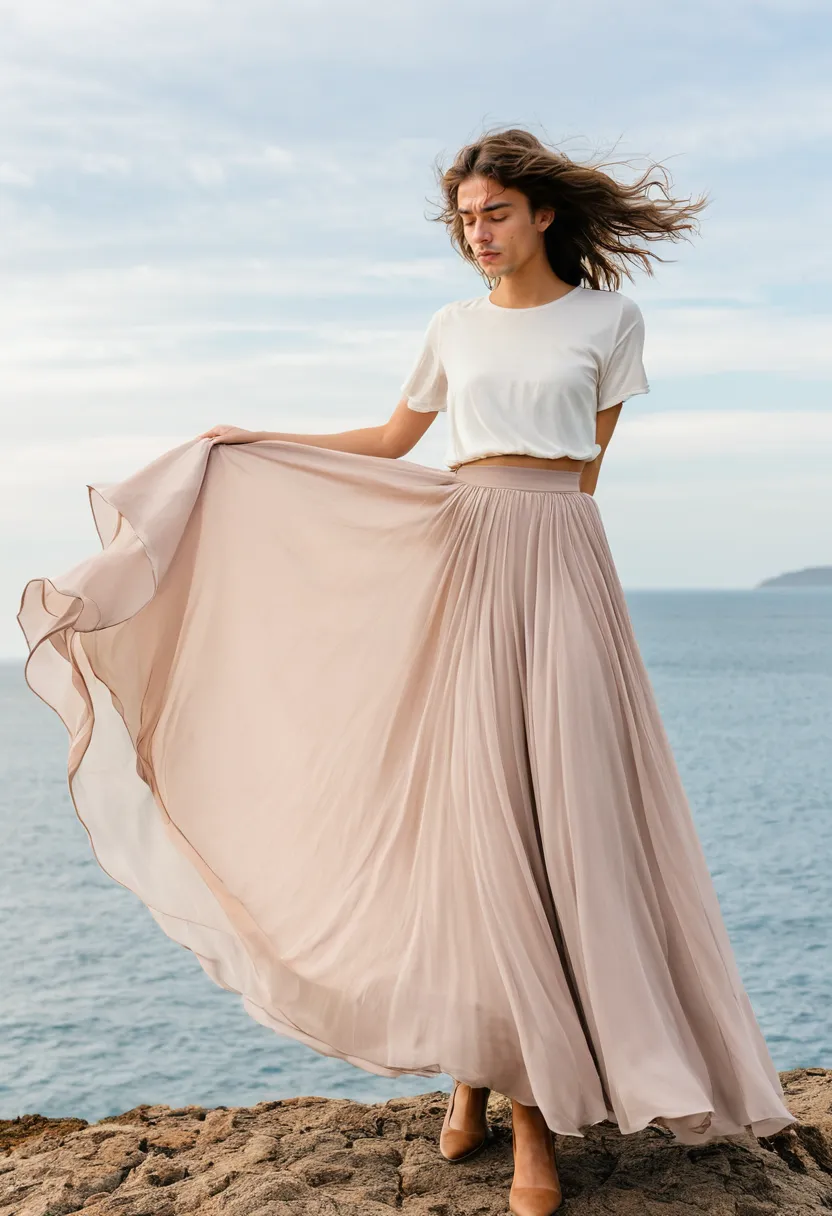
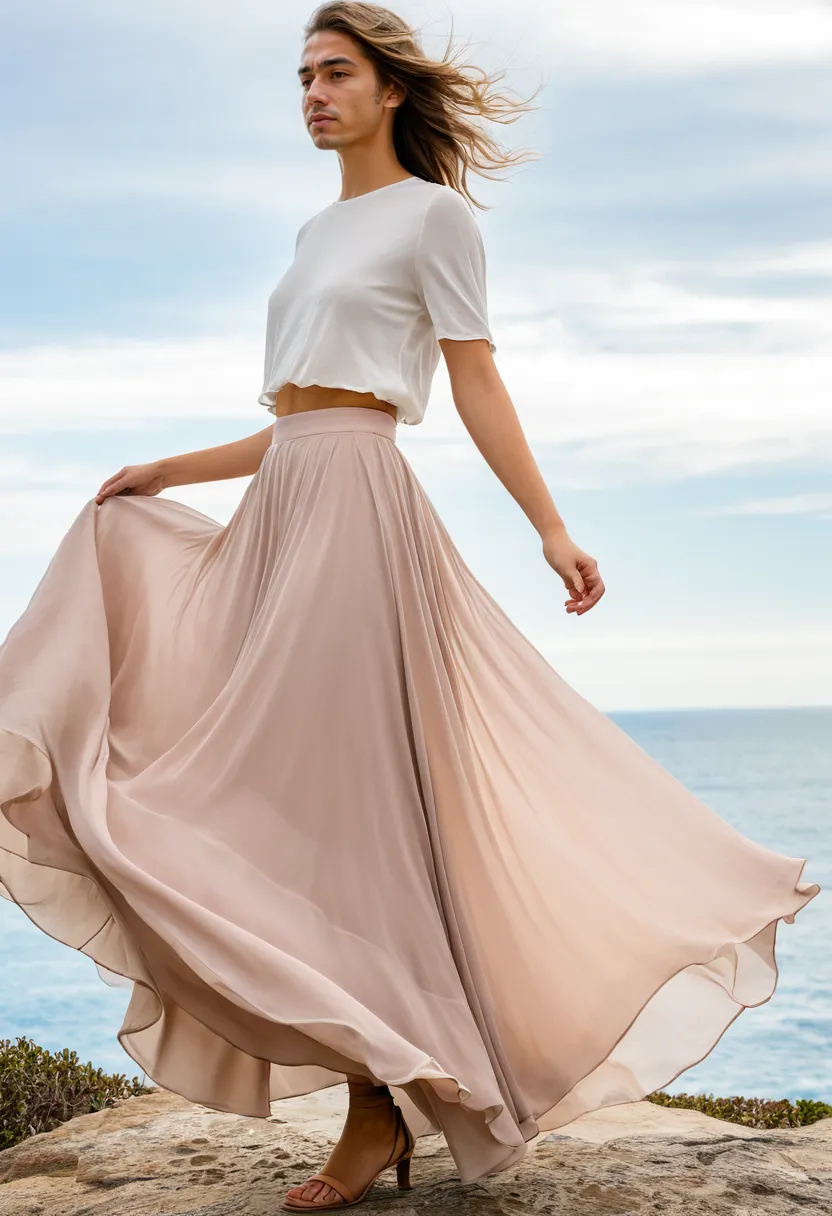
For walking, take slightly longer strides than usual. This lets the fabric catch against your legs and release with each step, creating natural rippling. Avoid rushing; a flowy skirt rewards patience. Let the fabric lead slightly, then follow through. On windy days—particularly near water—you may not need to do much at all. The wind will animate the skirt for you.
For photography, movement is everything. Walking shots, twirling shots, and candid moments where the wind is doing the work tend to outperform static poses. Photographers should use a shutter speed fast enough to freeze the fabric mid-motion, usually 1/500 or faster, while keeping the depth of field shallow to emphasize the skirt against a softer background. Diffuse light—overcast skies, golden hour, or open shade—tends to flatter sheer fabrics, avoiding the harsh contrasts that direct sunlight can create through chiffon.
Shoes matter too. For maximum flow, choose footwear that does not interrupt the line of the skirt. Bare feet on a beach, simple sandals, or minimal flats all let the fabric take center stage. Avoid chunky boots or visually heavy footwear, which can anchor the look in ways that compete with the skirt’s lightness.
Finally, allow yourself to enjoy the garment. A flowy skirt rewards confidence. Wear it like you mean it—like you know exactly how beautiful it looks as it moves—and the photographs, and the experience, will reflect that ease.
Flowy skirts for men are not merely a trend; they are an invitation. An invitation to soften the edges of conventional dress, to explore femininity and grace without apology, and to discover how different the world feels when your clothing moves with you instead of against you. From floor-length ivory chiffons to midi dusty rose A-lines to sage green silhouettes paired with fitted crops, the language of flowy skirts is vast, varied, and waiting to be spoken. Whether you are drawn to the dramatic twirl of sheer layers or the quiet sway of linen in summer light, there is a skirt that will make you feel more yourself, not less. Step into one, let it move, and see what happens.
Author: Emma. Photos: Alex Neuron. The material was prepared with the assistance of AI and has undergone quality review.