Feminine Outfits for Men at School: Stylish, Soft & School-Appropriate
Walking into a school hallway wearing something that feels truly you — even when “truly you” leans soft, gentle, or unmistakably feminine — can be one of the most quietly radical acts of self-expression a young man can make. For boys and young men who feel drawn to skirts, blouses, pastel cardigans, or delicate accessories, school presents a unique challenge: dress codes, peer dynamics, and the everyday pressure to blend in all collide with the desire to dress honestly. The good news? Feminine outfits for men at school don’t have to be loud, rebellious, or impractical. With the right fabrics, silhouettes, and styling choices, soft and feminine school looks can be polished, tasteful, and completely wearable for a full day of classes. This guide walks through every piece of the puzzle — from building your first outfit to handling questions with grace — so that your style feels like an extension of your confidence rather than a costume.
The Reality of Wearing Feminine Outfits in a School Environment
Before diving into specific pieces, it helps to be honest about what school actually looks like for a young man exploring feminine style. Schools are structured environments with dress codes, social hierarchies, and daily routines that can make any deviation from the norm feel magnified. That doesn’t mean femininity has no place there — it just means the approach benefits from thoughtfulness.
First, understand your dress code. Many public schools have guidelines that are technically gender-neutral, meaning a skirt of appropriate length or a blouse with proper coverage is often allowed regardless of who wears it. Private and uniformed schools may be stricter, but even within uniforms, there’s often room for subtle feminine expression through accessories, hairstyles, or tailoring choices.
Second, read your social environment. Some schools have active LGBTQ+ alliances, open-minded faculty, and a culture that celebrates self-expression. Others may be more conservative. Knowing the temperature of your environment doesn’t mean hiding — it means choosing your pace. Starting with one soft element, like a pastel cardigan or a delicate pair of earrings, and building from there, is often more sustainable than a complete wardrobe overhaul overnight.
Third, recognize that comfort — both physical and emotional — matters. A skirt you constantly tug at or a blouse that feels too thin will distract you from learning and from carrying yourself with ease. Choose pieces that let you sit, stand, walk between classes, and carry a backpack without constant adjustment.
Finally, remember that the legal landscape in many regions now explicitly protects students’ rights to gender expression in clothing. Knowing your rights — and your school’s policies — gives you a foundation to stand on if conversations ever arise with administration.
Step-by-Step: Building a School-Appropriate Feminine Outfit for Men
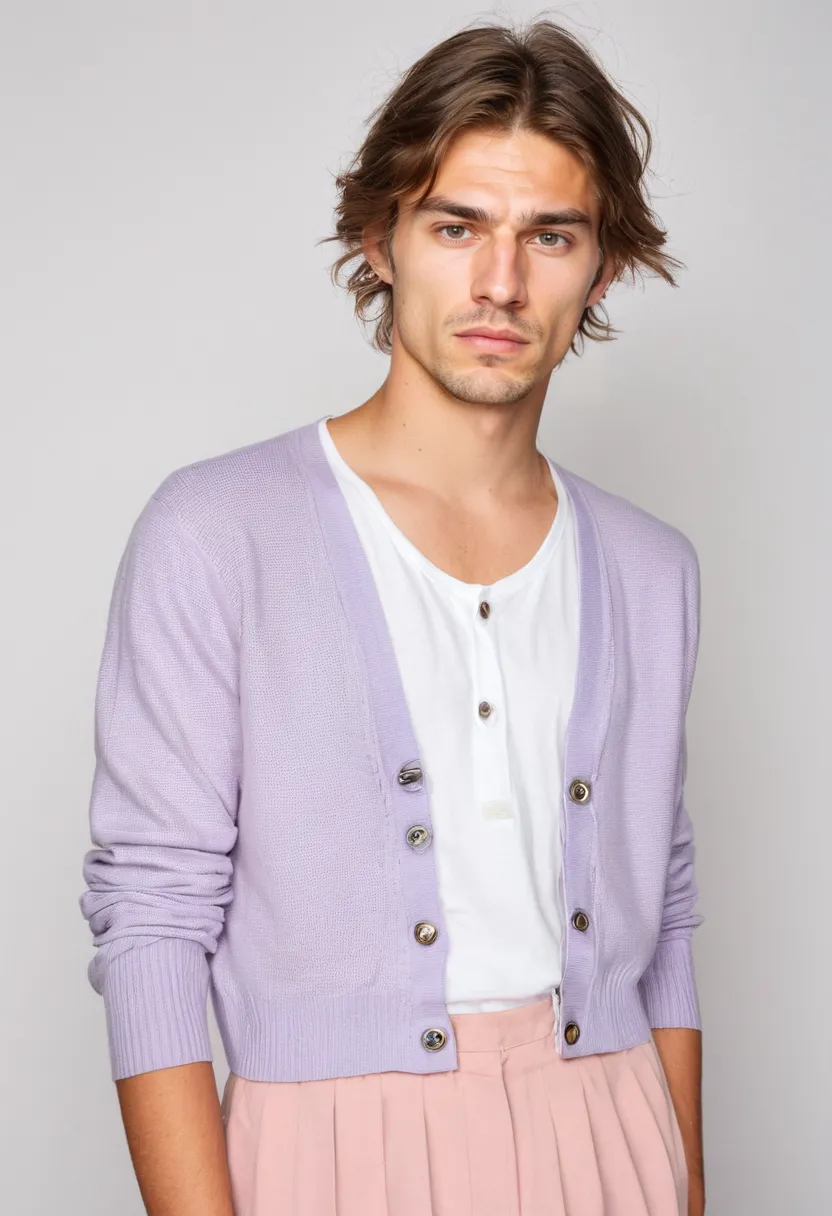
The easiest way to build a first feminine school outfit is to layer soft, covered pieces that feel familiar enough to move through a school day in. A beautiful starting formula is a fine knit pastel cardigan worn over a crisp white cotton blouse — something close to the look pictured above, where a pale lilac cardigan sits gently over a neat button-up. The result is covered, modest, and softly feminine without reading as costume.
Step 1: Start with the base. A white cotton blouse is the feminine wardrobe equivalent of a perfect white t-shirt. Look for small collars, subtle puff shoulders, or a gentle tie at the neck. Cotton is breathable, washes easily, and holds up under a backpack.
Step 2: Add a soft top layer. A fine knit cardigan in a pastel like pale lilac, butter yellow, soft mint, or powder pink immediately signals femininity through color and texture. Because the fabric is fine knit rather than chunky, it layers under a coat or jacket in colder months.
Step 3: Choose your bottom. If skirts feel like a big leap, begin with tailored trousers in cream, beige, or a pastel shade. If you’re ready for a skirt, a midi length in a structured fabric offers coverage and ease. Pleated styles move nicely when you walk without revealing more than you’d like.
Step 4: Footwear and basics. Simple white sneakers, loafers, or ballet flats all work. Skip anything with a heel for daily school wear — you’ll be walking more than you think.
Step 5: Finish with hair and small details. A neat hairstyle, a thin headband, or a small pair of stud earrings ties the look together without overwhelming it.
Top Soft and Feminine Pieces That Work Within School Rules
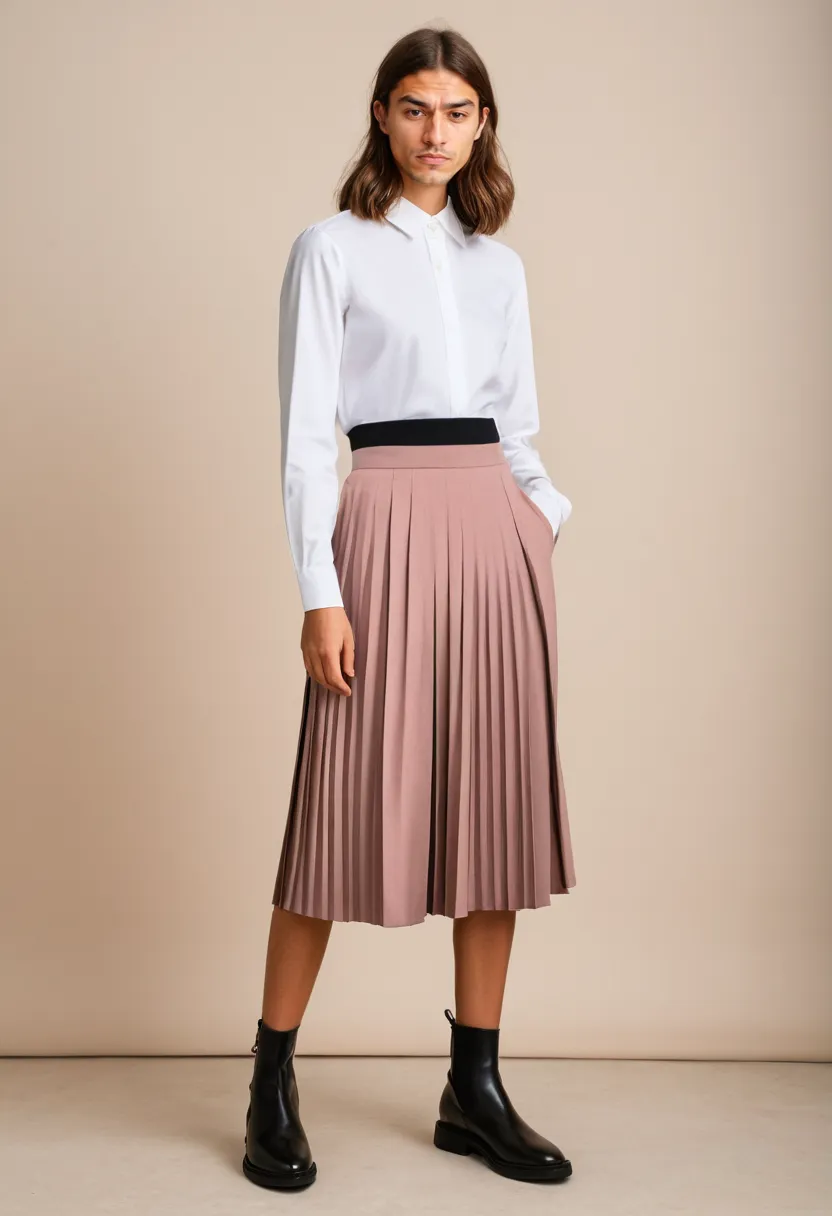
Certain garments work especially well for feminine school style because they balance coverage, comfort, and quiet beauty. These are the anchor pieces to build a rotation around.
The pleated midi skirt. Pictured above in a gorgeous dusty rose, a pleated midi is perhaps the single most versatile feminine school piece. It hits below the knee (satisfying most dress codes), moves gracefully, and pairs with everything from a fitted white cotton blouse to a cozy sweater. Dusty rose, navy, sage green, charcoal, and pleated tartans are all timeless options.
The fitted white blouse. A crisp cotton blouse with a clean silhouette — slightly fitted through the torso — reads as polished and school-ready. It tucks easily into skirts or trousers and layers under cardigans or blazers.
The A-line skirt. Slightly structured and flattering on most body types, A-line skirts in solid pastels or neutral tones sit neatly at the waist and fall cleanly to the knee or just below.
The soft cardigan. Fine gauge knits in pastel shades are a feminine school staple. They’re warm enough for cool classrooms, light enough to stash in a bag, and endlessly mixable.
The Peter Pan or small collar blouse. A rounded collar immediately softens a look. It works under pinafores, jumpers, or on its own with tailored bottoms.
The knit vest or sweater vest. A preppy feminine favorite — layered over a blouse, it creates a put-together silhouette that’s both school-appropriate and stylish.
Tights and knee socks. Neutral tights in black or opaque nude, or classic white knee socks, complete a skirt look and add a practical layer of coverage and warmth.
Building a small capsule from three or four of these pieces gives you a week’s worth of combinations without overwhelming your closet — or your budget.
How to Express Femininity Through Accessories When Clothes Are Restricted
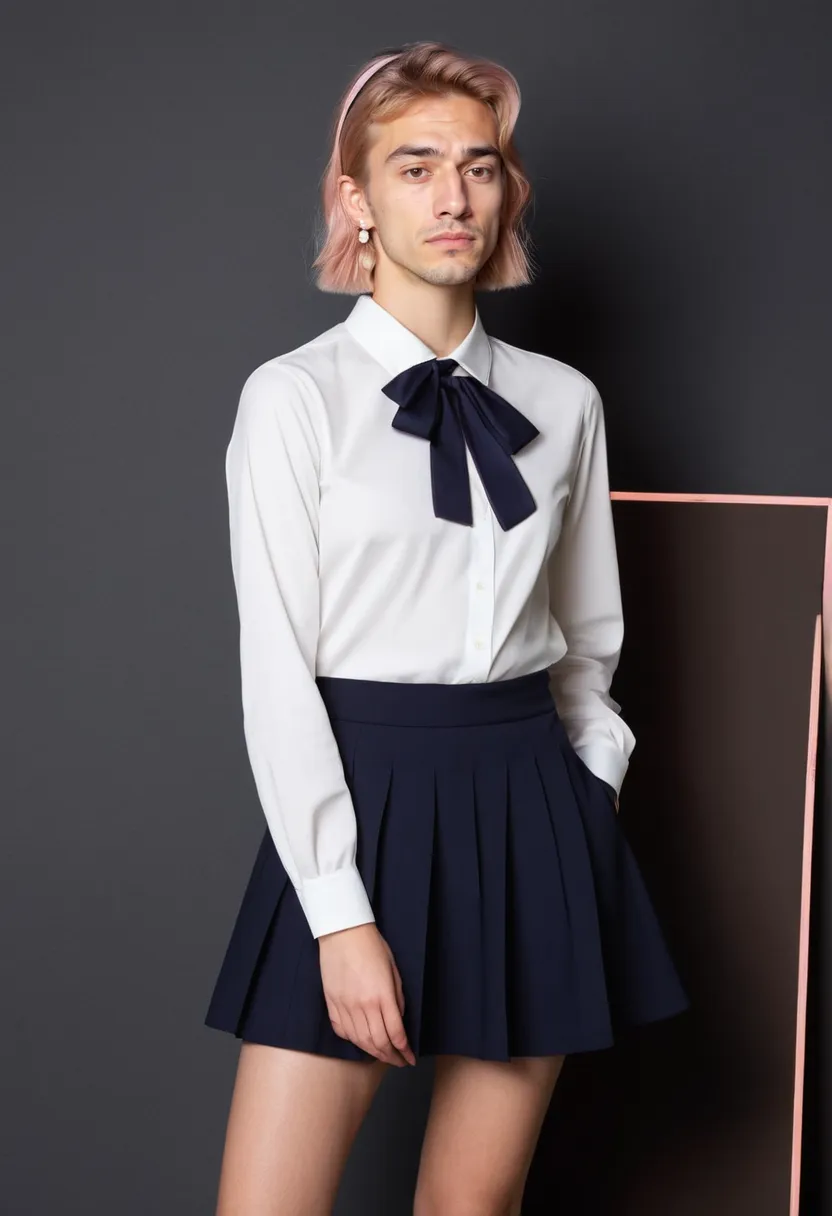
If you attend a uniformed school or live in a stricter home environment, accessories become your quiet language. The beauty of small, deliberate touches — like the delicate pearl earrings and thin pink hair ribbon in the look above — is that they’re hard to argue with but deeply transformative.
Earrings. Small pearl studs, tiny hoops, or discreet flower studs add an unmistakable softness. If your ears aren’t pierced, magnetic or clip-on styles work well.
Hair ribbons and bows. A thin pink or ivory ribbon tied around a half-up hairstyle, or a small bow clip tucked at the side, is one of the most feminine accents available. It’s also easily removed if you need to shift registers between classes.
Headbands. Thin fabric or velvet headbands in soft colors add polish and femininity simultaneously. Thicker satin or pearl-embellished options elevate the look further.
Jewelry. A delicate chain necklace, a simple ring, or a thin bangle bracelet communicates femininity quietly. Choose dainty pieces over bold statement jewelry for a school setting.
Bags. Swap a bulky backpack for a structured tote, a canvas bag with floral embroidery, or a soft pastel backpack with rounded shapes.
Nail care. Neatly filed nails with a clear or sheer pink polish are subtle but noticed. For stricter environments, just keeping nails clean and buffed adds a groomed, feminine touch.
Scent. A light floral or powdery perfume layered into your routine is an invisible but powerful feminine signal to yourself, even if no one else notices.
The trick is restraint. One or two carefully chosen accessories read as intentional styling; five or six can overwhelm a uniform. Pick your favorites and let them speak.
Dealing With Questions and Comments: Practical Tips for School
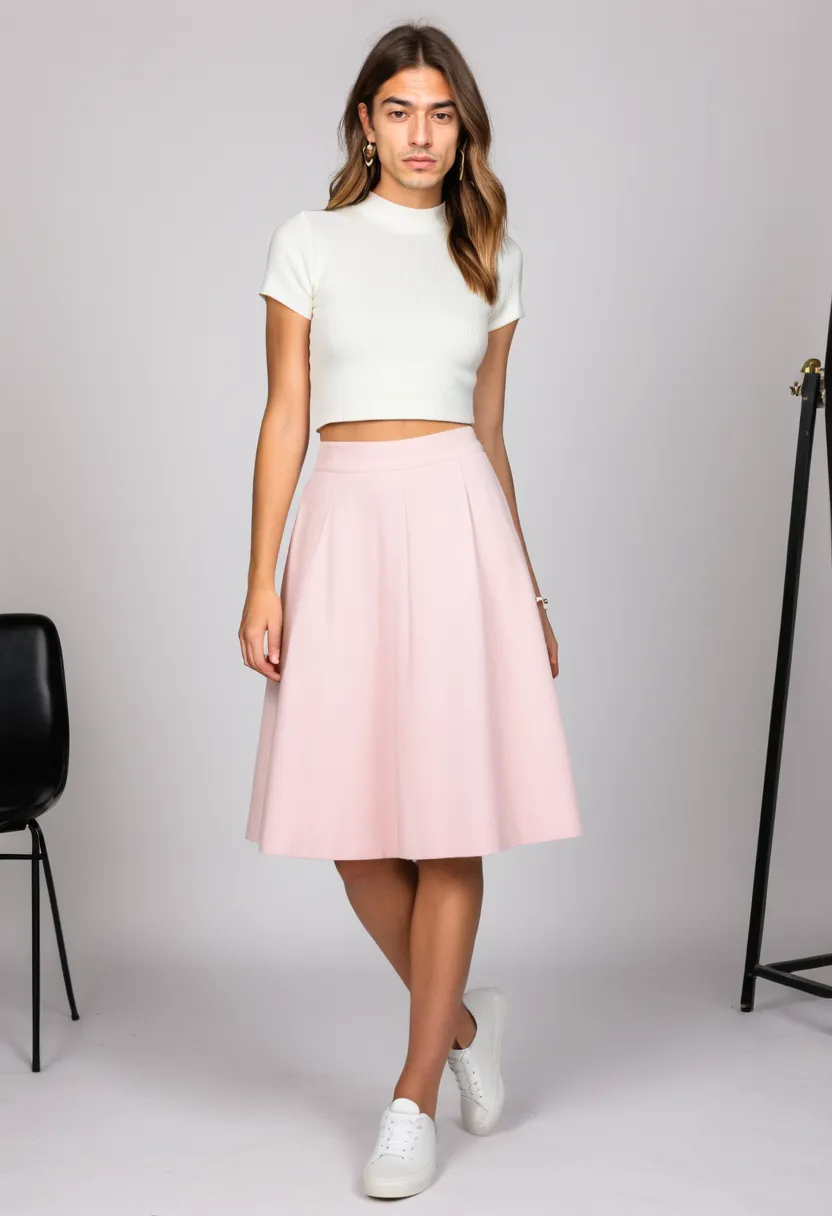
Questions will happen. Some will be kind, some curious, and a few may be unkind. Preparing for them in advance — the way you might rehearse a class presentation — takes away most of their power. Imagine yourself in a clean pastel pink A-line skirt and fitted white knit top like the look above: approachable, neat, quietly confident. Now imagine answering a question while standing in that outfit. The goal is to respond from that same place of calm.
Keep responses short and matter-of-fact. “I just like this style” or “I think it looks nice” are complete sentences. You don’t owe anyone a TED talk on gender expression in the hallway before second period.
Use humor when it fits. A light “Thanks, it’s my favorite skirt” in response to a comment can defuse tension faster than a serious debate.
Don’t match energy with hostility. If someone is rude, staying calm makes you look like the grown-up in the exchange. Teachers and peers notice who is actually causing drama.
Identify allies early. One or two friends who will sit next to you at lunch or walk with you between classes change the entire experience. Most schools have more quiet allies than visible ones.
Know when to involve adults. Curious questions are part of life. Persistent harassment, threats, or targeted bullying are not, and most schools have policies that protect you. Document incidents, and speak with a counselor or administrator you trust.
Build a recovery routine. Some days will be harder than others. Having something to look forward to after school — a favorite show, a walk, a call with a friend — helps you decompress rather than carry the day home.
Inspirational Examples: Men Wearing Feminine Outfits at School
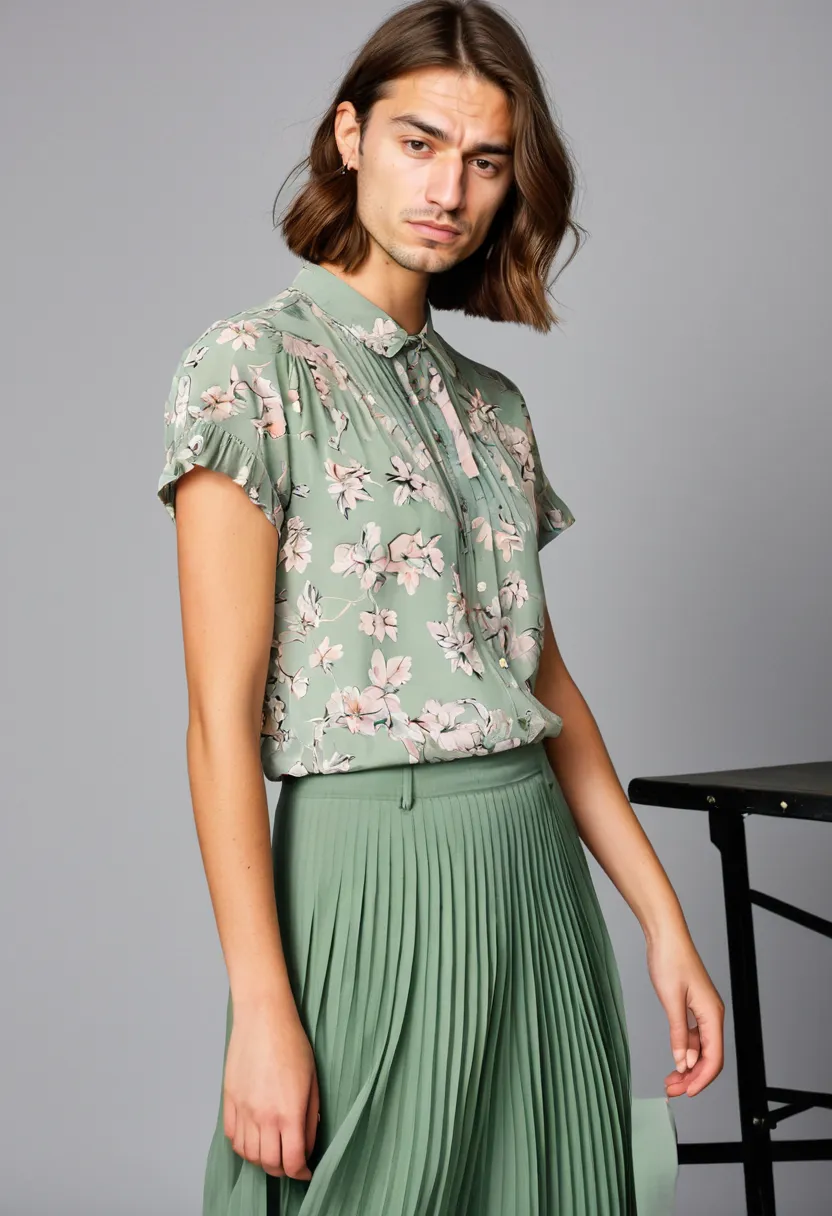
Sometimes the best way to understand a style direction is to see it. The look above — a soft floral blouse in lightweight fabric paired with a sage green pleated midi skirt — is a masterclass in school-appropriate femininity. The colors are muted enough to feel grown-up, the coverage is complete, and the overall effect is quietly beautiful rather than attention-seeking.
The soft florals look. Lightweight floral blouses in small, scattered prints work beautifully with solid-colored skirts. Keep the prints delicate and the palette soft — think faded blooms on cream, not large tropical prints.
The monochrome pastel look. Head-to-toe soft pink, lavender, or butter yellow in slightly different tones creates a sophisticated, editorial feeling. A pale pink blouse with a dusty pink skirt, for example, looks curated and intentional.
The preppy schoolgirl-inspired look. Pleated tartan or navy skirts, white blouses, knit vests, and knee socks reference a classic academic aesthetic that feels timeless and school-appropriate.
The soft minimalist look. A cream knit top, a flowing white or beige midi skirt, and simple accessories feel airy, modern, and gently feminine without leaning into any one reference.
The layered autumn look. A blouse, a cardigan, a pleated skirt, and opaque tights layered together for cooler weather is both practical and visually rich.
Look up style accounts, lookbooks, and creators who document femme and gender-nonconforming fashion — seeing other young men dressed this way, moving through their real lives, normalizes the experience faster than almost anything else.
Building Confidence Around Your Style Choices in a School Setting
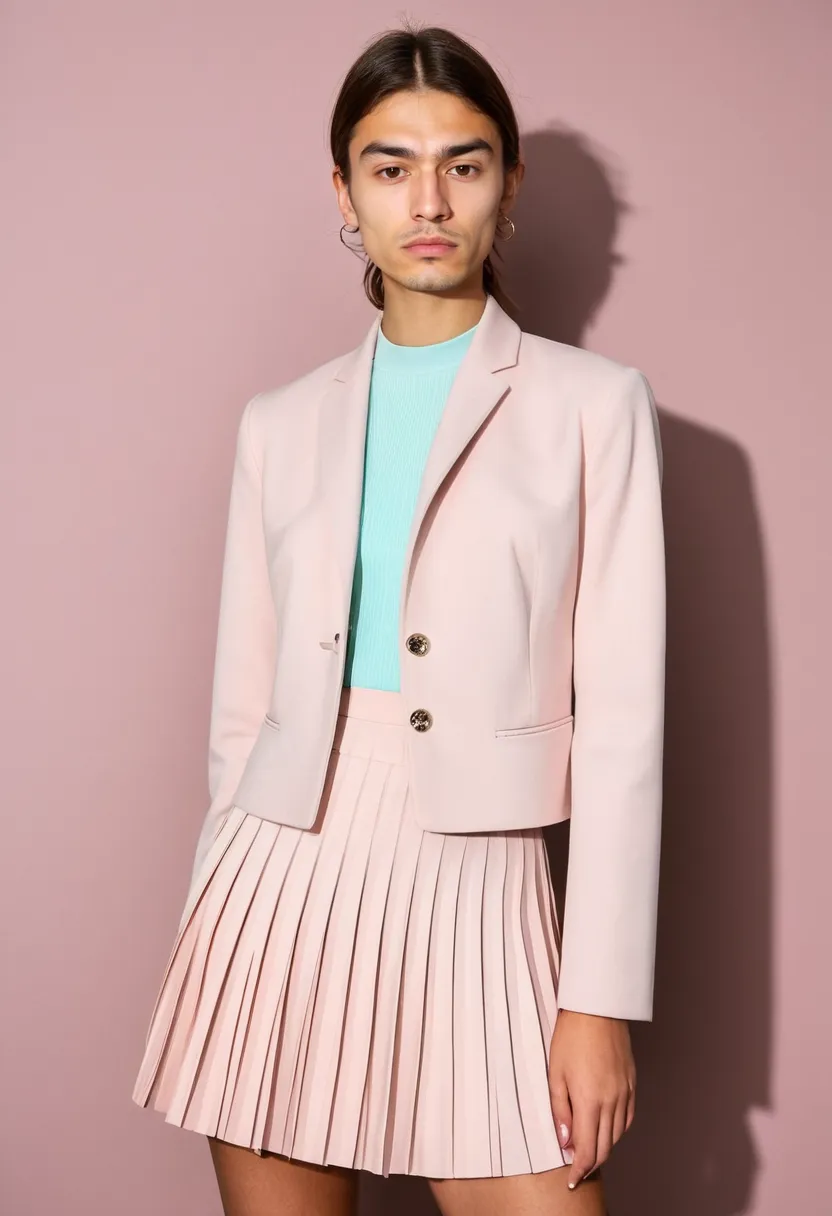
Confidence isn’t a feeling you have to wait for — it’s a posture you practice. A structured pastel blazer in soft pink paired with a pleated skirt, like the look pictured above, is almost a tutorial in confident femininity: the blazer adds structure and authority, the skirt softens the silhouette, and the overall effect is polished rather than hesitant. You can build that same sense of “put-together” into how you carry yourself.
Start with fit. Clothes that fit you well — not too tight, not too loose — make you stand straighter without thinking. Tailoring a thrift-store blouse or skirt can cost less than a coffee and make an enormous difference.
Practice at home first. Wearing a new outfit around your room, then to the grocery store, then to a casual outing before school, builds comfort in layers. By the time you wear it to class, your body already knows what it feels like.
Pay attention to posture. Shoulders back, chin up, unhurried stride. Confidence is often 70% body language and 30% clothes.
Keep a “proof folder.” Save photos of yourself in outfits you love, screenshots of kind comments, and notes about good days. On harder days, flipping through reminds you this is real and worth it.
Find your community. Online spaces, local LGBTQ+ youth groups, and creative friends provide the mirror you may not get at school. Seeing yourself reflected somewhere helps you stand taller everywhere else.
Accept that confidence fluctuates. Some days you’ll feel invincible in a skirt. Some days you’ll want to wear jeans. Both are valid. Femininity isn’t a test you’re constantly being graded on.
Talking to Parents, Friends and Teachers About Your Style
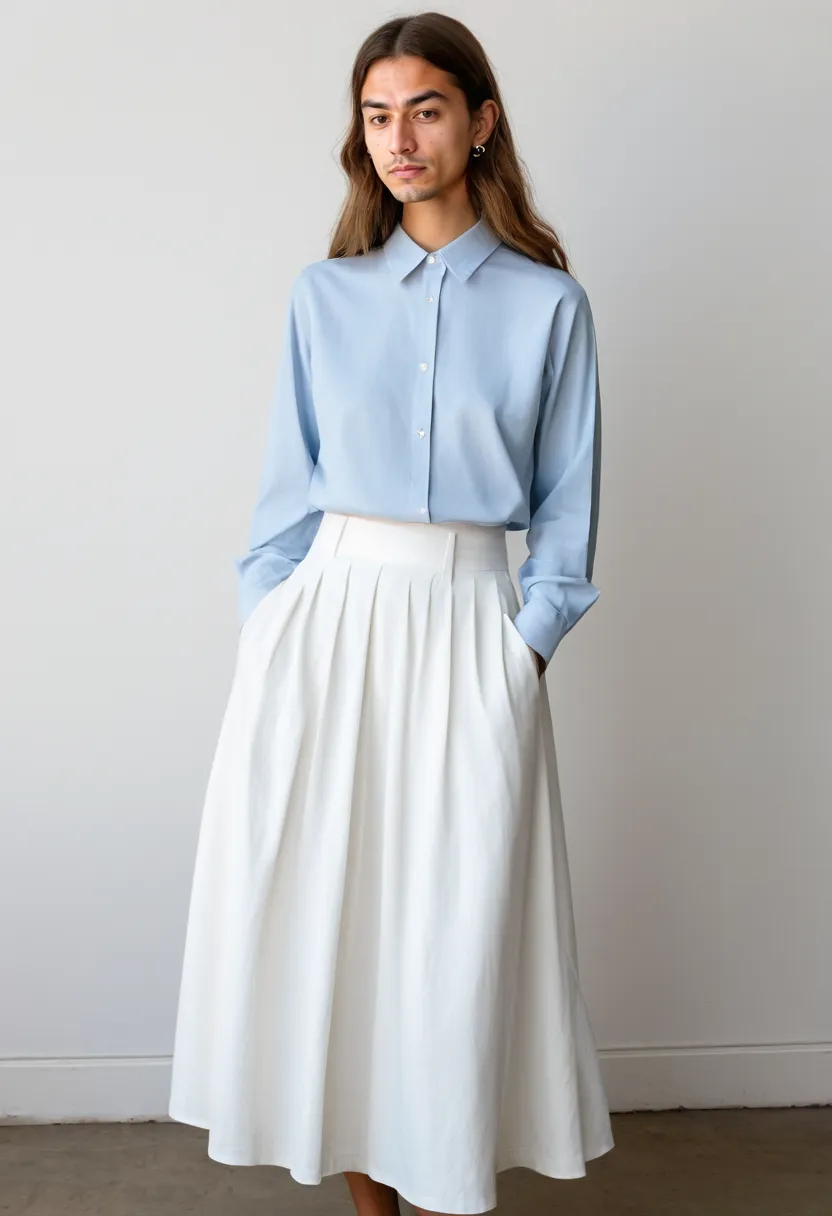
The conversations around your clothing choices are sometimes harder than the clothing itself. A gentle outfit like the one above — a pale blue cotton blouse with a flowing white midi skirt — looks thoughtful and considered, and that same quality can carry into how you talk about your style with the people in your life.
With parents: Lead with reassurance about the things that matter to them — school, safety, responsibility. “I’m still me. I’m still doing well in class. I just feel more like myself in these clothes.” Invite them into the process when possible: showing them a specific blouse you love, or asking their opinion on a cardigan, makes them feel included rather than confronted. If parents are resistant, patience and consistency often do more than arguments. Small steps at home can precede bigger steps outside.
With friends: Most friends take cues from you. If you’re relaxed about your clothes, they’ll be relaxed too. If a friend struggles with it, give them space to adjust — but also notice whether they’re genuinely working through it or consistently making you feel bad. The second isn’t friendship.
With teachers: Most teachers care about your learning and behavior, not your skirt length. If a teacher raises concerns, stay polite, ask specifically what policy is being referenced, and involve a counselor or parent if needed. You’re allowed to advocate for yourself calmly.
With yourself: The most important conversation is the internal one. Remind yourself regularly that expressing femininity doesn’t make you less of a man, doesn’t require justification, and doesn’t need anyone else’s permission to be valid. Your clothes are an extension of you — and you’re allowed to take up space, softly, in the world.
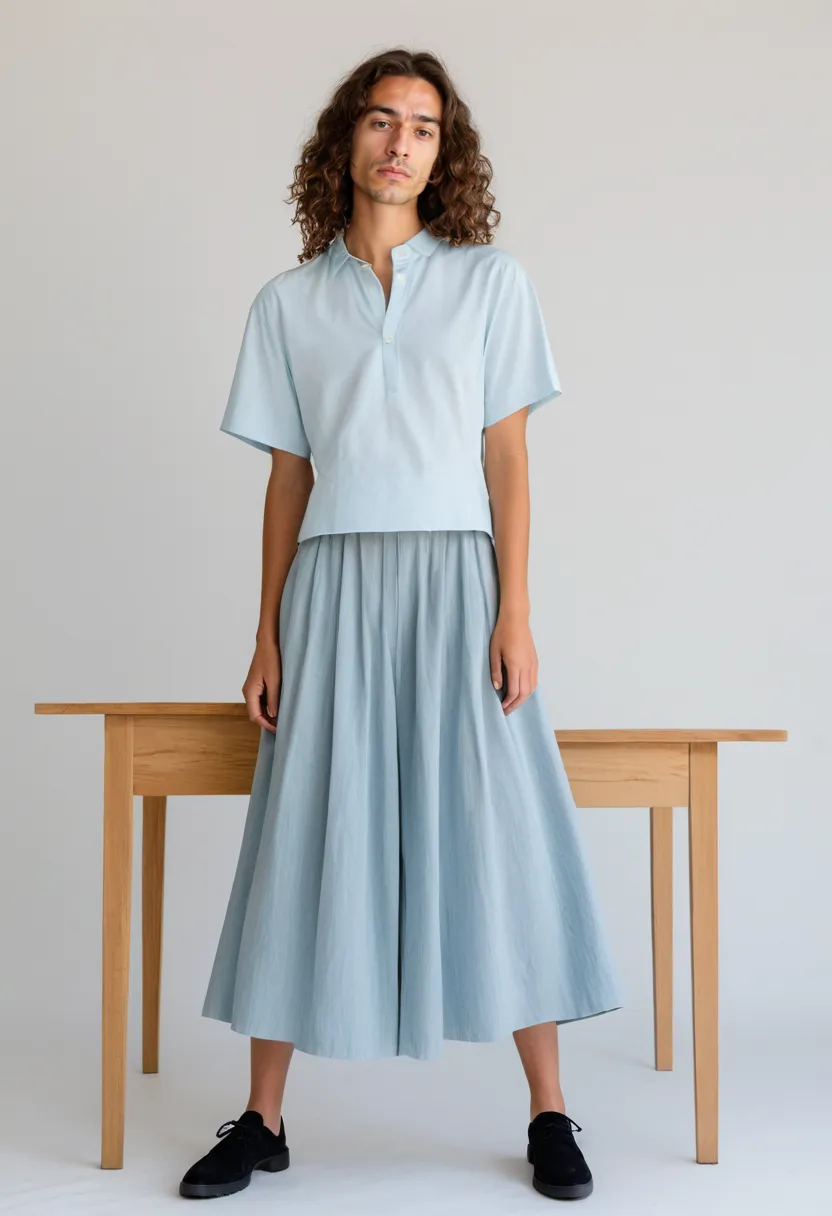
Feminine outfits for men at school aren’t about rebellion or spectacle — they’re about honesty. They’re about walking into a classroom in a pastel cardigan and a pleated midi skirt and feeling, finally, that the person walking in matches the person inside. With thoughtful fabric choices, school-appropriate silhouettes, quiet accessories, and a steady hand on your own confidence, a soft and feminine school style is entirely possible. Start small, dress for yourself, prepare for the occasional question, and remember: every young man who dresses honestly makes it a little easier for the next one. Your outfit tomorrow might be the reason someone else finds the courage to try the day after.
Author: Emma. Photos: Alex Neuron. The material was prepared with the assistance of AI and has undergone quality review.