Gender-Fluid Style for Men: Expressive, Free & Beautifully Personal
Gender-fluid style for men isn’t a trend that arrived overnight, nor is it a costume to be worn for shock value. It’s a quiet, confident rethinking of what clothing can mean when we stop asking it to announce our gender and start asking it to express who we actually are. For a growing number of men, this shift has unlocked a wardrobe that feels both more personal and more playful — one where a floral blouse can sit beside raw denim, where a satin skirt can be layered under a crisp white shirt, and where the only real rule is that the clothes feel like yours. In this guide, we’ll explore what gender-fluid fashion truly means today, the pieces that make it work, the fabrics and silhouettes that bring it to life, and how to wear it with ease in the everyday world.
What Gender-Fluid Fashion Actually Means Beyond the Label
The phrase “gender-fluid fashion” often gets flattened into something simple — a man in a skirt, a boy in pearls, a headline. But the reality is far more interesting, and far less performative. At its core, gender-fluid style is about dissolving the invisible barrier that tells us certain fabrics, colors, or cuts belong to one gender and not another. It’s not about dressing as a woman or dressing against masculinity. It’s about dressing as a whole person, free to pull from every drawer in the collective wardrobe.
For men, this often starts with small experiments. A softer shoulder on a jacket. A pearl earring. A pair of trousers cut with a higher waist and looser leg. Over time, those small shifts can lead to bolder choices — a sheer layer, a floral print, a length of fabric that moves with the body rather than framing it rigidly. Each of these choices is a decision about self-expression, not a statement about identity. A straight man can wear a blouse. A queer man can wear a three-piece suit. Neither is performing; both are simply dressing.
The label “gender-fluid” is useful because it names something that previously had no language. But the clothes themselves are older than the label. Men have worn robes, ruffles, high heels, embroidered silks, and jewelry across centuries and cultures. What’s new isn’t the fluidity — it’s the self-awareness. Today’s men who embrace expressive fashion are doing so with intention, choosing garments that feel aligned with how they want to move through the world. That intention is what turns a wardrobe into a form of personal language.
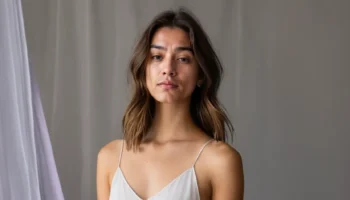
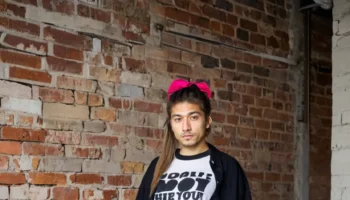
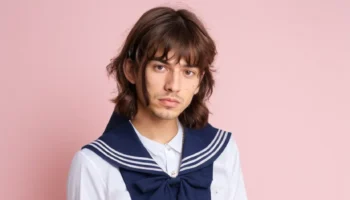
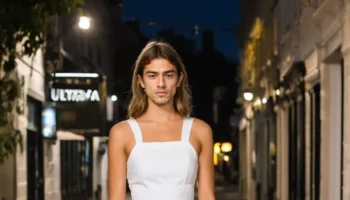
Gallery: Boys in Gender-Fluid Outfits That Express Something Personal
One of the most compelling things about gender-fluid dressing is how instantly it telegraphs personality. Consider a look built around a vintage floral blouse in soft chiffon — the kind of fabric that moves with every breath, printed with small, faded blooms that feel pulled from a grandmother’s summer garden. Paired with straight-leg raw denim jeans, the contrast is immediate and deliberate. The delicate, feminine floral fabric brushes against the stiff, honest texture of unwashed denim. Neither piece apologizes for the other. Together, they say something that neither could say alone.
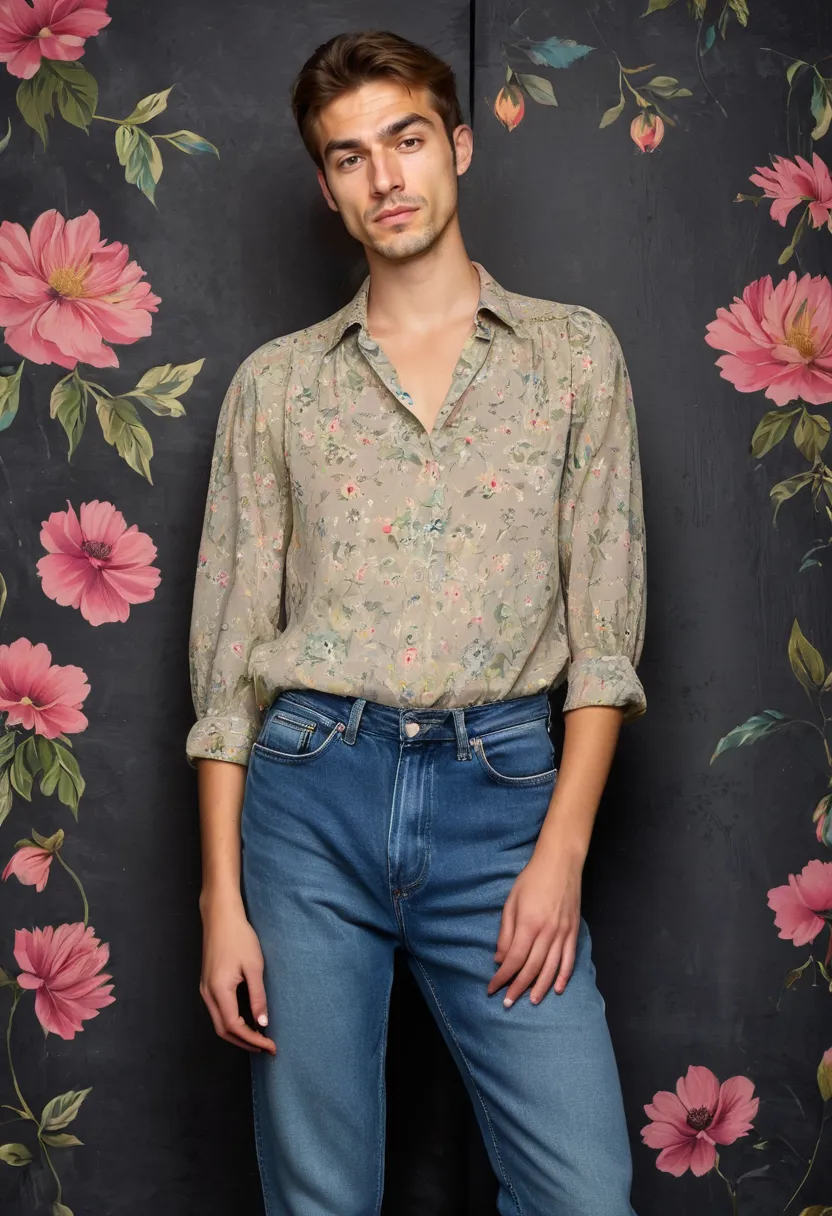
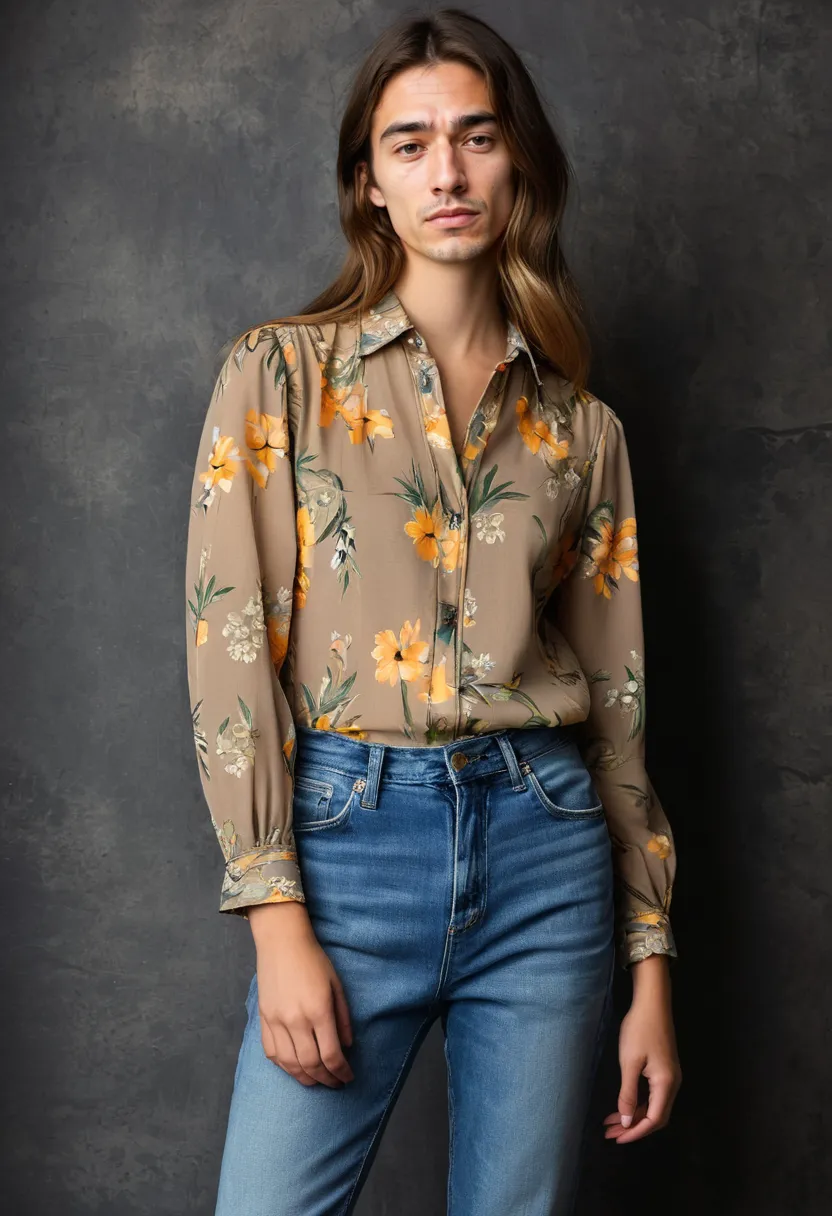
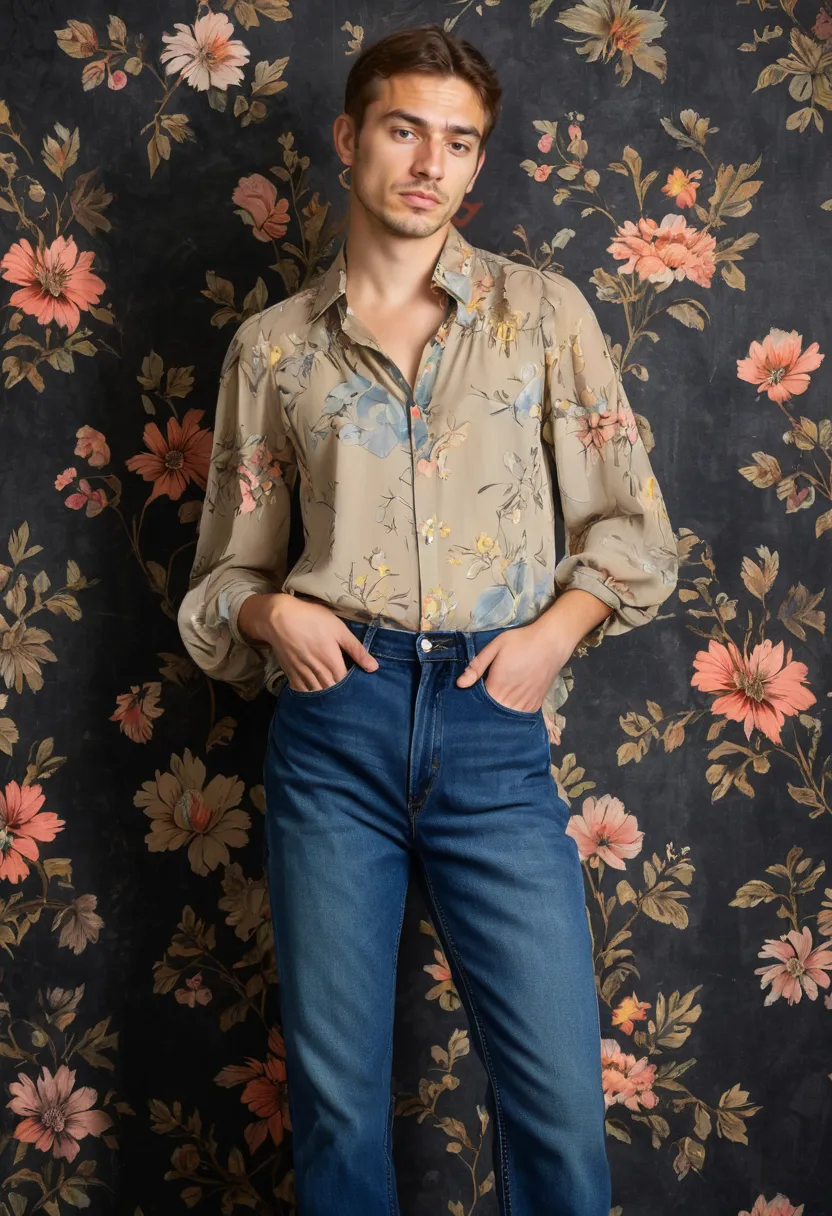
What makes these looks feel personal rather than performative is the attention to balance. The blouse has volume at the sleeves; the denim is grounded and straight. The print is vintage and soft; the denim is raw and modern. This is the grammar of gender-fluid dressing — tension and harmony, not imitation. A man wearing this outfit isn’t borrowing from womenswear in a literal sense. He’s using the full palette of textiles available to him and composing a look that reads as his own.
The setting matters, too. In a neon noir studio, with holographic accents catching on the chiffon, the outfit takes on a cinematic quality. But strip away the dramatic lighting and the same pieces work at a gallery opening, a coffee shop, or a late dinner with friends. That’s the quiet power of these looks — they’re built to live, not just to be photographed. The floral softness adds warmth; the denim keeps things anchored. It’s a wardrobe that carries mood with it.
Key Pieces That Work in Gender-Fluid Dressing for Men
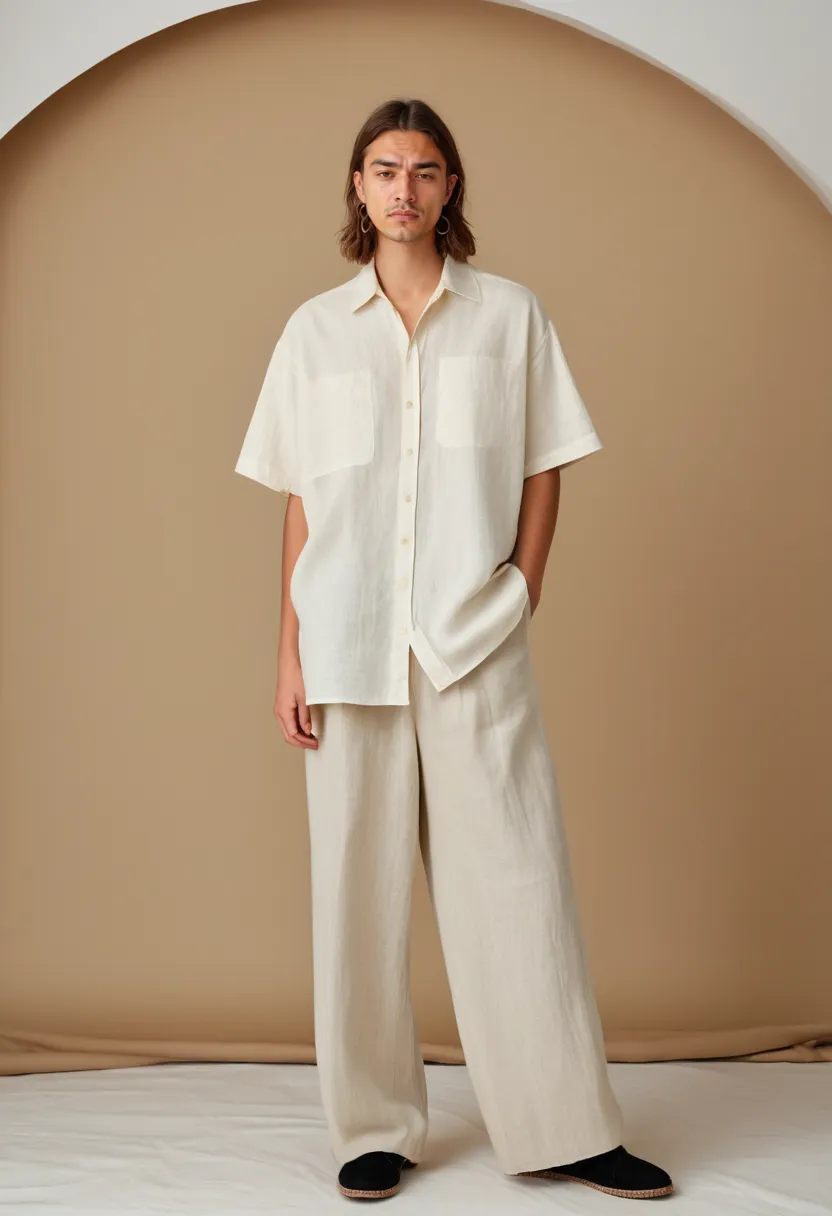
Building a gender-fluid wardrobe doesn’t require tearing down what you already own. Most men who explore this space begin by adding one or two foundational pieces that open up new combinations. An oversized linen shirt in natural cream, for instance, is one of the most versatile items a man can own. Cut loosely, with a slightly dropped shoulder and a relaxed body, it blurs the line between a traditional button-down and a tunic. Worn with wide-leg tailored trousers in a similar natural tone, the whole silhouette reads as ungendered — soft, grounded, and confident in its own quietness.
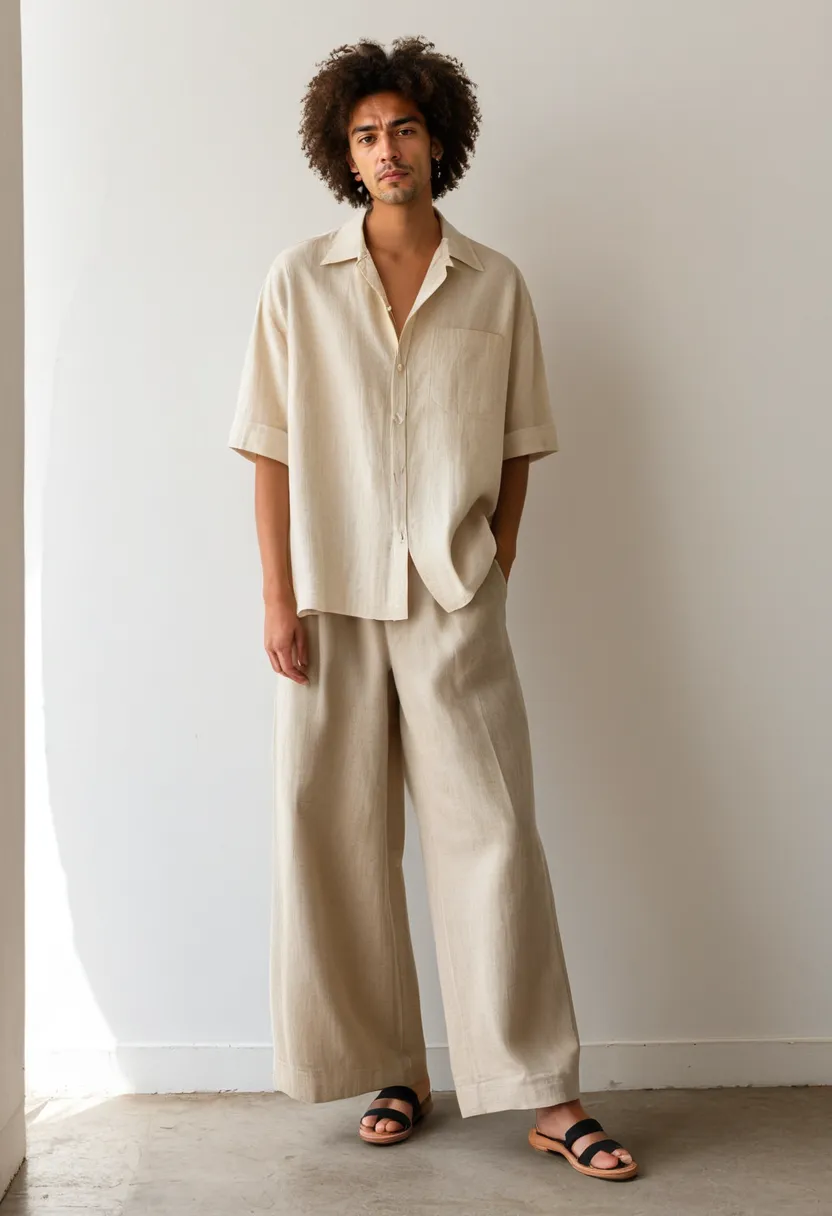
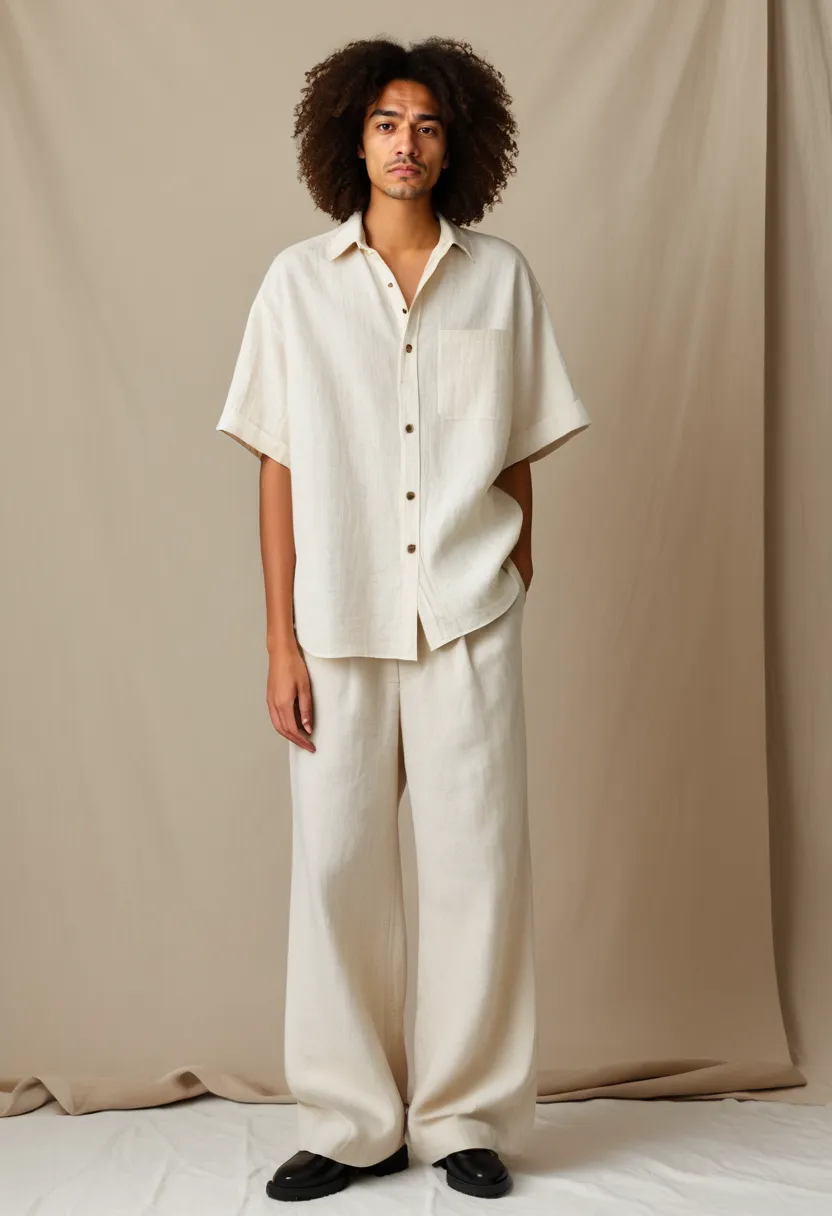
Beyond linen and loose tailoring, a few other pieces recur again and again in expressive gender-fluid menswear. High-waisted trousers with a fuller leg sit differently on the body than standard men’s cuts, creating a longer, more dramatic line. Knitwear in cropped or boxy shapes shifts proportions without feeling costumey. A simple silk or satin camisole worn under a jacket adds a layer of softness against structured outerwear. Jewelry — pearls, rings, layered chains — acts as punctuation, drawing the eye and signaling care.
Footwear tends to follow the same logic. Chunky loafers, square-toed boots, and minimalist leather sandals all work because they sit outside the obvious gendered codes of athletic sneakers or pointed dress shoes. The goal isn’t androgyny for its own sake; it’s choosing pieces that prioritize shape, fabric, and feeling over category.
The key insight for anyone starting out: don’t chase the most extreme version of the look. Begin with one piece that genuinely interests you — a fabric that feels good, a cut you’ve been curious about — and build around it. Gender-fluid style rewards patience. A wardrobe that grows slowly, with intention, will always feel more authentic than one assembled in a single shopping spree.
Color, Silhouette and Fabric Choices in Expressive Gender-Fluid Style
If there’s a single lesson gender-fluid fashion teaches, it’s that color and fabric have no gender — only associations. Pastel pink, long coded as feminine, becomes something else entirely when cut into a structured wide-shouldered jacket. Picture it: a jacket built with the sharp, architectural shoulders of classic menswear tailoring, rendered in a soft, almost powdery pastel pink. Paired with tailored shorts in the same shade, the outfit plays with expectation. The silhouette is traditionally masculine — broad on top, clean at the waist — but the fabric is soft, almost sweet. The contradiction is the point.
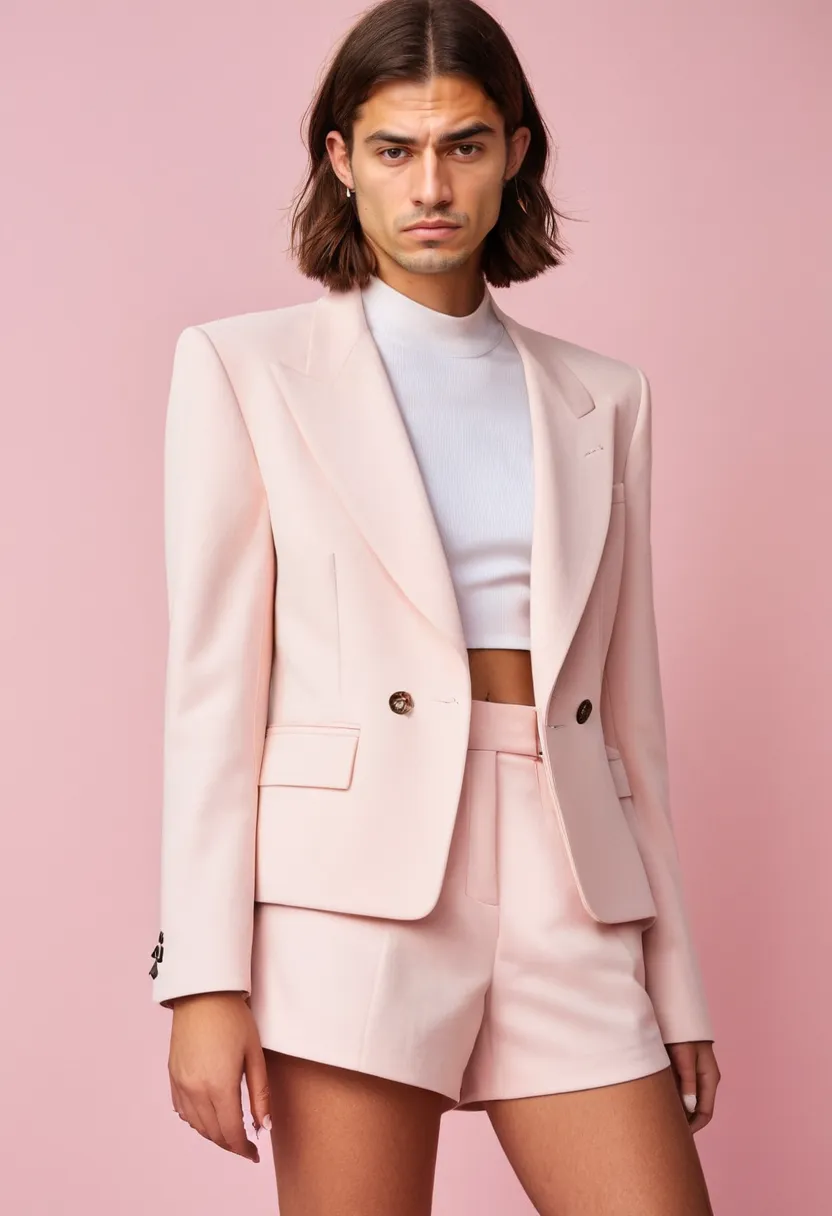
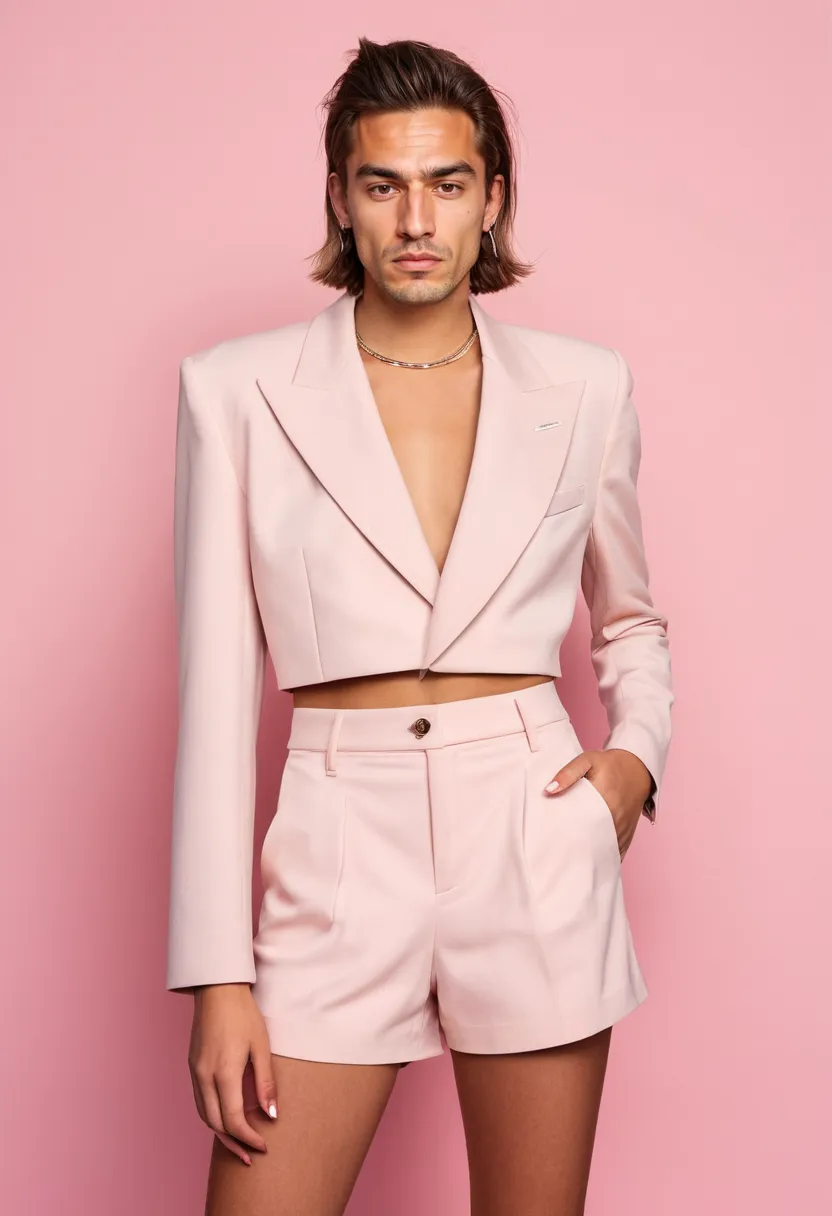
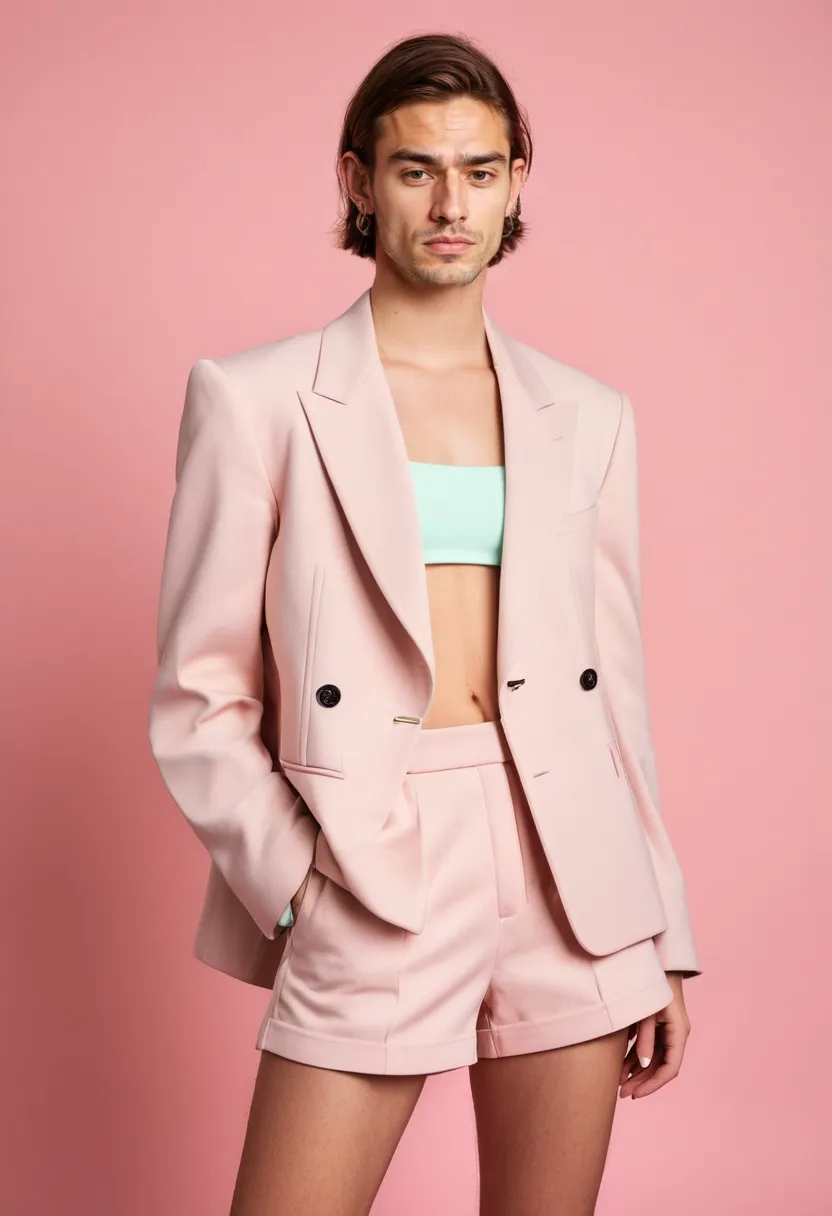
This kind of layered dressing — where silhouette and color pull in different directions — is where gender-fluid fashion gets genuinely interesting. A rigid silhouette in a soft color feels different from a soft silhouette in a rigid color. A silk shirt in navy reads traditional; a cotton button-down in lavender reads fresh. The interplay between what the eye expects and what the fabric delivers is what creates memorable outfits.
Fabrics carry enormous weight in this conversation. Chiffon, silk, satin, and fine jersey all move and drape in ways that feel soft, romantic, and responsive to the body. Wool, denim, canvas, and leather feel grounded, structured, and assertive. Gender-fluid dressing often mixes these registers deliberately — a satin under a leather jacket, a chiffon beneath a wool coat, a silk scarf knotted above a raw denim jean. Each pairing creates a small conversation on the body.
Color palettes tend to reward restraint. While a rainbow of options is available, the most elegant gender-fluid looks often work within a tight range — neutrals with one accent, or two tones of the same hue — allowing the fabric and silhouette to carry the visual interest. Pastels, earth tones, inky blacks, and soft whites all photograph and wear beautifully. The goal is never to overwhelm the look with color but to let the composition breathe.
How to Navigate Gender-Fluid Fashion in Everyday Social Contexts
The studio is one thing. The Tuesday-morning commute, the office meeting, the family dinner — those are where gender-fluid style really gets tested. The good news is that most expressive looks translate more easily into daily life than people expect, provided they’re styled with a bit of intention. Consider a simple white button-down shirt worn loosely over a satin midi skirt. The shirt is familiar, almost universal — a wardrobe staple that signals ease and competence. The skirt is unexpected, smooth and fluid, catching light as the wearer moves. Together they form a look that is both legible and personal.
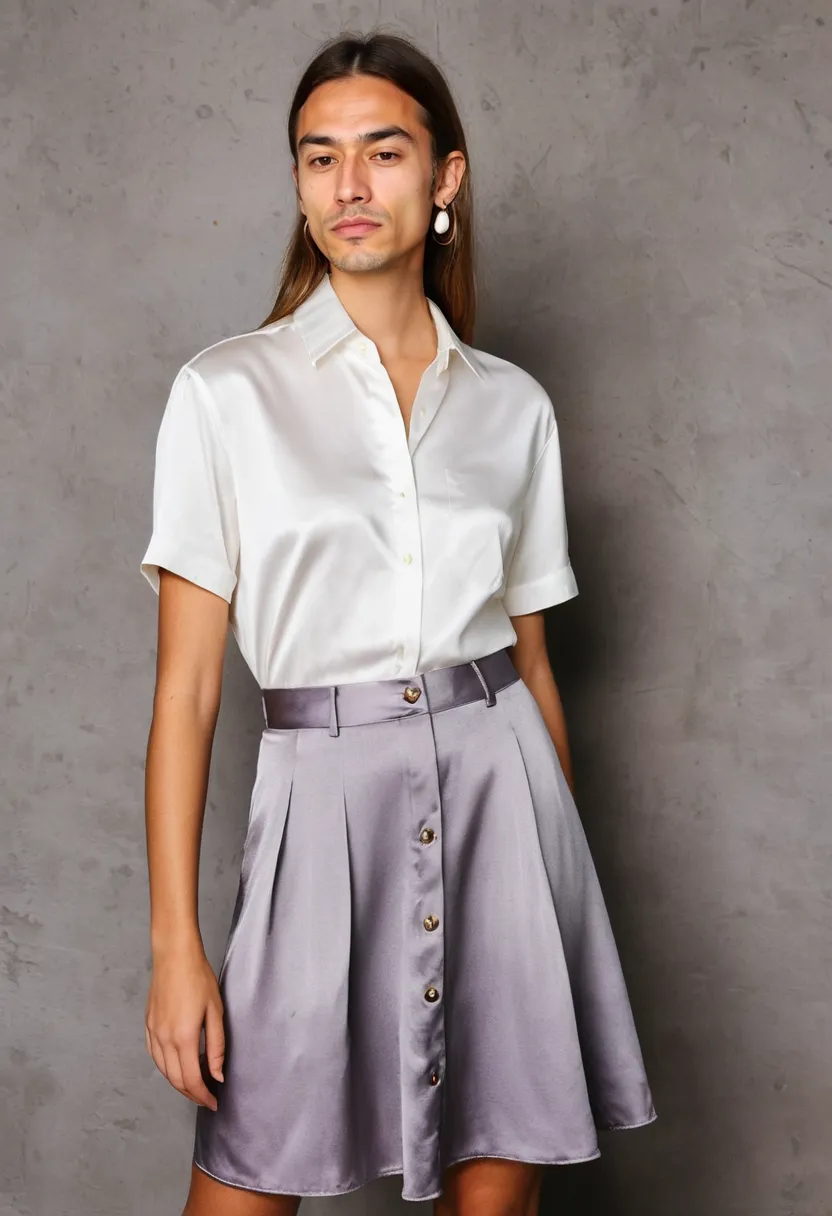
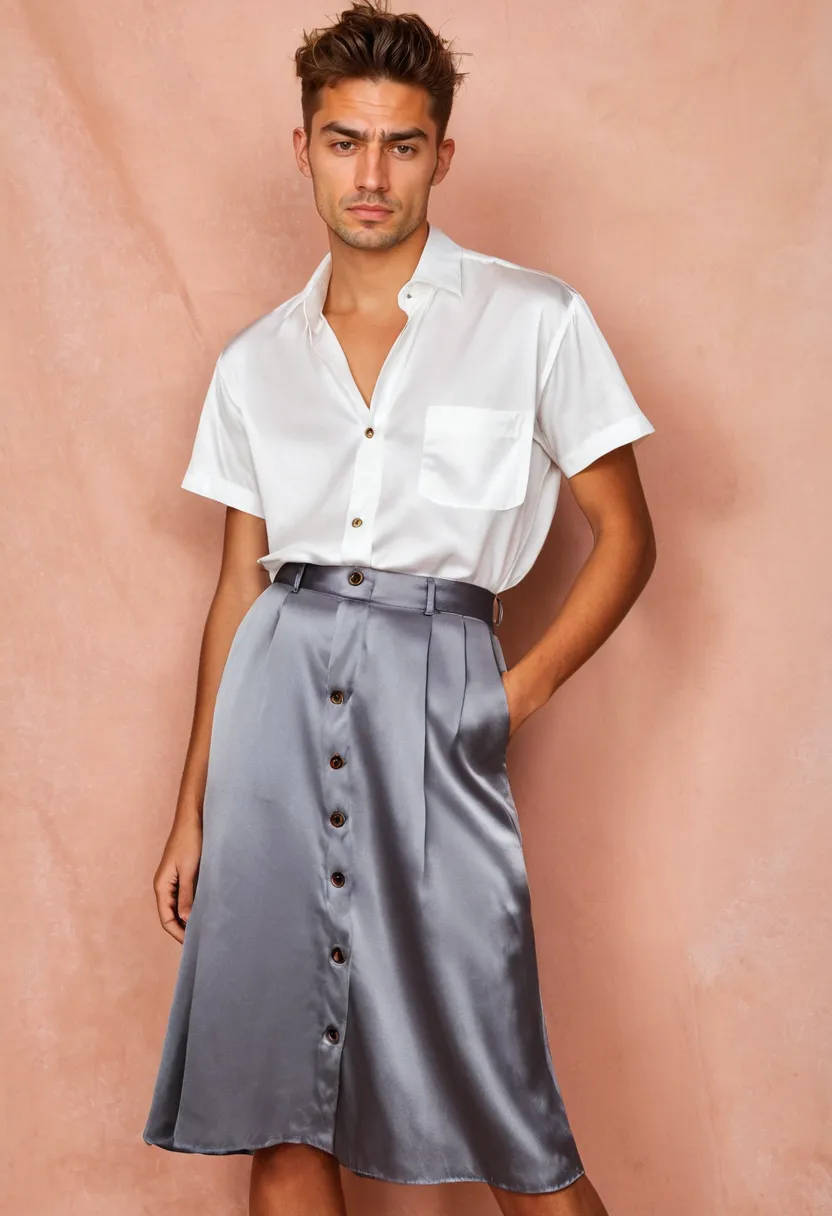
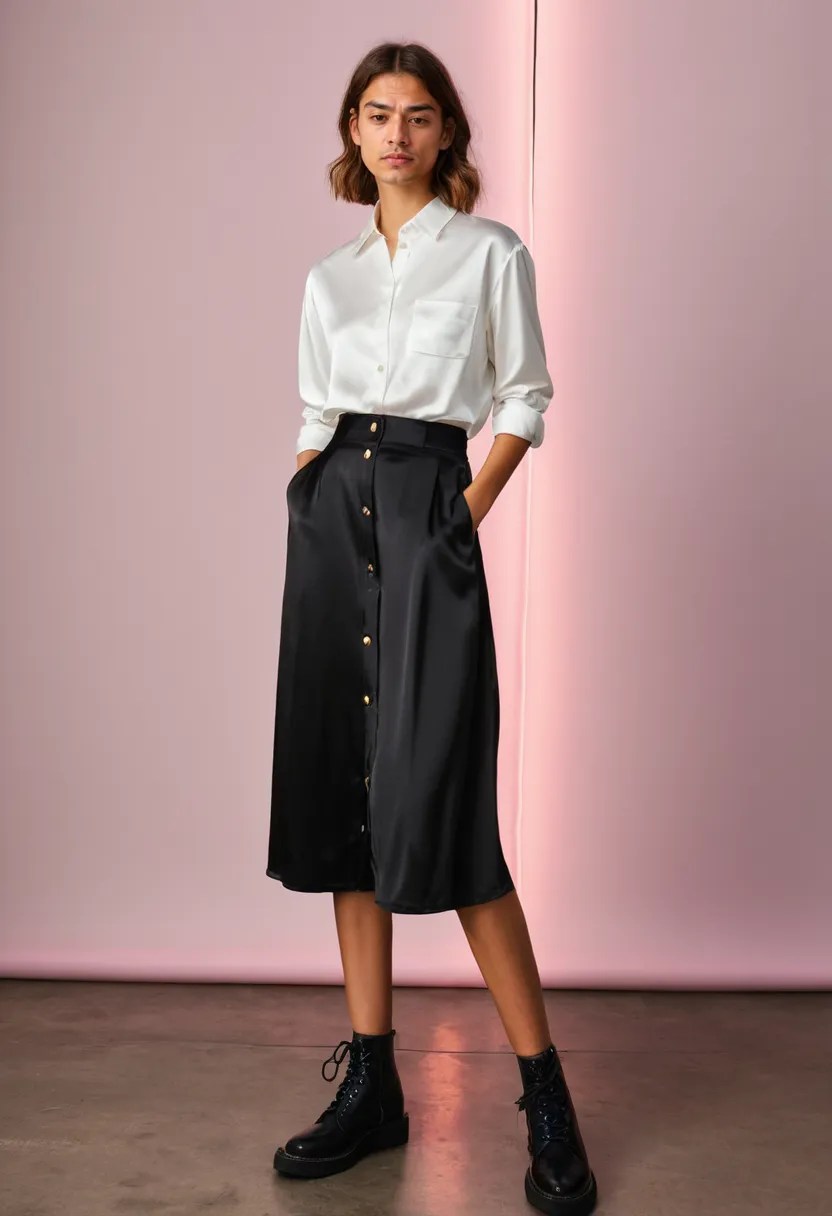
The trick to wearing something like this in public isn’t hiding it or defending it — it’s wearing it like you always have. Confidence reads as normality. When a person moves through the world as if their outfit is simply what they wore today, most people respond in kind. The few who don’t are rarely worth the energy of explanation. This is a practical truth of gender-fluid dressing: how you carry the clothes matters nearly as much as what the clothes are.
Context, of course, still matters. A satin skirt and shirt combination might feel effortless at a creative workplace, a dinner with friends, or a weekend in a city. It might feel more charged at a conservative family gathering or a formal business meeting. None of these contexts are inherently wrong places to wear it — but knowing the room helps you choose how expressive you want to be on a given day. Many men build their wardrobes in layers of boldness, with quieter pieces for certain contexts and more expressive looks for others.
Community also helps. Finding other men who dress expressively — whether online, through brands, or in person — provides both inspiration and a kind of permission. Seeing someone else navigate the same questions you’re navigating makes the path feel less singular. And slowly, as more men dress this way, the social friction around it softens. The wardrobe becomes simply a wardrobe again, rather than a statement that needs defending.
Gender-fluid style for men, at its best, isn’t about rebellion or politics — though it can hold those meanings for some. It’s about reclaiming the full range of what clothing can do. It’s about letting a chiffon sleeve catch the light on an ordinary afternoon, letting a pastel jacket soften a hard day, letting a satin skirt move with you down an ordinary street. The men who wear these clothes aren’t breaking rules so much as remembering that the rules were always arbitrary. What’s left, once the rules fall away, is a deeply personal kind of style — expressive, free, and beautifully, uniquely yours.
Author: Emma. Photos: Alex Neuron. The material was prepared with the assistance of AI and has undergone quality review.