Androgynous Outfits for Men: Blending Feminine & Masculine Style
Fashion has always been at its most interesting when it refuses to stay in its lane. For decades, the rigid boundaries between “men’s clothing” and “women’s clothing” have been quietly dismantled by designers, stylists, and wearers who understand that fabric doesn’t have a gender—only context does. Androgynous outfits for men represent one of the most compelling evolutions in contemporary menswear, offering a vocabulary of dress that draws equally from masculine structure and feminine softness. The result is something richer than either alone: a look that plays with tension, contrast, and balance in ways that traditional menswear simply cannot. Whether you’re a young guy experimenting with your first silk camisole under a blazer or a seasoned dresser refining your gender-blending wardrobe, this guide walks through the aesthetic principles, key pieces, and styling strategies that define the movement. Expect oversized suiting paired with delicate lace, wide-leg trousers softened by pastel blouses, and a deeper understanding of why this kind of dressing resonates so powerfully right now.
Androgynous Fashion: What It Means and Why It Matters
Androgynous fashion is the intentional blending of elements traditionally coded as masculine and feminine into a single, unified look. It isn’t about cross-dressing, drag, or mimicking another gender’s wardrobe wholesale—it’s about dismantling the idea that certain fabrics, silhouettes, or colors belong exclusively to one group. When a man pairs a sharply tailored blazer with a silk camisole, or wears wide-leg trousers with a soft blouse, he’s engaging in a centuries-old conversation about what clothing can communicate beyond binary identity.
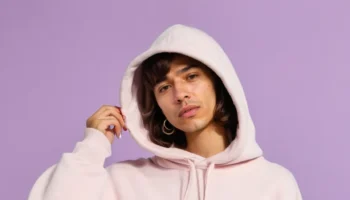
The cultural importance of this style cannot be overstated. Boys in androgynous fashion are increasingly visible across runways, music videos, social media, and even everyday streets. Artists like Harry Styles, Jaden Smith, and a new generation of Korean pop performers have pushed androgynous aesthetics into the mainstream, making it easier for young men to experiment without social penalty. But beyond celebrity influence, this movement reflects something deeper: a genuine shift in how masculinity is understood. Softness, delicacy, and ornamentation are no longer seen as threats to male identity—they’re seen as legitimate expressive tools.
There’s also an aesthetic argument to be made. Pure menswear, for all its tailoring brilliance, can feel one-note. Pure womenswear can feel equally constrained when divorced from masculine counterpoints. The combination produces something more dynamic: hard against soft, structured against flowing, matte against shimmer. This tension is what makes androgynous style men outfits visually magnetic. It invites a second look, a reconsideration, a pause. And in a world of fast fashion and disposable trends, clothing that makes people pause is clothing that matters. Androgyny isn’t a passing phase—it’s a mature design philosophy built on contrast, nuance, and genuine self-expression.
Gallery: Androgynous Outfits for Boys That Blur Gender Lines Beautifully
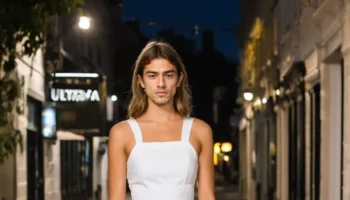
Nothing demonstrates the power of androgynous dressing quite like seeing it in practice. Consider a boy standing on an empty night street, the pavement slick with rain, dressed in an oversized structured blazer in deep charcoal. The blazer’s shoulders are sharp, its lapels precise, its fabric unmistakably masculine—heavy wool suiting that has defined boardrooms and ballrooms for a century. But beneath it, instead of the expected cotton shirt or turtleneck, there’s a silk camisole in a pale, luminous tone. The camisole’s straps are thin, its neckline delicate, its fabric catching the wet streetlight in a way that wool never could.
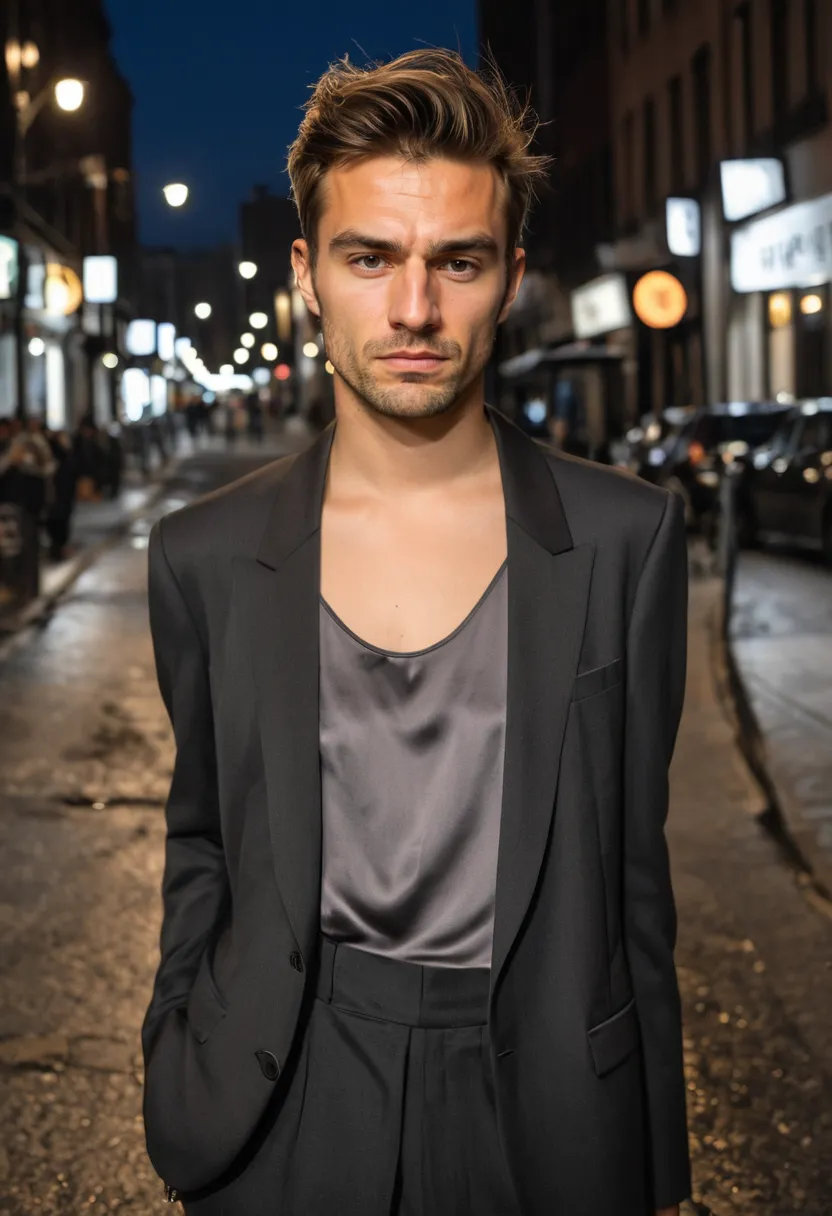
This single outfit captures everything androgynous fashion does well. The charcoal blazer provides authority, shape, and a grounded silhouette. The silk camisole introduces vulnerability, movement, and light. Neither piece would be particularly remarkable on its own—a blazer is just a blazer, a camisole is just underwear in the wrong context—but together they create a visual dialogue. The masculine suiting fabric frames the delicate inner silk, and the delicate silk humanizes the severe suiting. The contrast is the point.
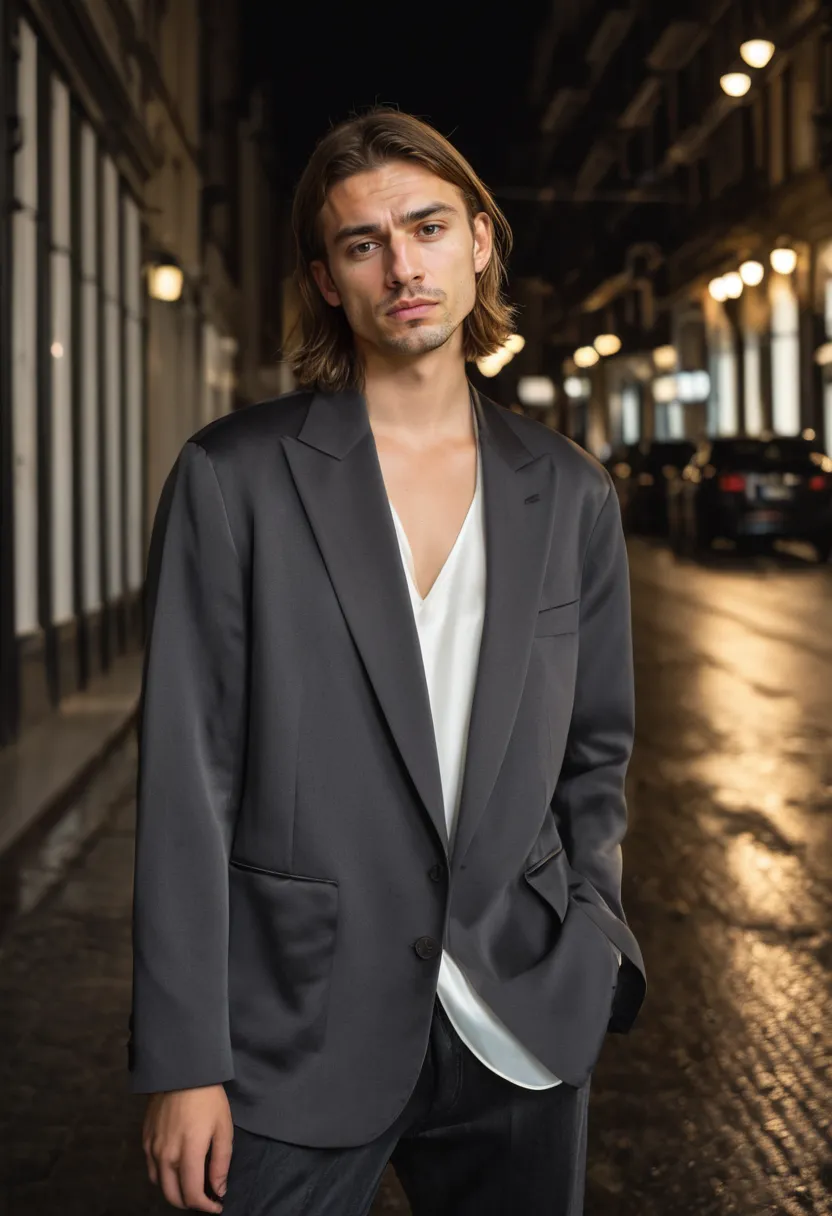
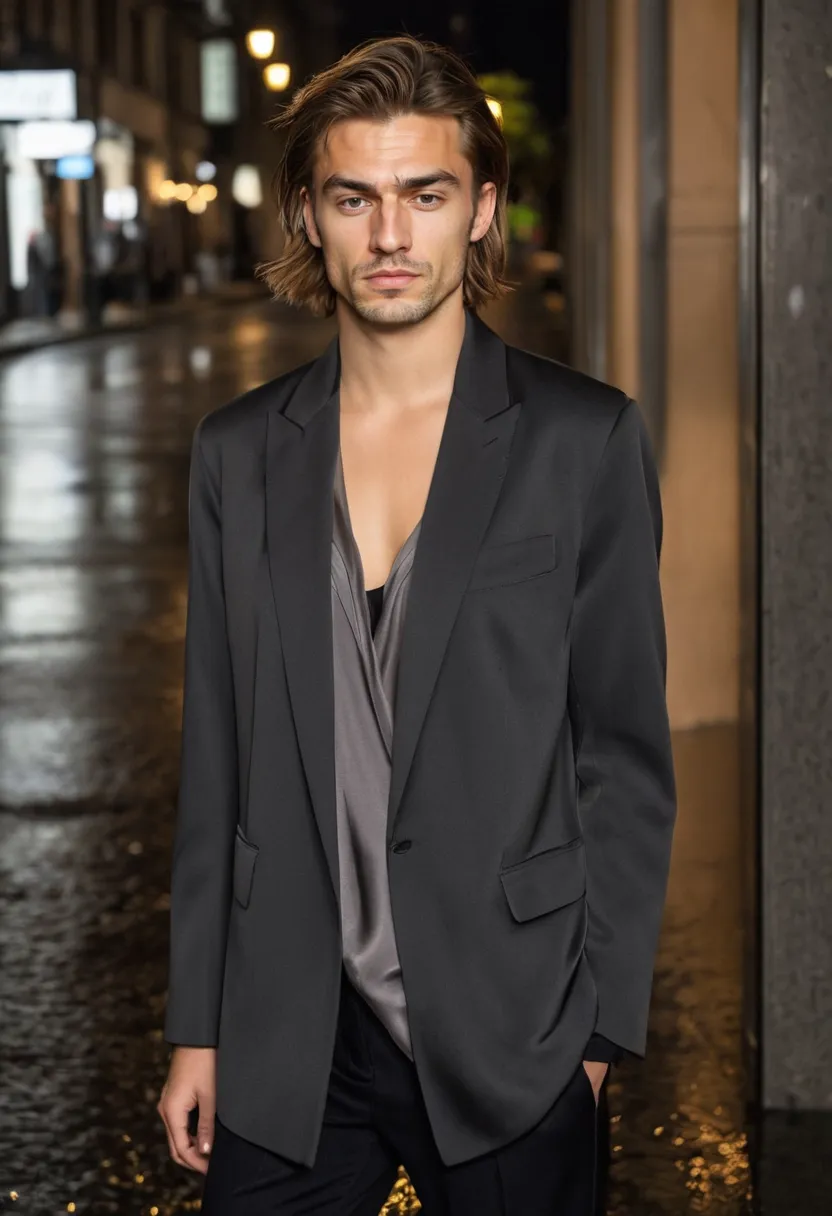
What makes this styling approach so successful is restraint. The look doesn’t try to do everything at once. It picks two elements—one firmly masculine, one firmly feminine—and lets them negotiate. The wet pavement and empty street add cinematic atmosphere, but the real drama is in the clothing itself. This is androgynous dressing at its most confident: quiet, considered, and completely unafraid of contradiction.
Key Pieces That Define Androgynous Dressing: Feminine + Masculine in Balance
Building a wardrobe of androgynous outfits for men starts with understanding which pieces carry the heaviest symbolic weight. Some garments are coded so strongly along gender lines that introducing them into a mixed outfit creates instant tension. The tailored white shirt is one of the most powerful masculine-coded garments in existence—crisp cotton, structured collar, often associated with professionalism and formality. Pair it open over a fitted lace camisole, and you’ve created one of the most beautiful androgynous combinations possible. The structured shirt fabric pressed against delicate inner lace is a study in deliberate contrast: architecture meeting ornament.
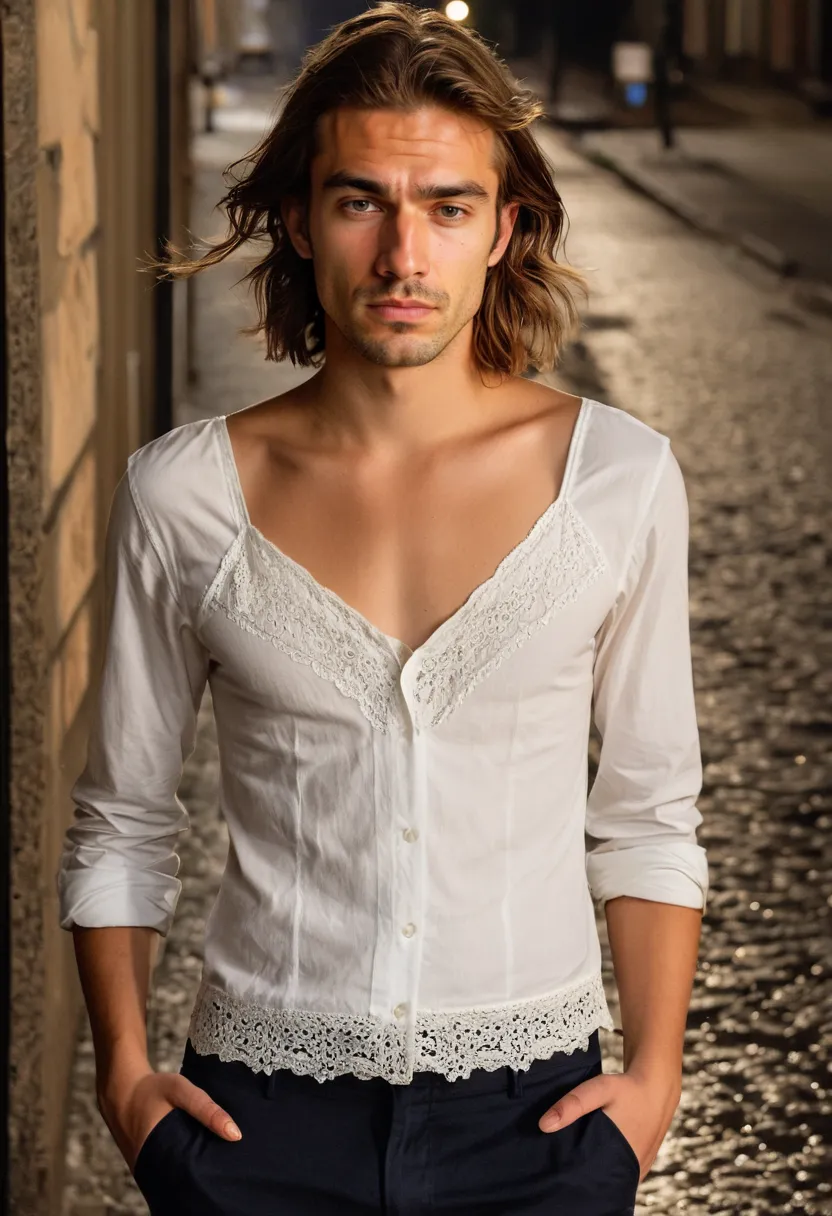
Beyond the blazer-camisole pairing, several key pieces appear repeatedly in androgynous wardrobes. Wide-leg trousers in wool or gabardine offer masculine tailoring with enough volume to feel fluid rather than rigid. Silk blouses in neutral tones—ivory, blush, dove grey—provide softness without veering into overtly feminine territory. Lace camisoles, when worn as intentional layering rather than hidden underwear, become statement pieces. Chunky loafers or polished oxford shoes keep the lower half grounded in traditional menswear, creating a stable base for more experimental upper-body choices.
Accessories matter enormously in this aesthetic. A delicate silver chain, a pearl earring, or a slim bracelet can tip a neutral outfit into androgynous territory without requiring a full wardrobe overhaul. The key is intentionality. Each piece should feel chosen, not accidental. Androgynous dressing falls apart when it becomes a random mix of gendered items—it succeeds when every element is placed with purpose.
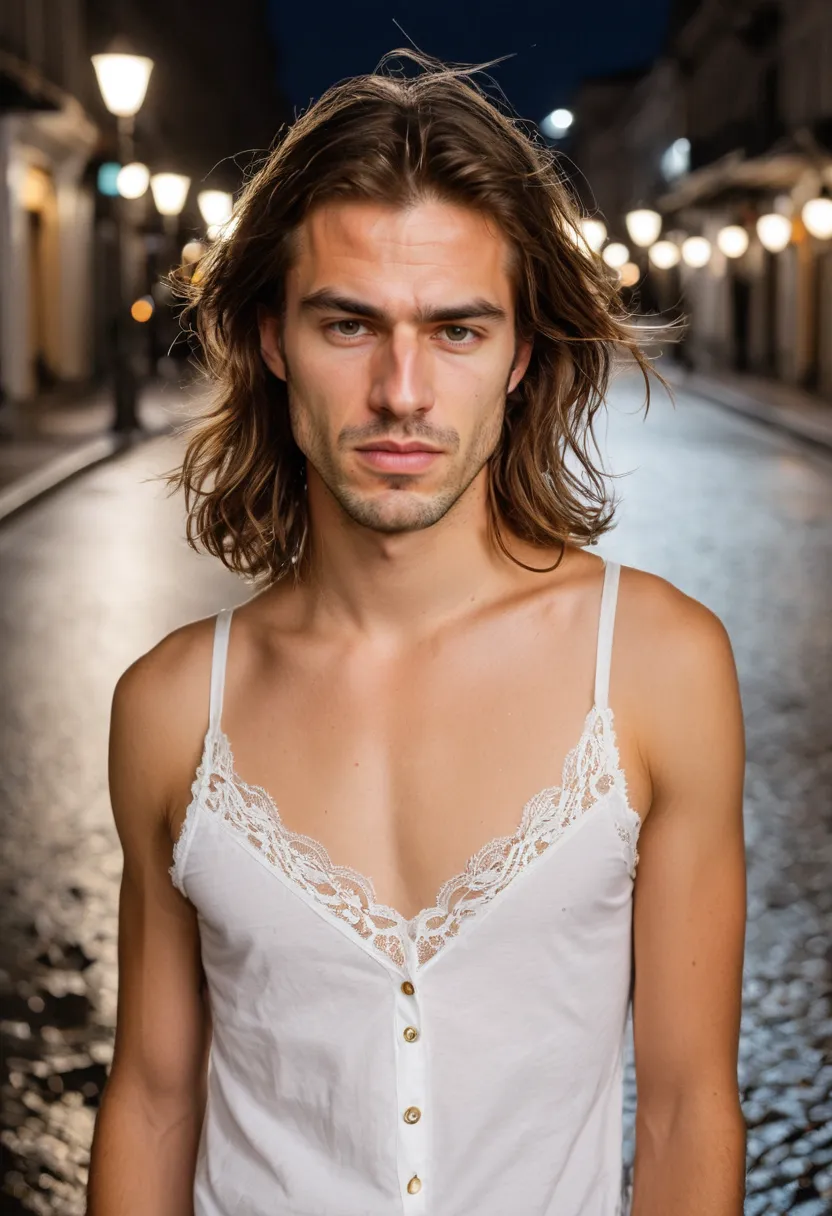
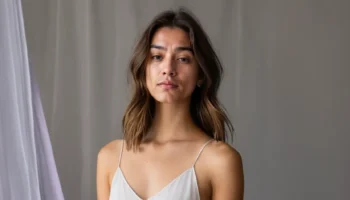
Fit is the final variable that determines whether an androgynous outfit reads as considered or confused. The cotton shirt in the reference image is tailored—not baggy, not skintight—sitting cleanly on the shoulders with enough room to drape naturally over the lace beneath. This precision is what allows the contrast between fabrics to read clearly. When fit is off, the eye gets distracted by proportion problems and never makes it to the fabric conversation underneath.
Color and Silhouette Strategies in Androgynous Fashion
Color and silhouette are the two most powerful tools in the androgynous dresser’s kit, and understanding how they interact separates amateur experimentation from genuine style. Consider the classic pairing of wide-leg black tailored trousers with a fitted soft pink blouse. The trousers carry all the weight and authority of traditional menswear—their construction is precise, their drape considered, their color absolute. The blouse, meanwhile, introduces a completely different register. Soft pink is one of the most feminine-coded colors in Western fashion, and fitted blouse construction shapes the torso in a way that traditional menswear rarely does.
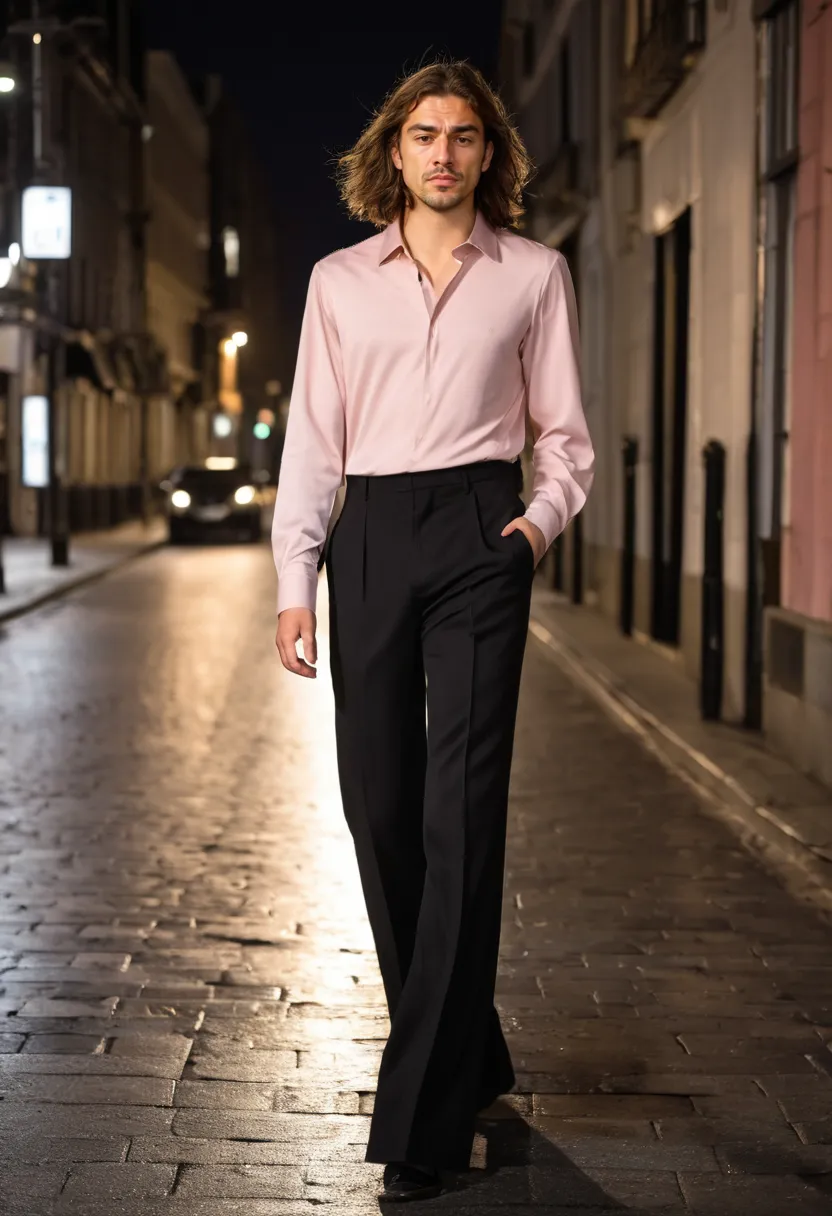
The silhouette strategy at work here is contrast through proportion. The trousers are wide, the blouse is fitted. If both pieces were slim, the look would read as preppy or possibly too feminine. If both were voluminous, it would read as oversized streetwear. The specific combination of wide bottom and fitted top creates a silhouette that borrows from both masculine and feminine traditions without fully committing to either. This is classic gender blending fashion men strategy: use silhouette to hold the tension that color alone cannot.
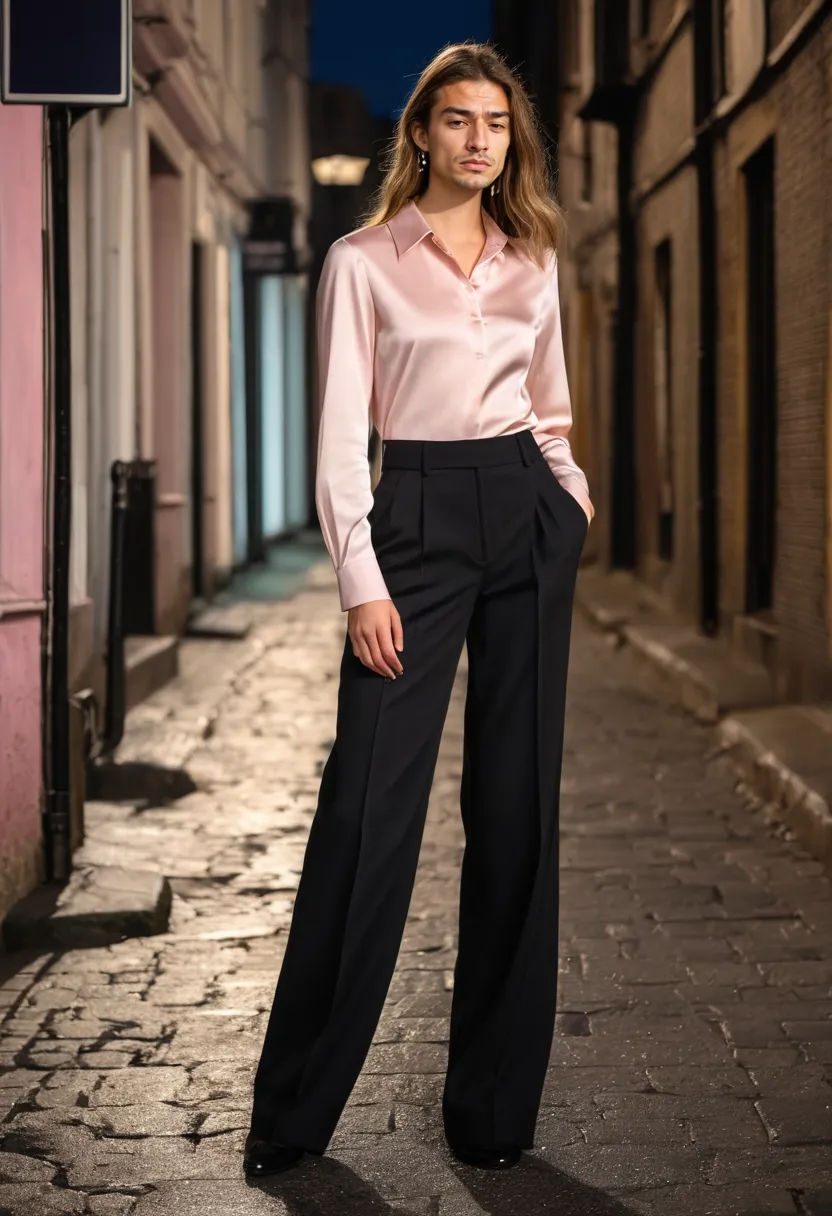
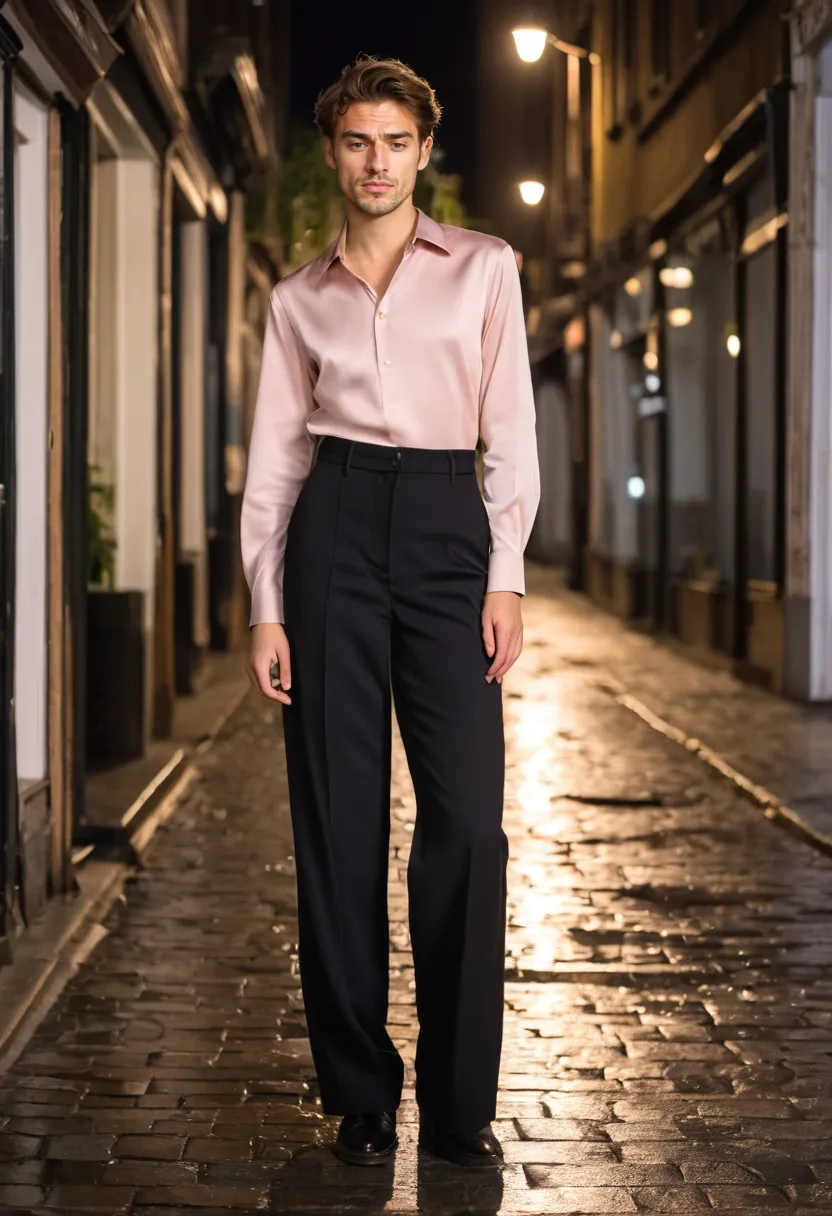
Color choices within androgynous dressing tend to follow a few patterns. Neutrals dominate because they allow silhouette and fabric to do the talking—think blacks, greys, ivories, and navies. When color is introduced, it’s usually a single accent: a dusty pink, a muted lavender, a soft sage. Bold color blocking is rare in this aesthetic because it competes with the fabric and silhouette conversations already happening. The best androgynous outfits use color sparingly and deliberately, letting one feminine-coded shade provide counterpoint to a field of neutral masculinity.
Silhouette strategy also extends to how pieces hang on the body. Tucked versus untucked, fitted versus loose, long versus short—each decision shifts the gender coding of the overall look. A soft pink blouse tucked into wide trousers reads differently than the same blouse left loose. Experimenting with these variables teaches you how small adjustments dramatically change the final impression.
Styling Androgynous Outfits for Different Settings and Contexts
One of the most practical questions around androgynous style men outfits is where and when they can actually be worn. The honest answer is: far more places than you might think, provided you adjust the intensity of the gender-blending to match the context. A structured navy blazer worn over a flowing ivory chiffon blouse is a perfect example of a look that translates across multiple settings. The sharp structured outer fabric reads as appropriate for dinners, gallery openings, creative workplaces, and evening events. The soft inner chiffon layer adds the androgynous dimension without screaming for attention.
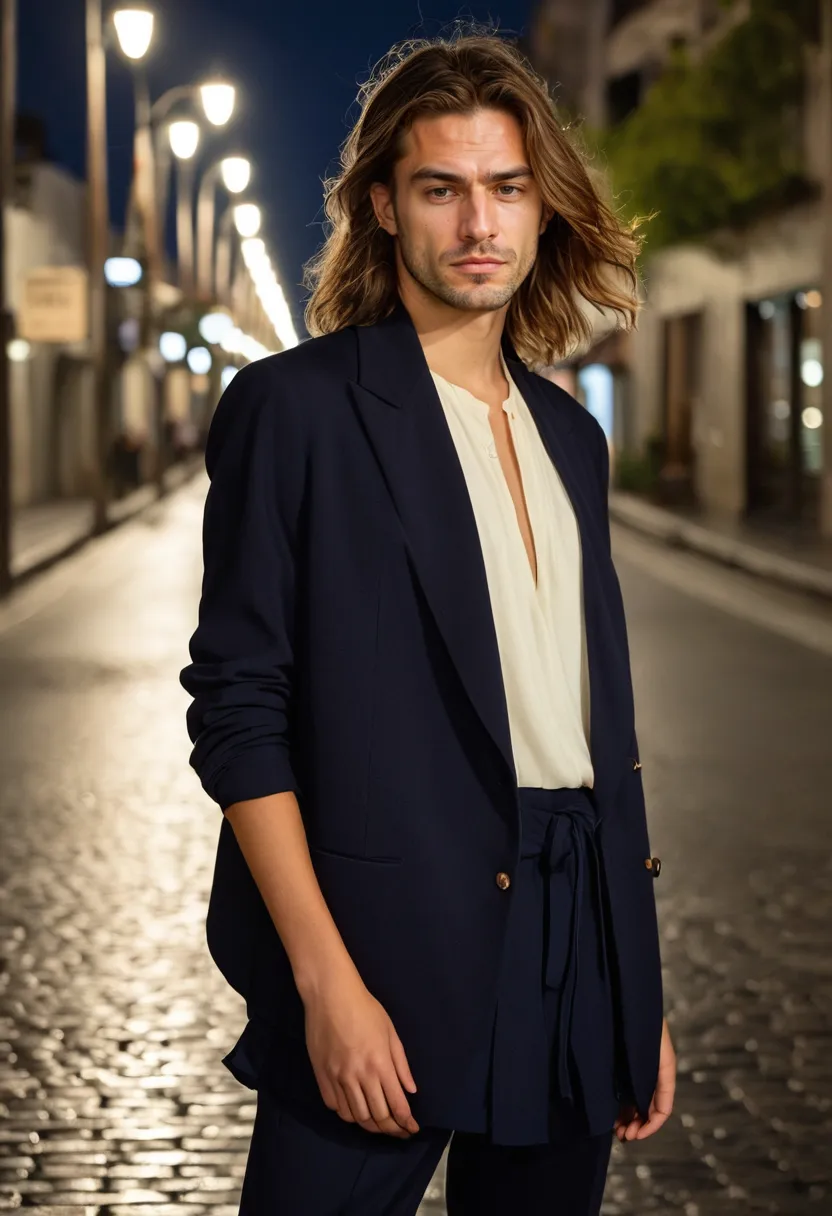
For professional or semi-formal settings, the rule of thumb is to keep the outermost layer traditionally tailored. A navy blazer, a charcoal suit, a camel overcoat—these pieces provide the visual authority that most professional environments expect. The androgynous elements can then live underneath, visible but not dominant. A chiffon blouse peeking out at the collar, a silk camisole showing when the jacket opens, a delicate necklace catching the light—these small signals communicate your aesthetic without requiring explanation.
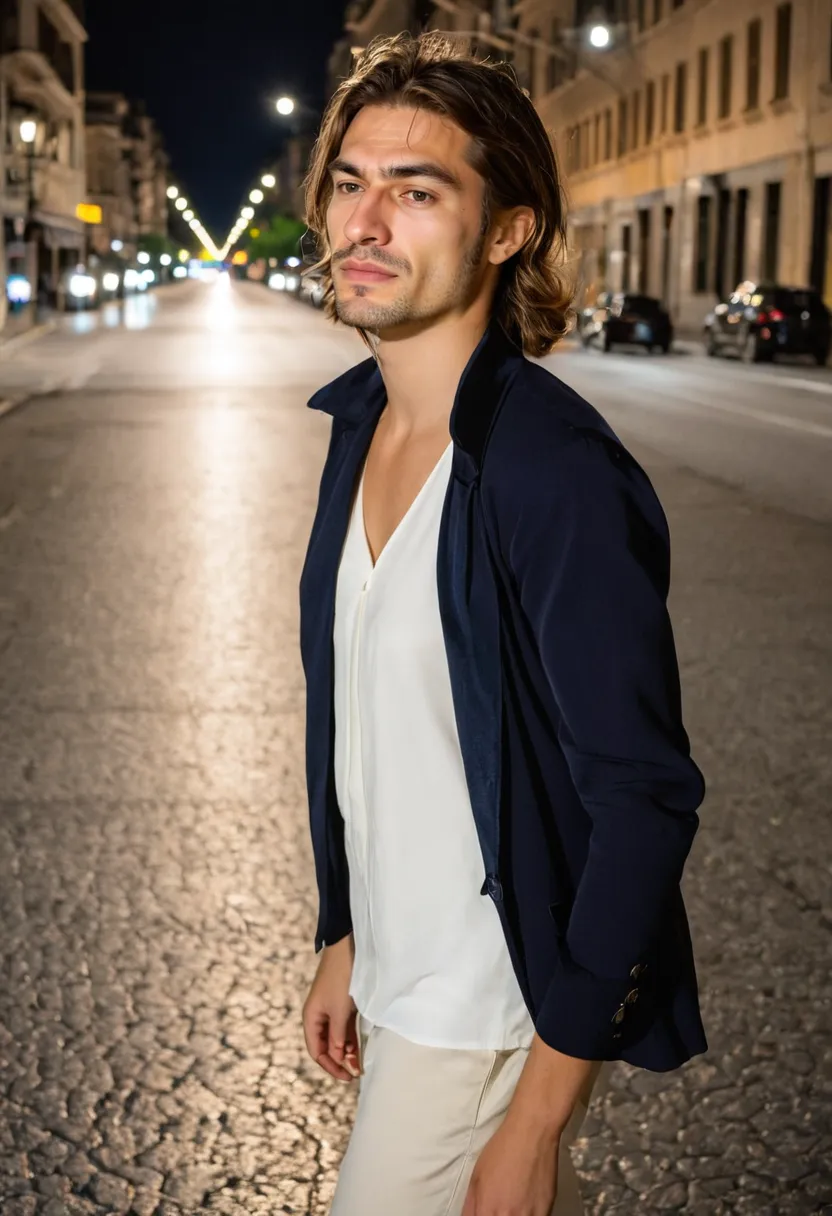
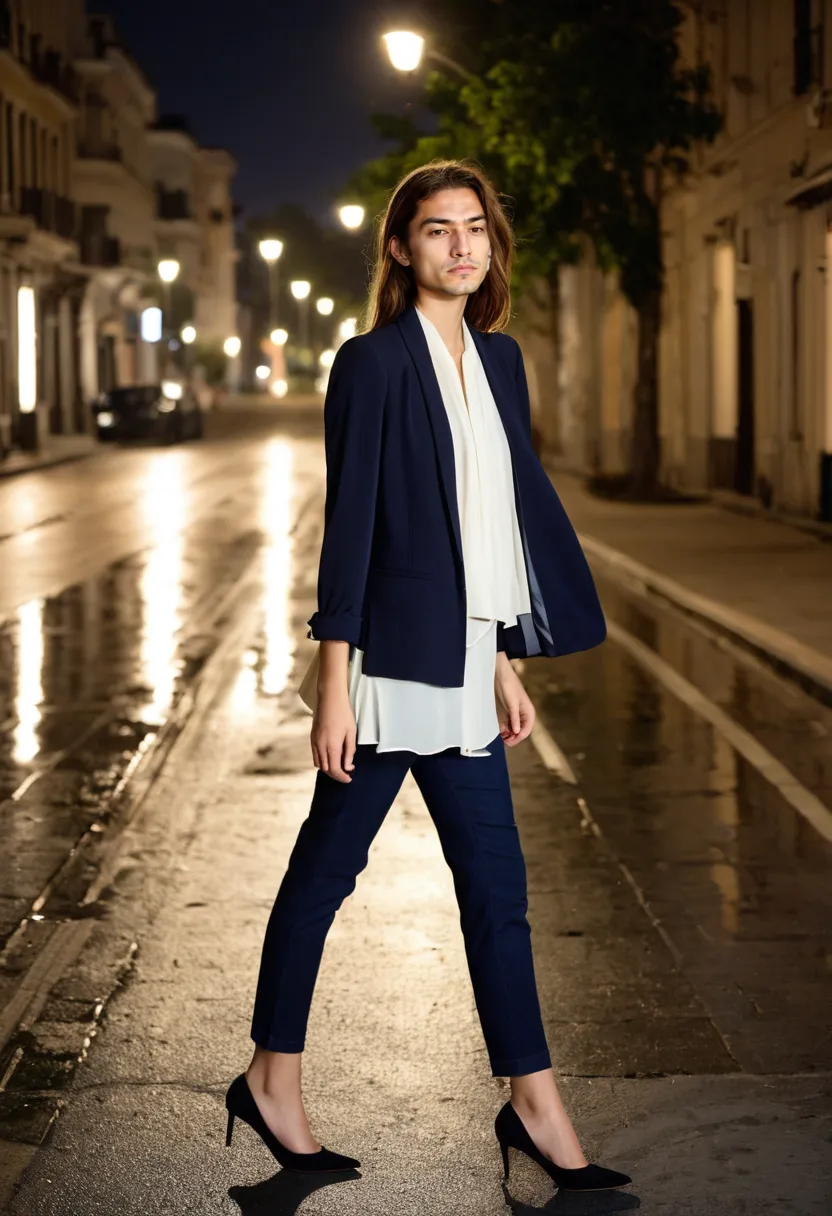
For nightlife, creative events, and social settings where self-expression is welcomed, you can push further. This is where full silk shirts, statement jewelry, heeled boots, and bolder color choices come into play. The empty night street setting in the reference images isn’t accidental—androgynous fashion photographs beautifully in urban nighttime environments because artificial light catches delicate fabrics in ways daylight cannot. The wet pavement adds reflection and depth, creating a natural stage for the contrast between structured and flowing elements.
For everyday wear, the approach should be incremental. Start with subtle integrations: a silk pocket square, a pearl stud earring, a softer blouse under a familiar jacket. As your confidence grows, so can the visibility of your androgynous elements. The goal is never to shock—it’s to build a wardrobe that feels authentically yours, regardless of which gendered traditions contributed to it. Context-appropriate androgyny is sustainable androgyny, and sustainable style is the only kind worth building.
Where to Shop for Androgynous Clothing That Actually Fits Boys Well
Finding well-fitting androgynous clothing is the single biggest practical challenge in building this kind of wardrobe. Most menswear brands don’t offer delicate fabrics, and most womenswear brands aren’t cut for male bodies. The solution is a combination of sources, each chosen for what they do best. Consider a head-to-toe look built around tailored slim trousers in soft grey paired with a draped blouse in the same neutral tone. The precise tailoring of the trousers demands a specialty tailor or a brand that understands male proportions, while the soft feminine drape of the blouse likely requires hunting through womenswear sections or unisex labels.
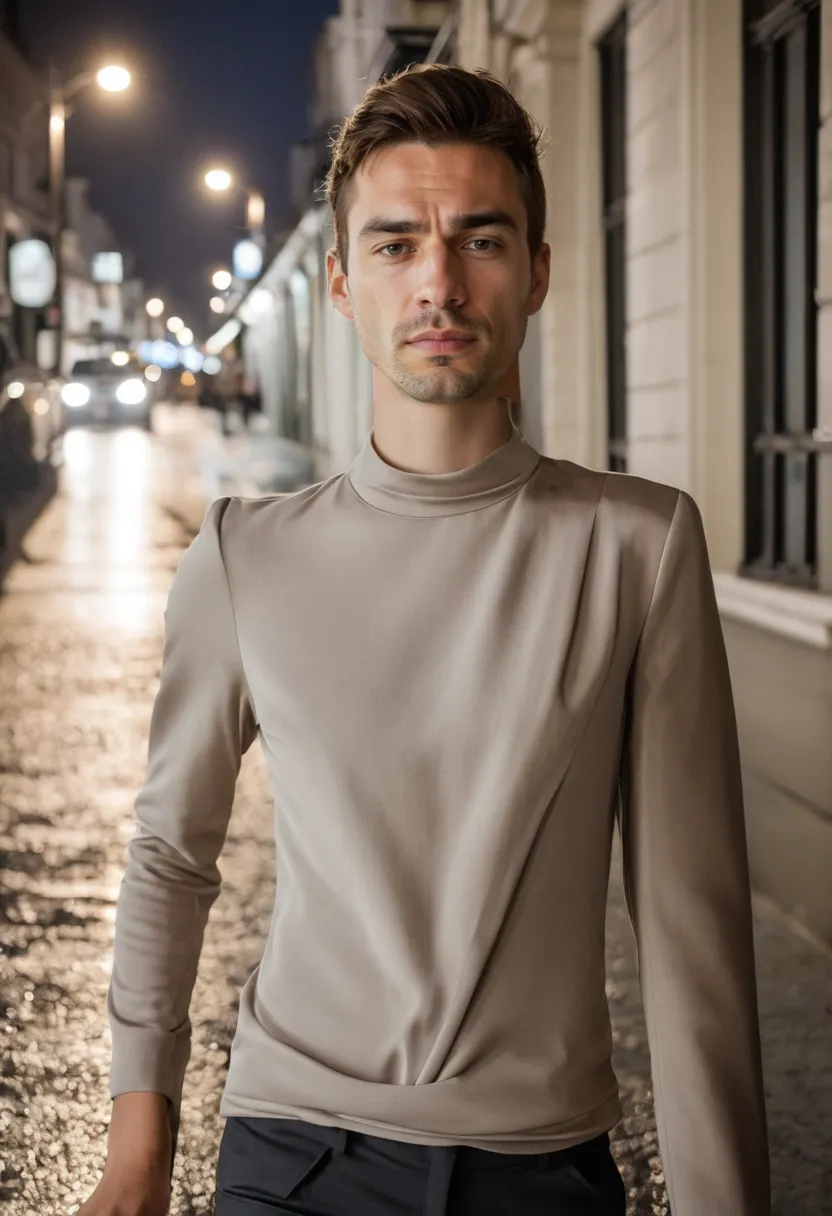
Start with independent designers who specifically design for androgynous aesthetic boys. Brands like Telfar, Ludovic de Saint Sernin, Rick Owens, Ann Demeulemeester, and Harris Reed have built reputations on clothing that refuses binary categorization. These designers understand that a man’s shoulder needs different construction than a woman’s, even when the garment’s aesthetic coding is feminine. Their prices can be steep, but a single well-made androgynous piece often outlasts dozens of fast-fashion experiments.
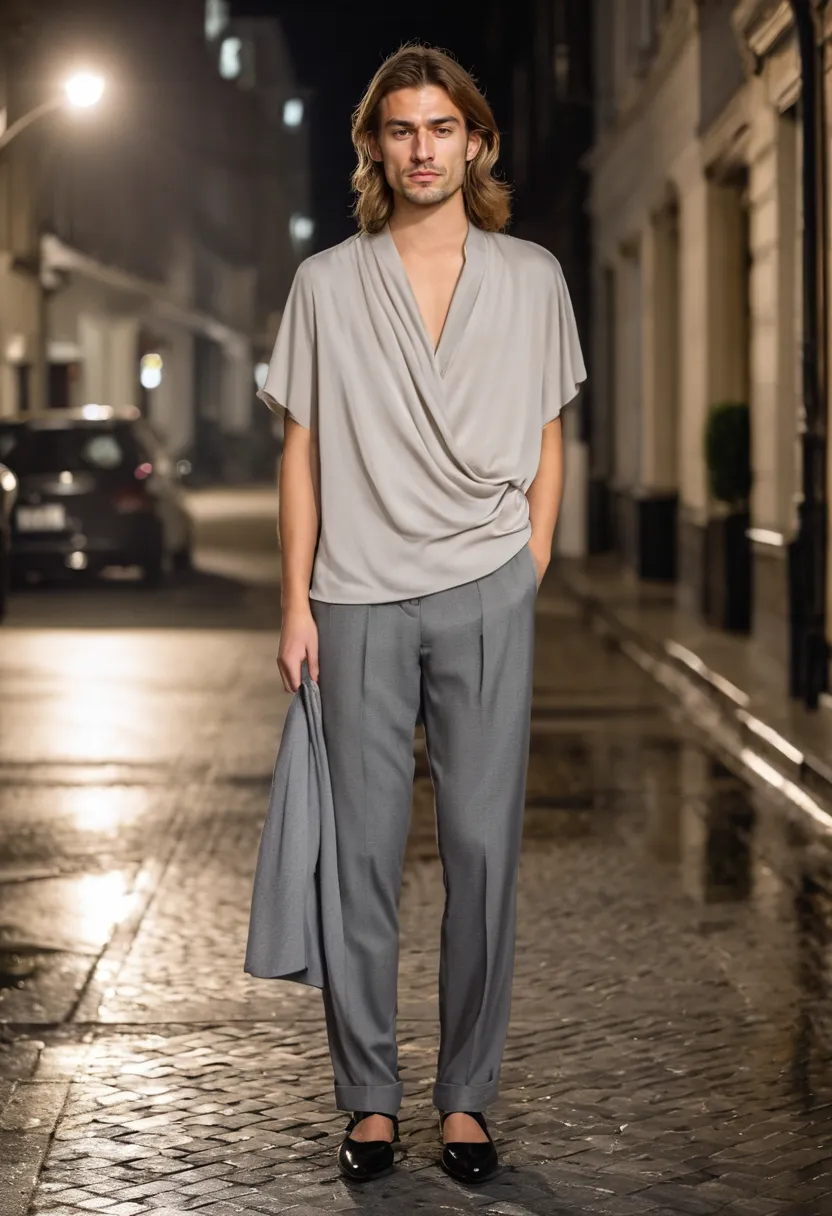
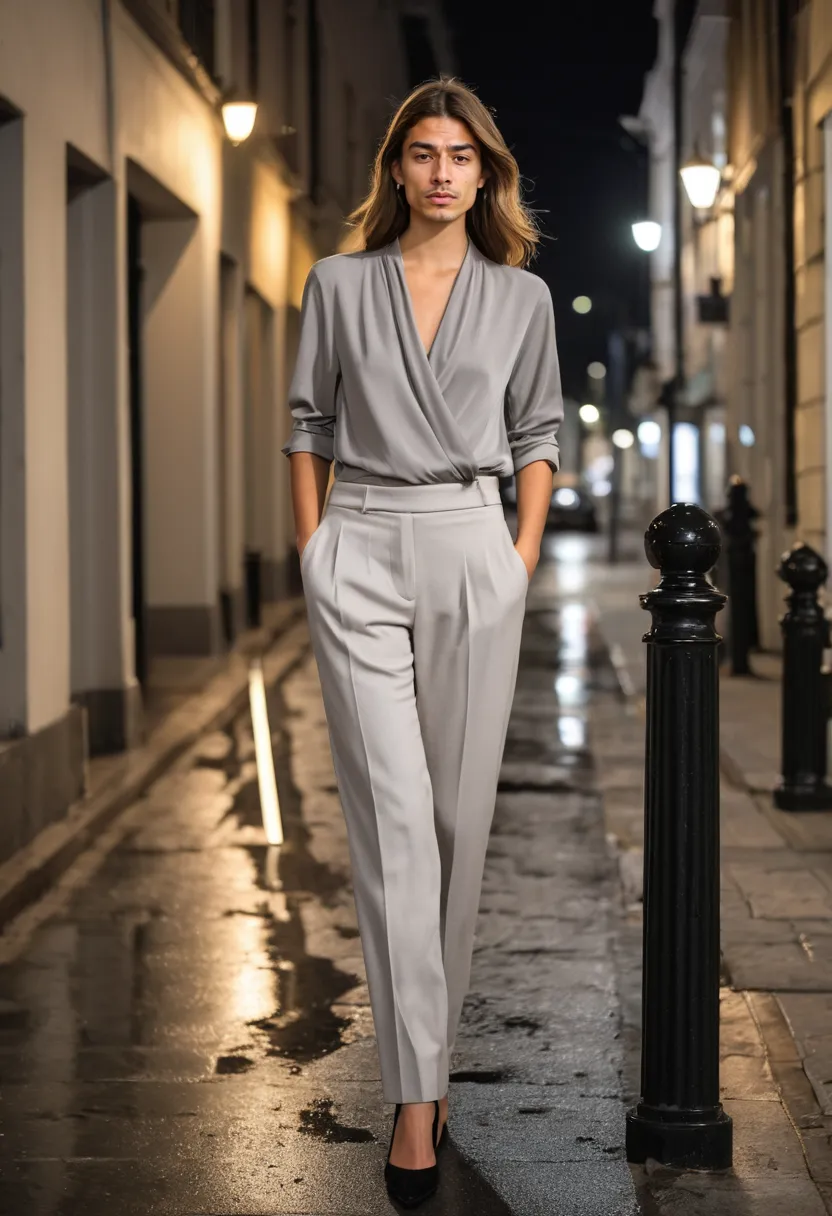
Vintage shops are another treasure trove. Older silk blouses, 1970s wide-leg trousers, structured blazers from decades past—these pieces often have the kind of fabric quality that contemporary fast fashion cannot match. Because vintage sizing is inconsistent, you can sometimes find womenswear items that fit a male frame purely by accident. Always bring what you find to a good tailor; a forty-dollar vintage blouse plus twenty dollars of alterations often produces better results than two hundred dollars spent on something new.
Unisex and gender-neutral brands are the most practical everyday option. Labels like Cos, Uniqlo U, Margaret Howell, and various Japanese brands produce clothing specifically designed to work across bodies and genders. Their silhouettes tend to be clean and their fabrics quietly excellent. For basics—the kinds of pieces you’ll layer repeatedly—these brands offer reliable quality at reasonable prices.
Finally, never underestimate the power of tailoring. A mediocre garment that fits you perfectly will always outperform a beautiful garment that doesn’t. Build a relationship with a local tailor who understands your aesthetic goals. Explain that you want a womenswear blouse altered to sit properly on male shoulders, or that you want men’s trousers taken in for a slimmer line. Good tailors have seen everything and will work with you without judgment.
Androgynous outfits for men represent something far more meaningful than a passing trend—they’re a considered response to decades of unnecessary rigidity in how men have been allowed to dress. By combining the structural power of masculine tailoring with the expressive softness of feminine fabrics, this style creates visual conversations that neither tradition could produce alone. The charcoal blazer over silk camisole, the cotton shirt over lace, the wide trousers with pink blouse, the navy jacket over chiffon, the monochromatic grey draping—each combination demonstrates how contrast, restraint, and intentionality combine to create something genuinely new. Whether you’re just beginning to experiment or already deep into building your androgynous wardrobe, remember that the best version of this style is always the one that feels authentically yours. Let the masculine and feminine elements negotiate on your terms, in your context, at your pace. The result won’t just be better clothing—it will be a clearer expression of who you actually are.
Author: Emma. Photos: Alex Neuron. The material was prepared with the assistance of AI and has undergone quality review.