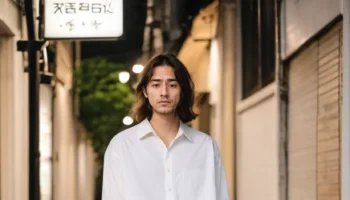
Kawaii Fashion for Men: Cute, Colorful & Unapologetically Playful
Kawaii fashion for men is having a moment, and it’s not the kind of moment that fades quietly. Across Tokyo’s Harajuku streets, London’s Camden Market, and countless TikTok feeds, boys and men are embracing pastel palettes, cartoon embroidery, puffed sleeves, and ruffled skirts with the confidence of someone who has simply decided that joy looks good on them. This isn’t cosplay, and it isn’t a costume — it’s a wearable, evolving aesthetic rooted in Japanese pop culture that has crossed gender lines, age groups, and continents. Whether you’re curious about easing into the style with a single embroidered blouse or ready to dive headfirst into puffed mini skirts and velvet dresses, this guide walks you through everything you need to know about men wearing kawaii outfits, from its cultural origins to how to shop for it, style it, and make it your own.
What Is Kawaii Fashion and Where Did It Come From
The word “kawaii” (可愛い) translates loosely to “cute,” “lovable,” or “adorable” in Japanese, but the cultural weight it carries is far heavier than a simple adjective. Kawaii emerged in Japan during the 1970s, initially as a rebellious youth movement centered around handwriting. Teenage girls began using rounded, childish script filled with hearts, stars, and cartoon faces — a visual language that rejected the rigid formalities of adult Japanese society. By the 1980s, this aesthetic had spilled into fashion, product design, and media, birthing icons like Hello Kitty and giving rise to entire neighborhoods, most famously Harajuku, dedicated to its celebration.
For decades, kawaii fashion was coded as feminine, associated with schoolgirls, Lolita fashion, and Sanrio-obsessed pop stars. But the 2010s saw a dramatic shift. Artists like Kyary Pamyu Pamyu pushed kawaii into surreal, experimental territory, while male idols in J-pop and K-pop began incorporating pastel hair, sparkly accessories, and soft tailoring into their looks. The internet did the rest. Global audiences discovered that cute wasn’t a gender — it was a feeling, a rebellion, a style choice available to anyone brave enough to wear a bow.
Today, kawaii fashion for men stands as one of the most genuinely subversive style movements in contemporary menswear. It challenges decades of “masculine minimalism” and invites softness, playfulness, and color back into male wardrobes. It borrows from streetwear, decora, fairy kei, and Y2K nostalgia, blending them into something that feels both deeply personal and joyfully communal. To wear kawaii as a man is to opt out of drab convention and opt into a world where clothing can be fun again.
Gallery: Boys in Kawaii Outfits That Are Unapologetically Playful
There’s a particular kind of magic in seeing a boy fully commit to a kawaii look — not hedging, not apologizing, just wearing it. Picture this: an oversized baby pink hoodie in soft fleece, its surface dotted with cartoon embroidery of wide-eyed bears and tiny hearts, paired with a puffed mini skirt in dreamy lilac. The fabrics are intentionally voluminous, almost cloud-like, designed to swallow the wearer in gentle pastels. It’s the kind of outfit that looks best under a moody neon noir studio light, holographic accents bouncing off every sequin and stitch.
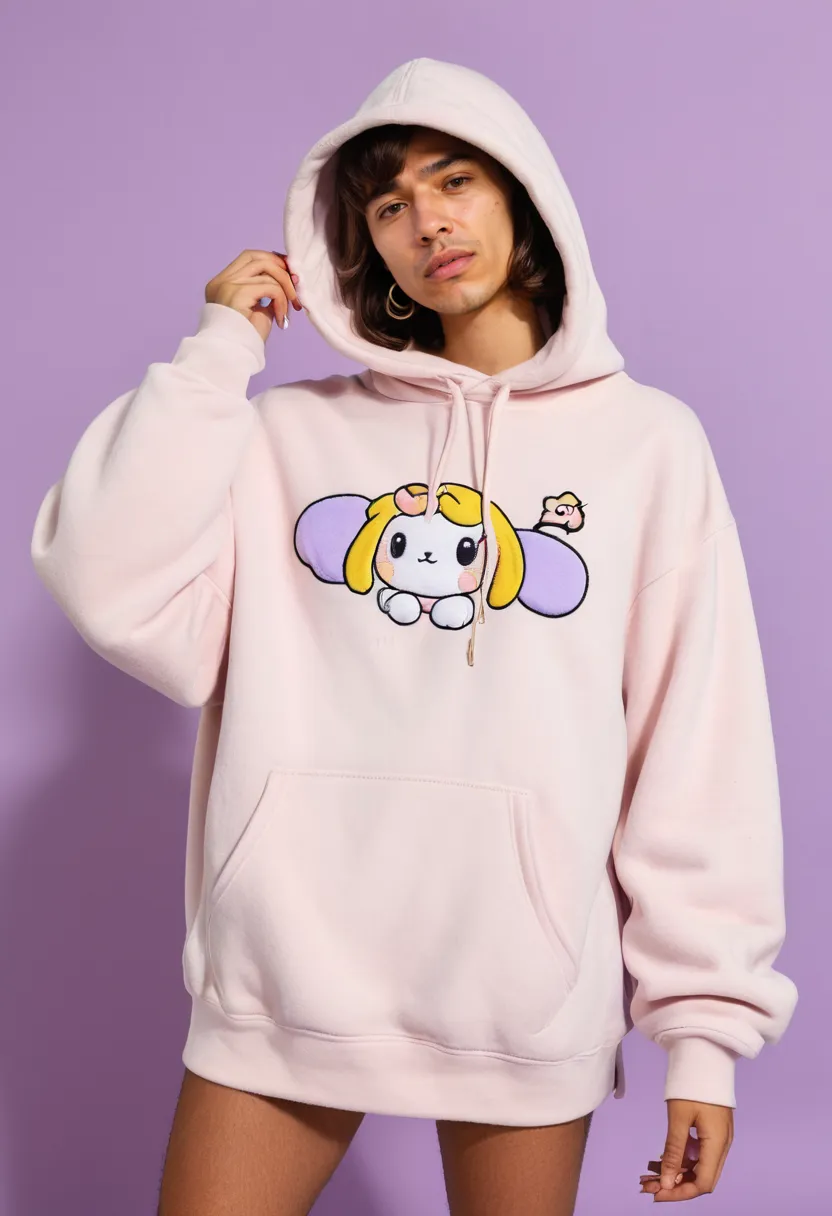
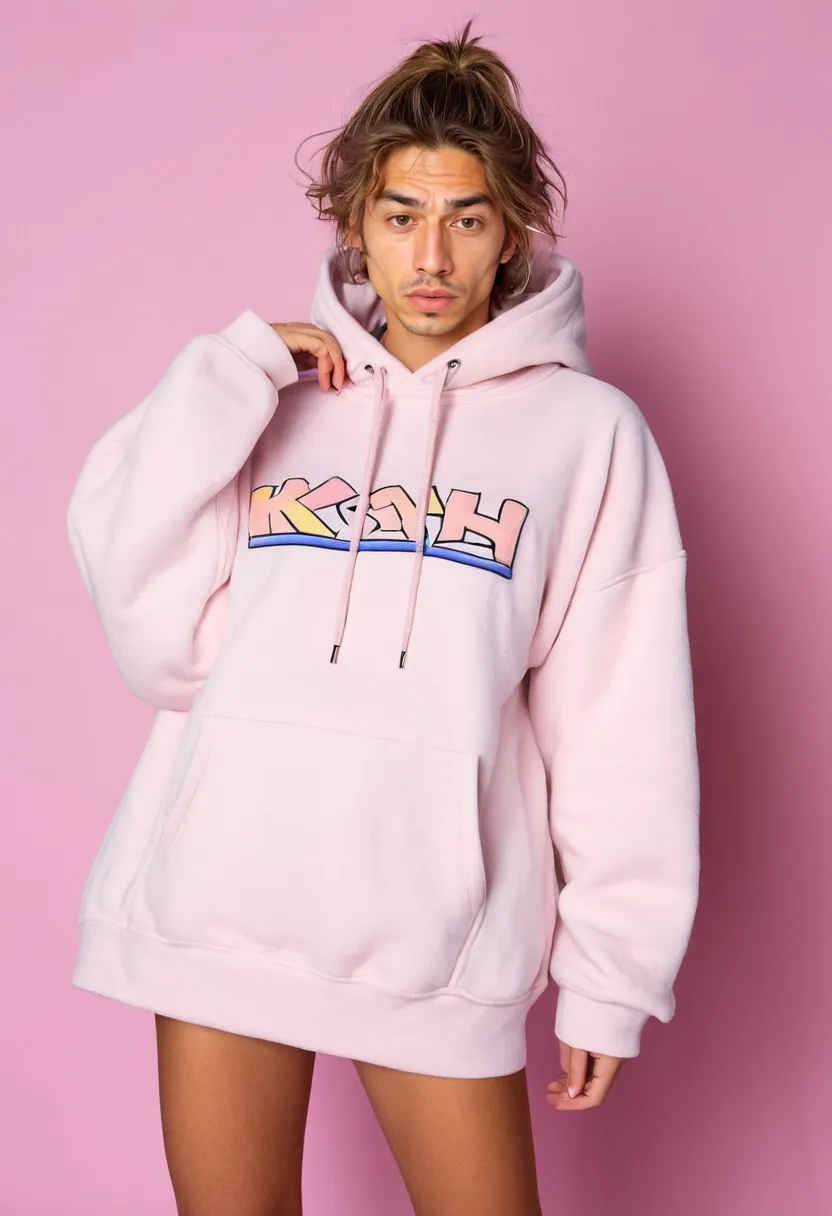
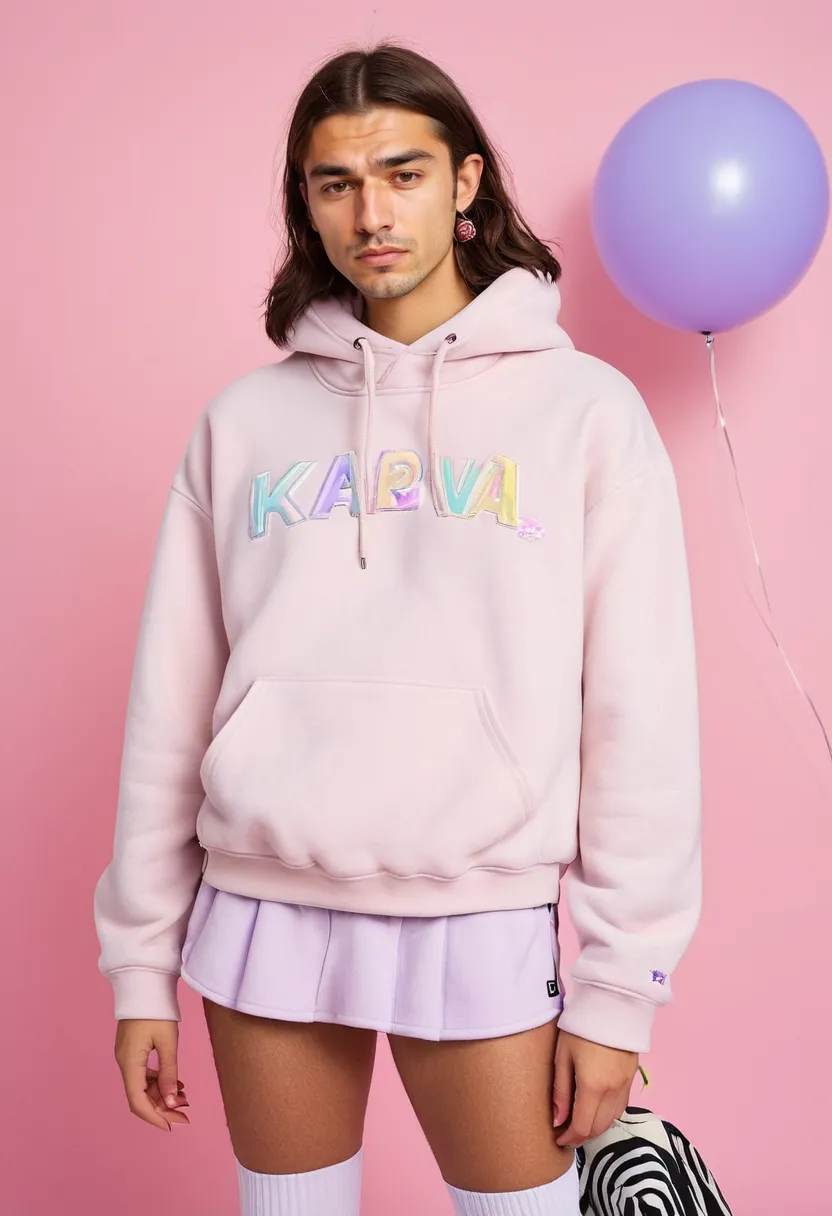
What makes these looks work isn’t just the garments themselves — it’s the attitude. The oversized silhouette plays with proportion, softening the body into something sculptural. The embroidery adds storytelling, little characters scattered across the chest like pages from a childhood sketchbook. The lilac skirt, with its puffed volume, echoes the hoodie’s softness while introducing movement. Together, the pieces feel like a visual poem about permission: permission to be cute, to be colorful, to take up space in pink and purple without explanation.
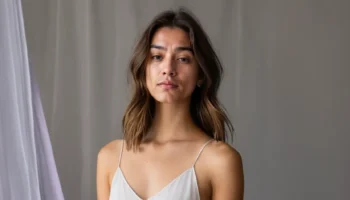
For boys just starting out, galleries like this one matter. Seeing the look fully realized — styled, lit, and photographed with care — makes it easier to imagine yourself in it. Kawaii style for boys isn’t about copying, but about borrowing moods. Maybe you love the hoodie and want to pair it with jeans. Maybe the skirt catches your eye and you can picture it with sneakers and a graphic tee. The point is that these outfits are starting lines, not finish lines.
Key Kawaii Pieces: Oversized Tees, Puffed Sleeves and Character Prints
If you’re building a kawaii wardrobe from scratch, there are a few foundational pieces that do most of the heavy lifting. At the top of the list is the oversized kawaii t-shirt. Picture a crisp white cotton jersey tee, cut in a relaxed boxy fit, splashed across the front with a bold, colorful kawaii character print — think round-faced creatures with blushing cheeks, rainbow auras, or tiny speech bubbles declaring “hi!” in bubble letters. Add wide puffed sleeves cinched with elastic cuffs, and suddenly a basic tee becomes the centerpiece of an entire outfit.
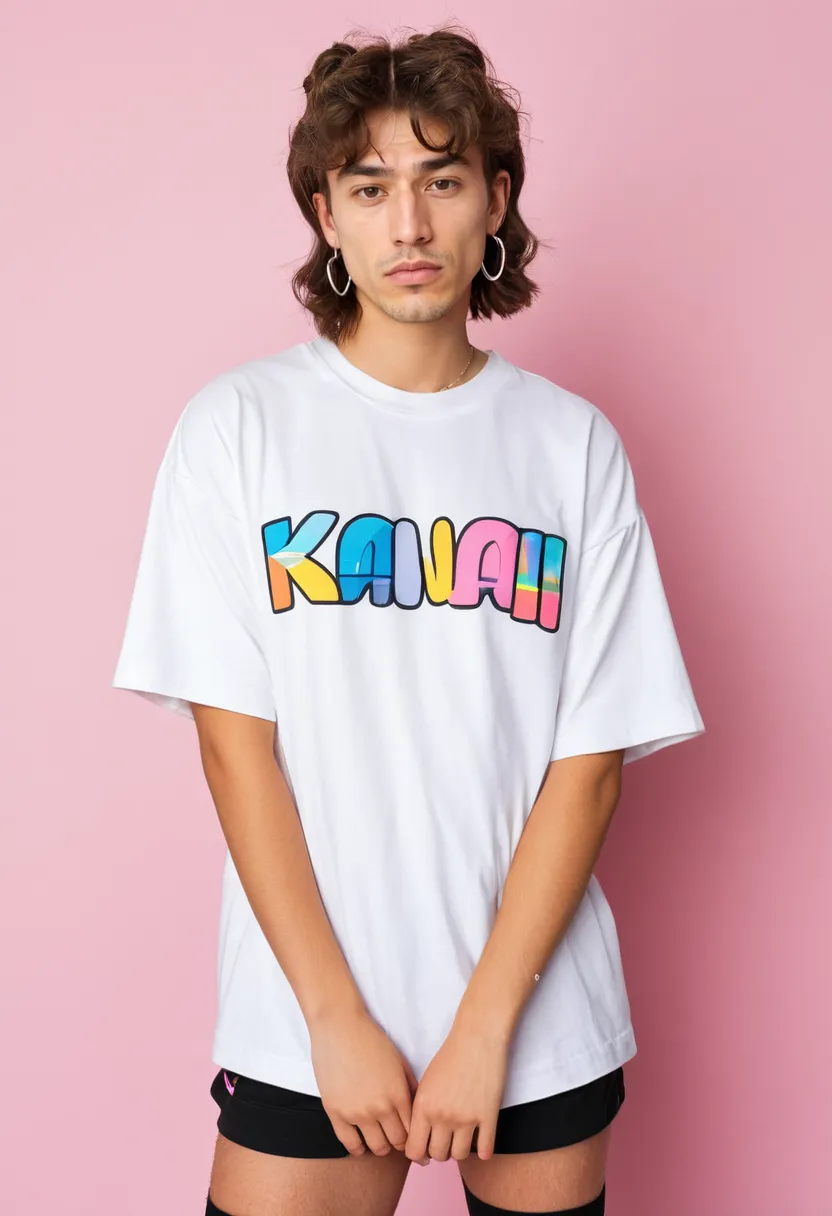
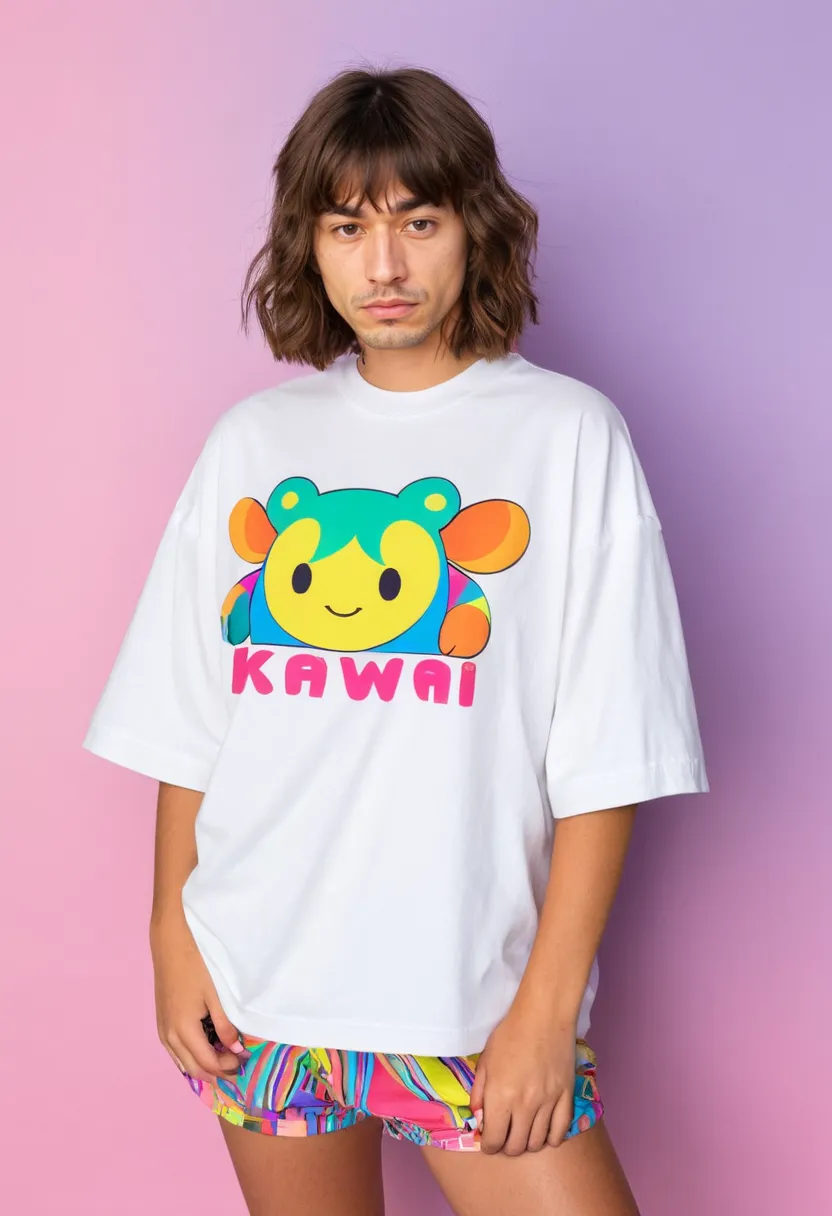
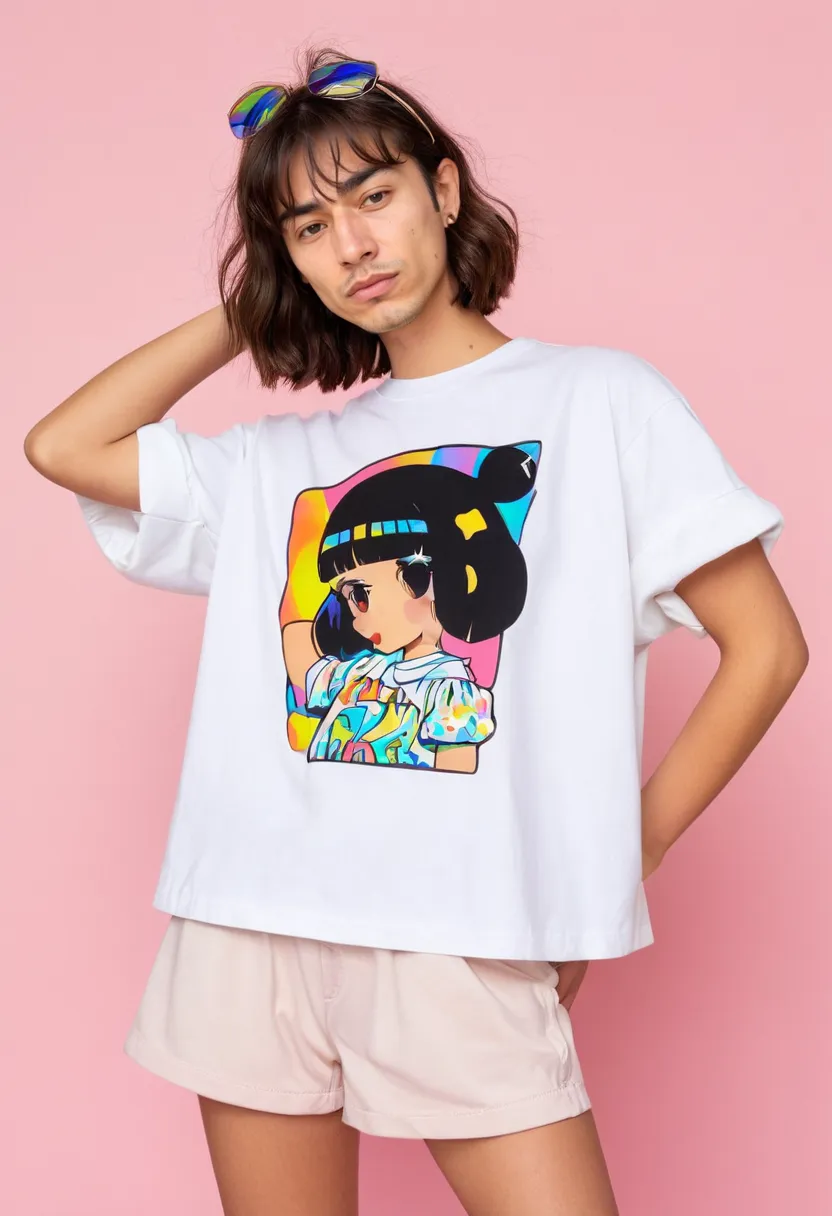
Puffed sleeves are one of kawaii’s most signature elements, and they’re particularly powerful in menswear because they so clearly reject the straight, narrow lines of traditional male tailoring. A puffed sleeve adds drama, softness, and a slight theatricality — qualities that have historically been pushed out of men’s clothing. Reclaiming them is, in a small way, radical.
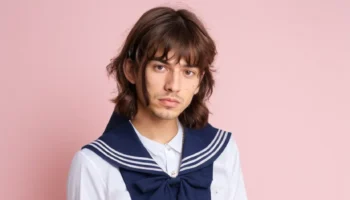
Character prints are another non-negotiable. Whether it’s original kawaii mascots, licensed anime art, or Sanrio favorites like My Melody, Cinnamoroll, and Kuromi, the print tells the story. Men in kawaii fashion often build entire outfits around a single beloved character, pulling colors from the design into the rest of the look. Beyond tees, key pieces include pastel cardigans with button-up fronts, pleated skirts in any color that reminds you of bubblegum or cotton candy, high-waisted shorts, knee-high socks with lace trim, and chunky platform shoes — sometimes Mary Janes, sometimes sneakers covered in rainbow charms.
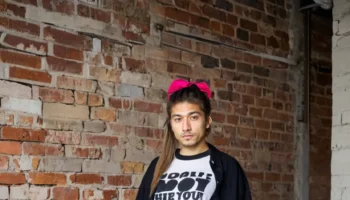
Accessories seal the deal. Hair clips shaped like stars and bows, plush backpacks, heart-shaped sunglasses, layered pearl necklaces, and lots of enamel pins all add the “decora” element that kawaii loves. The goal isn’t restraint — it’s abundance, joyfully curated.
Current Kawaii Trends for Boys Right Now
Kawaii is not a static aesthetic. It shifts with the seasons, absorbs new influences, and reinvents itself constantly, which is part of why it stays so exciting. Right now, a few specific trends are dominating feeds and wardrobes. The matching set is having a huge moment — and not just any matching set. Think pale yellow ribbed crop top and high-waisted shorts, the ribbed knit fine and delicate in a soft lemon yellow, finished with a large bow at the waist made from the same fabric. The effect is sweet without being saccharine, polished without being stiff, and it photographs beautifully.
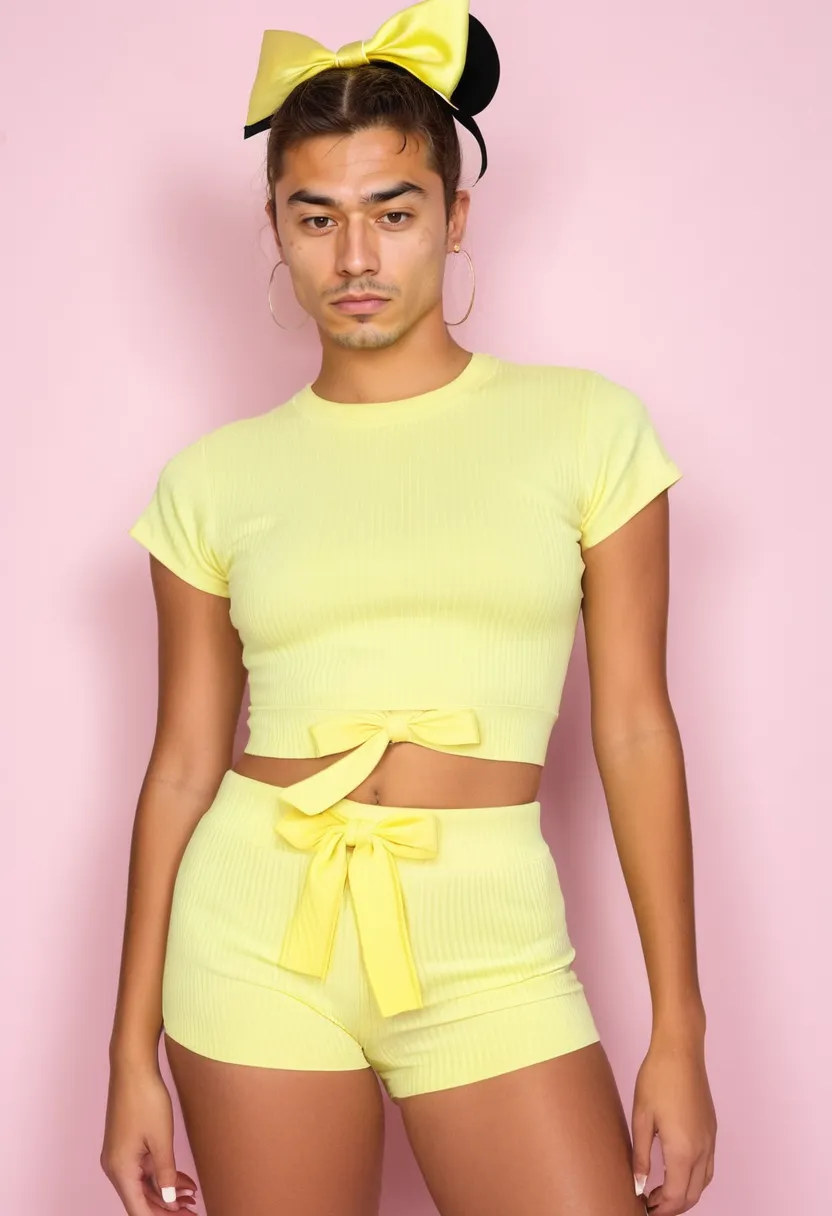
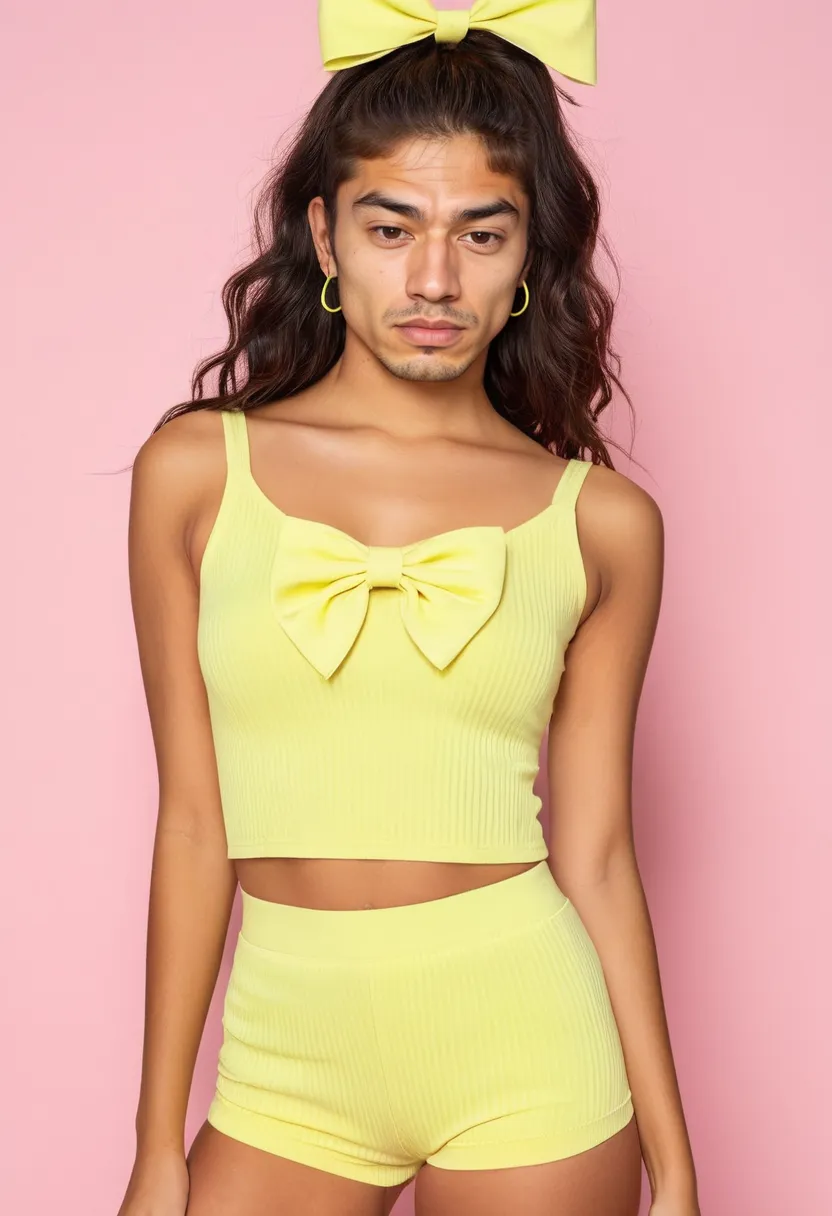
Beyond the lemon-yellow coordinates, soft-grunge kawaii is rising — pairing pastel pieces with black platform boots, fishnet layers, and a touch of gothic makeup. It’s kawaii with an edge, perfect for boys who love the cute aesthetic but want to anchor it in something a little darker. There’s also “office kawaii,” a newer trend that combines pleated skirts and puffed-sleeve blouses with structured blazers and loafers for a look that’s almost workplace-appropriate (depending on the workplace).
Another major movement is the return of “angel kawaii” or “dreamy kawaii,” which leans heavily on white, sky blue, and soft pink, with feathers, wings, and cloud motifs. Translucent materials, glitter, and pearl details are everywhere. Y2K kawaii is still going strong too, with baby tees, low-rise skirts, butterfly hair clips, and frosted eyeshadow making appearances on nearly every For You page.
Gender-neutral sizing is a trend in itself. More brands are dropping size charts that ignore traditional men’s/women’s categories, making it easier than ever for boys to find puffed-sleeve blouses and ribbed shorts that actually fit. This quiet infrastructural change may be the biggest trend of all, because it removes one of the last practical barriers keeping boys out of kawaii fashion entirely.
How to Style Kawaii Without It Looking Like a Costume
One of the most common fears for men approaching kawaii fashion is looking costumey — like they’re wearing someone else’s clothes or trying too hard. The trick to avoiding this is restraint, proportion, and authenticity. You don’t have to wear every kawaii element at once. In fact, the most wearable kawaii looks often feature just one or two intentional pieces.
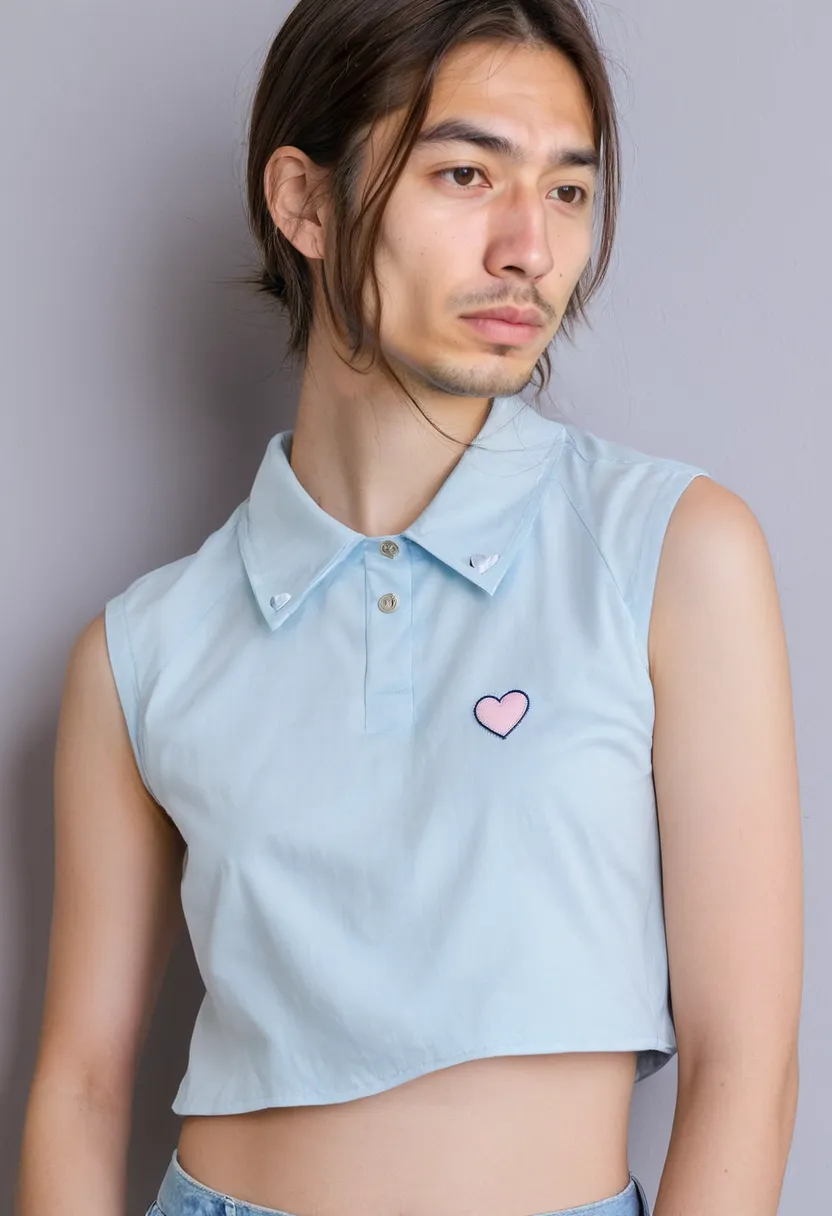
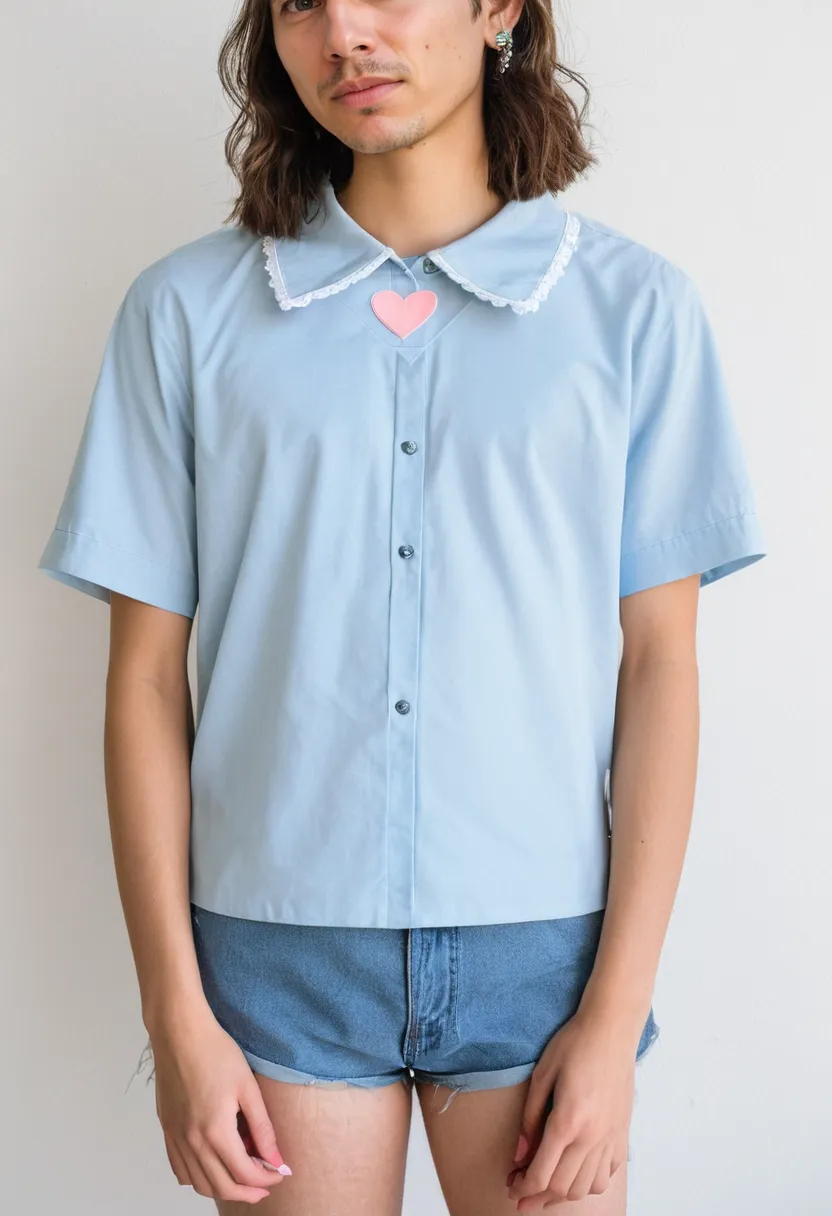
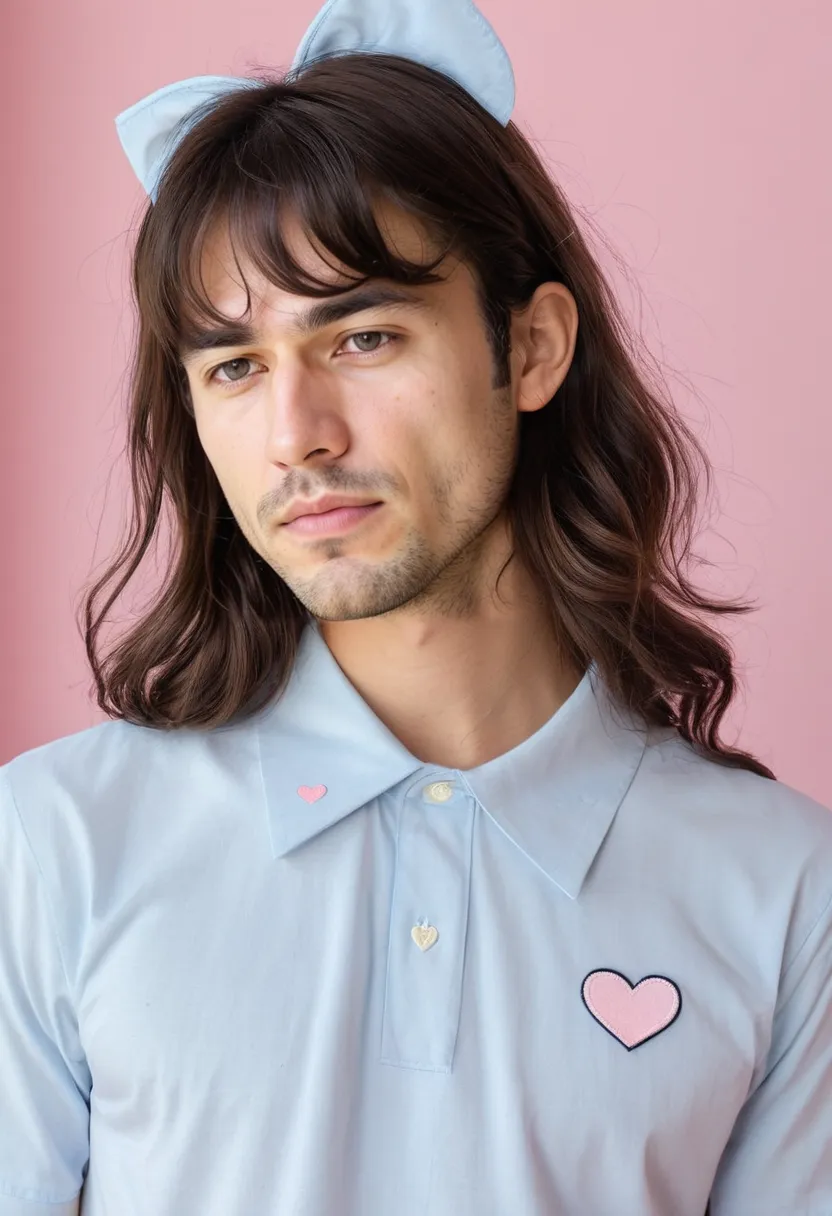
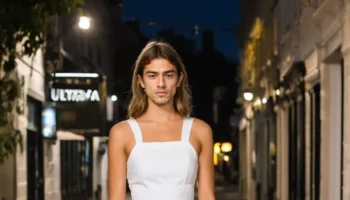
Take, for example, a pastel blue blouse in soft cotton with a simple clean cut and a single cute embroidered heart detail on the chest. This piece is quietly kawaii — the pastel color and the embroidery signal the aesthetic without shouting it. Pair it with well-fitted dark jeans and minimalist sneakers, and you’ve got an outfit that reads as thoughtful, slightly whimsical, and fully grown up. This is kawaii as texture rather than full submersion.
Proportion is another secret weapon. If you’re wearing something playful on top, balance it with something more structured on the bottom. A puff-sleeve tee with tailored trousers. A pastel cardigan with straight-leg jeans. A character graphic tee with a pleated midi skirt, but paired with clean white sneakers rather than platform boots. Mixing “grown-up” silhouettes with kawaii details prevents the look from tipping into dress-up territory.
Grooming and confidence matter enormously. A well-kept haircut, clean skin, and natural makeup (or no makeup at all) can ground even the cutest outfit in reality. And maybe most importantly: wear it like you mean it. Costumes feel like costumes partly because the wearer feels uncertain inside them. When you genuinely enjoy what you’re wearing, other people pick up on that energy and read the outfit as style, not performance.
Finally, make it yours. Don’t recreate a Pinterest look pixel-for-pixel. Take the bow, leave the skirt. Keep the pastel tee, ditch the knee socks. Kawaii is about joy and self-expression; the moment it starts feeling like a uniform, adjust.
Where to Shop Kawaii Fashion: Online and In-Store Options
Finding genuinely good kawaii pieces used to require a plane ticket to Tokyo. That’s no longer true. The market has exploded, and there are now dozens of brands dedicated to Japanese kawaii outfits for men, with price points ranging from fast fashion to luxury. Online is where most shopping happens, and platforms like YesStyle, Devil Inspired, and Listen Flavor carry a wide range of kawaii pieces with international shipping.
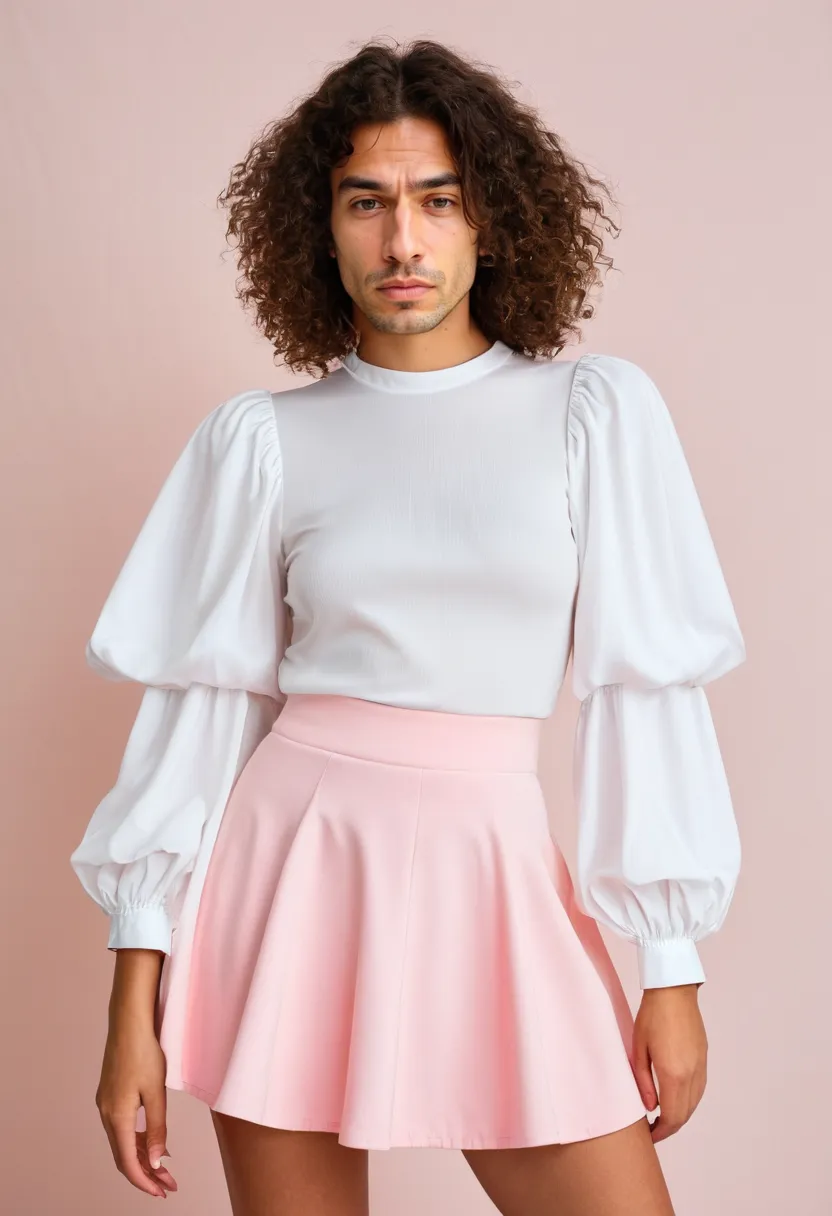
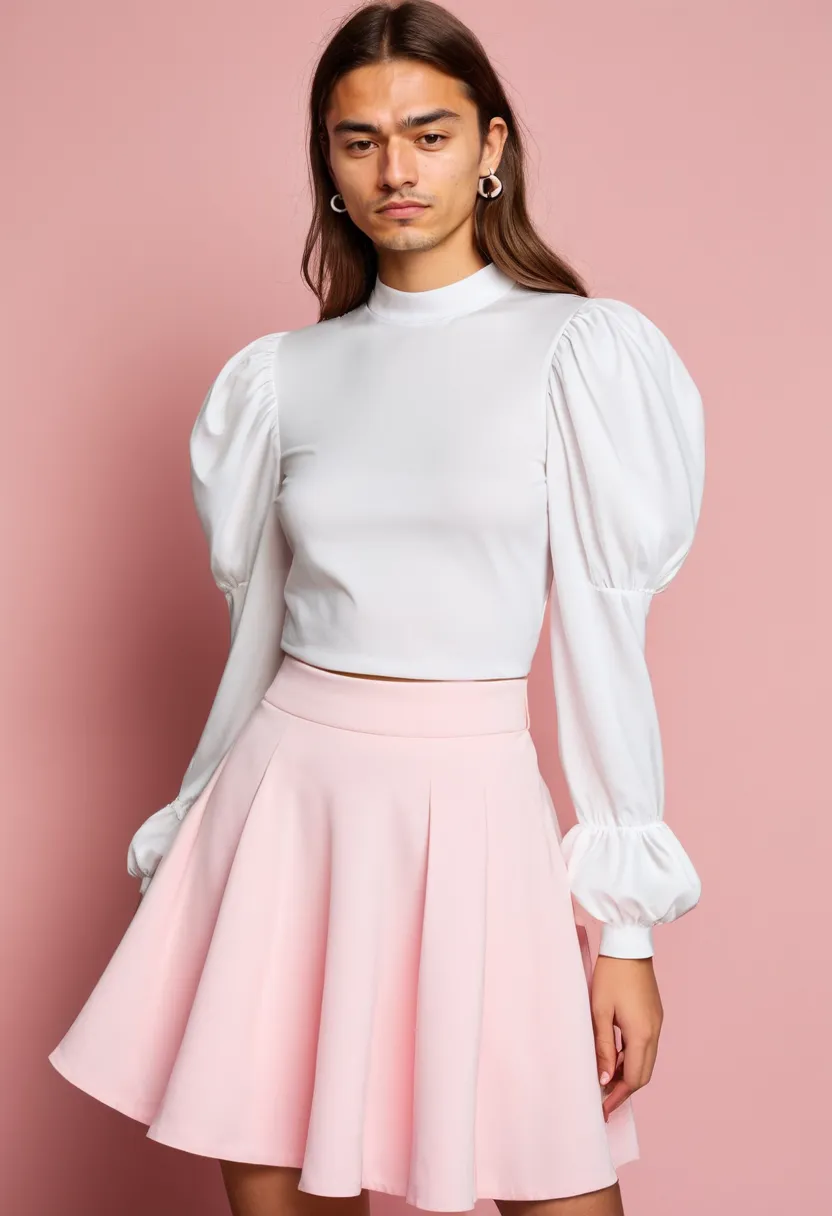
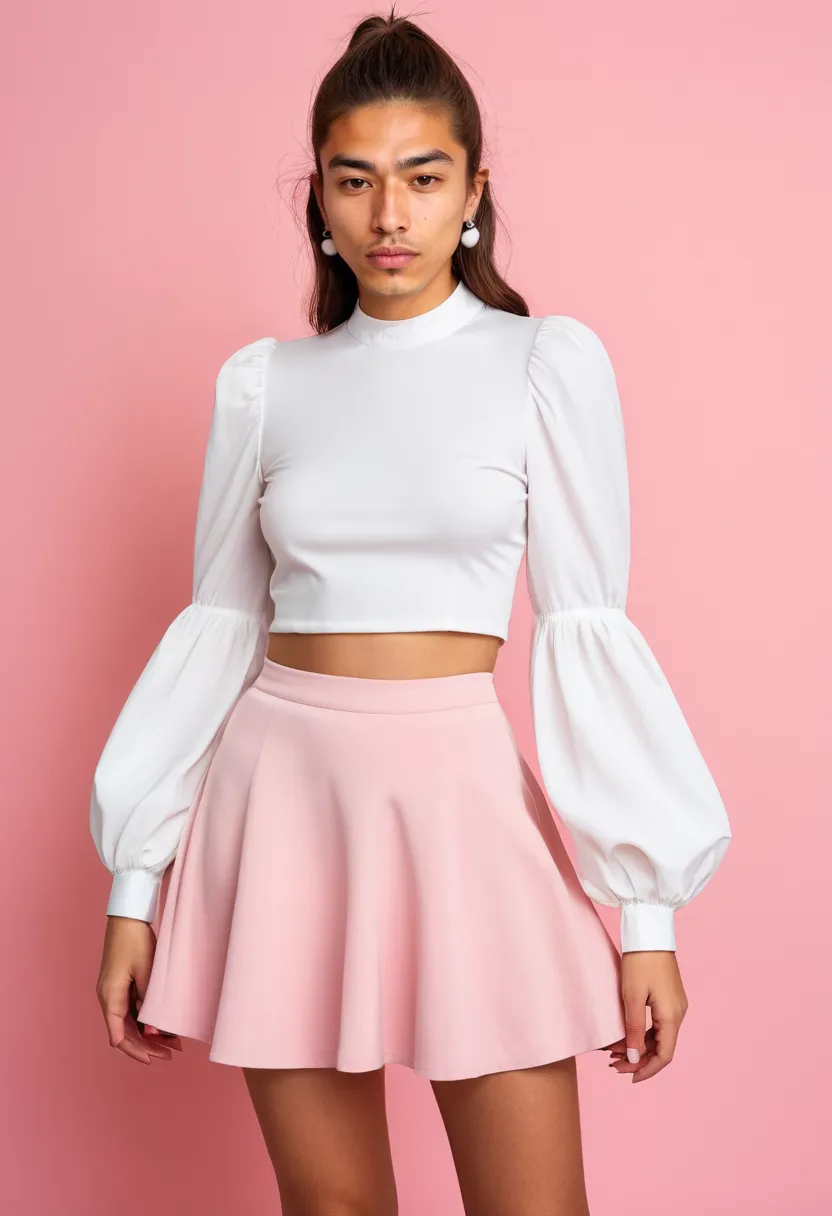
Imagine scoring a pastel pink flared skirt with gentle volume and a white puff-sleeve blouse with elastic cuffs — both in lightweight fabrics perfect for layering across seasons. These are exactly the kinds of versatile, wearable pieces that online retailers now stock in sizes that accommodate male bodies. Etsy is another goldmine, particularly for handmade items like embroidered cardigans, custom character tees, and one-of-a-kind hair accessories. Supporting independent makers also means getting pieces that feel genuinely personal rather than mass-produced.
For in-store shopping, the options depend heavily on your location. Tokyo’s Harajuku district remains the undisputed capital, with shops like 6%DOKIDOKI, ACDC RAG, and Pameo Pose offering full kawaii immersion. In the US, cities like Los Angeles, New York, and Seattle have dedicated kawaii and Japanese fashion boutiques. Anime conventions are surprisingly great shopping opportunities too, with vendor halls full of indie designers selling pieces you won’t find elsewhere.
Don’t overlook thrift stores. A lot of kawaii-adjacent pieces — pastel cardigans, pleated skirts, puff-sleeve blouses, ruffled socks — can be found secondhand at a fraction of retail prices. Vintage shops in particular often carry 1990s and early 2000s pieces that fit seamlessly into contemporary kawaii styling. Learning to DIY is the final hack. Simple iron-on patches, fabric markers, and sewing basics can transform a plain tee into a kawaii masterpiece for almost nothing. The community around kawaii fashion is generous with tutorials, and YouTube is full of step-by-step guides for boys customizing their wardrobes.
Kawaii Makeup and Hair That Complete the Look
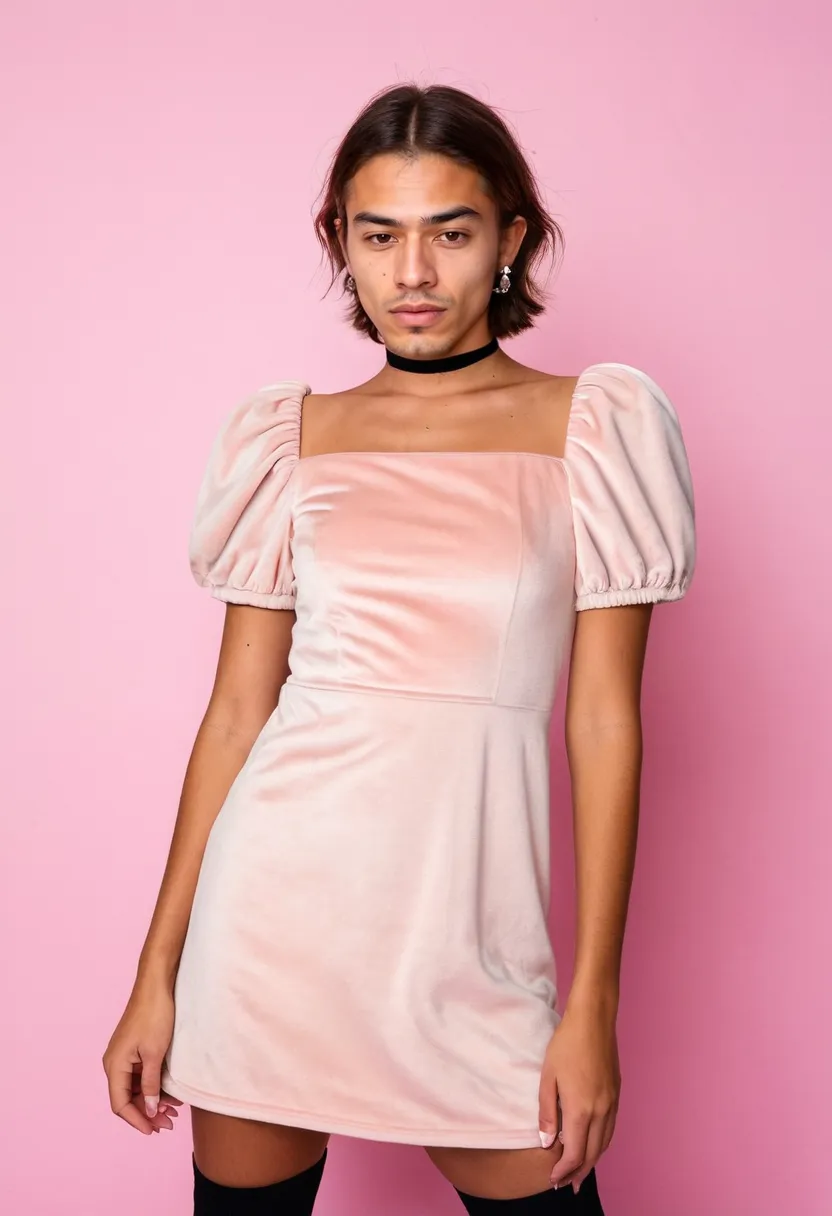
Clothing is only half the story. Kawaii fashion, especially at its most committed, is a full visual package — and that means paying attention to hair and makeup. You don’t have to do either to participate in kawaii, but leaning into them opens up entirely new dimensions of the aesthetic. Imagine a baby pink velvet mini dress with puff sleeves, the velvet thick with a plush pile that catches the light, the puffy sleeves gathered with elastic, the skirt short and swingy. An outfit like that begs for a coordinated hair and makeup look.
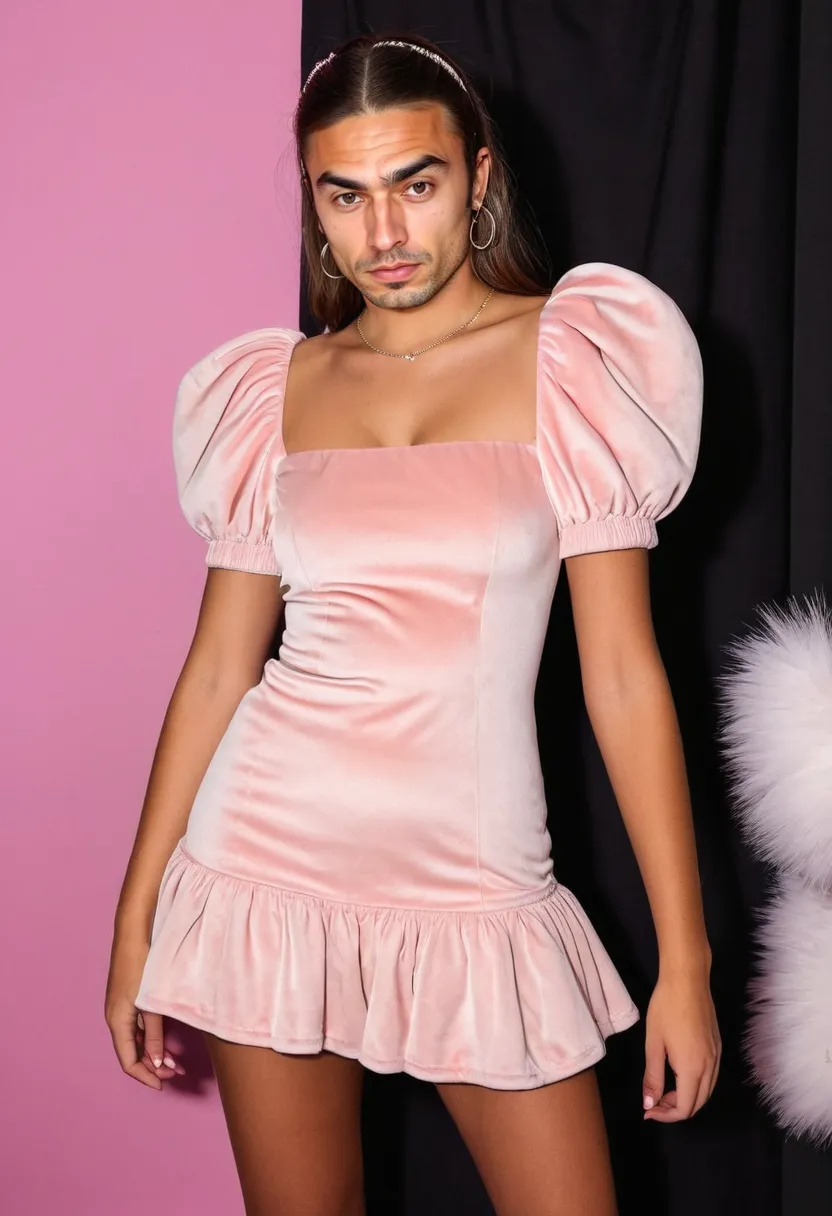
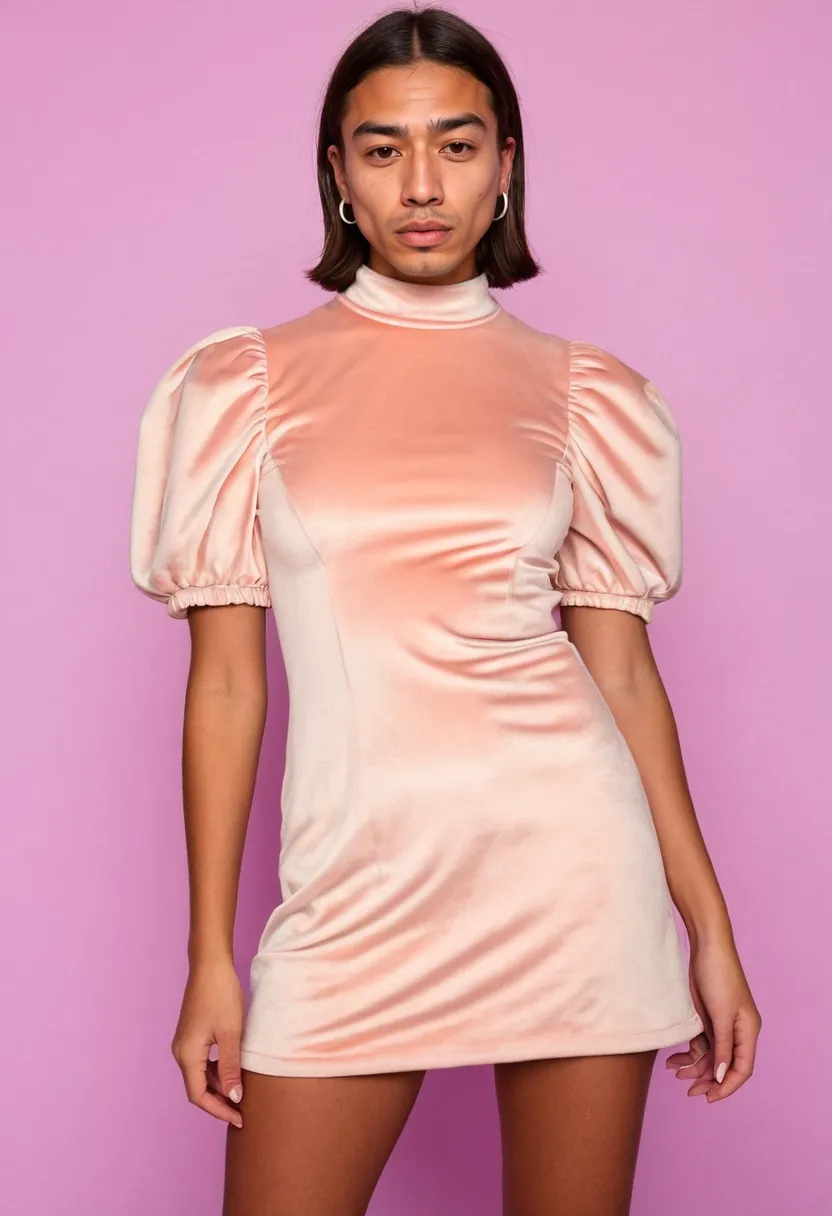
For hair, kawaii generally celebrates softness, volume, and color. Pastel hair — baby pink, lavender, mint, powder blue — is practically a kawaii signature. If permanent color isn’t an option, wigs and temporary sprays do the job beautifully. Hairstyles tend toward the playful: space buns, half-up pigtails, loose curls with ribbons woven through, chunky barrettes, and heart-shaped clips. Longer hair gives more styling options, but shorter cuts can be just as kawaii with the right accessories and a fluffy, texturized finish.
Makeup for men in kawaii fashion follows the broader kawaii beauty playbook. The emphasis is on looking soft, doe-eyed, and slightly doll-like. Key techniques include lightly flushed pink cheeks applied high on the cheekbone, a glossy lip in pink or peach, subtle white or pastel eyeshadow to brighten the inner corners of the eyes, and sometimes tiny painted details — freckles, stars, hearts, or blush-pink under-eye “aegyo sal” highlights. Circle lenses, which enlarge the appearance of the iris, are also popular for that signature wide-eyed look.
The important thing is that kawaii hair and makeup should feel like an extension of the outfit, not a mask. Experiment, play, and give yourself permission to be bad at it for a while. Like any skill, kawaii styling improves with practice, and the journey itself is part of the fun. Watching yourself transform in the mirror — from a regular guy into someone who looks like they stepped out of a pastel dream — is a genuinely joyful experience, one that a lot of men never get to have in their everyday lives.
In the end, kawaii fashion for men is less about a specific look and more about an invitation. An invitation to wear pink, to add bows, to embroider hearts onto your shirts, to let softness and color back into a wardrobe that society often insists should be neutral and serious. It’s an invitation to play. Whether you start small with a single pastel blouse or go all-in with velvet dresses and puffed sleeves, the kawaii world welcomes you exactly as you are — and sends you home with a little more joy than you had when you arrived.
Author: Emma. Photos: Alex Neuron. The material was prepared with the assistance of AI and has undergone quality review.