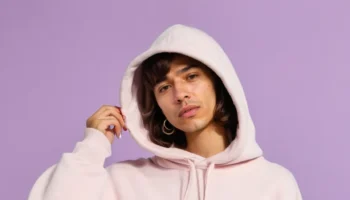
Ethereal Man Aesthetic: Angelic, Soft & Beautifully Other-Worldly
There is a quiet rebellion happening in menswear — one that whispers rather than shouts, that floats rather than struts. The ethereal man aesthetic has emerged as one of the most captivating visual movements in contemporary fashion, blending the delicate language of angelic imagery with the architectural ambition of couture. It is a look built on translucence, luminosity, and a careful suspension of gender norms, where boys appear as if they have drifted in from a dream or stepped out of a Renaissance painting reimagined for the neon-lit night. This aesthetic rejects the sharp, the heavy, and the aggressive in favor of softness, mystery, and a sense of otherworldly grace. In the following guide, we’ll explore every dimension of this striking style — from the fabrics that make it possible to the photography that captures its magic — and show how the ethereal aesthetic boys outfits movement has become a defining visual language for a new generation.
Defining the Ethereal Aesthetic: Where Fashion Meets the Otherworldly
To understand the ethereal man aesthetic, you must first understand what it is not. It is not minimalism, though it often shares minimalism’s quiet palette. It is not streetwear, though it sometimes borrows streetwear’s willingness to experiment. It is not drag, though it shares drag’s devotion to transformation. The ethereal aesthetic lives in its own category — a space where the body becomes a canvas for something beyond ordinary fashion, something closer to performance art, religious iconography, and romantic poetry fused into a single wearable image.
At its core, this aesthetic is defined by a commitment to lightness. Not only visual lightness — though pale whites, silvers, ivories, and pearlescent tones dominate the palette — but emotional lightness too. The ethereal man does not posture. He does not pose in a way that demands attention through force. Instead, he invites the viewer into a gentler, more contemplative mood, where a single translucent sleeve or the shimmer of fabric under streetlight becomes a small poem.
The movement draws heavily from classical depictions of angels, saints, and celestial beings, but it also owes a debt to contemporary designers like Simone Rocha, Ludovic de Saint Sernin, and Harris Reed, who have pushed menswear toward softness and romance. In practice, the look involves long silhouettes, flowing layers, and an embrace of what some might call “feminine” details — ruffles, sheer fabrics, sculptural volume — all worn with an unselfconscious confidence. The result is a style that feels simultaneously ancient and futuristic, fragile and powerful, and entirely its own.
Gallery: Boys in Ethereal Outfits That Look Like They’re From Another World
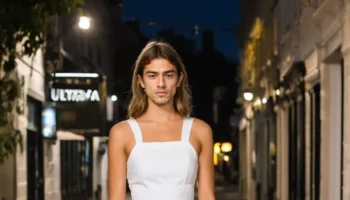
There is nothing quite like seeing the ethereal aesthetic brought to life on a human figure against the stark contrast of an urban environment. The tension between the delicate, almost celestial clothing and the grit of the night street is what gives these images their power. Picture a figure standing alone on a wet pavement, the city’s lights reflecting in puddles around him, dressed in a layered white organza gown with wide, stiff sleeves that extend like sculpted clouds from his shoulders. The fabric possesses a crisp, translucent quality — you can see the faint outline of the layers beneath, each one catching the glow differently, each one contributing to a silhouette that reads as pure architecture rendered in cloth.
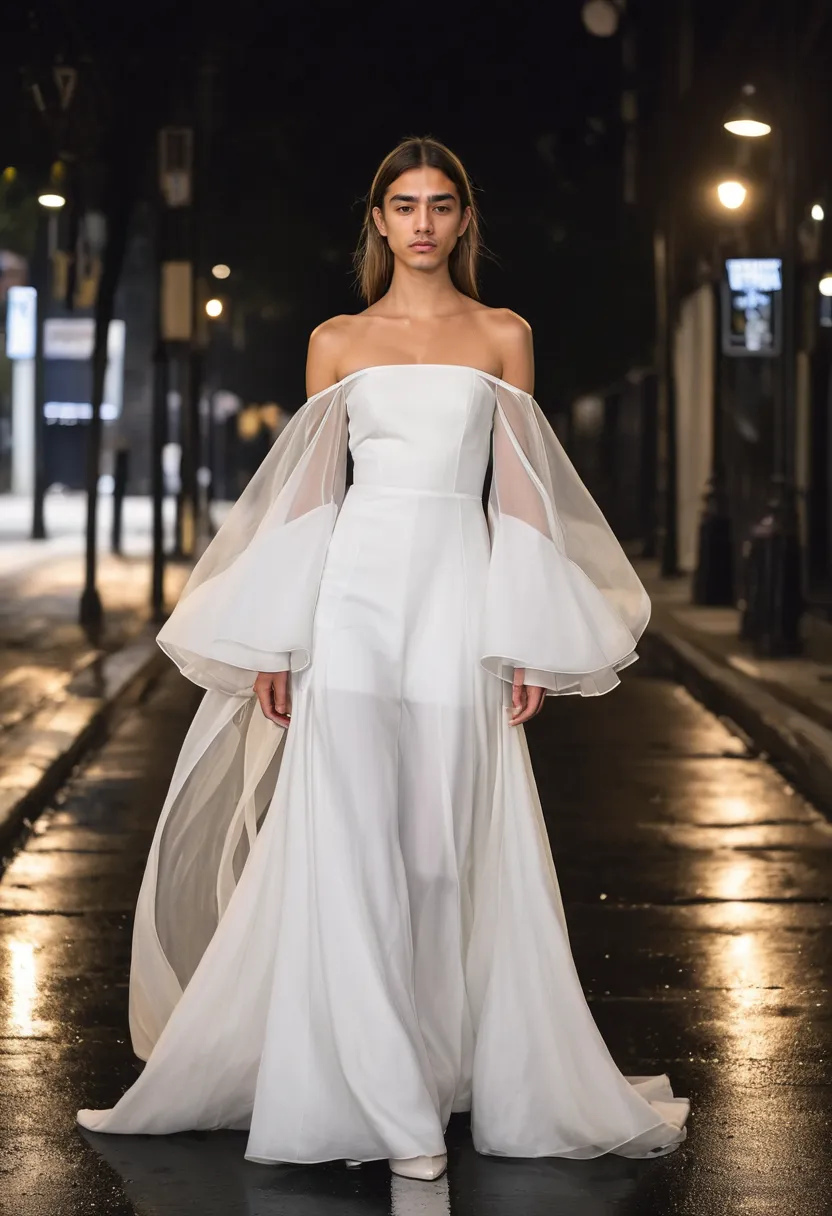
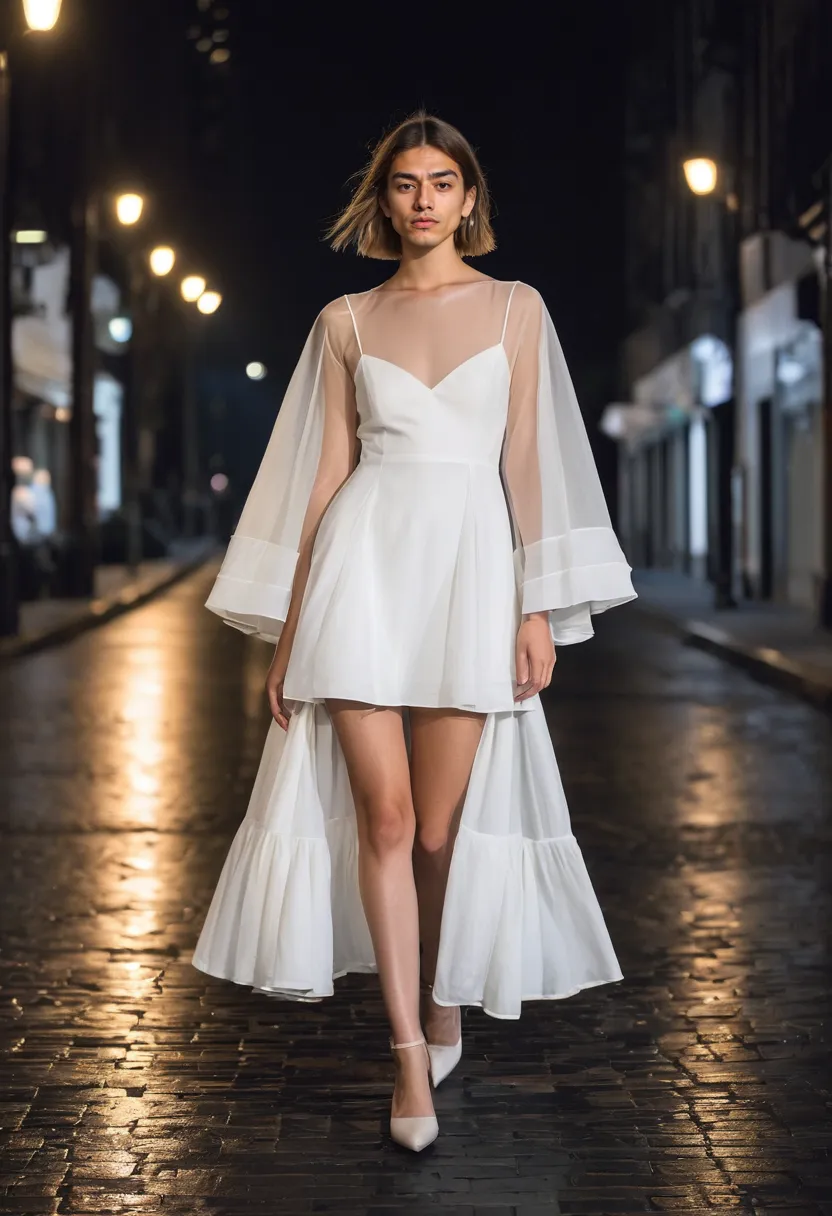
What makes this look extraordinary is the way the stiffness of the organza defies gravity. Rather than draping softly, the fabric holds itself in precise folds that stand away from the body, creating a sculptural silhouette that reads almost as a piece of architecture. The multiple layers create depth, shadow, and an illusion of movement even when the figure is still. Photographed against an empty night street with the slick reflections of a rained-on pavement, the contrast between the garment’s pristine whiteness and the environment’s darkness becomes unforgettable — the figure seems to exist in a separate plane entirely, a visitor from somewhere softer and stranger.
This is the visual core of angelic man fashion: the collision of something deeply delicate with something deeply real. The street is ordinary. The figure is not.
Fabrics That Create the Ethereal Effect: Tulle, Organza and Sheer Layers
You cannot build an ethereal look without the right materials, and the ethereal aesthetic is first and foremost a study in fabric. The most important textiles in the ethereal wardrobe are tulle, organza, and chiffon — each contributing its own quality to the overall effect. Organza is perhaps the signature fabric of the aesthetic: a sheer, lightweight material traditionally made from silk (though now often produced in polyester) that holds its shape remarkably well. Its crispness allows designers to create structured shapes that appear weightless, a paradox that sits at the heart of the ethereal look.
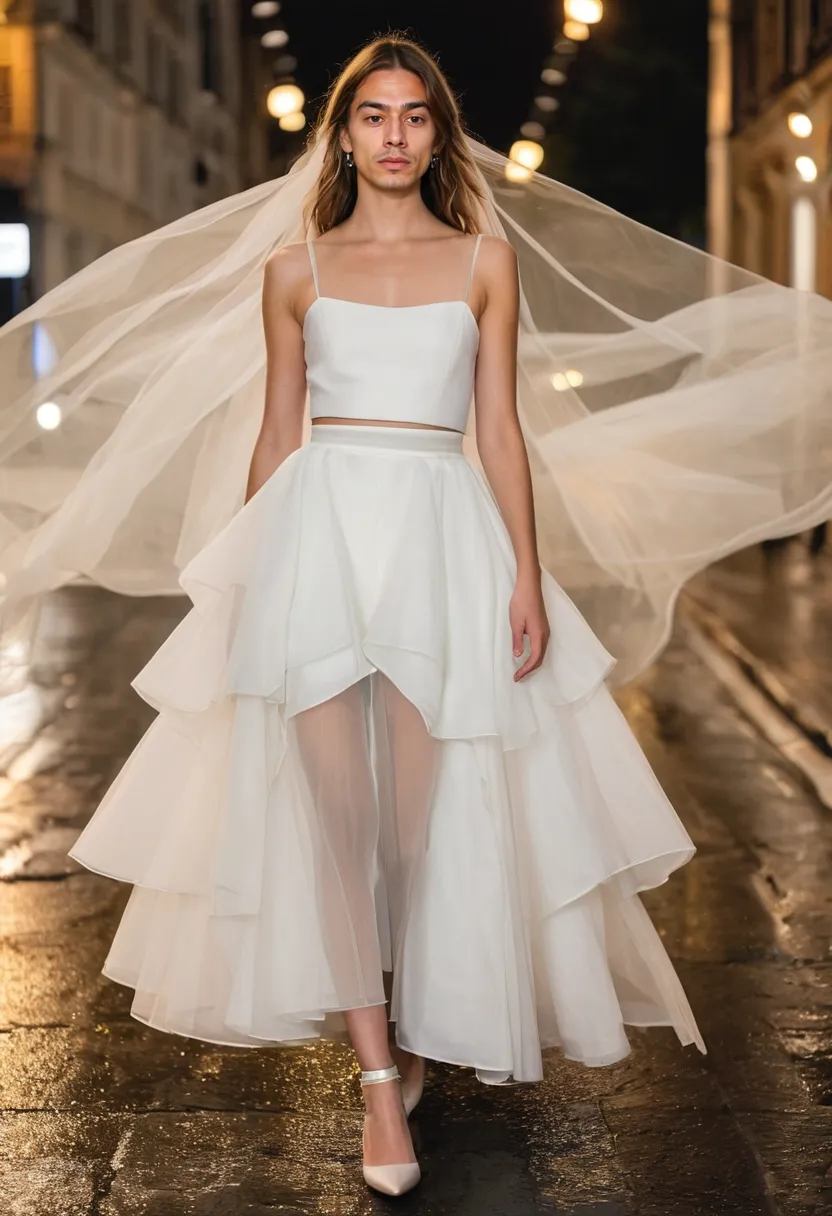
Consider an ivory ensemble that combines a stiff outer layer of organza with soft tulle beneath. The outer organza provides architecture — those sharp, standing folds that catch and reflect light. The inner tulle softens the line, creating a misty, cloudlike effect where the body meets the garment. This layering technique is essential to achieving the ethereal effect because it produces visual depth. Light passes through one layer and gets diffused by the next, creating subtle gradients of color and shadow that change as the wearer moves.
Chiffon plays a different but equally important role. Where organza is crisp and sculptural, chiffon is fluid and atmospheric. It drapes and flows, catching breezes and creating movement that reads as almost spiritual. Mesh and net fabrics, silk georgette, and fine lace round out the ethereal fabric vocabulary, each one offering a particular kind of translucence.
The ivory and off-white palette matters too. True bright white can read as clinical or costume-like; ivory, cream, and pearl tones feel warmer, more human, more consistent with the romantic mood the aesthetic demands. When silver is introduced, it should lean toward the cool, liquid shimmer of mercury rather than anything metallic or hard-edged.
Angelic Details: Wings, Halos and Other Artistic Fashion Choices
While fabric is the foundation, it is the sculptural detailing that elevates an ethereal look from simply romantic to genuinely otherworldly. Wings, halos, trailing veils, architectural sleeves, and impossible collars all belong to the vocabulary of angelic man fashion. These elements are rarely literal — you will not often see a figure with actual feathered wings strapped to his back — but they appear through suggestion. A stiff organza collar that rises dramatically behind the head reads as a halo. A pair of exaggerated sleeves that extend outward like blades of light reads as wings.
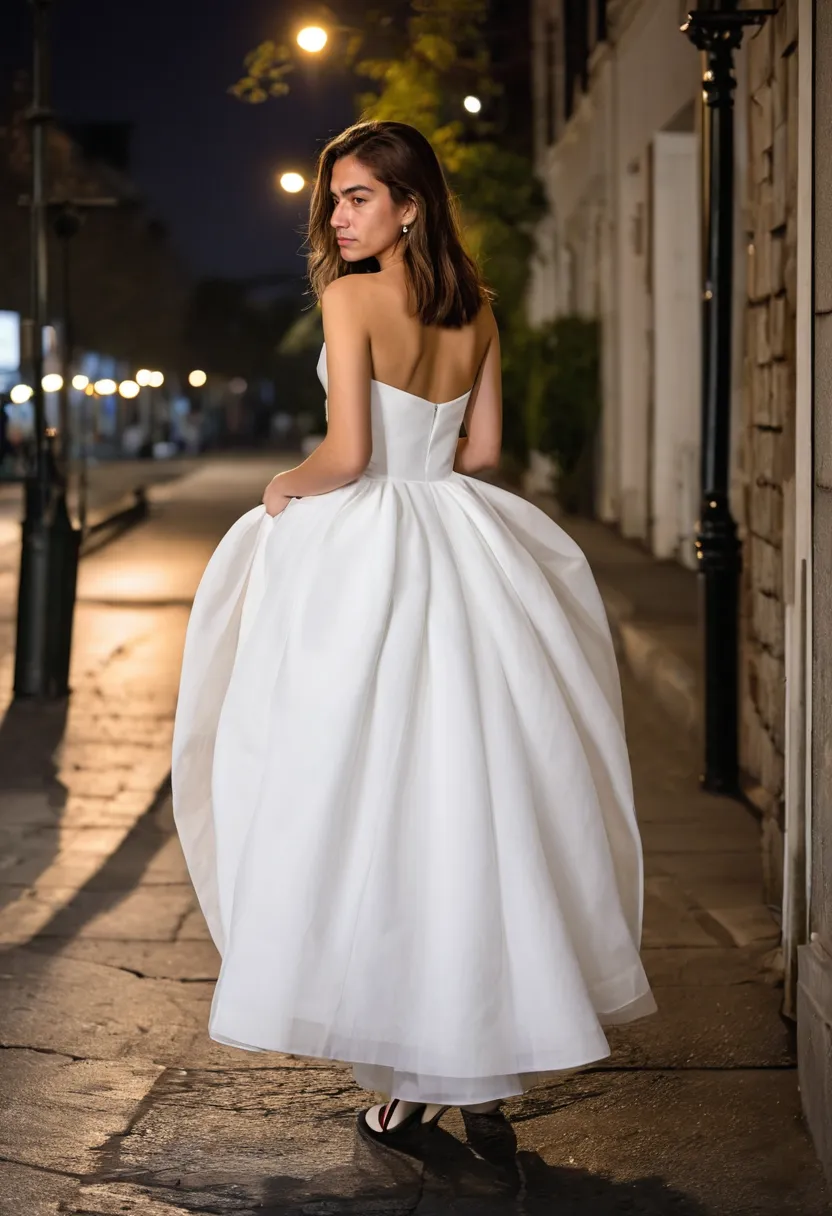
Consider a pure white structured organza dress with a stiff bodice and a wide, architectural skirt. The fabric holds itself away from the body in precise, deliberate folds — not draping, but constructing. This is a garment that refuses to collapse into softness. Each fold is an intentional mark, like the stroke of a brush or the crease of origami. When paired with the right setting — in this case, the empty night street with its reflective wet pavement — the whole figure reads as a kind of living sculpture, a statue that has decided to take an evening walk.
These artistic details are where the ethereal aesthetic shows its daring side. It takes courage to wear a sculptural gown, and it takes even more to wear one on a real street, in a real city, without ceremony. This is where boys in white ethereal looks differentiate themselves from the safe and the predictable. The aesthetic demands commitment, and that commitment is what gives the look its power. The details — whether a hand-sewn pearl along a hem, a cape that trails behind like a ghost, or a veil of fine tulle pulled over the face — all serve the same purpose: to transform the ordinary body into something momentarily sacred.
Makeup for the Ethereal Look: Luminous, Pale and Dreamlike
Makeup in the ethereal aesthetic is never an afterthought — it is an integral part of the total image. The goal is luminosity. Skin should appear pearlescent, as if lit from within, with a dewy quality that suggests the figure has absorbed moonlight. This is achieved through careful layering of hydrating primers, sheer foundations in cool undertones, and, crucially, liquid highlighter applied to the high points of the face: the cheekbones, the bridge of the nose, the cupid’s bow, the brow bones. The effect should be subtle glow rather than glitter.
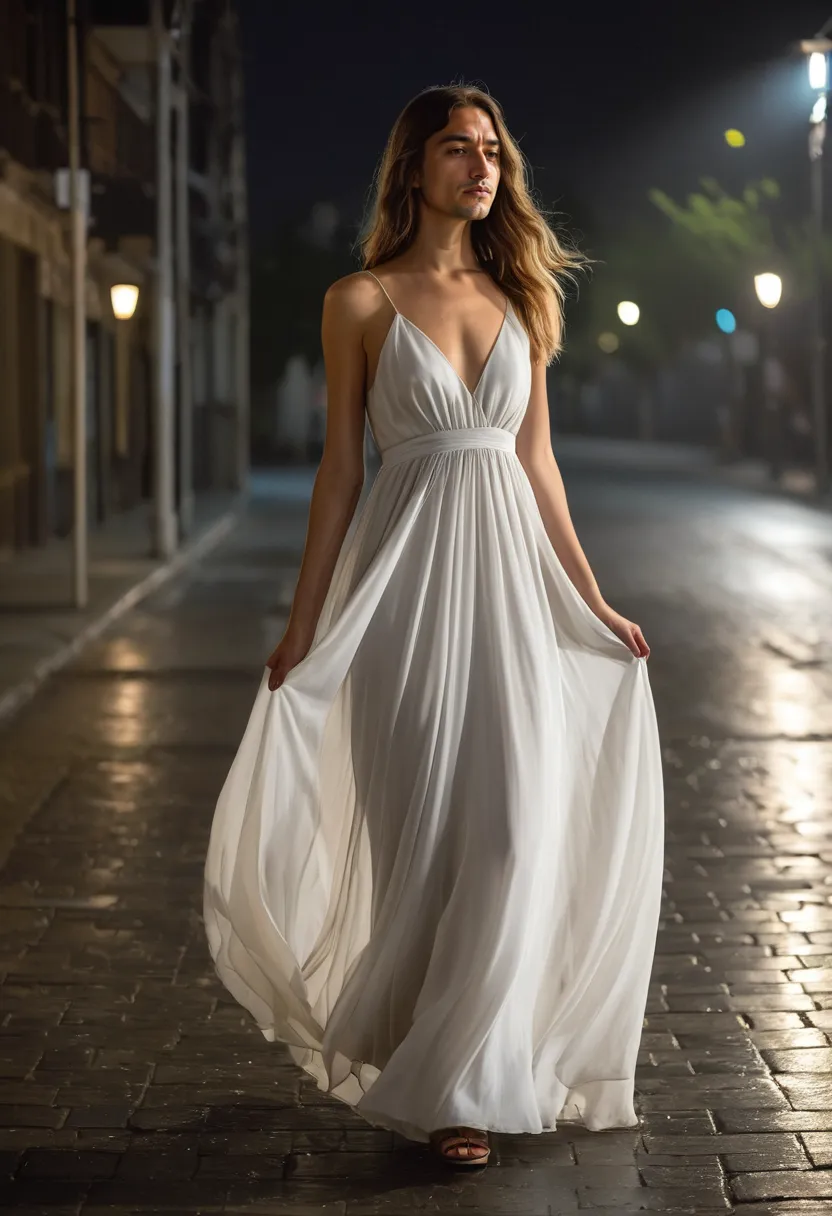
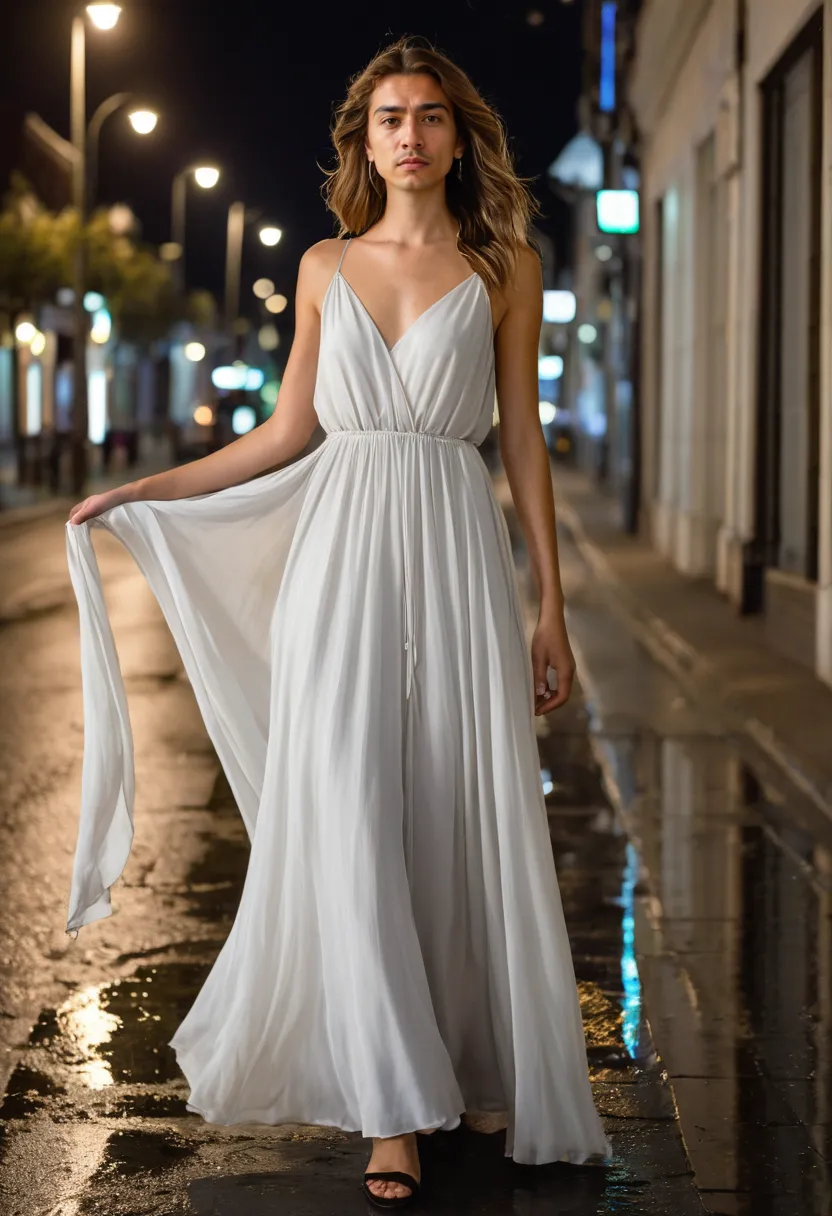
Consider how a pale, luminous silver-white chiffon dress photographs under ambient streetlight. The fabric itself possesses a pearlescent quality, catching the light with a subtle iridescence that shifts as the figure moves. To complement this shimmering garment, the makeup should echo the same qualities: a wash of shimmering pale silver or champagne on the eyelids, softly smudged rather than sharply drawn. Brows are kept light and feathered, almost faded, to contribute to the overall sense of otherworldly softness. Harsh, drawn-on brows would break the spell.
Lips are typically kept pale — a glossy balm, a nude tinted treatment, or a faint pink. Blush, when used, is applied high on the cheeks and blended outward toward the temples to suggest a flushed, delicate warmth rather than a defined structure. Some practitioners of the soft angelic aesthetic men look add faint touches of pale blue or lavender under the eyes to deepen the dreamlike quality — a technique borrowed from editorial photography and classical portraiture.
Hair should feel similarly untouched and soft. Loose waves, slightly messy strands, or even a sleek wet-look that echoes the dampness of the rain-slicked street all work beautifully. Accessories like fine pearl earrings, delicate chains, or a single glass drop pendant complete the look without overwhelming it. The philosophy throughout is restraint — every element whispers, nothing shouts.
How to Photograph an Ethereal Boy Aesthetic for Maximum Impact
Capturing the ethereal aesthetic in photographs requires as much intention as creating the look itself. The right environment, lighting, and movement are all essential to translating the three-dimensional magic of the outfit into a two-dimensional image that holds the same power. The empty night street with wet pavement has become something of a signature backdrop for a reason — it offers contrast, reflection, and mood all at once. The darkness swallows distractions, the wet ground creates mirror-like reflections that double the figure’s presence, and the ambient city lights provide soft, diffused illumination that flatters translucent fabrics.
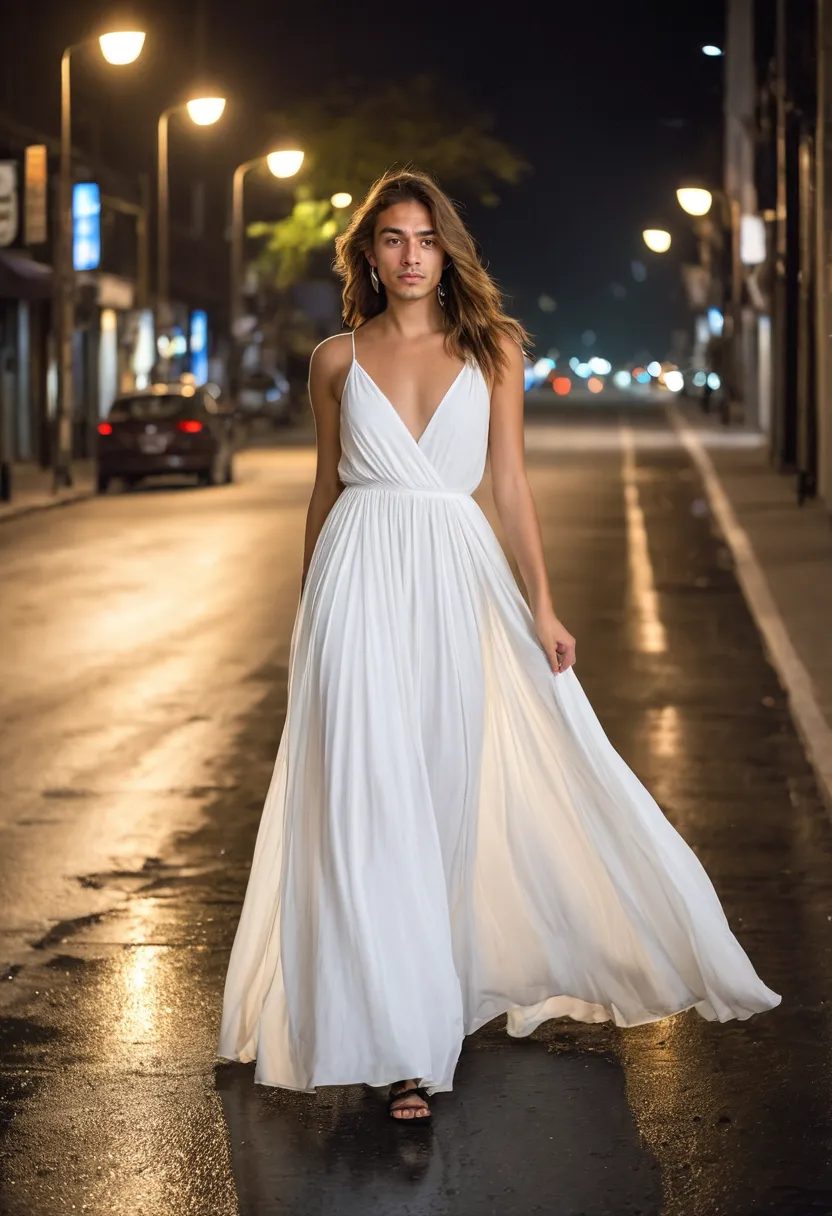
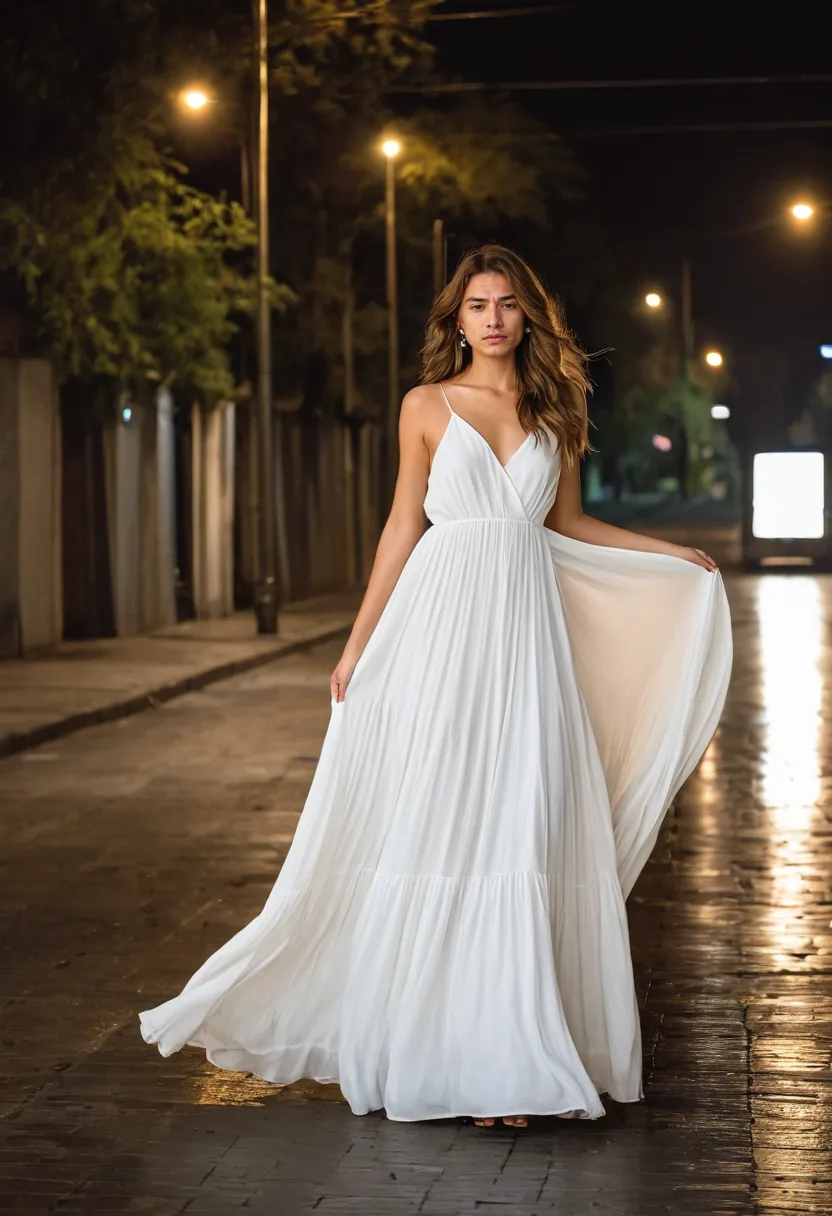
Movement is perhaps the most underrated tool in ethereal photography. A static figure, no matter how beautifully dressed, captures only a fraction of the potential. But a figure caught mid-motion — a flowing white maxi dress in lightweight chiffon billowing dramatically around the body, the wide skirt filled with air, the translucent layers visibly shifting — tells a story. It suggests wind, breath, spirit. To achieve this, photographers often use fans, instruct subjects to spin or walk, or capture the moment just after a gesture. Shutter speeds must be fast enough to freeze the fabric’s shapes without losing the sense of motion.
Lighting should be soft. Harsh flashes flatten translucent fabrics and destroy the subtle play of shadow through layers. Instead, work with available light — streetlamps, neon signs, the glow from shop windows — or bring a single soft diffused source. Back-lighting is particularly magical for ethereal looks because it illuminates sheer fabrics from behind, revealing the layers in a luminous, almost x-ray quality.
Composition matters too. Leave space around the figure. The dreamy white silver outfits boys wear deserve room to breathe in the frame, to feel like apparitions rather than subjects. Low angles can lend the figure a sense of grandeur, as if they are floating slightly above the ground. And finally, resist the urge to over-edit. The ethereal aesthetic is already doing the heavy lifting — your job as photographer is simply to witness it.
The ethereal man aesthetic is more than a passing trend; it is a genuine reconsideration of what masculine beauty can look like. It invites softness, mystery, and imagination back into a wardrobe too often defined by rigidity. It celebrates the poetic, the strange, and the beautiful, and it does so without apology. Whether you are drawn to the architectural crispness of organza, the fluid drama of chiffon, or the quiet luminosity of pearl-pale makeup, there is room within this aesthetic for countless interpretations. What unites them all is a belief that fashion can be a form of transcendence — that with the right fabric, the right light, and the right courage, a boy on an ordinary street can become, for a moment, something entirely otherworldly.
Author: Emma. Photos: Alex Neuron. The material was prepared with the assistance of AI and has undergone quality review.