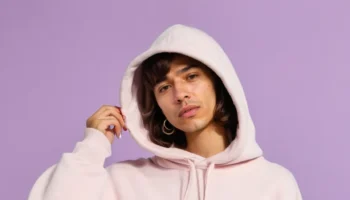
Pastel Outfits for Men: Soft Colors, Soft Vibes, Pure Style
There’s something undeniably magnetic about a man who embraces pastels. In a world where menswear has long been dominated by navy, charcoal, and black, the rise of soft, dreamy palettes feels like a quiet revolution. Pastel outfits for men aren’t just a passing trend — they’re a statement about confidence, softness, and the willingness to rewrite old rules about what masculinity can look like. Think of powder blues that catch the moonlight, lilacs that whisper rather than shout, mints that feel like spring air, and blush pinks that carry a kind of tender power. These are colors that don’t demand attention — they earn it through subtlety and grace. Whether you’re drawn to full head-to-toe pastel looks or prefer to introduce soft tones through a single statement piece, this guide is your invitation to explore a softer side of style. We’ll walk through the palette, the combinations that work, the textures that elevate everything, and the accessories that tie it all together. So if you’ve ever wondered how to wear pastels without feeling like a walking Easter egg, you’re in exactly the right place.
The Pastel Fashion Palette: More Than Just Pink
When most people hear “pastel,” their minds jump straight to baby pink — and while blush and rose absolutely belong in this conversation, the pastel family is far more diverse than that single shade suggests. The true pastel palette is a gentle spectrum that includes powder blue, pale mint, soft lilac, buttery yellow, dusty peach, sage green, lavender, and even muted coral. Each of these tones carries its own emotional temperature. Powder blue reads calm and collected, like a morning sky. Mint feels fresh and slightly nostalgic, evoking vintage kitchens and spring gardens. Lilac has an almost ethereal quality — it’s the color of twilight, of dreams half-remembered. Peach and apricot bring warmth without the drama of bolder oranges, while sage green feels grounded, natural, and quietly sophisticated.
What unites all of these shades is their desaturation — they’re created by adding white or softening the intensity of a primary hue. This gives them a luminous, almost translucent quality that photographs beautifully and flatters a wide range of skin tones. For men exploring pastel fashion, the key is recognizing that these colors aren’t fragile or feminine by default. They’re simply soft, and softness in fashion is a tool — one that can communicate confidence, openness, and a willingness to stand apart from the crowd. The modern wardrobe has room for all of these tones, whether you’re layering a pale mint shirt under a blazer or going full commitment with a lavender suit. Understanding the palette is the first step. Once you know which shades speak to you, the styling possibilities open up dramatically.
Gallery: Men in Pastel Outfits That Are Soft and Stunning
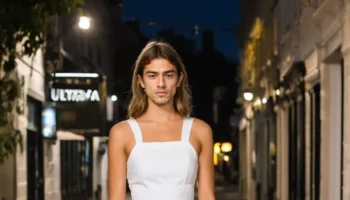
Nothing illustrates the power of pastel fashion quite like seeing it in action. Picture a figure standing on an empty night street, wet pavement reflecting the scattered light of distant streetlamps. The outfit is pure poetry: a soft lilac chiffon blouse with wide, flowing sleeves that move with every gust of air, paired with a pale mint A-line midi skirt cut from equally lightweight fabric. The two pastels — lilac and mint — are complementary without being identical, creating a layered harmony that feels intentional and artistic. The sheer quality of the chiffon lets the surrounding glow filter through, while the structured flare of the midi skirt grounds the silhouette.
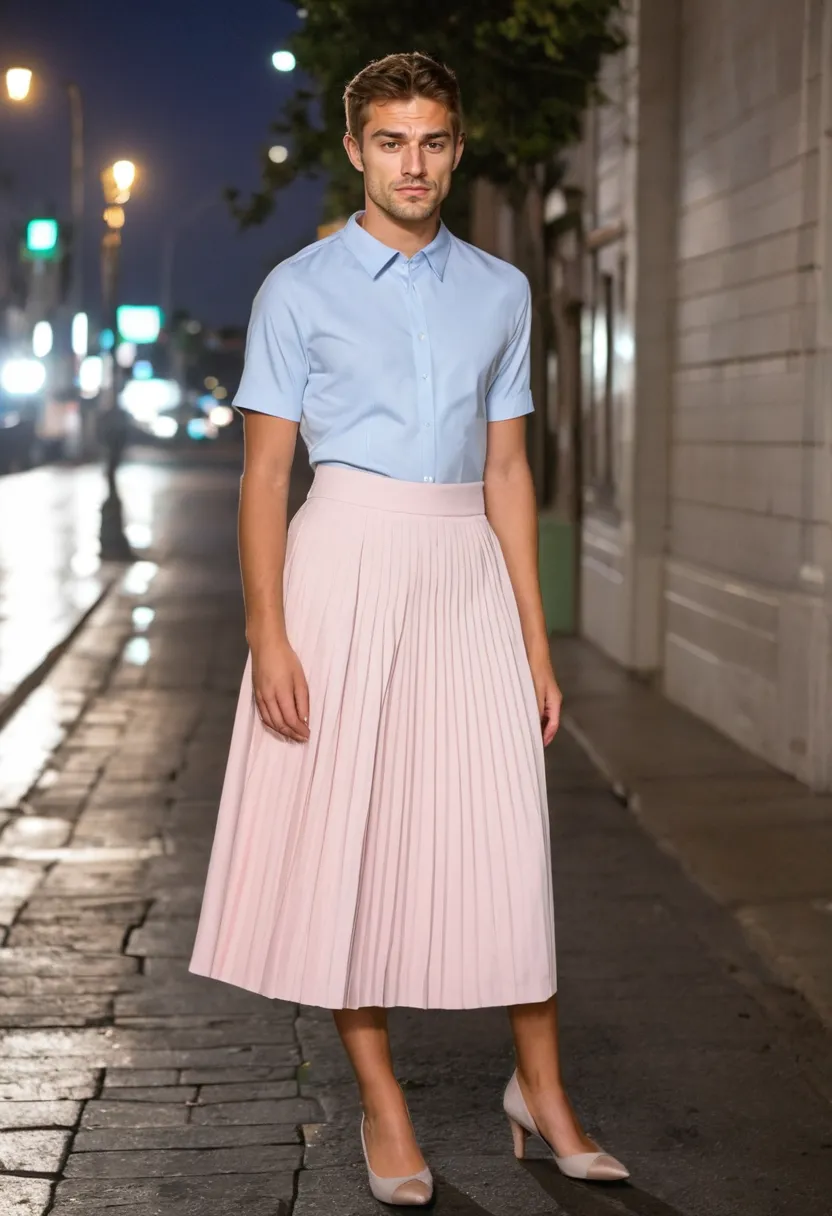
This kind of styling proves that pastels don’t have to be reserved for daylight or casual settings. There’s something deeply cinematic about soft colors against a nocturnal backdrop. The wet pavement acts almost like a mirror, doubling the visual impact of the outfit and amplifying the dreamlike quality of the pastel tones. What makes this look succeed is the commitment to the palette — both pieces live in the same soft register, so the eye reads them as a single, cohesive vision rather than competing elements.
The lesson here is that pastel outfits for men gain power through conviction. A half-hearted attempt often falls flat, but when you lean fully into the softness — matching the weight of fabrics, complementing undertones, and letting the silhouette do quiet work — the result is magnetic. Soft pastel clothes for men are at their best when they feel like they belong together, a curated mood rather than a random collision of colors.
How to Build a Head-to-Toe Pastel Look Without It Looking Washed Out
The biggest fear people have when attempting a full pastel outfit is looking washed out — as if the colors might bleed into each other and leave the wearer visually flat. The solution isn’t to avoid head-to-toe pastels; it’s to build them with intention. Consider a look anchored by a powder blue fitted blouse cut from crisp cotton, paired with a soft pink pleated skirt. The crispness of the cotton adds structure, while the sharp pleats of the skirt introduce movement and geometry. Suddenly, what could have read as a flat wash of pale color becomes a dynamic, three-dimensional outfit.
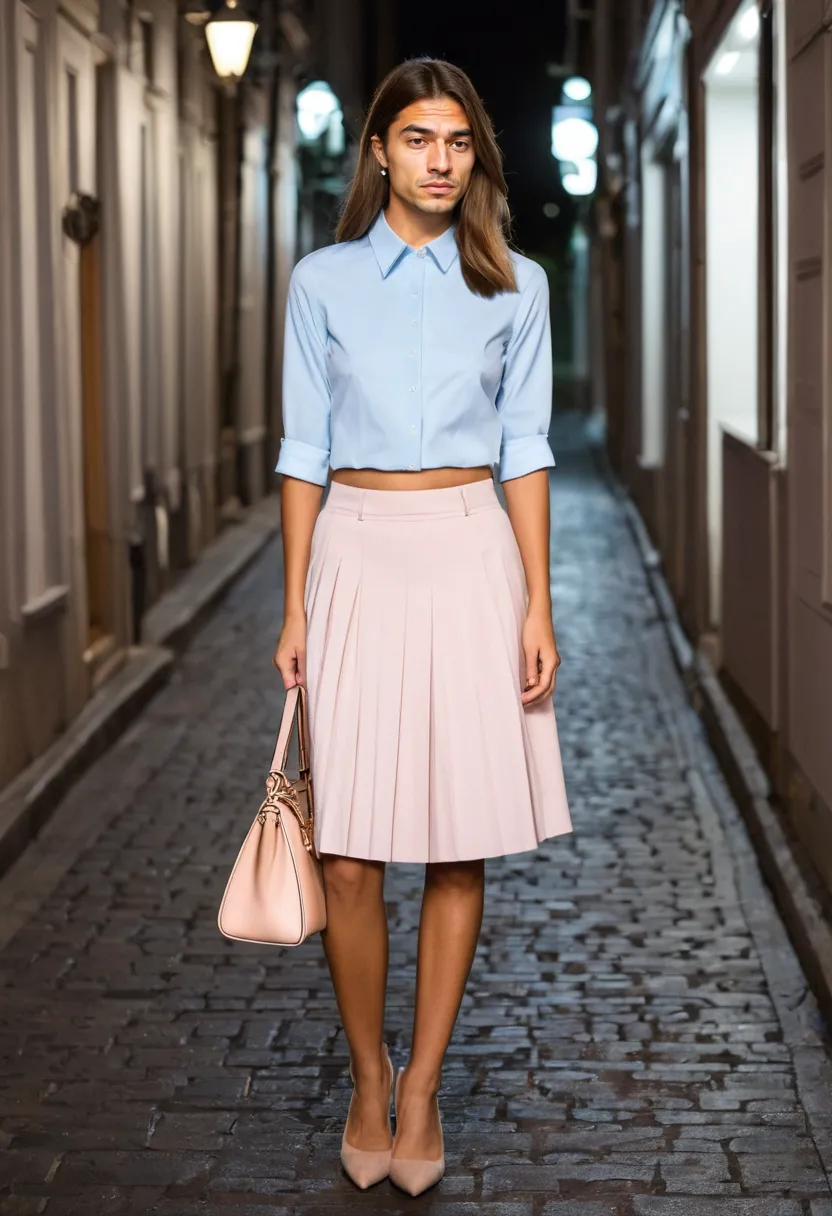
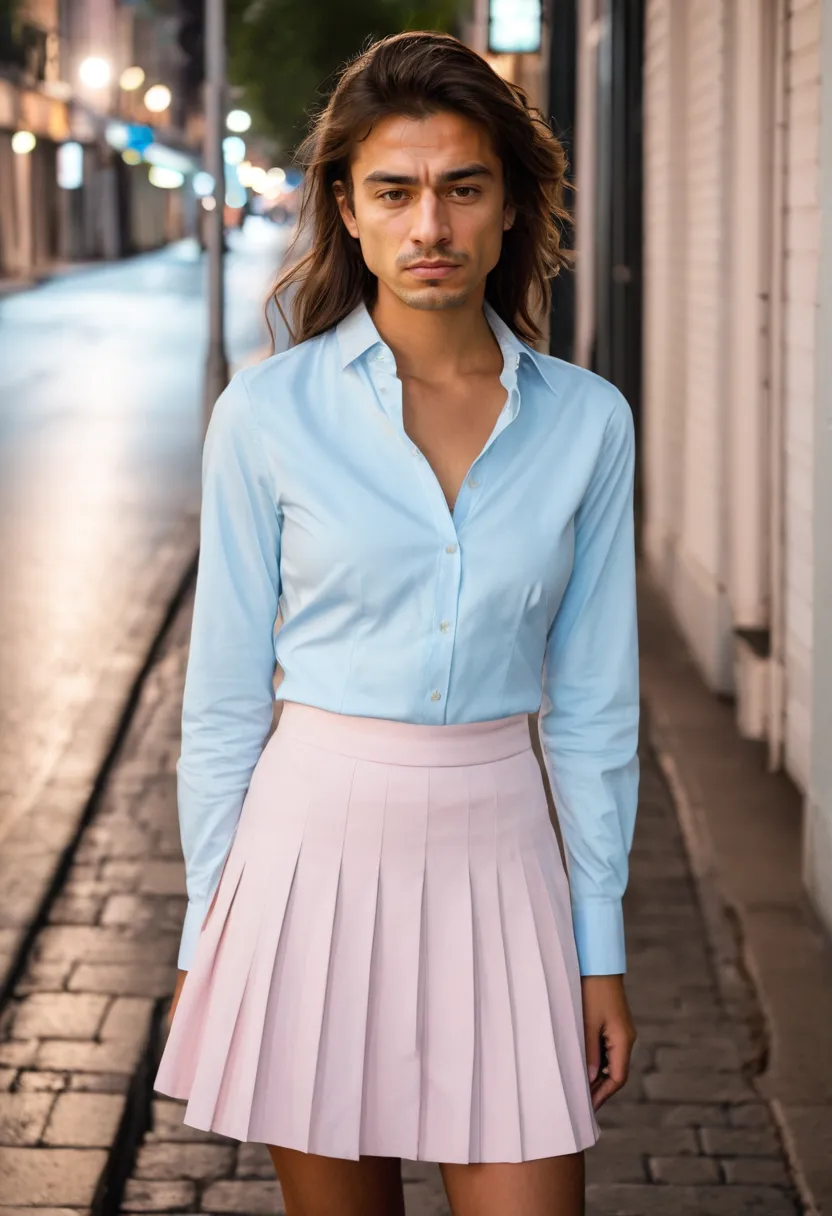
Texture is your best friend when building pastel looks. Smooth fabrics need to be balanced with ones that have visual weight — pleats, ribbing, weaves, or gentle drape. The contrast between a structured top and a flowing bottom (or vice versa) creates silhouette definition that keeps the eye engaged. Another trick is to choose pastels from slightly different color families. Pairing a cool-toned powder blue with a warm-toned soft pink creates a subtle tension that prevents the look from reading monochromatic in a bland way.
Fit matters enormously here. Loose, oversized pastel pieces can sometimes overwhelm the wearer and make the softness feel shapeless. A fitted top — like a tailored blouse that follows the line of the body — gives the outfit architecture. Then you can let the bottom piece breathe with volume, like a pleated or A-line skirt. This top-tight, bottom-flowing formula (or its reverse) works across nearly every pastel combination.
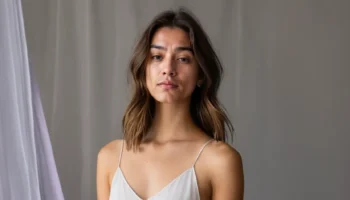
Finally, don’t underestimate the power of grooming and skin-against-fabric contrast. A well-tended appearance gives pastels something to play off of. When the fabrics are soft and the colors are gentle, the wearer’s presence becomes the exclamation point. That’s how light pastel outfit ideas for boys transform from sweet to striking.
Mixing Pastel Shades: Which Combinations Actually Work
Not every pastel pairs perfectly with every other pastel — and that’s a good thing, because it gives us something to think about when building an outfit. Some combinations sing, others just sit quietly side by side without quite connecting. Take, for example, a lavender crop top paired with a pale peach flowing skirt. On paper, you might hesitate — purple and orange family members meeting up. But in practice, the soft lavender and muted peach share enough desaturation that they harmonize beautifully. The lightweight fabrics, in different textures, let each color breathe while complementing the other through their mutual softness.
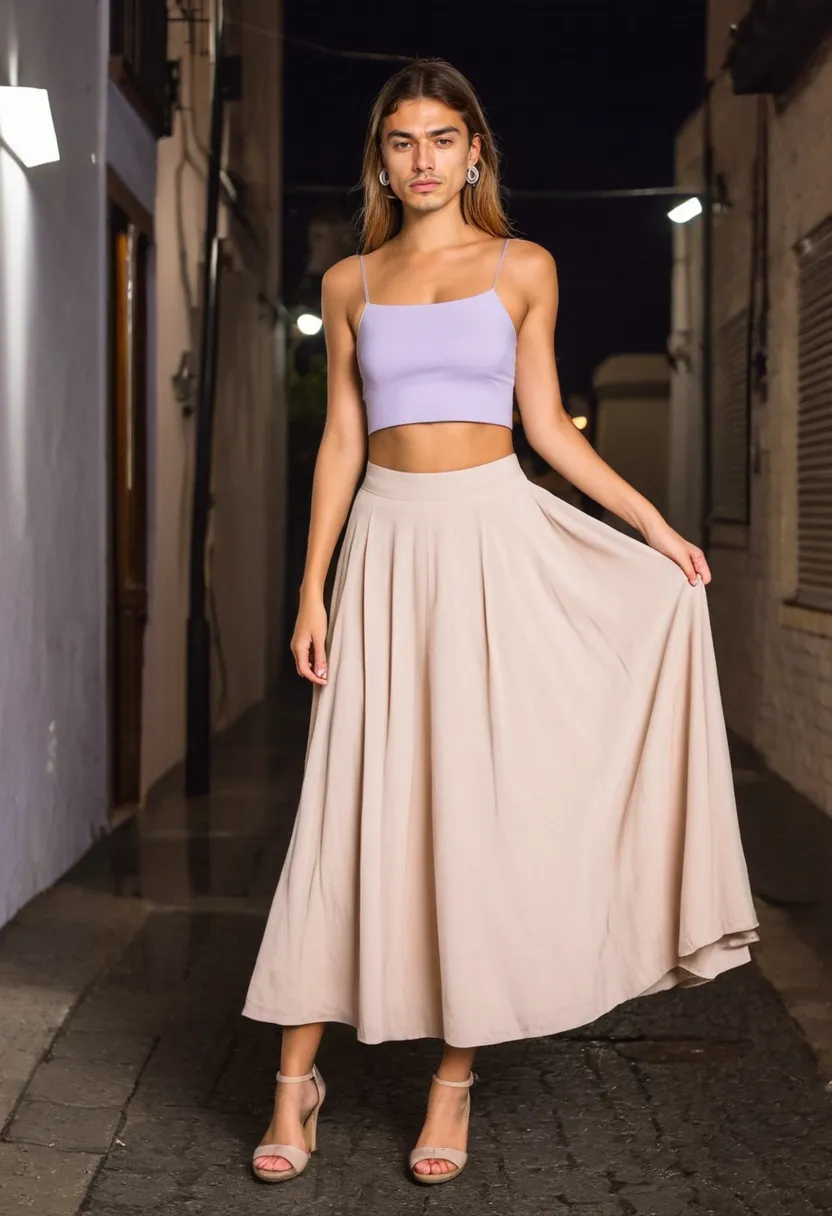
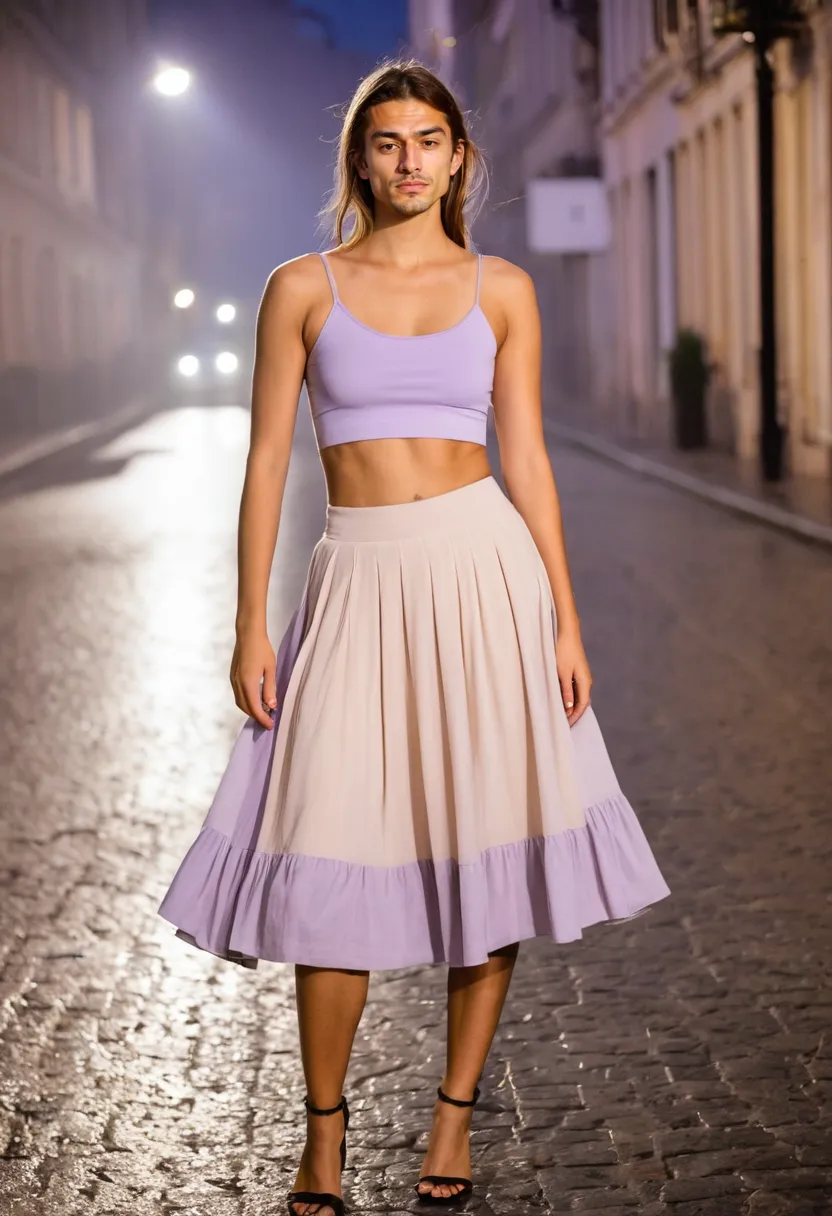
The combinations that tend to work best follow a few loose rules. First, analogous pastels — shades that sit near each other on the color wheel — almost always play well together. Think mint with sage, lilac with dusty blue, peach with blush. These pairings feel cohesive and calm. Second, complementary pastels — shades from opposite sides of the wheel — can create striking contrast when both are desaturated enough. Lavender and peach work because both have been softened; a saturated purple with a saturated orange would clash, but pastels tame that tension into something poetic.
Triadic combinations, where three colors are evenly spaced on the wheel, also work surprisingly well in pastel form. Imagine a soft mint piece with lavender accents and a touch of pale peach — the eye travels smoothly between them because none of the tones are shouting. The key is balance: if one pastel is doing the heavy lifting in volume, let the others play supporting roles through smaller details.
Avoid pairing pastels that have wildly different undertones — a cool, blue-based pink next to a warm, yellow-based mint can feel disjointed. Pay attention to whether your pastels lean warm or cool, and try to keep them in the same temperature zone for the cleanest effect. When in doubt, stand in natural light and hold the pieces side by side. If they feel like they belong in the same story, they probably do.
Pastel Textures That Elevate the Look: Satin, Lace and Chiffon
If color is the melody of a pastel outfit, texture is the rhythm — and the right fabrics can take a soft look from pleasant to unforgettable. Consider a pale pink chiffon blouse layered over a sage green satin skirt. The chiffon, with its sheer, airy quality, catches light and movement in a way that feels almost liquid. Underneath, the satin skirt brings a glossy, reflective smoothness that contrasts beautifully with the matte, whispery texture above. Both pieces live in muted pastel territory, but the textural dialogue between them creates visual depth that a single fabric could never achieve.
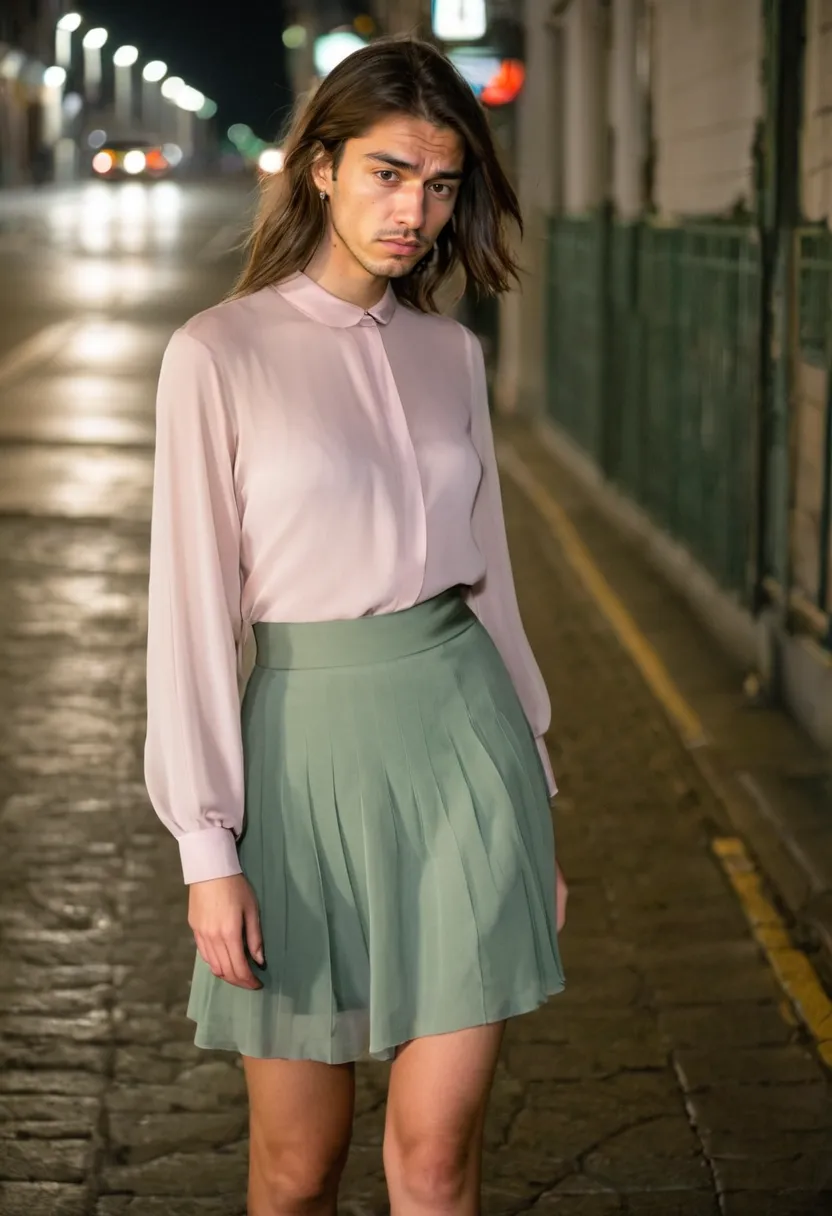
Satin is a particularly powerful ally in pastel fashion because it amplifies color through its sheen. A pale mint satin catches light and looks almost liquid silver in the right angle; a soft lavender satin picks up surrounding tones and shifts subtly as the wearer moves. This quality gives satin pastels a kind of living presence that flatter, more matte fabrics can’t replicate. Pair satin with something structured — a cotton button-up, a linen blazer — and the contrast feels sophisticated and intentional.
Chiffon, by contrast, is all about lightness. It drapes, it flows, it lets air and light pass through. A chiffon layer in a pastel tone introduces movement to an outfit, creating a sense of grace even in still moments. It pairs beautifully with heavier pastels — think a chiffon overlay above a denser skirt, or chiffon sleeves on a structured bodice.
Lace adds yet another dimension. Pastel lace — especially in blush, cream, or powder blue — carries a romantic, almost heirloom quality. A small lace detail, like a collar edge or a trim along a hem, can soften a structured look and introduce intricacy without overwhelming the soft palette. The magic of these textures is that they let pastels perform at their full potential. Without texture, soft colors can flatten. With the right fabric choices — chiffon, satin, lace, crisp cotton, gentle knits — pastel outfits gain the dimension they deserve.
Accessories in Pastel: Subtle or Matching?
When it comes to accessorizing a pastel outfit, there’s an ongoing quiet debate: should you go fully tonal, matching every accessory to the main palette, or introduce contrast through something bolder? Both approaches have merit, and the right choice depends on the effect you’re chasing. Consider an all-blush look — a soft pink dress finished with a satin ribbon bow in the same tone. The bow is perfectly tonal, and that’s exactly what makes it work. Fabric to accessory detail, everything lives in the same soft register, creating a sense of cohesion that feels curated rather than accidental.
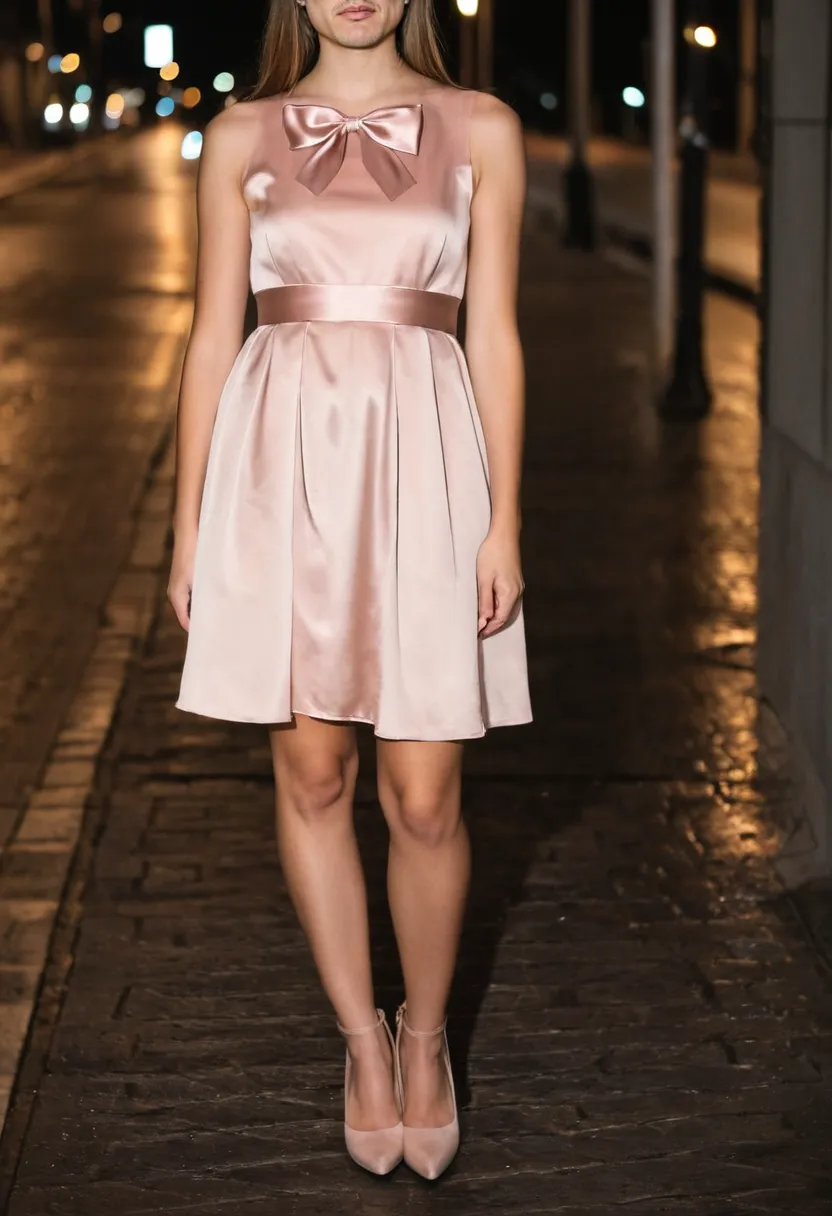
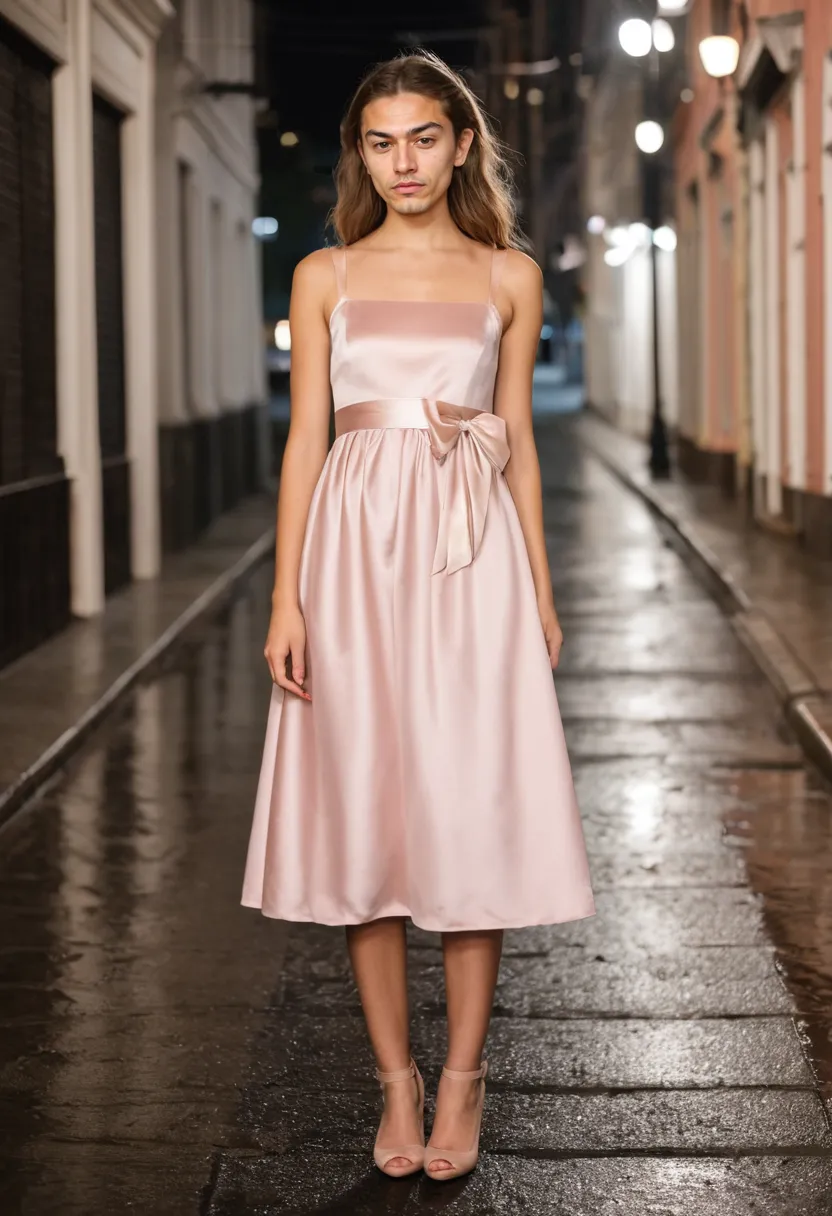
The matching approach — what stylists sometimes call “total look” styling — has a long history in fashion editorials and runway presentations. When every detail belongs to the same color family, the result reads as elegant, thoughtful, and almost sculptural. The eye doesn’t get pulled away by a contrasting element; instead, it travels over the silhouette, noticing small variations in texture, sheen, and fabric weight. For men exploring pastel fashion, this tonal approach can be especially effective because it commits fully to the aesthetic. There’s no hedging, no compromise — just a complete soft-color statement.
That said, the subtle-contrast approach also has its place. Introducing a neutral accessory — a soft cream bag, a pale gray shoe, a bone-colored belt — can ground a pastel outfit and give the eye a place to rest. Metallics also play wonderfully with pastels: soft gold warms up cool pastels like mint and lavender, while silver adds a cool shimmer to warmer shades like peach and blush. Pearl accessories, in particular, feel tailor-made for pastel styling because their natural iridescence picks up surrounding tones.
Whichever direction you choose, the principle is the same: accessories should support the outfit’s story, not compete with it. Avoid high-saturation pops of color that pull focus away from the softness — a bright red bag against a mint ensemble will simply overpower the palette. Instead, think in whispers. In pastel fashion, the loudest voice in the room is the one that knows exactly when to be quiet.
Pastel outfits for men are an invitation to explore a softer, more expressive side of style — one where confidence lives in subtlety and boldness wears the face of calm. Whether you’re drawn to the dreamy harmony of lilac and mint, the structured play of powder blue and blush, or the tactile magic of chiffon over satin, the world of pastel fashion has room for every interpretation. Start with one piece if full commitment feels like a leap, or go all in with a head-to-toe look that tells a complete story. Pay attention to texture, respect the undertones, and let your accessories whisper rather than shout. The beauty of pastels is that they reward thoughtfulness — the more care you put into assembling a look, the more striking the result. So step into the soft colors, trust the palette, and watch how a whisper of pink or a breath of mint can become the most memorable thing you wear all season.
Author: Emma. Photos: Alex Neuron. The material was prepared with the assistance of AI and has undergone quality review.