Elegant Dresses for men: Graceful, Feminine & Strikingly Beautiful
There is something quietly revolutionary about a man in an elegant dress. Not theatrical, not costume-like, not ironic — simply elegant. The kind of elegance that comes from beautifully cut fabric, a considered silhouette, and the confidence of someone who knows exactly what they’re wearing and why. Elegant dresses for men occupy a space in fashion that is both timeless and contemporary, drawing on centuries of refined tailoring while embracing a softer, more fluid vision of masculinity. This lookbook is a celebration of that space — an exploration of how grace, femininity, and striking beauty can live harmoniously on any body, regardless of who society originally intended these garments for. From floor-length satin gowns to sculpted midi dresses in ivory duchess, these are the looks that prove elegance has never belonged to one gender alone.
What ‘Elegant’ Actually Means in Feminine Fashion for men
Elegance is one of those words fashion loves to use but rarely defines. It gets tossed around alongside “chic” and “sophisticated” as if they’re interchangeable, but they aren’t. Elegance has a specific quality — a restraint, a proportion, a respect for the wearer’s own presence rather than an attempt to overwhelm it. For men embracing feminine dresses, understanding what elegant actually means is the first and most important step toward getting the look right.
At its core, elegant dressing is about editing. It’s choosing one statement and letting everything else support it quietly. An elegant dress doesn’t shout through sequins, cutouts, and novelty prints all at once — it whispers through a perfectly placed seam, the way a column silhouette falls from the shoulder, or the weight of fabric that swings just so when you walk. For men in elegant dresses, this principle is liberating. You don’t need to compensate, overstate, or prove anything. The garment does the work.
Elegance also respects the body without obsessing over it. A truly elegant dress skims rather than clings, suggests rather than reveals. It allows the wearer’s natural lines — whether broad shoulders, a flatter chest, narrower hips — to exist as part of the design rather than something to camouflage. This is why elegant dressing tends to translate so beautifully across body types traditionally considered masculine. The architecture of a well-cut gown works with structure, not against it.
Finally, elegance is inseparable from intention. It’s the difference between throwing something on and choosing something deliberately. When a man puts on an elegant feminine dress with clear intention — aesthetic, emotional, personal — the result reads as style rather than spectacle.
men in Elegant Dresses: A Lookbook of Graceful Feminine Looks
Nothing demonstrates the quiet power of elegant dressing quite like a floor-length gown on a male frame. Picture it: a man standing in a soft sunset field, wearing a deep midnight blue gown in heavy satin. The fabric catches the golden light with a rich, lustrous surface, its weighty drape falling in smooth sculpted lines from a structured, fitted bodice down through a straight narrow skirt that just grazes the floor. There is no fussiness here, no overworking — just the luxurious gravity of good fabric meeting a thoughtfully designed silhouette.
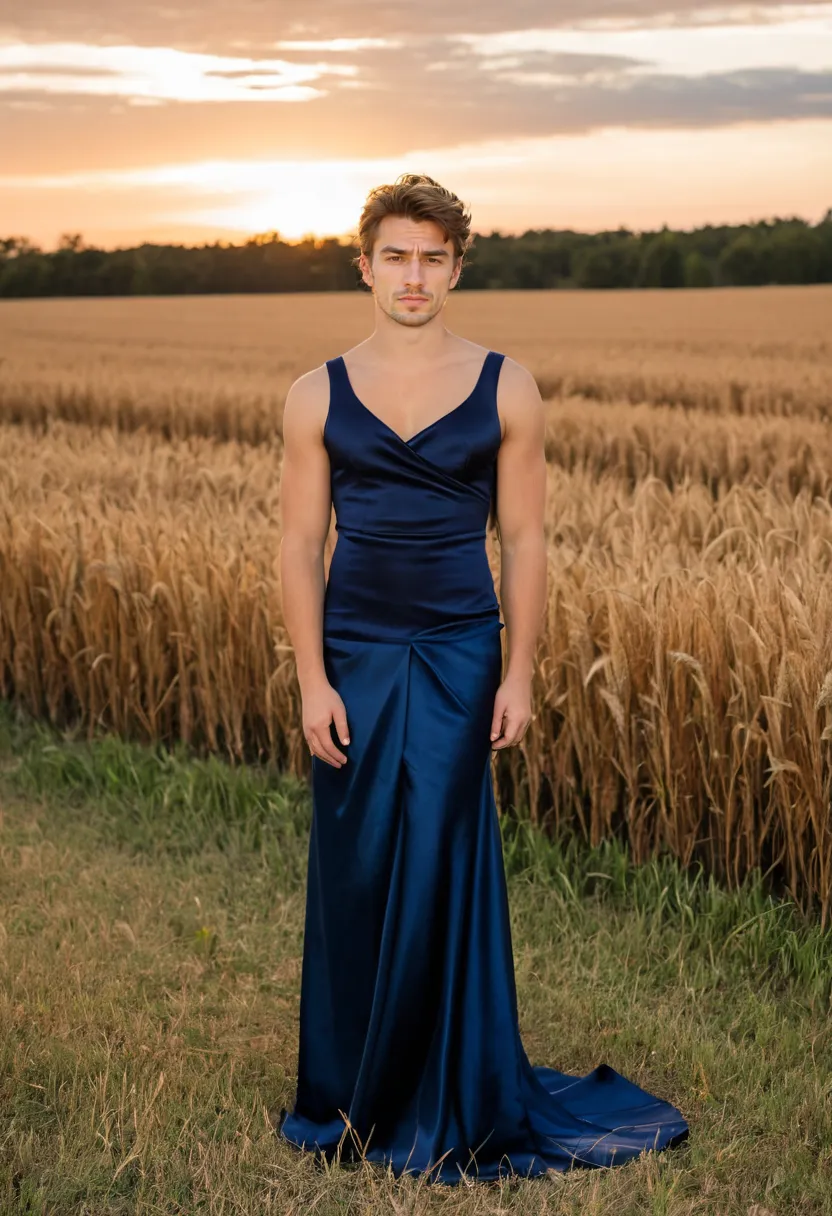
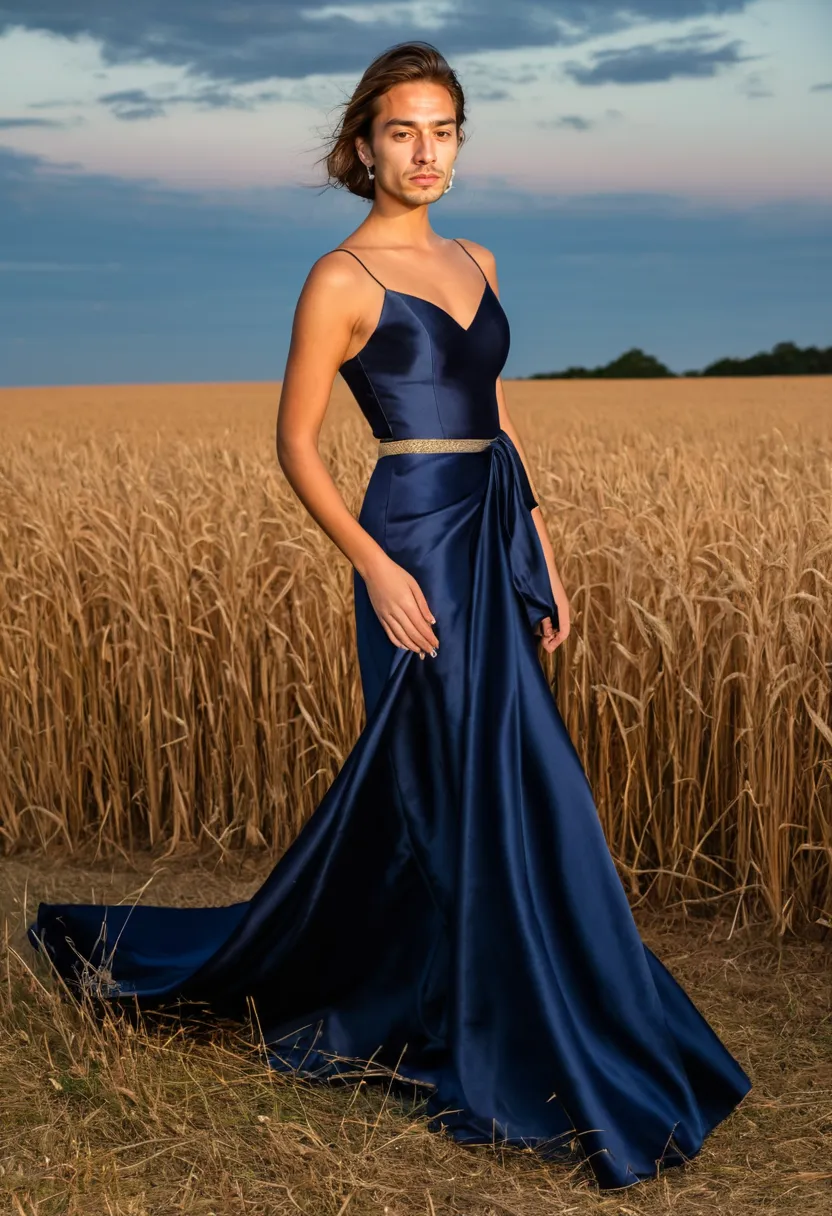
This is what makes a lookbook of men in elegant dresses so compelling. The midnight blue gown works because every element reinforces every other element. The deep, saturated color reads as serious and refined rather than loud. The heavy satin has enough weight to hold its shape, preventing the dress from looking flimsy or costume-like on a broader frame. The fitted bodice creates structure without pinching, and the narrow skirt elongates the body rather than adding visual bulk at the hip.
Beyond this single look, the lookbook approach encourages experimentation with different kinds of grace. Some men find their version of elegance in a long column silhouette that emphasizes height. Others discover it in softer bias-cut gowns that move with the body. Still others are drawn to the architectural precision of a structured evening dress with clean geometric lines. The common thread is simplicity of concept. When you look at men who have mastered elegant feminine dressing, you’ll notice they rarely layer effects. One fabric, one silhouette, one mood — executed perfectly.
What this lookbook ultimately shows is that the gendered associations we place on gowns are far more fragile than the gowns themselves. A beautifully made dress is a beautifully made dress. Put it on a body that carries it with calm confidence, and elegance takes over the conversation.
Fabric Choices That Instantly Read as Elegant and Refined
If there’s one secret that separates an elegant dress from a merely pretty one, it’s fabric. You can have the best cut in the world, but in the wrong material, it will never achieve true elegance. For men exploring feminine dresses, learning to recognize luxurious fabrics is essential — and often more important than chasing the latest trendy silhouette.
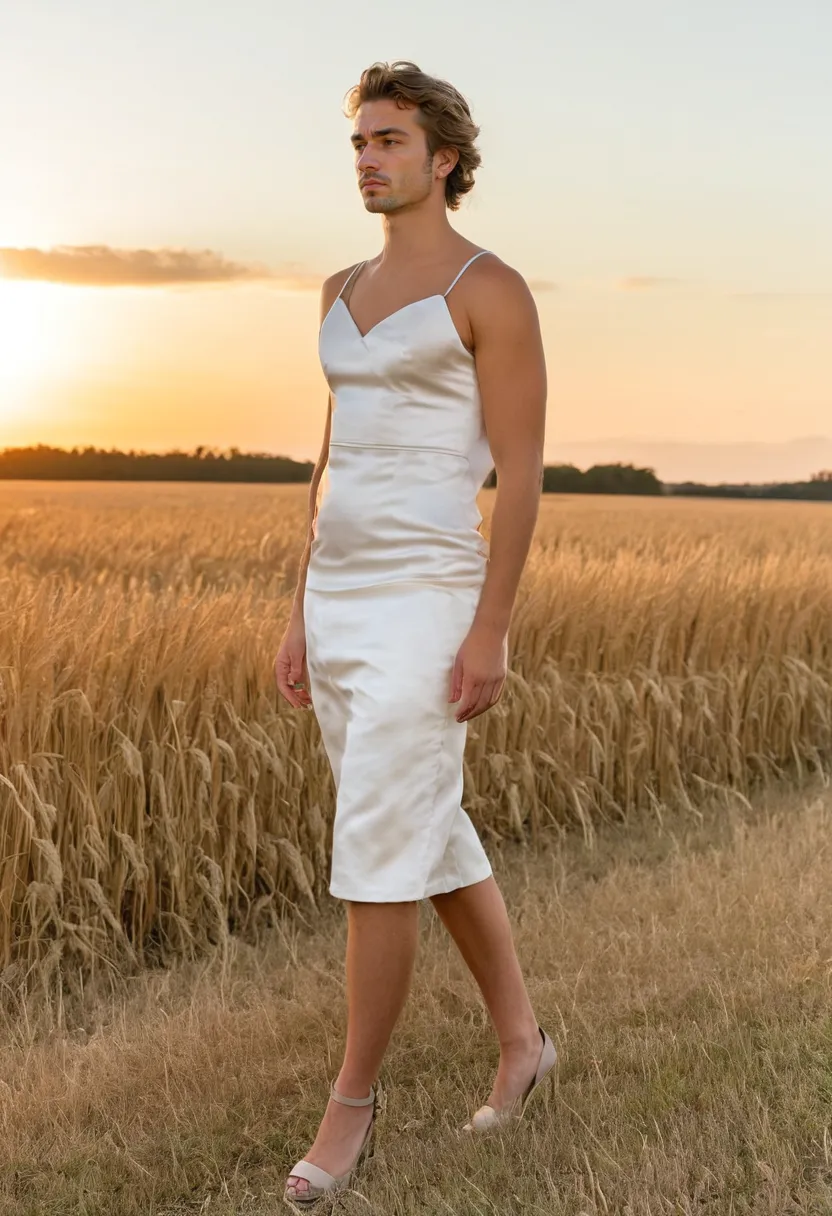
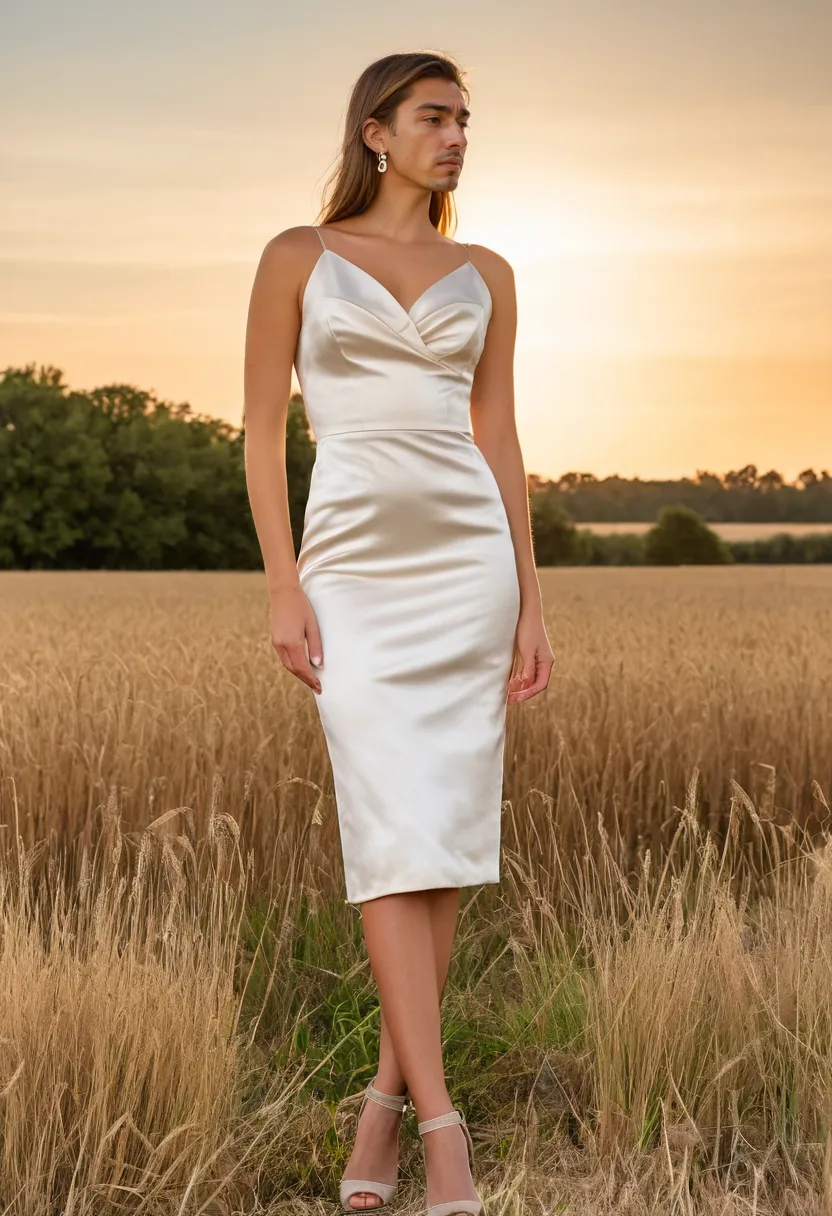
Consider duchess satin, shown here in an ivory midi silhouette. This is a fabric that broadcasts elegance from across a room. It has body — a stiffness that lets it stand slightly away from the hem rather than clinging limply — and a high, glossy sheen that reflects light like liquid pearl. On a male frame, duchess satin is particularly flattering because it adds its own architecture. The fabric essentially creates its own flattering lines, with a defined waist and a structured hem that curves outward just enough to suggest shape without artificial padding.
Silk-crepe is another fabric that reads as instantly elegant. Unlike satin’s high-gloss shine, silk-crepe has a subtle, almost matte luster with a pebbled surface texture. It drapes like water, flowing along the body in soft, elongating lines. It’s forgiving on any figure and photographs beautifully in any light.
Heavyweight crepe, ponte, and wool-crepe all share a similar virtue: weight. Cheap fabrics cling, shimmer unnaturally, or wrinkle into disarray at the first sign of movement. Elegant fabrics have gravity. They hang from the shoulders with authority and move in slow, deliberate waves rather than fluttery chaos.
Chiffon, organza, and silk gauze bring a different kind of elegance — airier, more romantic, but still refined when layered over proper linings. These work especially well for men who want a softer, more ethereal read rather than the sculpted formality of satin.
Avoid, at all costs, shiny polyester that looks wet rather than lustrous, stretchy jersey that clings to every contour, and anything described as “stretch satin” at a low price point. These fabrics will instantly drop any look from elegant to costume, regardless of who’s wearing it.
The Right Length for an Elegant Dress: Midi, Maxi & the Magic of Cut
Length is one of the most powerful tools in elegant dressing, and it’s also one of the most misunderstood. Many men first approaching feminine dresses assume “longer is more elegant” or reach for the shortest possible hem to look modern. The truth is more nuanced: elegance lives in the relationship between length, cut, and proportion.
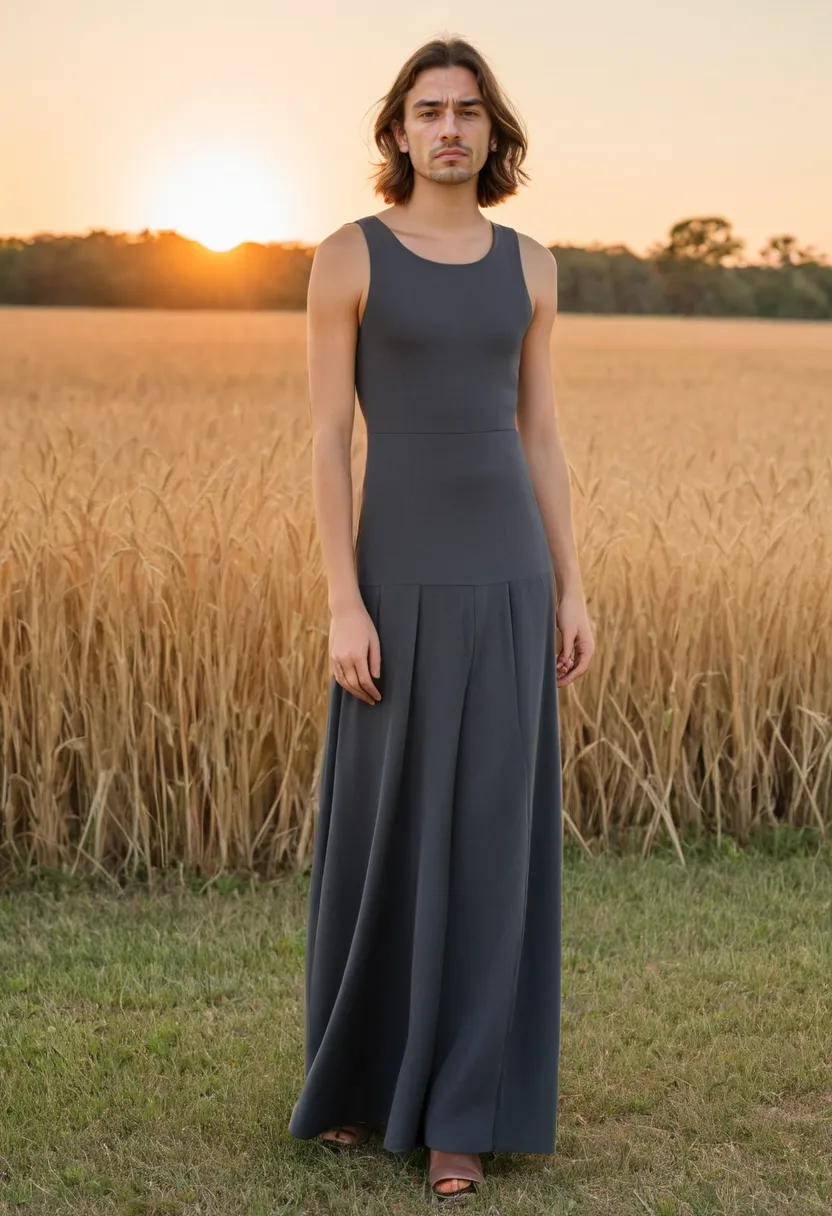
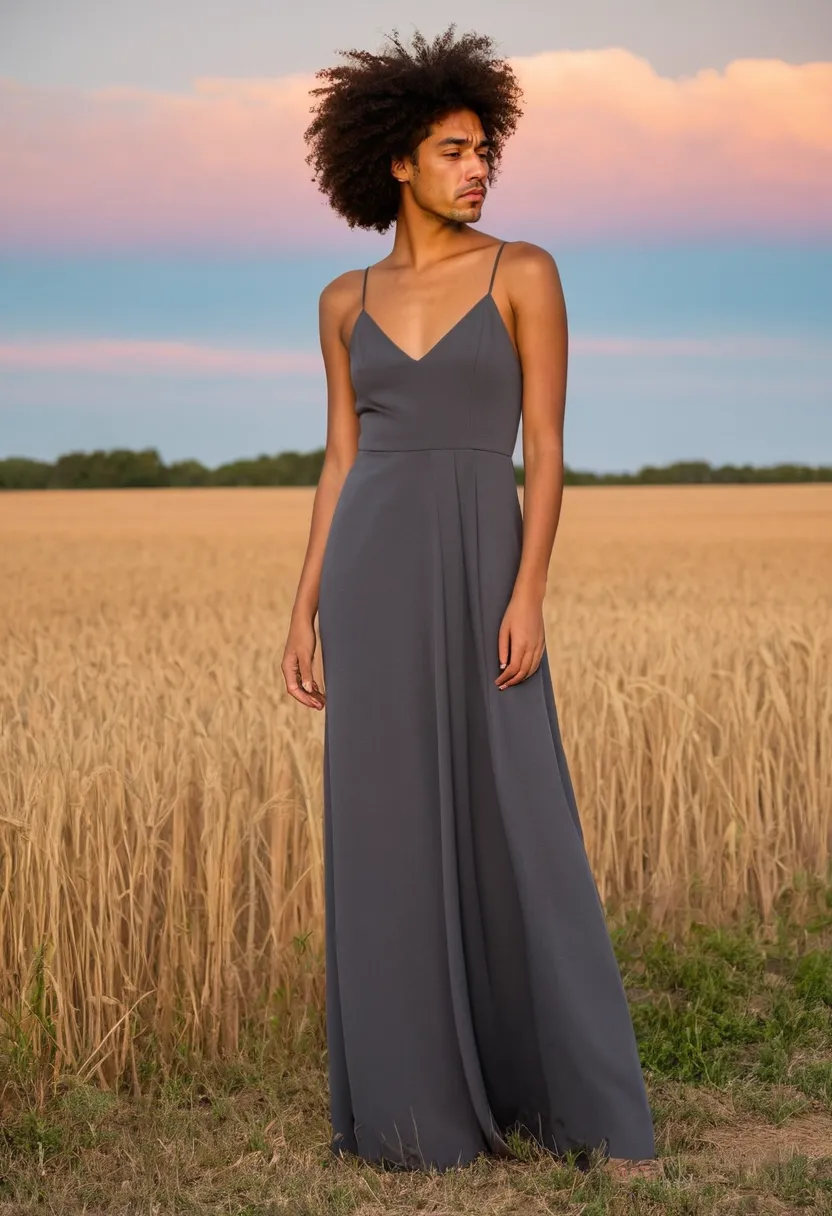
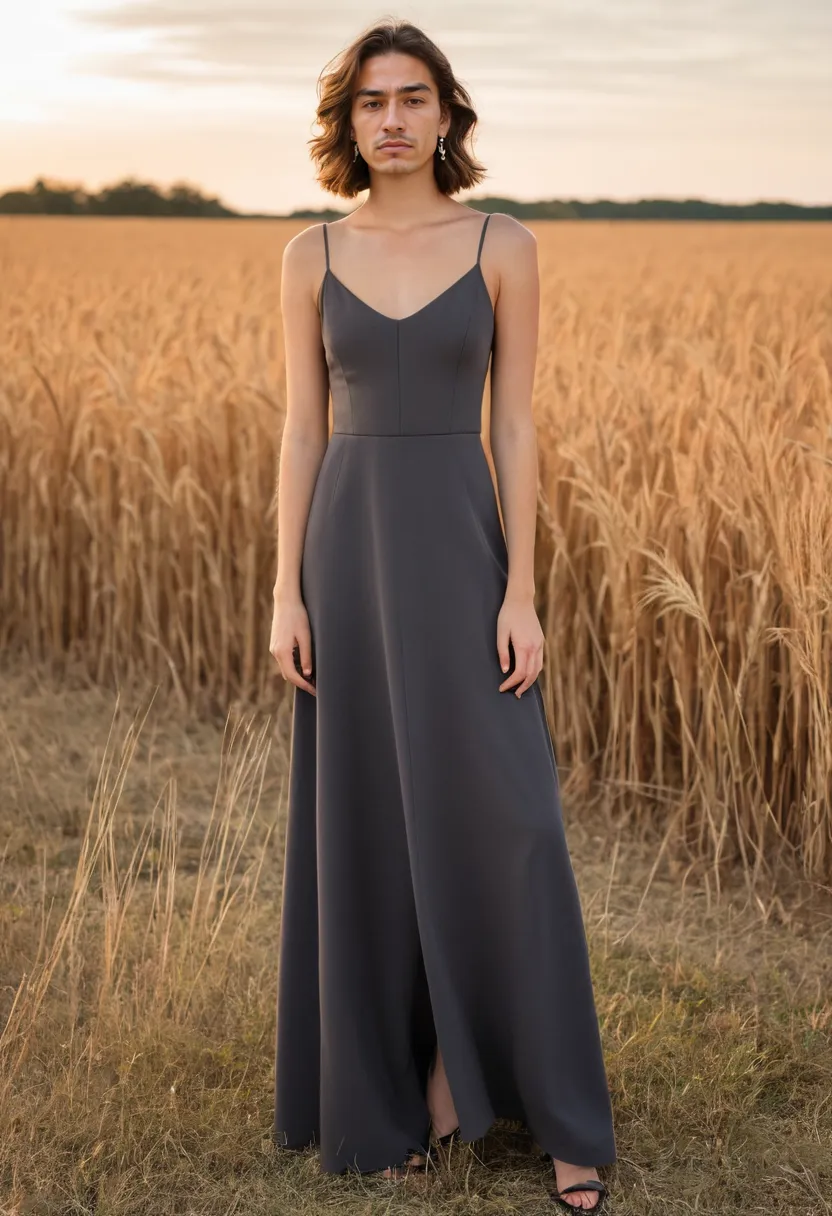
The maxi length — floor-grazing or just above the ankle — is the classic choice for formal elegance, and for good reason. A well-cut maxi in heavyweight crepe, like the soft charcoal A-line shown here, creates one long, uninterrupted vertical line. The smooth matte surface catches light softly, the clean precise seaming adds invisible structure, and a subtle ruche at the hip breaks the line just enough to suggest body without breaking the elongating effect. On a taller male frame, this can be profoundly beautiful — almost statuesque.
Midi length, hitting anywhere from mid-calf to just below the knee, is often the more versatile elegant choice. It reads as intentional and contemporary rather than purely formal. For men, midi can be particularly flattering because it exposes the lower calf — often a naturally slim part of the masculine body — while covering what some wearers prefer to cover around the thigh.
Here’s where cut becomes the magic ingredient. A maxi dress in the wrong cut — too wide, too clingy, or with a hem that puddles awkwardly — will look sloppy regardless of length. A midi dress cut with an A-line sweep, a narrow column, or a gentle bias will look elegant at nearly any height. Pay attention to where seams fall, whether the dress has a defined waist or flows from the shoulder, and how the hem breaks relative to your foot.
Mini dresses can absolutely be elegant, but they require the most careful styling and are best when the rest of the look leans sophisticated — simple shoes, minimal accessories, refined hair. Ultimately, the right length is the one that makes you stand taller when you put it on.
Color Palette for Elegant Dresses: Staying Refined Without Being Boring
Color is where many elegant looks either soar or stumble. It’s tempting to think that elegance must mean neutral — black, ivory, navy, nude — and while these colors absolutely belong in any elegant wardrobe, restricting yourself to them is a mistake. True elegance has room for deep, saturated, emotional color. The trick is choosing hues with depth rather than brightness.
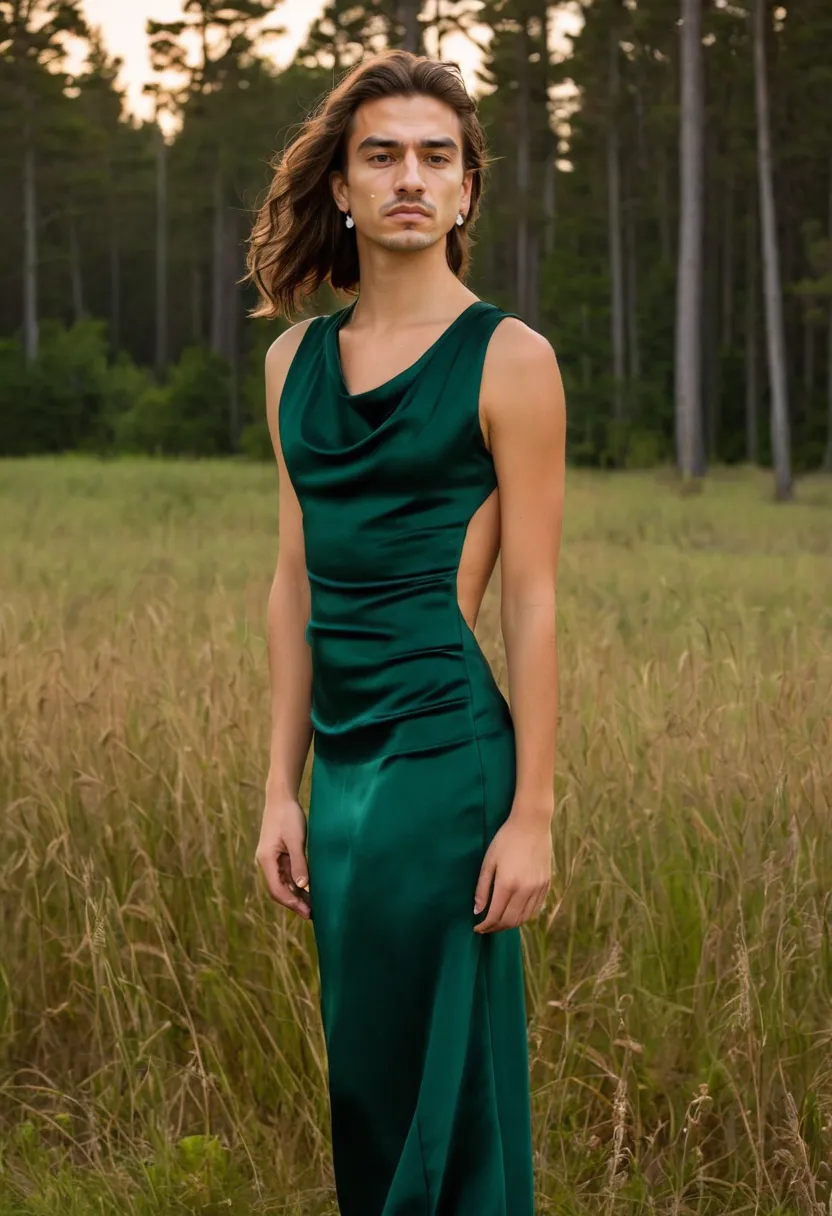
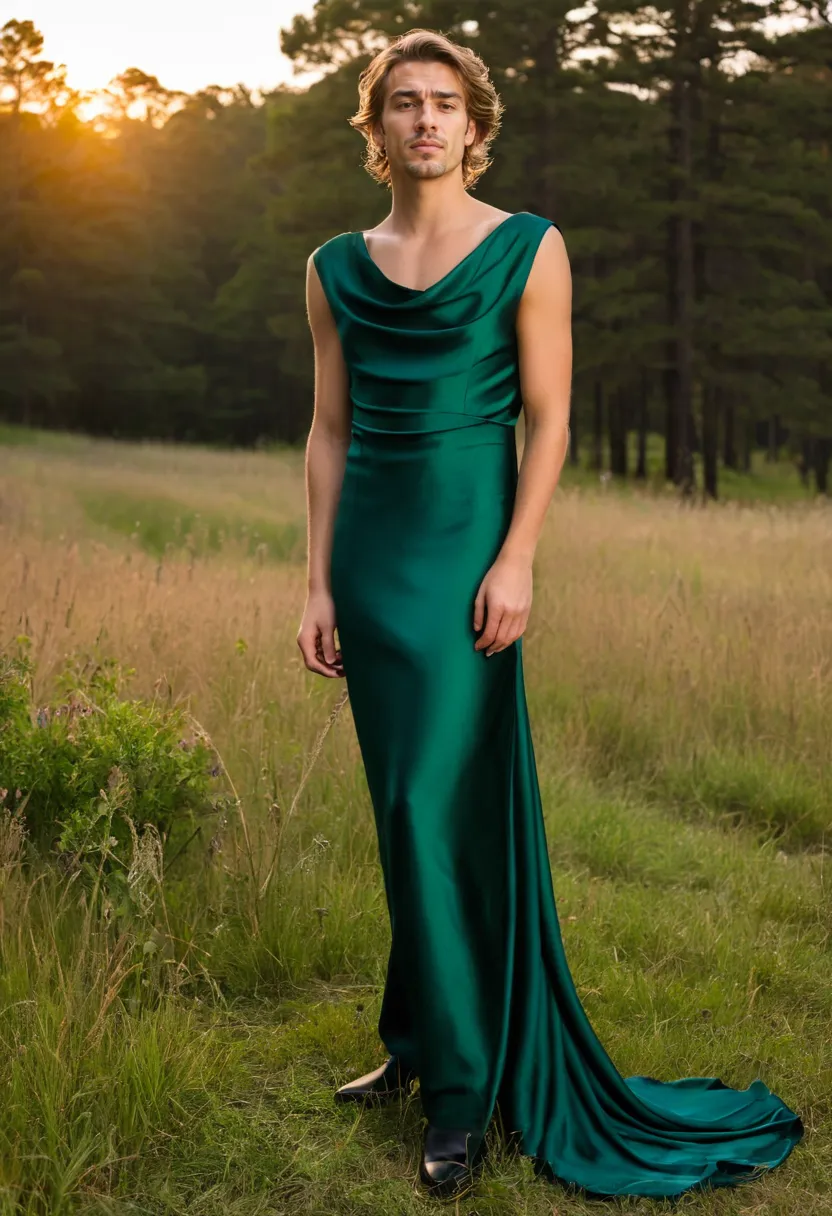
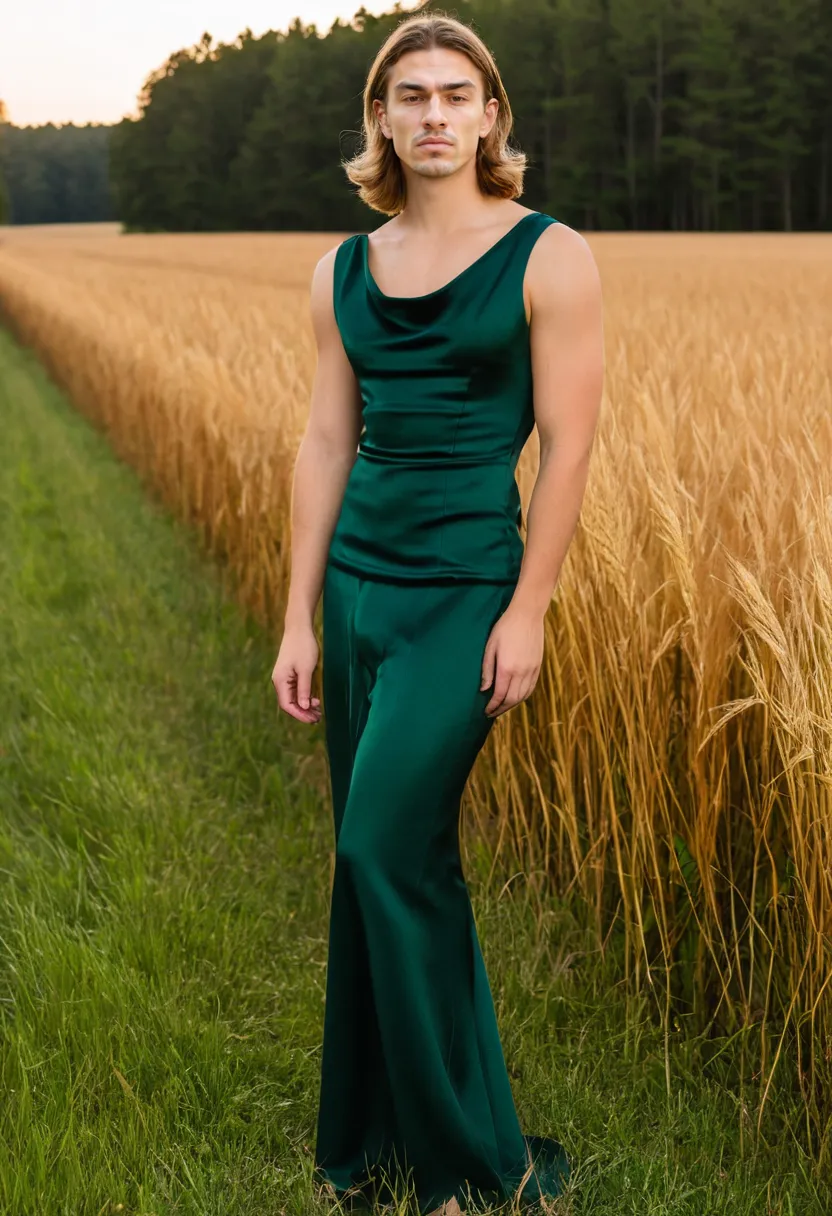
Take the deep forest green silk-crepe dress shown here. Forest green is not a “safe” neutral, but it reads as unmistakably elegant because of its depth. The color is rich and saturated, pulling from nature rather than from a crayon box. Combined with the silk-crepe’s subtle satin sheen, the fitted column silhouette, and a cowl neckline that creates natural drape at the collarbone, the result is polished and elongated — a dress that announces its elegance through quiet confidence rather than bold statement.
The rule of thumb: if a color appears in the natural world in rich, mature form — forest green, wine red, ocean navy, deep plum, bronze, ochre, charcoal, ivory, ink black — it will almost certainly read as elegant in a well-cut dress. Colors that tend to fight elegance are usually the ones that feel synthetic: hot pink, electric blue, neon yellow, or any highly processed shade.
Jewel tones deserve special mention for men exploring feminine dresses. Deep emerald, sapphire, garnet, and amethyst have an almost royal quality that complements any skin tone and photographs beautifully. They also offer an alternative to black for evening wear, which can sometimes read as predictable.
If you prefer neutrals, look for tonal complexity. Ivory is more elegant than pure white. Charcoal is more elegant than plain grey. Warm black with an undertone of brown or aubergine is more elegant than flat ink black. These subtle distinctions separate truly refined dressing from generic formalwear.
Finally, consider how color interacts with your personal coloring. Elegant dressing always flatters the wearer first, which means picking colors that make your skin glow and your eyes stand out rather than simply following trends.
Elegant Accessories That Complement a Beautiful Dress
Accessorizing an elegant dress is an exercise in restraint. The dress itself should remain the focal point; everything else exists to frame it. This is especially true for men in elegant feminine dresses, where the instinct to “add femininity” through layers of jewelry, scarves, and bows can backfire into costume territory. The most striking elegant looks almost always err on the side of less.
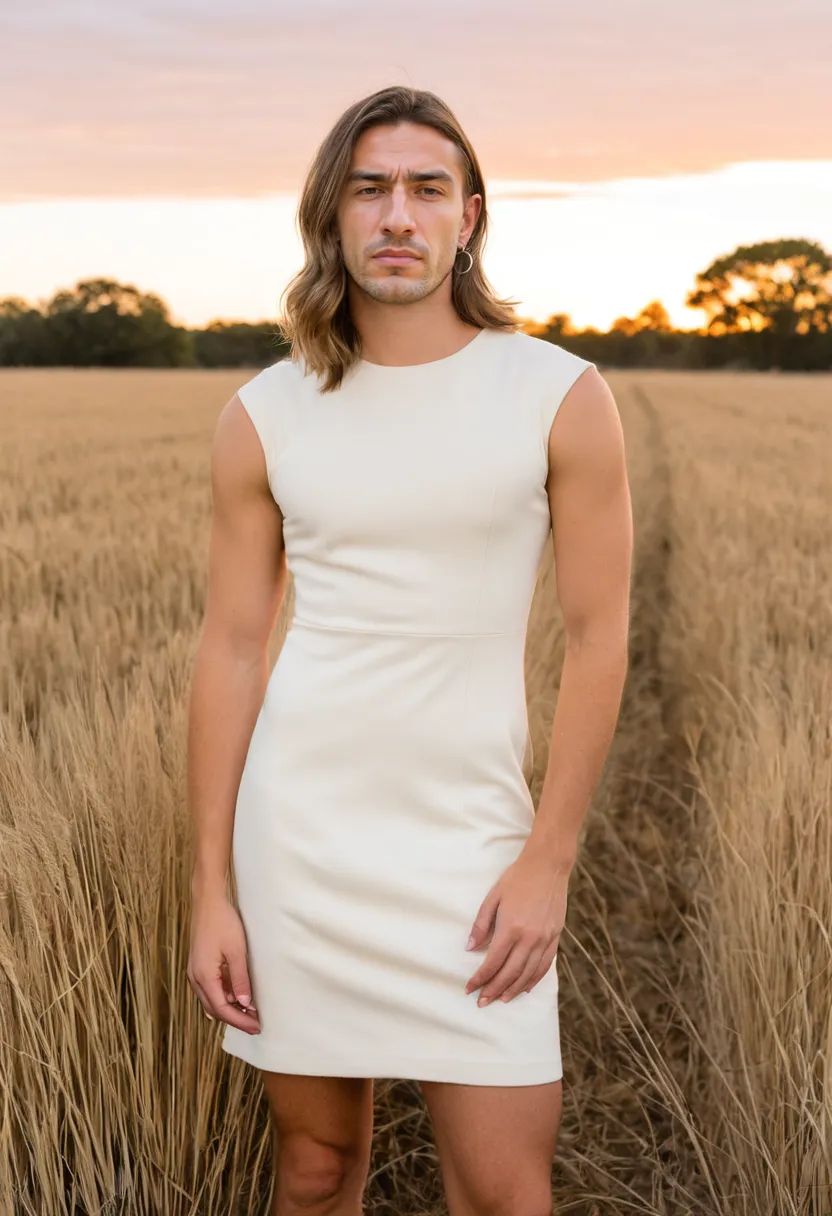
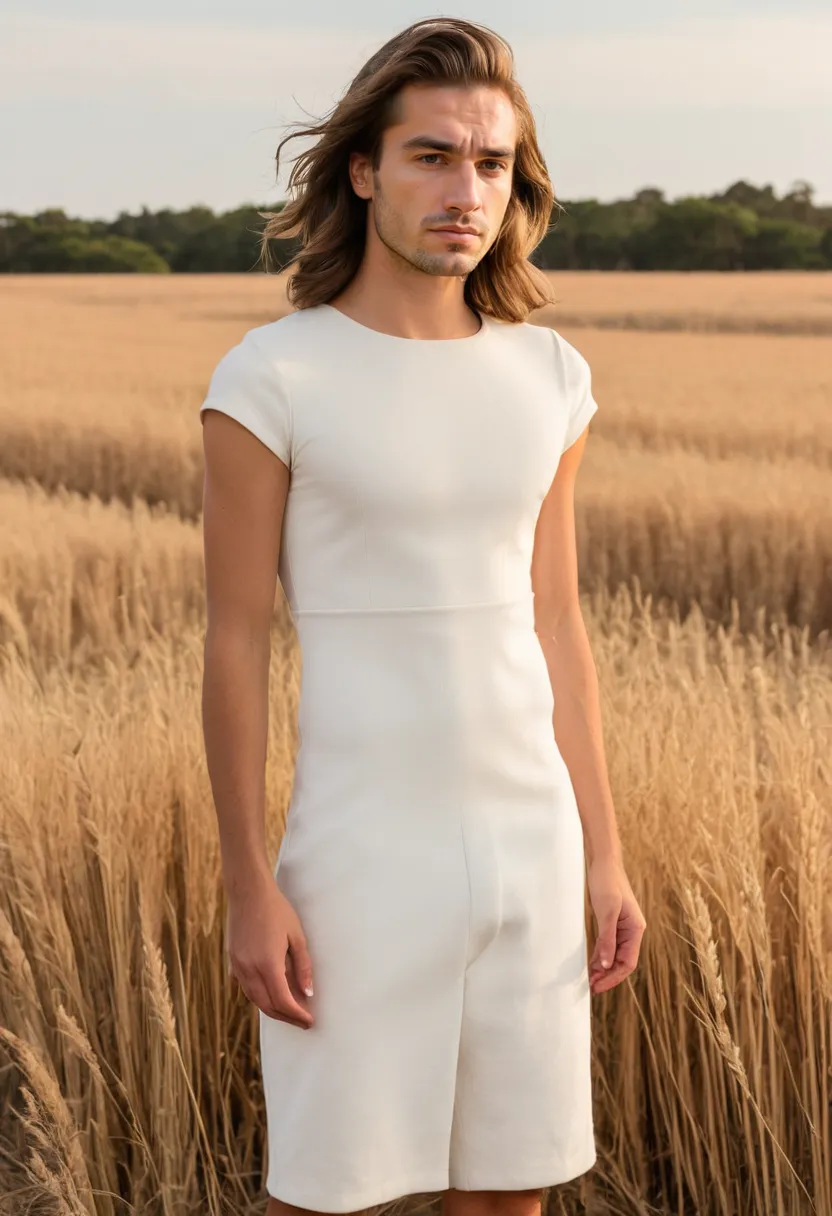
Consider the simple ivory sheath dress shown here — smooth ponte fabric, matte surface, perfectly fitted through the body, knee-length hem, minimal design with clean seam lines. This kind of dress is a blank canvas, and the temptation is to pile accessories onto it. Resist. A single strong accessory — perhaps a statement earring, or a slim leather belt, or polished nude heels — will do infinitely more than a cluttered collection.
Jewelry should be chosen with the neckline in mind. A high-necked or cowl dress asks for earrings only, no necklace. A plunging neckline can handle a delicate pendant but rarely benefits from layers. Metals should match the dress’s mood: gold for warm tones and romantic gowns, silver or platinum for cooler shades and modern minimalism. Avoid costume jewelry with obvious plastic stones; even inexpensive pieces should have a sense of weight and substance.
Footwear matters enormously. A pointed-toe pump in a neutral tone is almost always the safest elegant choice because it continues the line of the leg rather than interrupting it. Block heels, kitten heels, or elegant flats all work depending on the dress length and your comfort. Avoid chunky sneakers with formal gowns unless you’re deliberately pursuing a high-low styling moment — which is a more advanced move.
Bags should be small and structured for formal elegant dressing. A clutch, a tiny top-handle, or a simple envelope bag. Large totes and oversized slouchy bags fight the refined line of a dress.
Finally, grooming is itself an accessory. Clean nails, polished skin, and well-kept hair elevate any dress far more than additional jewelry ever could.
From Formal to Fashion-Forward: Where Elegant Dresses Fit In
One of the great misconceptions about elegant dresses is that they only belong at weddings, galas, and black-tie events. In reality, elegant dresses for men can inhabit a much wider range of occasions — from genuinely formal events to fashion-forward daywear, creative gatherings, photo shoots, and simply moments when you want to feel your most beautiful.
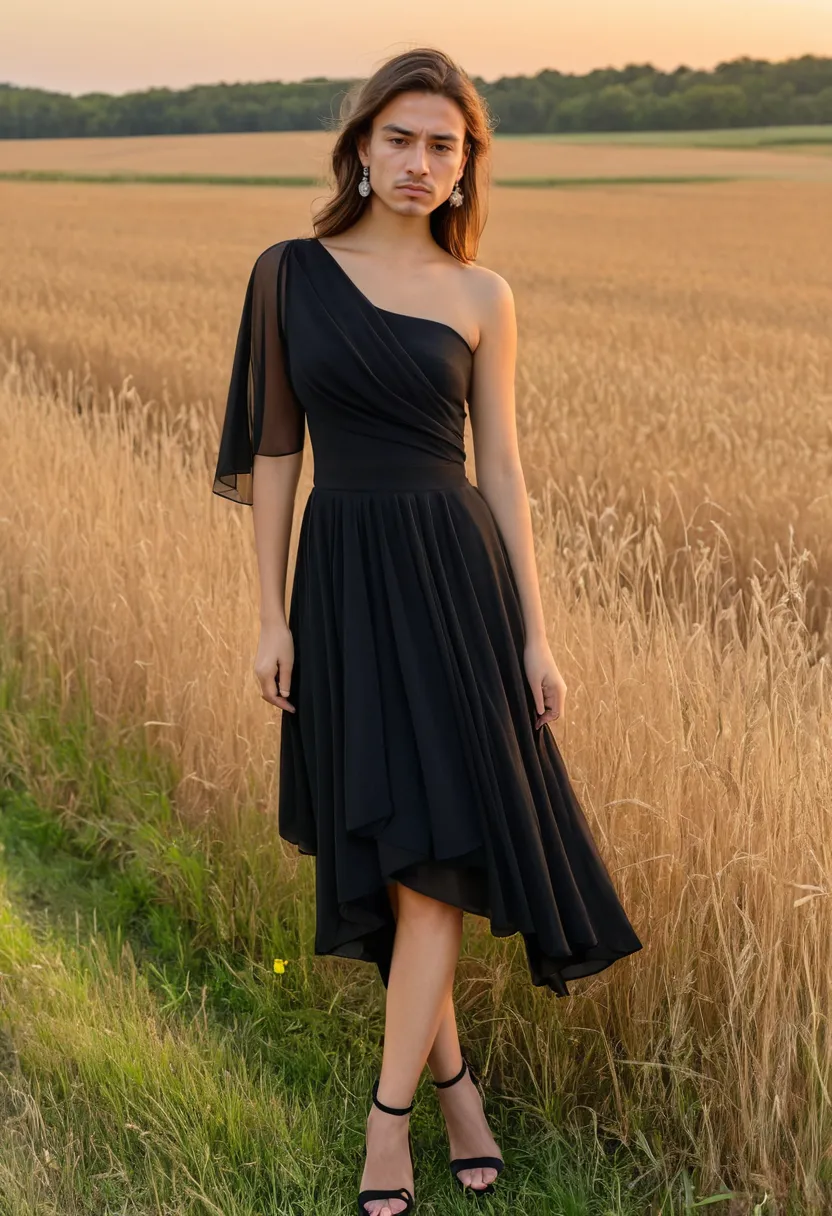
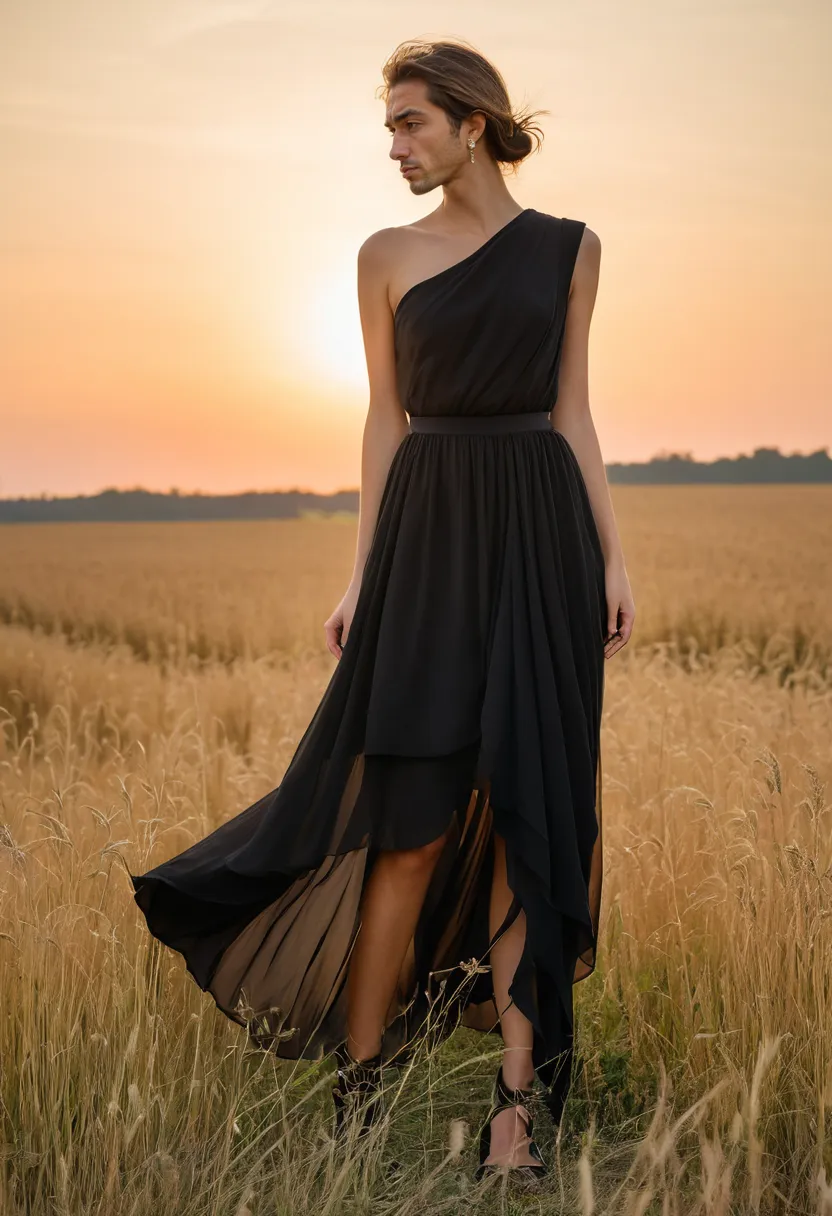
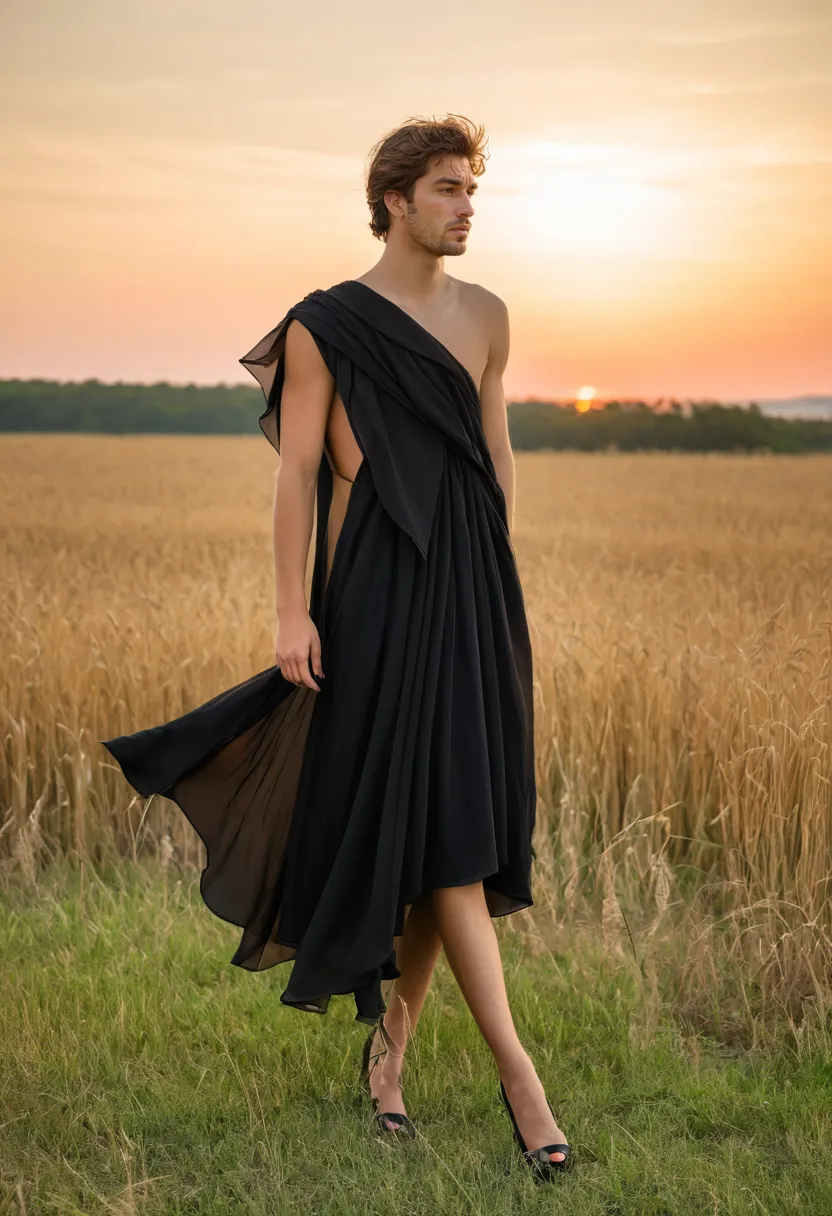
Take the asymmetric black chiffon dress shown here — a one-shoulder neckline with fabric draping diagonally across the body, a midi length with layers of flowing chiffon creating graceful diagonal lines. This dress is technically elegant, yes, but it’s also undeniably fashion-forward. The asymmetry is modern. The one-shoulder cut is architectural. The chiffon layers give movement that feels contemporary rather than strictly formal. A dress like this could work at a gallery opening, a dinner in a design-forward restaurant, a creative industry event, or a wedding where the dress code leans stylish rather than traditional.
For strictly formal occasions — black-tie weddings, opera premieres, formal state events — classic floor-length gowns in rich fabrics and deep colors remain the gold standard. Think of the midnight blue satin look from earlier in this piece. This is elegance in its most traditional form, and it still carries enormous weight.
For semi-formal or creative-formal events, a midi dress in silk-crepe, a structured satin cocktail dress, or an architectural sheath opens up more room for personality. These are also the dresses that transition best into professional creative environments, where elegant feminine dressing on a man can become a signature rather than an exception.
For daytime elegance — lunches, strolls, casual gatherings — consider lighter fabrics, slightly less formal silhouettes, and paired-down accessories. An ivory sheath with flat sandals and a straw bag can feel just as elegant as a gown, just in a different register.
The broader point is that elegance is a quality of approach, not a category of event. Once you internalize that, you’ll find elegant dresses fitting into your life in far more places than you expected.
Elegant dresses for men are not a novelty, a trend, or a statement that needs defending. They are simply beautiful clothes worn with intention, grace, and confidence. Whether you’re drawn to the gravity of a midnight blue satin gown, the architectural precision of ivory duchess satin, the elongating poetry of a charcoal crepe maxi, the saturated depth of forest green silk-crepe, the quiet refinement of an ivory sheath, or the fashion-forward movement of asymmetric black chiffon, there is an elegant dress that belongs to you. The only thing standing between you and it is the decision to wear it. Elegance, as it turns out, has always been waiting — patient, generous, and far less gendered than anyone ever told you.
Author: Emma. Photos: Alex Neuron. The material was prepared with the assistance of AI and has undergone quality review.