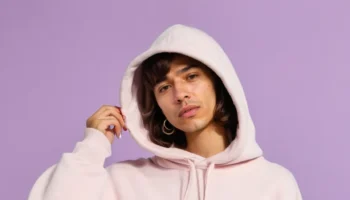
Soft Man Aesthetic Outfits: The Ultimate Style Guide & Lookbook
There’s a quiet revolution happening in menswear, and it doesn’t wear combat boots or demand attention with loud logos. The soft man aesthetic has emerged as one of the most compelling style movements of recent years, trading sharp angles and hard silhouettes for fluid fabrics, muted tones, and a gentleness that feels almost radical in its refusal to conform. This is fashion that speaks in whispers rather than shouts, inviting rather than imposing. Whether you’ve stumbled across the look on Pinterest boards, seen it sweep through TikTok edits set to dreamy synth-pop, or noticed it quietly redefining how your favorite indie musicians dress, the soft boy aesthetic style is more than a passing trend. It’s a philosophy about masculinity, vulnerability, and visual poetry. In this comprehensive guide, we’ll explore everything you need to know to build, understand, and truly inhabit this aesthetic — from wardrobe essentials to color theory, layering techniques to accessory choices, and how to differentiate it from neighboring styles like cottagecore and e-boy fashion.
What Is the Soft Man Aesthetic and Why It Resonates So Deeply
The soft man aesthetic is a visual language built on gentleness. At its heart, it’s a celebration of tactile pleasure — fabrics you want to touch, colors that calm the eye, silhouettes that flow rather than constrict. But to understand why it resonates so powerfully with young men today, we have to look beyond the clothing itself and into the cultural shift it represents.
For decades, men’s fashion operated within narrow parameters: sharp suits, rugged denim, utilitarian workwear. Masculinity was armor — something to project strength, competence, and emotional restraint. The soft boy aesthetic dismantles this entirely. It embraces pastels, cashmere, pleats, and lace not as provocations but as natural expressions of personality. It’s fashion that says a man can be tender, thoughtful, romantic, and aesthetically sensitive without diminishing any part of himself.
The aesthetic has roots in K-pop visual culture, where male idols have long embraced softer styling; in indie sleaze’s gentle cousin, the “sad boy” look of the early 2010s; and in Japanese and Korean street fashion, where gender fluidity in clothing has been normalized for years. Today’s soft man style also pulls from ballet core, quiet luxury, and the ongoing genderless fashion movement championed by designers like JW Anderson, Harris Reed, and Stefan Cooke.
What makes it deeply resonant is that it gives young men permission — permission to explore, to be soft, to experiment with beauty as an identity rather than a performance. It’s a wardrobe that mirrors an interior life, turning clothing into a form of emotional expression. And in a world that still often asks men to harden, choosing softness becomes a quiet act of self-definition.
Core Wardrobe Pieces That Define a Soft Boy Outfit
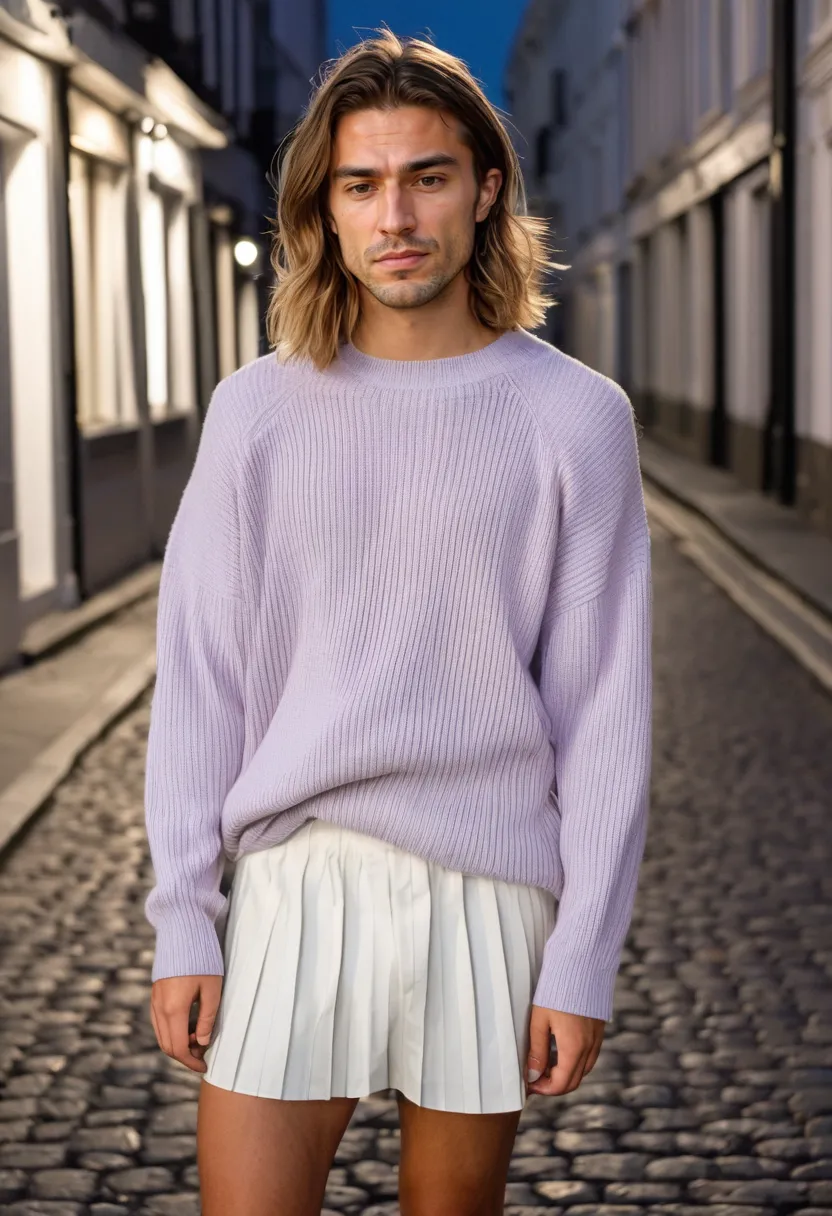
Building a soft boy wardrobe begins with understanding its anchoring pieces — the items that, even in isolation, immediately signal the aesthetic. These aren’t statement garments in the traditional sense; they’re essentials chosen for texture, proportion, and mood rather than bold design. The oversized knit sweater is perhaps the defining silhouette: thick, ribbed, and generously cut, ideally in pale lavender, dusty pink, butter yellow, or soft sage. The kind of chunky knit that slouches off one shoulder and creates volume around a slim lower half.
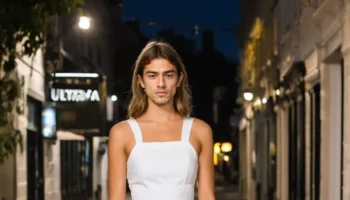
Consider the styling possibilities: that oversized pastel lavender sweater, with its thick ribbed texture, tucked loosely into a pleated ivory mini skirt with fine, precise folds. It’s a juxtaposition that embodies the whole philosophy — heaviness meeting lightness, rough knit meeting smooth fabric, the cozy meeting the formal. Against the backdrop of an empty, wet night street, this kind of outfit transforms from clothing into atmosphere.
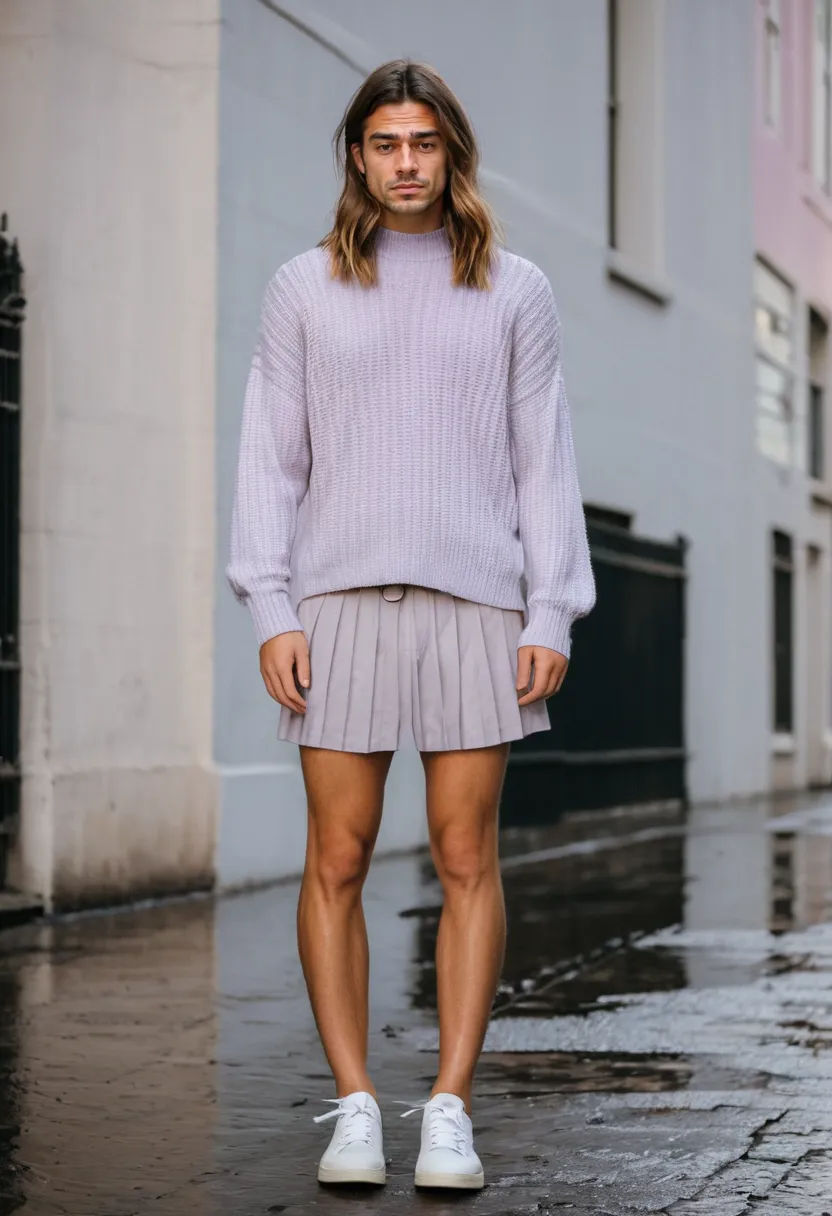
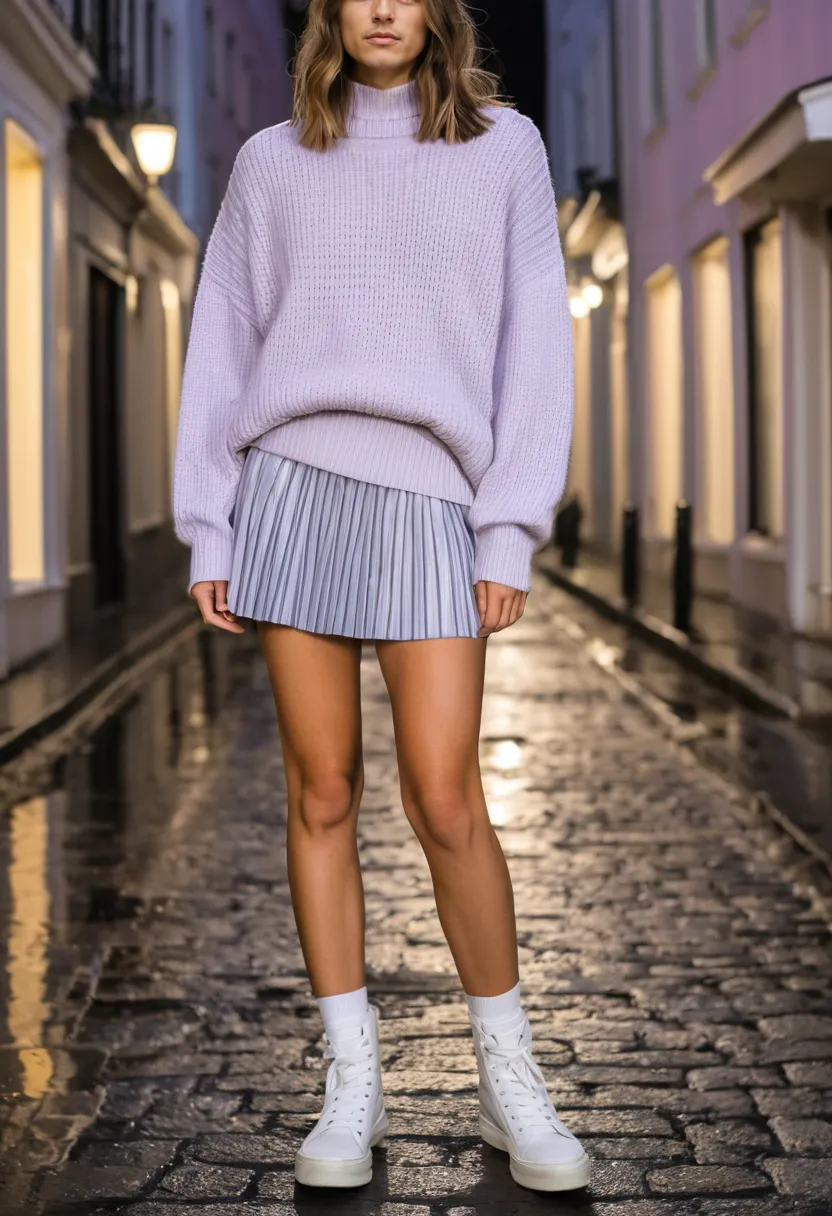
Beyond the signature knit, the soft boy wardrobe essentials include: wide-leg trousers in jersey or soft wool blends; pleated skirts worn with confidence; delicate button-up blouses in cotton, poplin, or linen; cardigans with mother-of-pearl buttons; fine-gauge turtlenecks; and loose tees in cloudlike washes. Footwear leans toward ballet flats, clean canvas sneakers, or Mary Janes. Nothing should feel constricting or aggressive. The goal is a silhouette that moves, drapes, and hangs with quiet grace.
Fabric choice cannot be overstated. A soft boy outfit lives or dies by texture. Cashmere, merino, brushed cotton, silk charmeuse, fine chiffon, and washed linen are your allies. Avoid anything stiff, synthetic, or overly structured. You’re building a wardrobe meant to be touched, meant to move with breath, meant to photograph beautifully in diffused light.
Soft Man Color Palette: The Shades That Define the Aesthetic
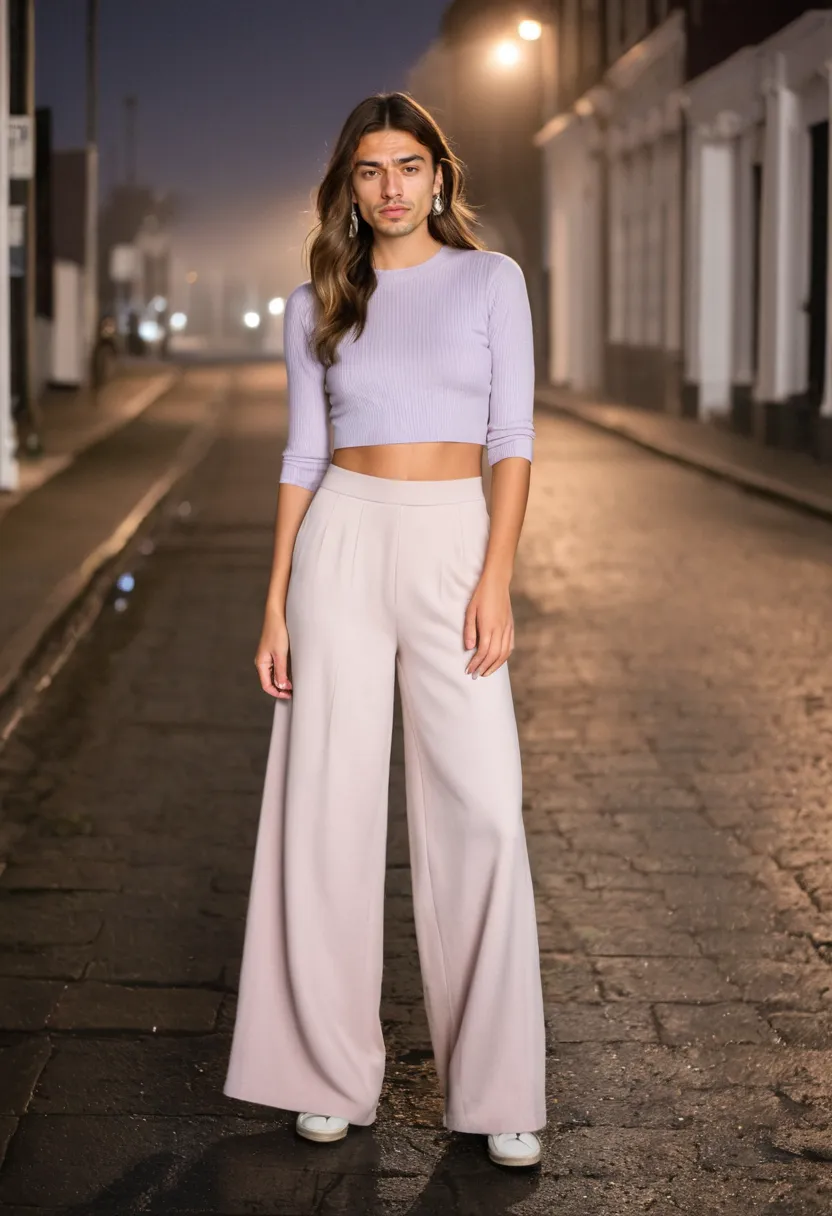
If the soft boy aesthetic has a secret weapon, it’s the color palette. The shades that define this look aren’t random — they’re carefully harmonized hues that sit on the gentle side of the spectrum, designed to flatter rather than dominate. Think of the palette as dawn light captured in fabric: blush pinks, pale lavenders, buttery yellows, soft sages, misty blues, powdered creams, and warm ivories. These are colors that feel like they’ve been sun-washed, dream-faded, softened by time.
The key to mastering the palette isn’t picking one color — it’s learning to combine them in tonal harmony. Consider the look of blush pink wide-leg trousers paired with a pale lavender fitted knit top. The fabrics are smooth, the tones are muted, and the two colors sit near each other on the spectrum in terms of saturation and warmth. Neither competes; they simply coexist in a gentle conversation. This principle — tonal dressing within the pastel family — is what separates an intentional soft boy outfit from a random assortment of light-colored clothing.
When building combinations, try the following approach: choose one base tone (often cream, ivory, or stone), one gentle accent (blush, lavender, sage), and one deeper anchor if needed (dusty rose, fog grey, muted terracotta). Avoid pure white, which reads too clinical, and steer clear of saturated brights that shatter the dreamy mood. Even your denim, if you wear any, should lean toward washed-out pale blue rather than rich indigo.
Seasonal adaptations matter too. In cooler months, the palette deepens slightly — think cream, oat, dusty mauve, and fog. In warmer months, it opens into sorbet territory — lemon, peach, mint, lilac. But the underlying principle remains: every color should feel like it’s been softened, as though viewed through gauze. This restraint is what makes the aesthetic visually cohesive and endlessly photogenic.
Gallery: Soft Boy Aesthetic Outfits Done Beautifully
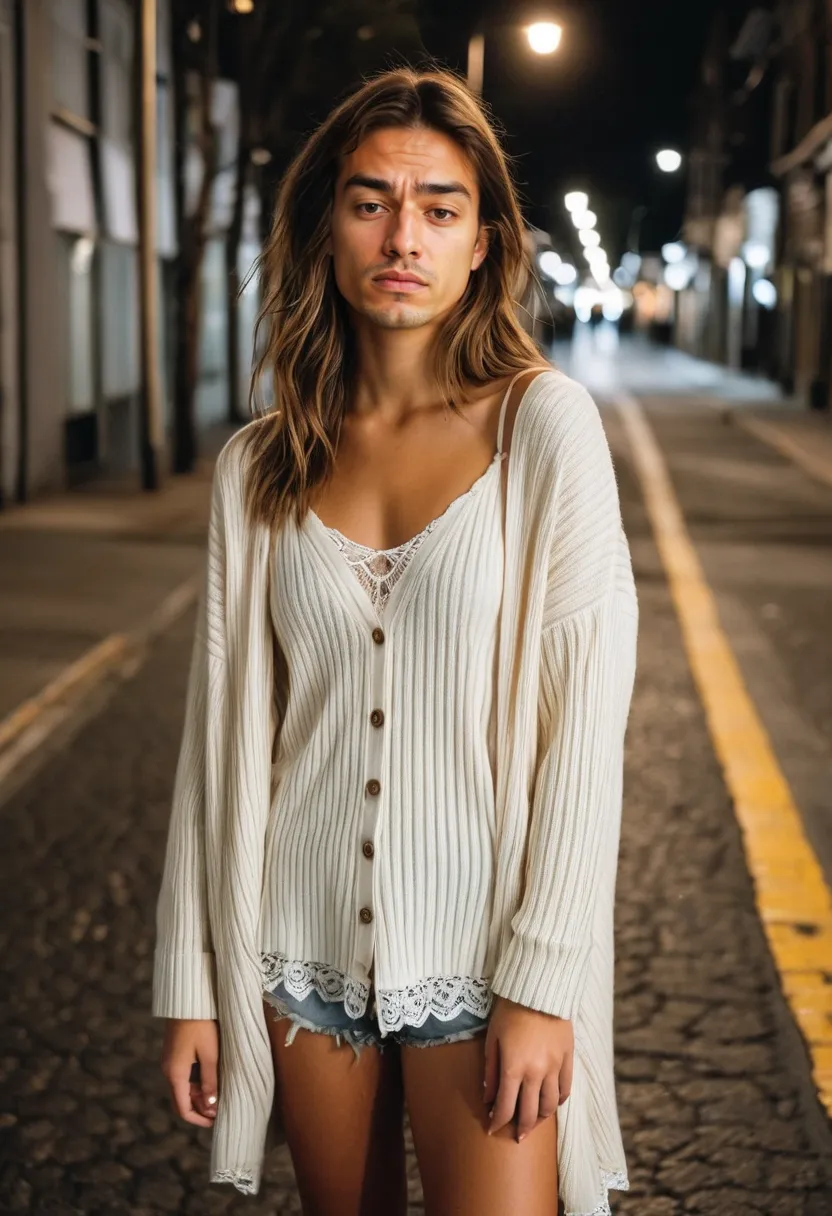
Sometimes the best way to internalize an aesthetic is to simply look at it done well — to absorb the way fabrics fall, how colors meet, how a look breathes. The image above captures one of the most elegant soft boy compositions: an oversized cream cardigan in wide ribbed knit layered over a white lace-trim camisole. What makes it work is the tension between the heavy, textured outer layer and the delicate, almost lingerie-adjacent inner piece. The cream and white tones sit in near-identical territory, creating that monochromatic softness the aesthetic depends on.
Notice how the ribbed knit cardigan hangs loose, unbuttoned, allowing the camisole’s lace trim to peek out at the neckline. This is the soft boy look in its most articulate form — a single outfit that demonstrates layering, texture play, tonal dressing, and a gentle embrace of traditionally feminine design elements. The lace isn’t worn as irony or provocation. It’s worn because it’s beautiful, and beauty is the point.
Other gallery-worthy combinations to study and recreate include: a sheer ivory blouse over a simple white tank paired with high-waisted cream trousers; a pale pink oversized button-up tucked into wide-leg butter yellow pants; a dusty lavender cardigan worn over a grey pleated skirt with opaque white tights; a soft sage turtleneck beneath delicate overall straps; a silk charmeuse shirt in pale blush, unbuttoned halfway, worn with loose cream shorts and ballet flats.
What each of these outfits shares is a commitment to proportion and texture. Nothing is skintight. Nothing is aggressive. Every piece contributes to an overall atmosphere of calm, romance, and quiet self-possession. Study these looks the way you’d study poems — noticing the small word choices, the line breaks, the restraint. That’s what makes soft boy fashion beautiful in practice, not just in theory.
Layering in the Soft Man Style: How to Build Depth Effortlessly
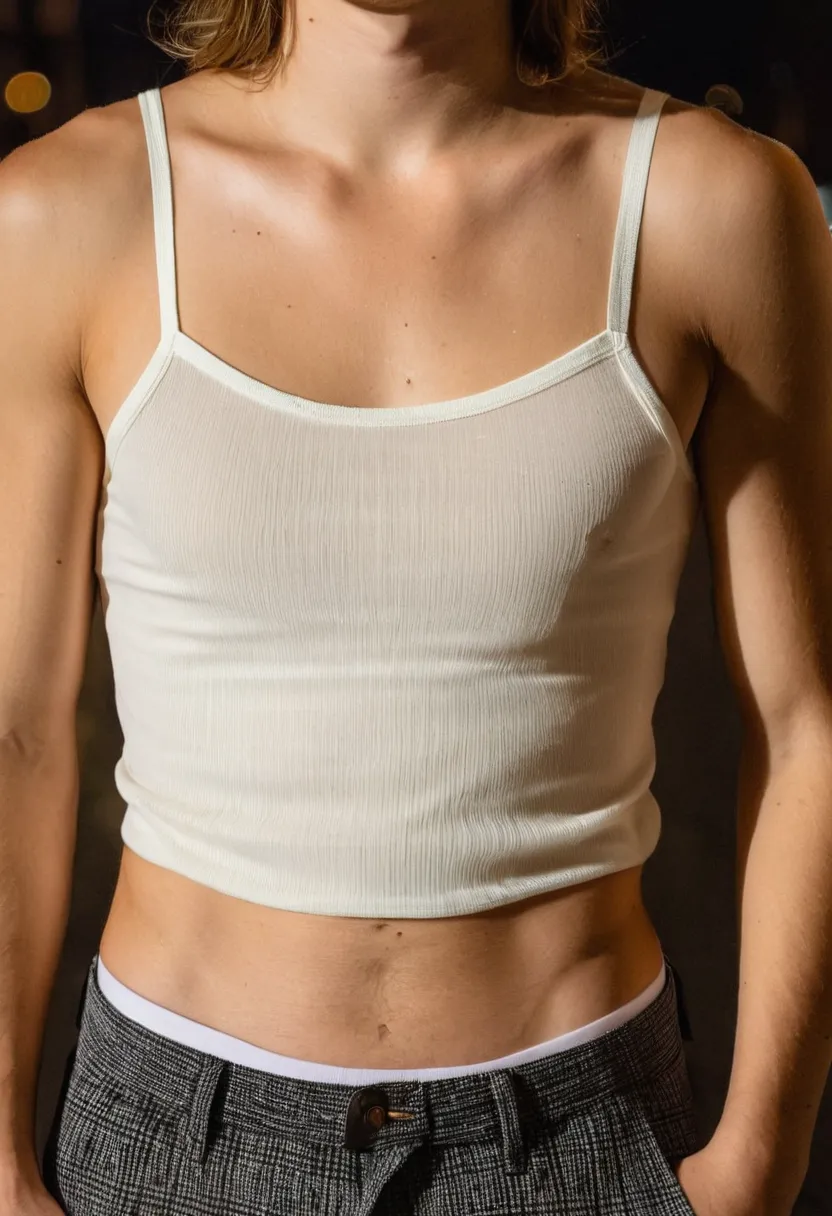
Layering is where the soft boy aesthetic truly comes alive. Unlike streetwear layering, which tends to rely on bulk and graphic contrast, soft man layering is about transparency, lightness, and the interplay of fabrics that whisper rather than announce themselves. The goal isn’t warmth or utility — it’s visual depth. Each layer should add a new dimension: a new texture, a new translucency, a new subtle shift in tone.
The image above illustrates this principle perfectly: a sheer ivory chiffon blouse worn over a fitted ribbed crop top. The outer layer is transparent, almost ghostly, while the inner layer provides structure and opacity. You can see through one to the other, creating an effect that’s far more sophisticated than solid-over-solid layering could ever achieve. This is the magic of working with lightweight fabrics — they allow multiple pieces to coexist without ever looking heavy.
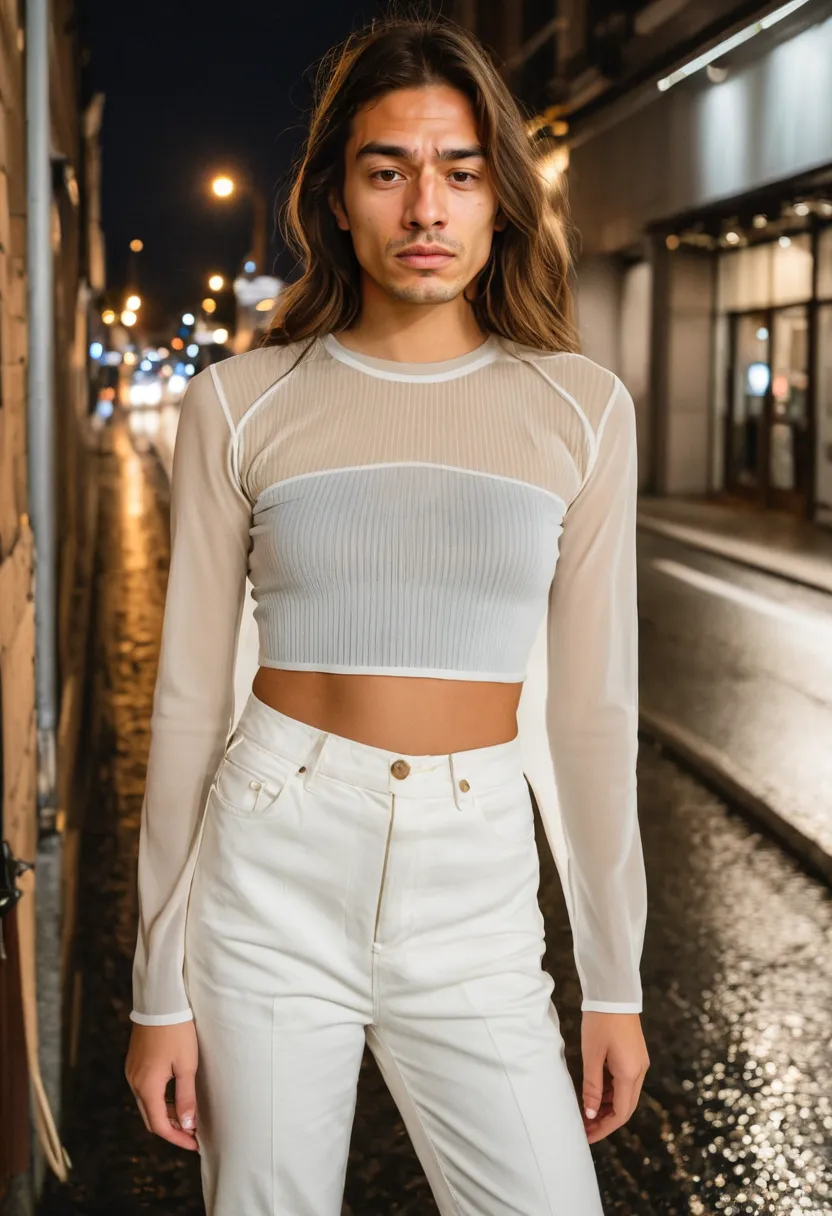
To master soft boy layering, think in terms of weight progression. Your base layer should be the lightest and most fitted — a ribbed crop, a thin tank, a fine jersey tee. Your middle layer adds texture or color shift — a delicate cardigan, a sheer blouse, a silky shirt left unbuttoned. Your outer layer, if you choose to add one, provides the largest silhouette — an oversized knit, a long trench in cream, a soft wool coat in pale camel.
Texture mixing is equally important. A great soft man outfit often combines three distinct textures: something smooth (silk, jersey), something textured (ribbed knit, bouclé), and something airy (chiffon, lace, fine cotton voile). When all three are present in a cohesive color palette, the outfit gains the kind of quiet complexity that makes viewers linger.
One pro tip: don’t layer for the sake of layering. If an outfit feels complete with just two pieces, leave it there. Soft boy style values restraint. Every piece should earn its place, either by adding meaningful texture, shifting the color story subtly, or creating a silhouette that couldn’t exist without it. Overlayering turns romance into costume, and that’s the line to walk carefully.
How Soft Boy Aesthetic Differs From Cottagecore, Coquette & E-Boy
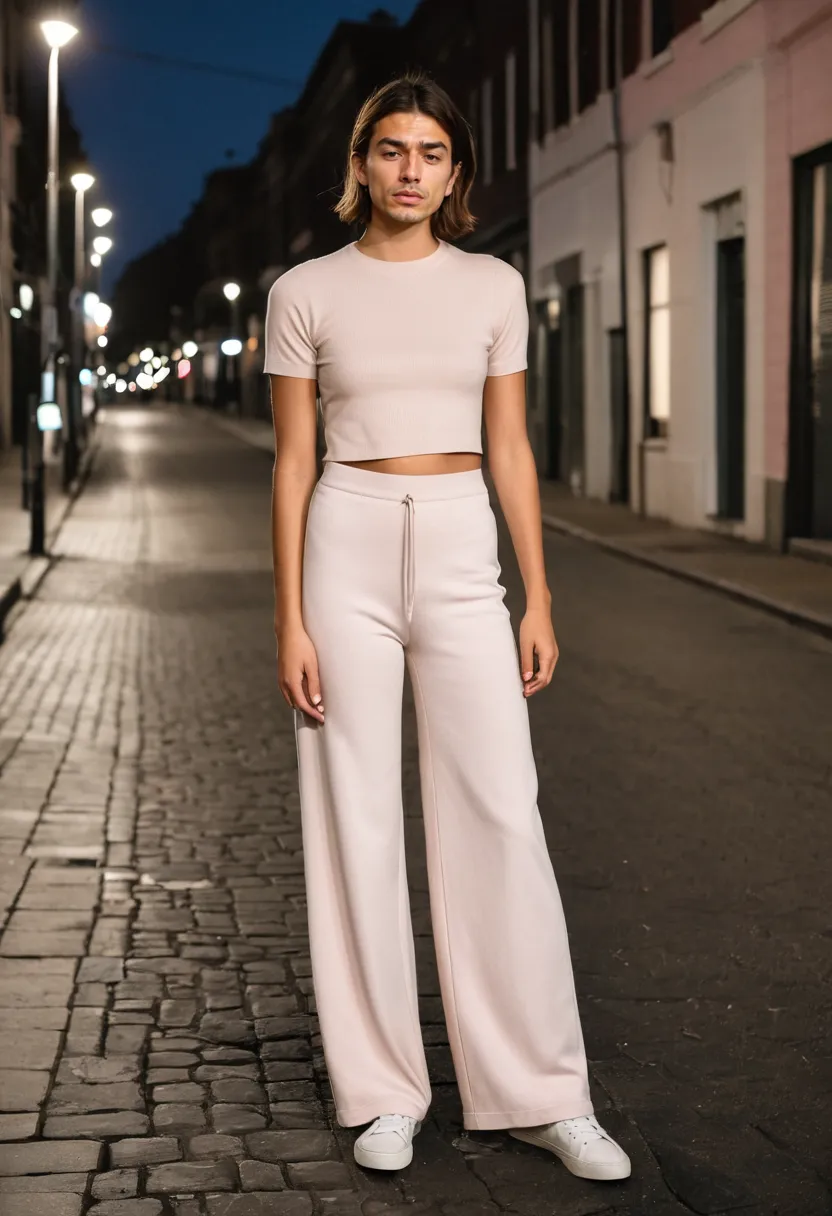
The soft man aesthetic exists within a broader ecosystem of gentle, romantic, or nostalgic styles — and it’s easy to conflate them if you’re new to the visual language. Understanding the distinctions helps you refine your own look and avoid accidentally wandering into adjacent aesthetics that have their own rules. Let’s break down the key differences.
Soft boy vs. cottagecore: Cottagecore is rural, pastoral, and historical. It involves linen aprons, wildflower prints, gingham, straw hats, and an overall aesthetic of imagined farm life. It romanticizes the countryside, baking bread, and pre-industrial simplicity. Soft boy style, by contrast, is urban, contemporary, and minimalist. It shares cottagecore’s gentleness but none of its rustic imagery. Where cottagecore looks to the past, soft boy looks to a dreamy present.
Soft boy vs. coquette: Coquette aesthetic leans into overt femininity, flirtation, and ribbon-laden romance. Pink bows, lace tights, ballet slippers, and Lana Del Rey imagery define it. It’s performative and theatrical. Soft boy style shares some visual overlap — lace, pastels, delicacy — but it’s quieter, less decorative, less concerned with being looked at. A soft boy outfit might feature a single lace trim; a coquette outfit layers ribbons, bows, and embroidery together.
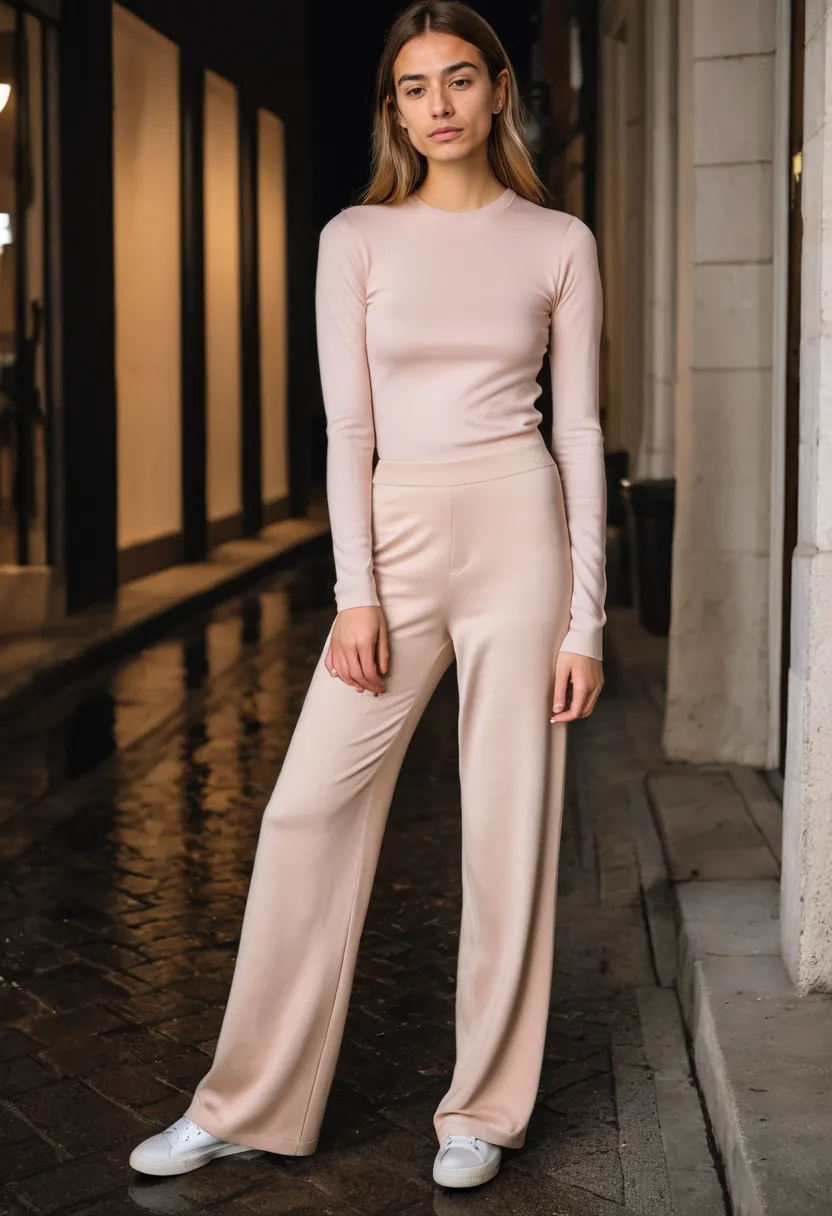
Soft boy vs. e-boy: E-boy is the most visually distinct neighbor. E-boy is dark, emo-influenced, and often involves striped long-sleeves, chains, black nail polish, and heavy eyeliner. It’s tied to gaming culture, TikTok, and an online-native identity. Where e-boy uses darkness to signal vulnerability, soft boy uses lightness. They’re almost mirror images of the same desire — to express emotional depth through clothing — but their visual vocabularies are opposite.
The look captured in the image above — a pale pink fitted knit top with smooth jersey wide-leg trousers in a minimal, clean palette — is pure soft boy. There’s no bow, no vintage print, no chain, no gingham. Just harmonious muted tones, clean lines, and quiet confidence. That’s the signature.
Accessories That Complete a Soft Man Look Without Overcomplicating It
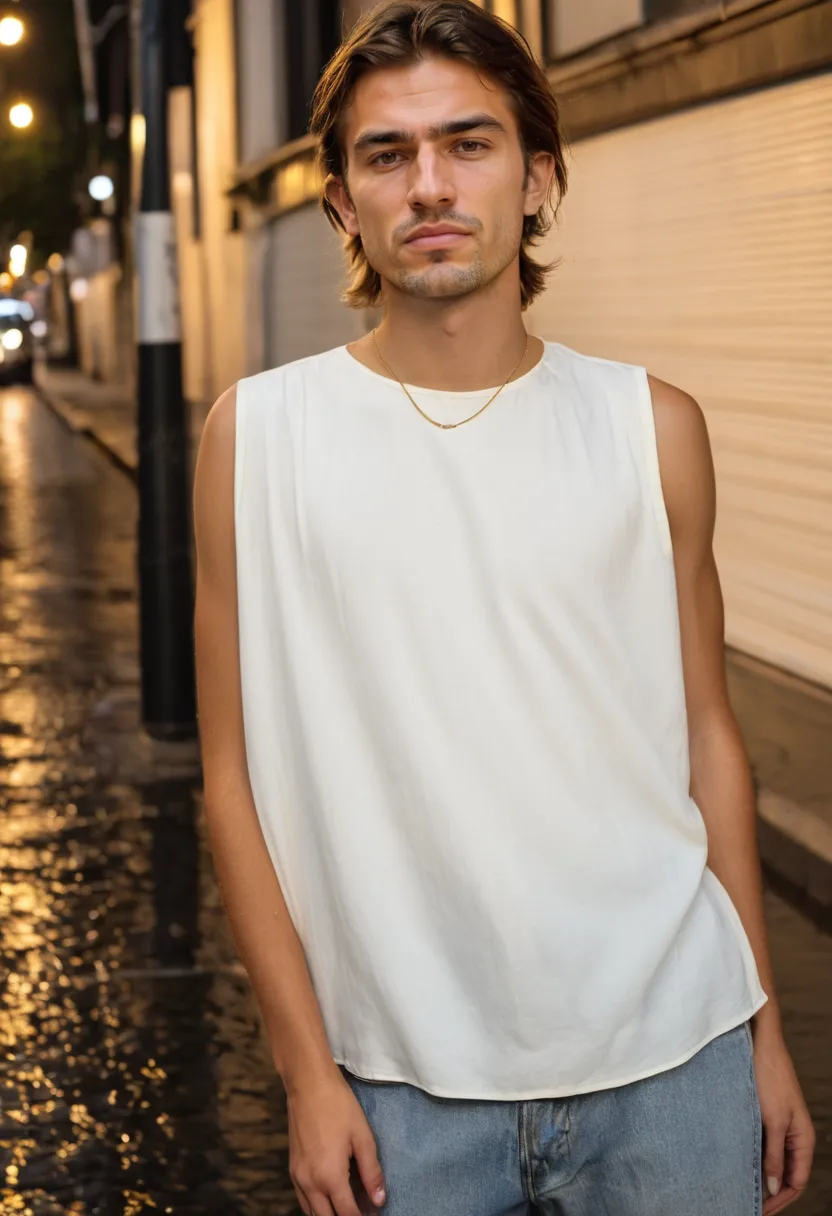
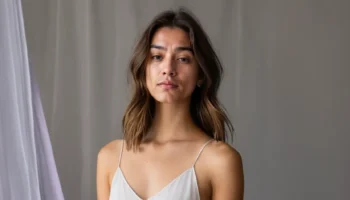
Accessorizing for the soft boy aesthetic is an exercise in subtraction. Where other styles pile on rings, layered necklaces, and bold watches, soft boy style treats accessories as punctuation marks — small, deliberate additions that complete rather than complicate. The image above captures this beautifully: a simple ivory blouse in lightweight woven fabric, worn with nothing but a thin gold necklace resting at the collar. The effect is clean, uncluttered, and quietly elegant.
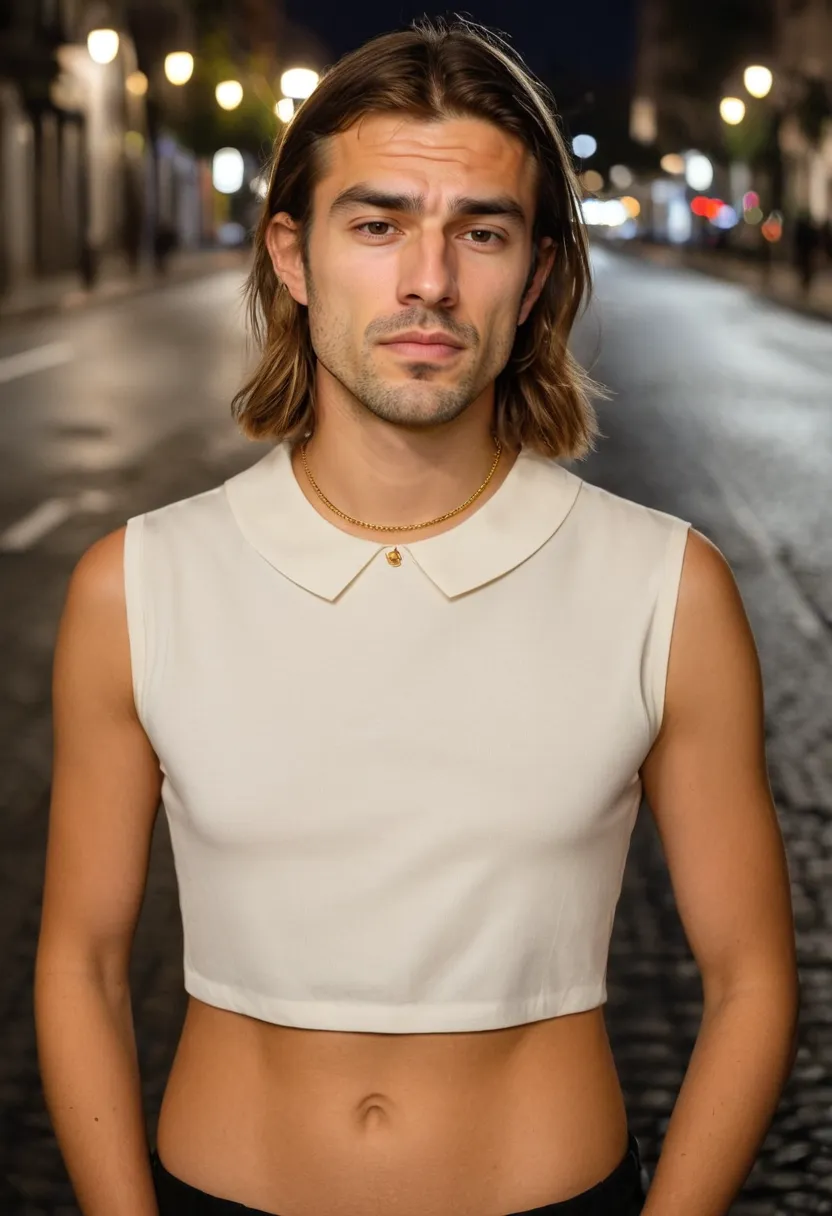
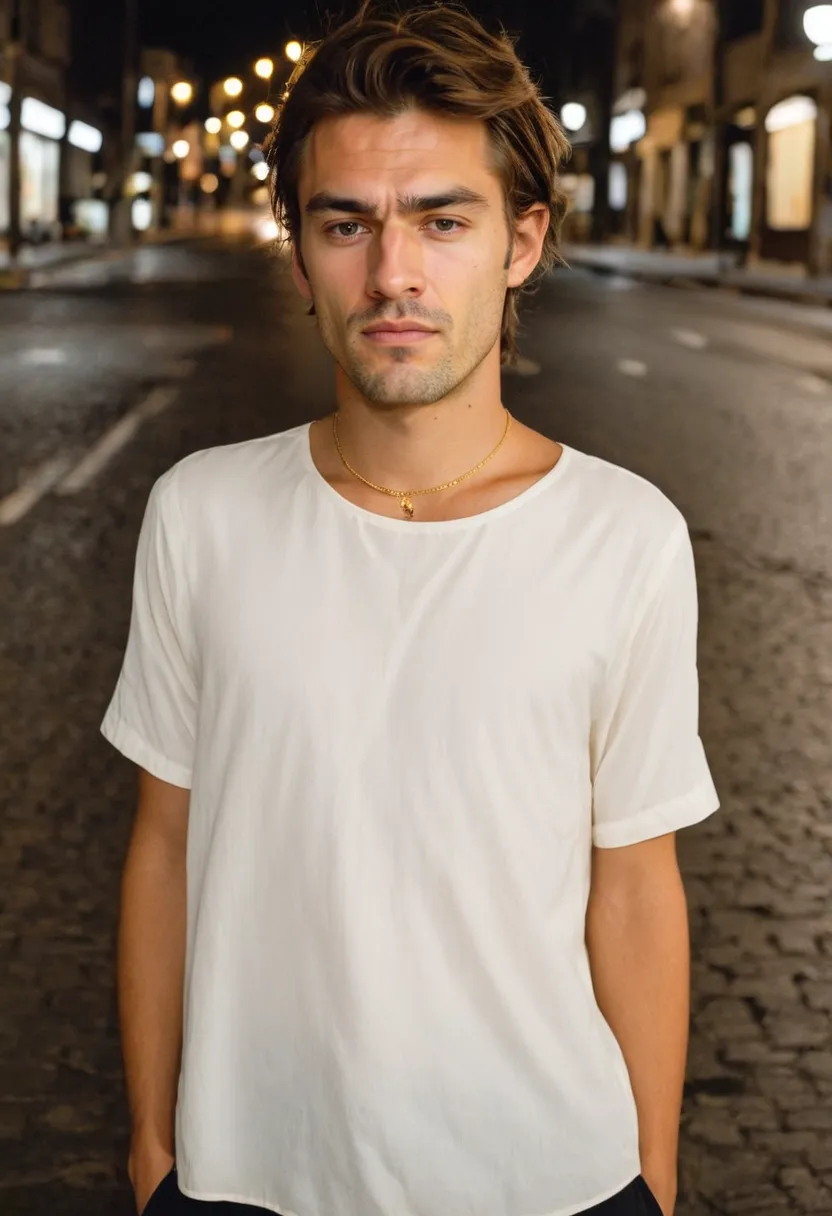
The rule of thumb: choose one or two small accessories and let them breathe. A single delicate gold chain. A thin silver ring. A simple pearl stud earring. A silk hair ribbon in a muted tone. A tote bag in cream canvas. Each piece should feel like it was placed with intention, not added to fill space. The aesthetic rewards restraint, always.
Jewelry choices lean toward thin metals — fine gold chains, slim silver bands, tiny pearl accents. Avoid chunky statement pieces, large pendants, or anything with aggressive hardware. If you wear a watch, choose something with a leather or fabric strap and a slim, minimalist face. Rings should be delicate bands, not signet rings. Earrings should be small and refined.
Hair accessories deserve special mention, as they’ve become central to the soft boy look. A thin satin ribbon tied in a bow at the base of a small ponytail, a simple claw clip in cream or tortoiseshell, a narrow headband in a muted shade — these are small touches that feel utterly soft. They also signal a willingness to engage with traditionally feminine beauty codes, which is core to the aesthetic’s appeal.
Bags should follow the same logic. Skip the structured leather briefcase. Reach for soft canvas totes in cream or stone, small crossbody bags in butter-soft leather, or even a vintage book bag in washed cotton. Footwear accessories like socks deserve attention too — a pair of slouchy cream socks peeking above ballet flats or clean white sneakers adds that final grace note. Remember: accessories should whisper, never shout.
Where to Build a Soft Boy Wardrobe on Any Budget
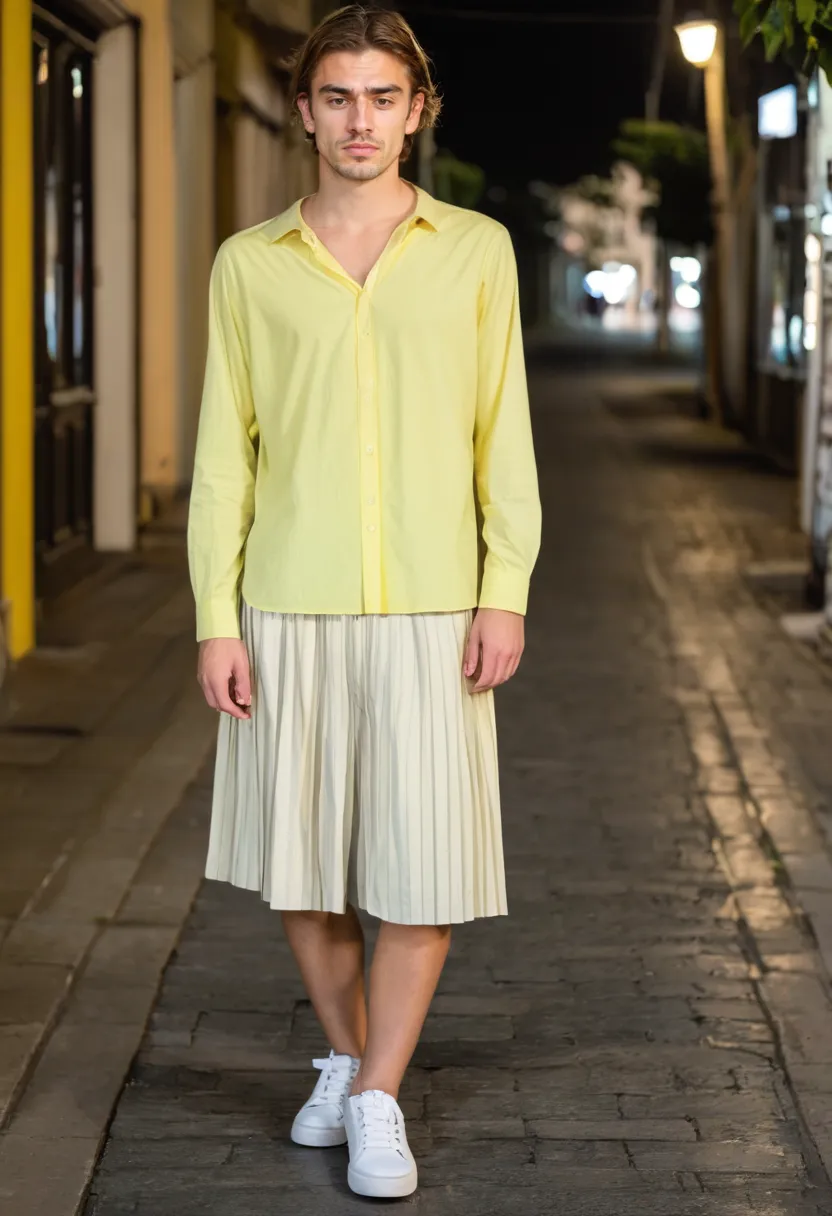
One of the genuine beauties of the soft boy aesthetic is that it doesn’t require designer price tags to execute well. Because the look depends on fabric, silhouette, and color rather than logos or branding, it’s remarkably accessible at every budget level. The soft lemon yellow pleated skirt paired with a pastel cotton blouse shown above could just as easily come from a thrift store as from a luxury label — what matters is the palette and the fit.
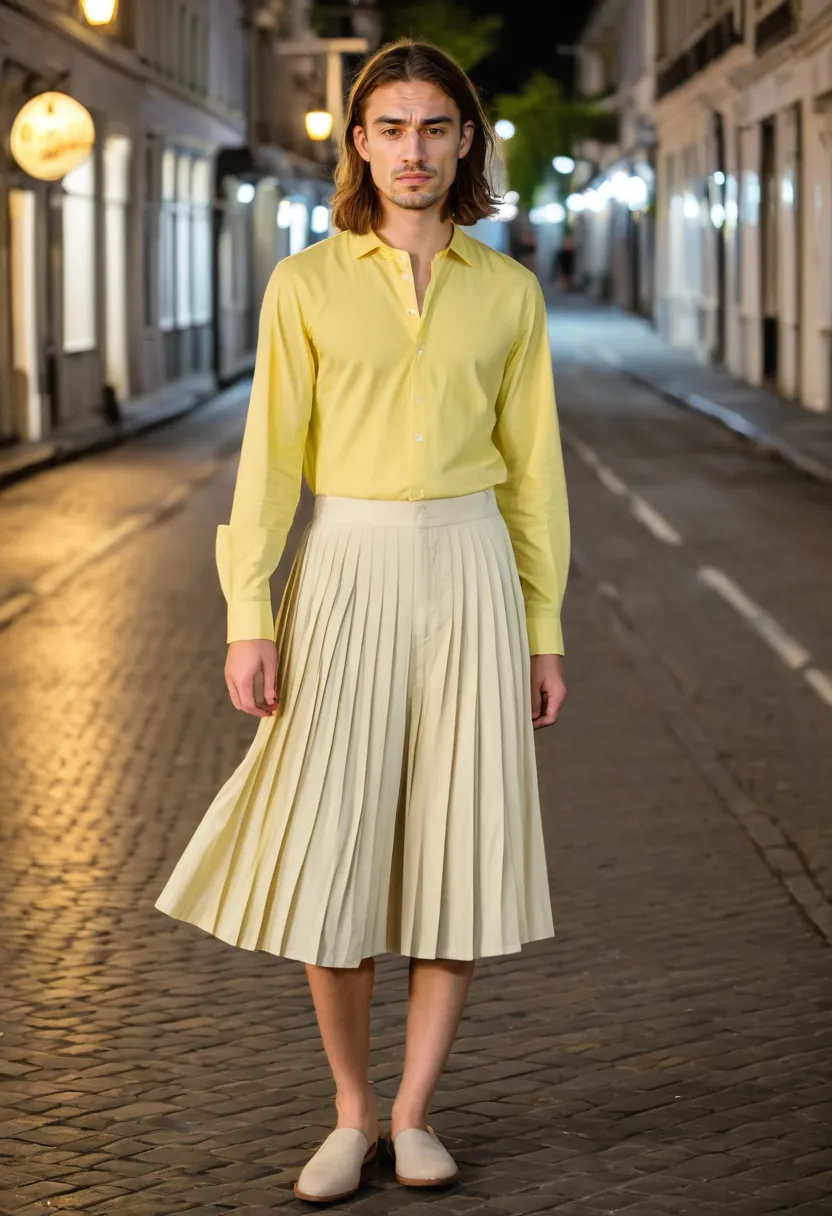
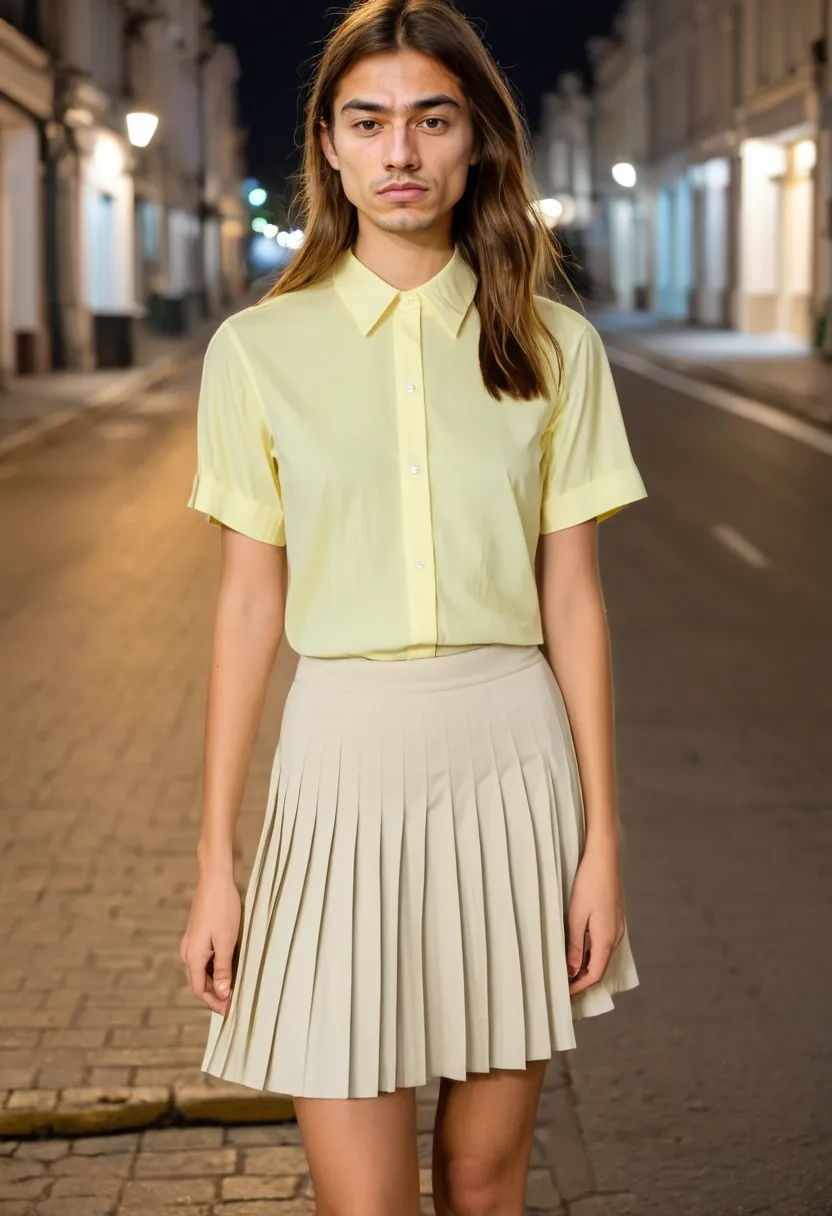
Thrift stores and vintage shops: This is your best starting point. Oversized knit sweaters, cashmere cardigans, silk blouses, pleated skirts, and wide-leg trousers fill thrift racks at a fraction of retail prices. Look in the women’s section as much as the men’s — or better yet, stop thinking of those sections as different. Focus on fabric quality, cut, and color. A thrifted pastel cashmere sweater for twelve dollars will always outperform a fast-fashion synthetic equivalent at full price.
Budget-friendly retail: Uniqlo is perhaps the single best resource for affordable soft boy basics — their merino and cashmere knits come in beautiful muted tones, their wide-leg trousers drape well, and their prices are sustainable. COS offers elevated minimalism at mid-range prices. Zara has loud moments but often carries excellent soft-tone blouses and knits each season. H&M’s more considered lines and ARKET also deliver strong pieces.
Mid-range and splurge: If you have more to invest, look toward Our Legacy, Lemaire, Margaret Howell, Auralee, and Studio Nicholson for soft tailoring and beautiful fabrics. For knitwear specifically, The Elder Statesman, Aiayu, and John Smedley produce pieces that will last decades. JW Anderson and Harris Reed push the aesthetic into conceptual territory with gender-fluid collections that embody the soft man philosophy.
Online and small-batch: Etsy, Depop, and Grailed are gold mines for unique soft boy pieces, from vintage silk blouses to handmade pleated skirts. Supporting small independent makers often means better fabric quality at prices comparable to fast fashion.
The key strategy regardless of budget: build slowly, buy intentionally, and prioritize fabric quality over quantity. A wardrobe of ten well-chosen pieces in a harmonious palette will always outperform a closet stuffed with random purchases. Let your wardrobe grow the way a gar
Author: Emma. Photos: Alex Neuron. The material was prepared with the assistance of AI and has undergone quality review.