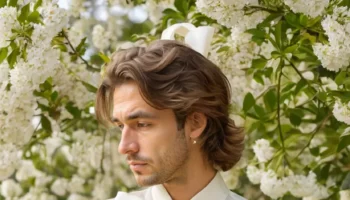
Ruffled Shirt Styles for men: Pretty, Feminine & Full of Character
There’s something quietly revolutionary about a man in a ruffled shirt. It softens, it surprises, and it refuses to play by the tired rules that say menswear has to be flat, rigid, or devoid of decoration. Ruffles have always carried a romantic weight — think of poets in loose blouses, aristocrats in lace-trimmed jabots, and the modern fashion icons who’ve reclaimed frills as a symbol of self-expression. Today, ruffled shirt styles for men range from theatrical jabots down the front of crisp cotton to the gentlest whisper of pleating at a cuff, and everything in between. In this lookbook, we’re exploring the full spectrum: the dramatic, the minimal, the casual, the feminine, and the unapologetically pretty. Whether you’re drawn to a full cascade of ruffles down the placket or a single delicate frill at the collar, there’s a version of this look that feels right for you. What follows is a celebration of men in ruffle shirts — a guide to wearing them with confidence, softness, and a sense of character that no plain button-down could ever offer.
What Makes a Ruffled Shirt Different From a Ruffled Top
At first glance, the difference between a ruffled shirt and a ruffled top might seem semantic, but the distinction actually shapes how the garment is constructed, worn, and perceived. A ruffled shirt, in the traditional sense, is a button-down — it has a collar, a placket, usually cuffs, and a structured silhouette inherited from classic menswear. The ruffles are added as decorative elements onto an otherwise formal base: a jabot down the front, pleated frills at the cuffs, or a layered tier beneath the collar. The shirt itself still behaves like a shirt. It can be tucked, starched, and worn under a jacket without losing its identity.
A ruffled top, by contrast, tends to prioritize the ruffle as the defining feature. It might pull over the head rather than button, feature a softer, drapier fabric, and lean more heavily into blouse-like construction. The silhouette is often looser, the neckline more varied, and the ruffles themselves frequently larger and more flowing.
For men exploring this territory, understanding the difference matters because it helps you choose a piece that aligns with your comfort level and intended look. A ruffled button-down offers a familiar structure that feels grounded and wearable, especially for someone new to frilly shirt outfits. A ruffle blouse pushes further into feminine territory, embracing softness and movement in a way that reads more overtly romantic. Neither is better — they’re just different tools for different moods. Recognizing which one you’re reaching for helps you style it with intention rather than uncertainty.
men in Ruffled Button-Downs: A Gallery of Charming Looks
The classic ruffled button-down is where many men begin their journey into frill, and for good reason: it takes a shape they already know and enhances it with just enough detail to feel special. Picture a crisp white cotton shirt, bright and freshly pressed, with a double-ruffle jabot cascading down the center front. The ruffles are stiff and architectural, their scalloped edges holding their shape against the flat plane of the shirt. The body is fitted cleanly through the torso, the cuffs are French cuffs — doubled over and fastened properly — and the overall impression is one of refined theatricality.
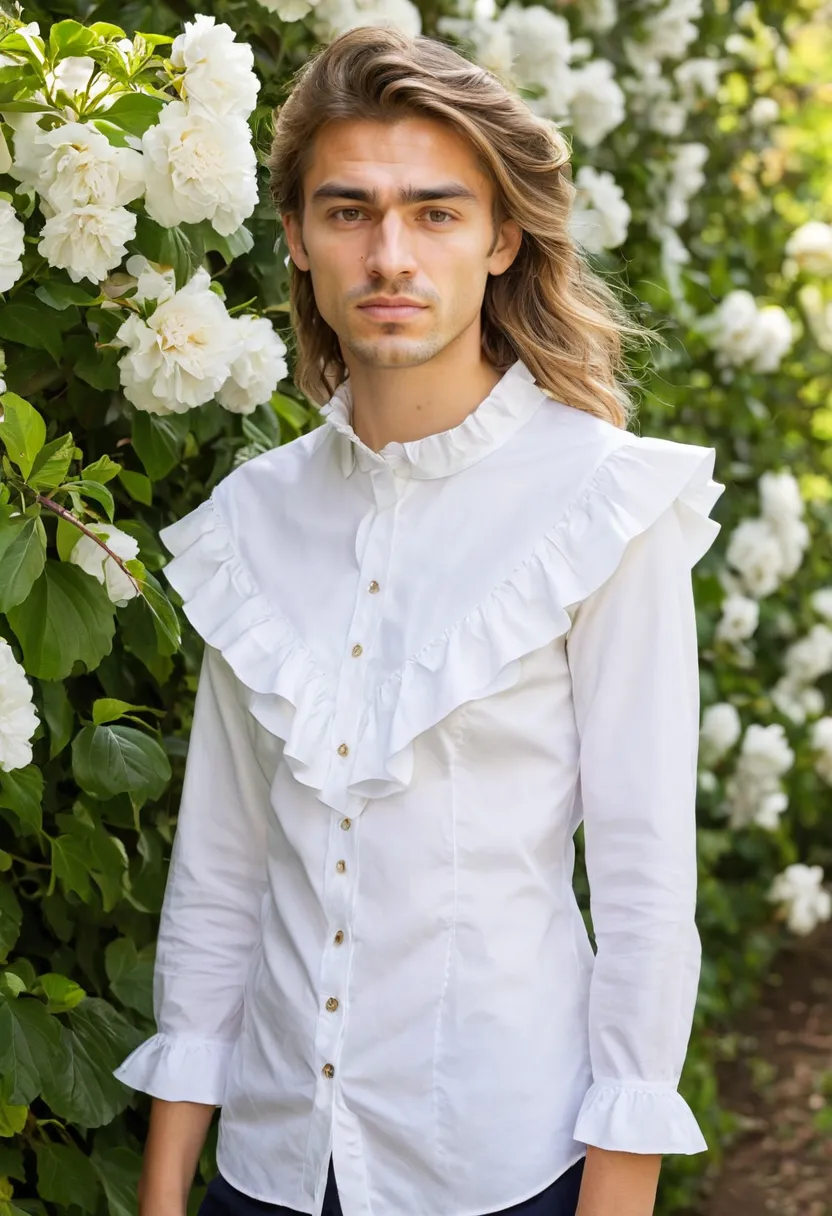
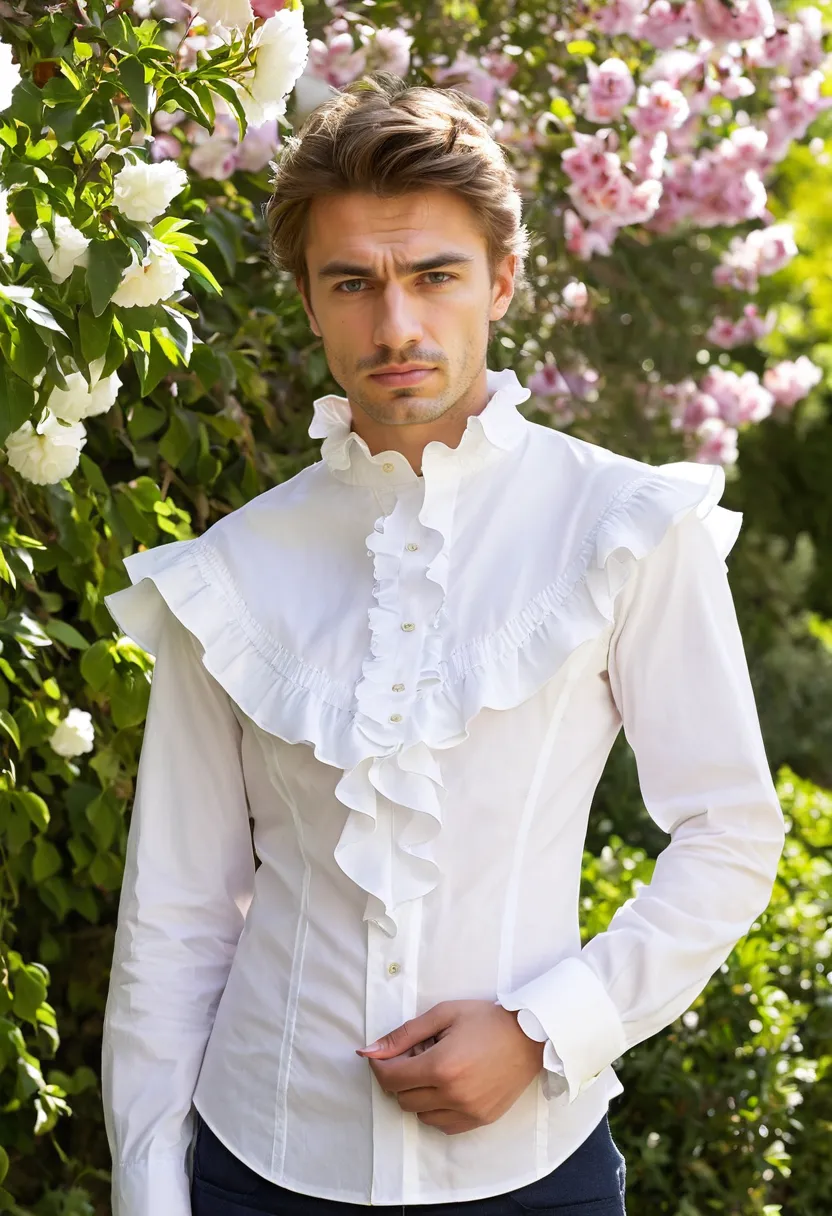
What makes this style so charming is the contrast between discipline and decoration. The cotton is crisp, the pressing is immaculate, and every scalloped edge sits exactly where it’s meant to — but those ruffles soften everything. They catch the light differently than the flat fabric around them. They move slightly as the wearer moves. They invite the eye to linger.
A ruffled button-down like this pairs beautifully with tailored trousers in charcoal or deep navy, or with cream wool pants for a softer palette. It can be worn under a dark waistcoat for a Romantic-era flourish, or left on its own with the cuffs peeking out confidently. The key is treating it with the same respect you’d give any fine dress shirt — pressed, tucked properly, and worn with posture that matches its formality.
Frilly Shirt Outfits That Feel Fashion-Forward, Not Costume-y
The fear that stops many men from wearing ruffles is the worry of looking costumed — as though they’ve wandered out of a period drama and into the wrong century. The solution lies in restraint and proportion. A modern frilly shirt can feel thoroughly contemporary when the ruffles are used as accents rather than centerpieces, and when the rest of the garment is cut with minimalist clarity.
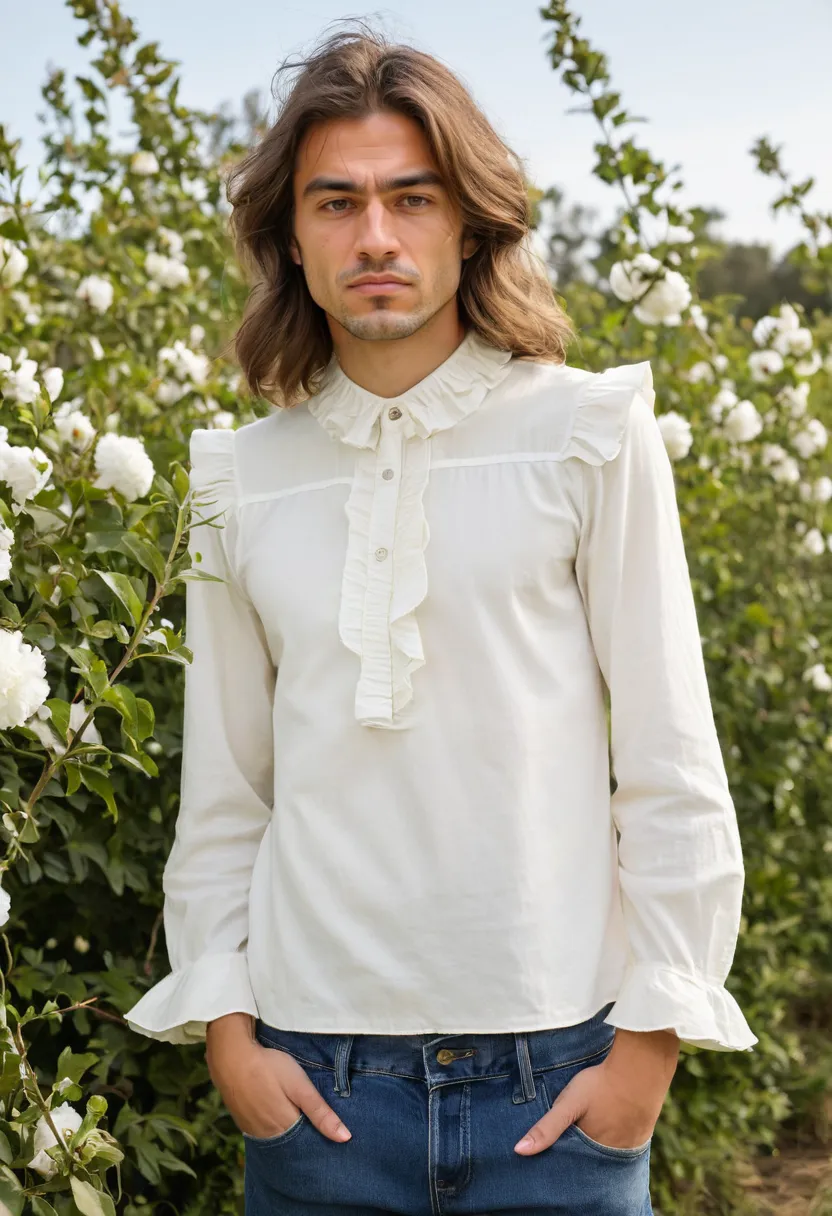
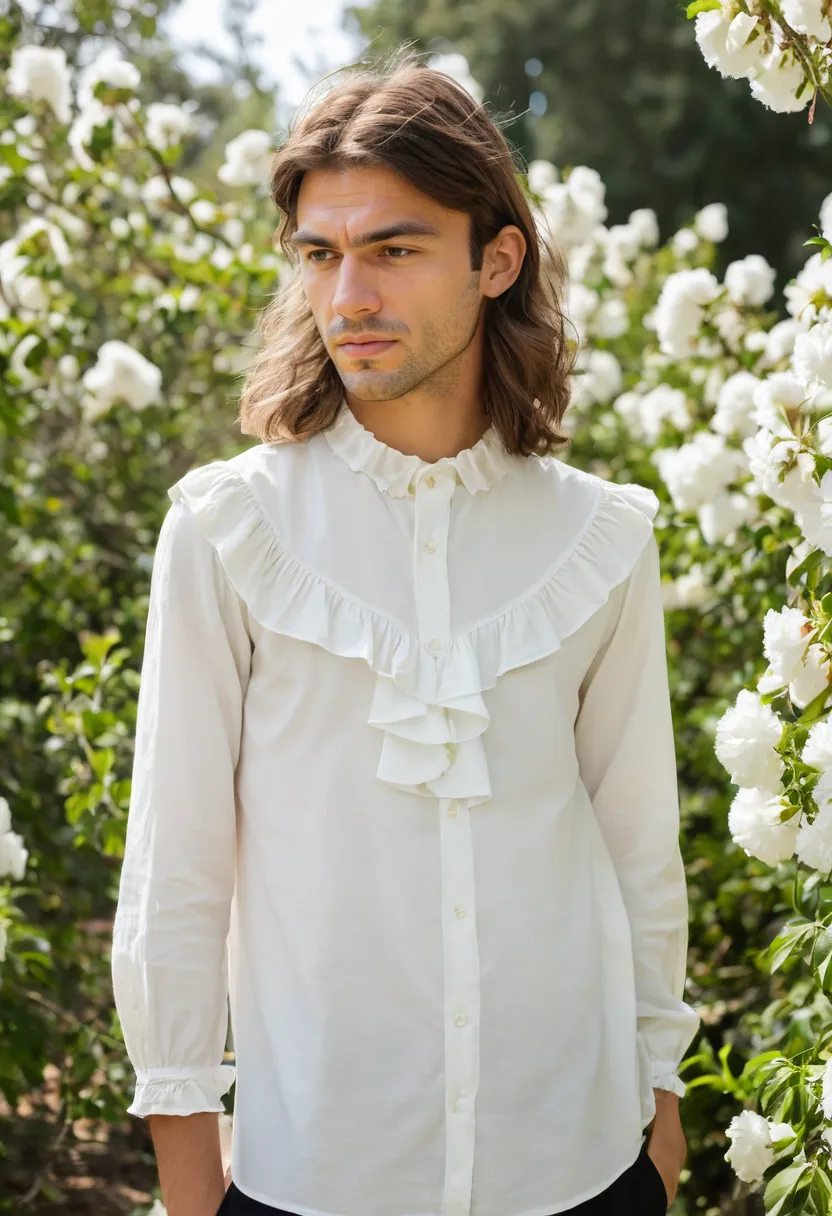
Consider an off-white blouse in smooth, lightweight cotton. The body of the shirt is clean and minimal — no elaborate panels, no heavy embroidery, no excess volume. The only ornament is a small ruffle at the collar and a matching frill at each cuff. These ruffles aren’t stiff or pressed; they’re soft, unstructured, falling in gentle folds that suggest handling rather than performance. The shirt looks like something a person actually wears, not a costume pulled from a wardrobe department.
This is the sweet spot for men who want to engage with feminine ruffle shirts for men without feeling theatrical. The understated version lets the ruffle function as a quiet detail — noticed on second glance, appreciated rather than announced. Pair it with straight-leg trousers in a neutral tone, simple leather loafers, and minimal jewelry. A thin silver chain, perhaps, or a single signet ring. The overall effect should read as thoughtful and modern, someone who chose this shirt because they liked it, not because it was their “statement piece.”
Fabric choice matters enormously here. Smooth lightweight cottons, soft silk-blends, and fine poplins all hold ruffles beautifully without adding bulk. Avoid anything too crisp or too heavy when you’re aiming for subtle.
Ruffle Placement Matters: Front, Collar, Cuffs & More
Where the ruffle sits on a shirt changes everything about how the garment reads. Front-placket ruffles — the jabot-style cascades — are the most dramatic, drawing the eye vertically down the center of the body and creating a strong focal point. Collar ruffles frame the face and bring attention upward, softening the jawline and adding a romantic halo. Cuff ruffles are the most discreet, visible only when the arm moves or when sleeves are pushed up, offering a hidden pleasure for the wearer. Hem ruffles, less common in menswear, add movement at the bottom of the shirt and work beautifully when the shirt is worn untucked.
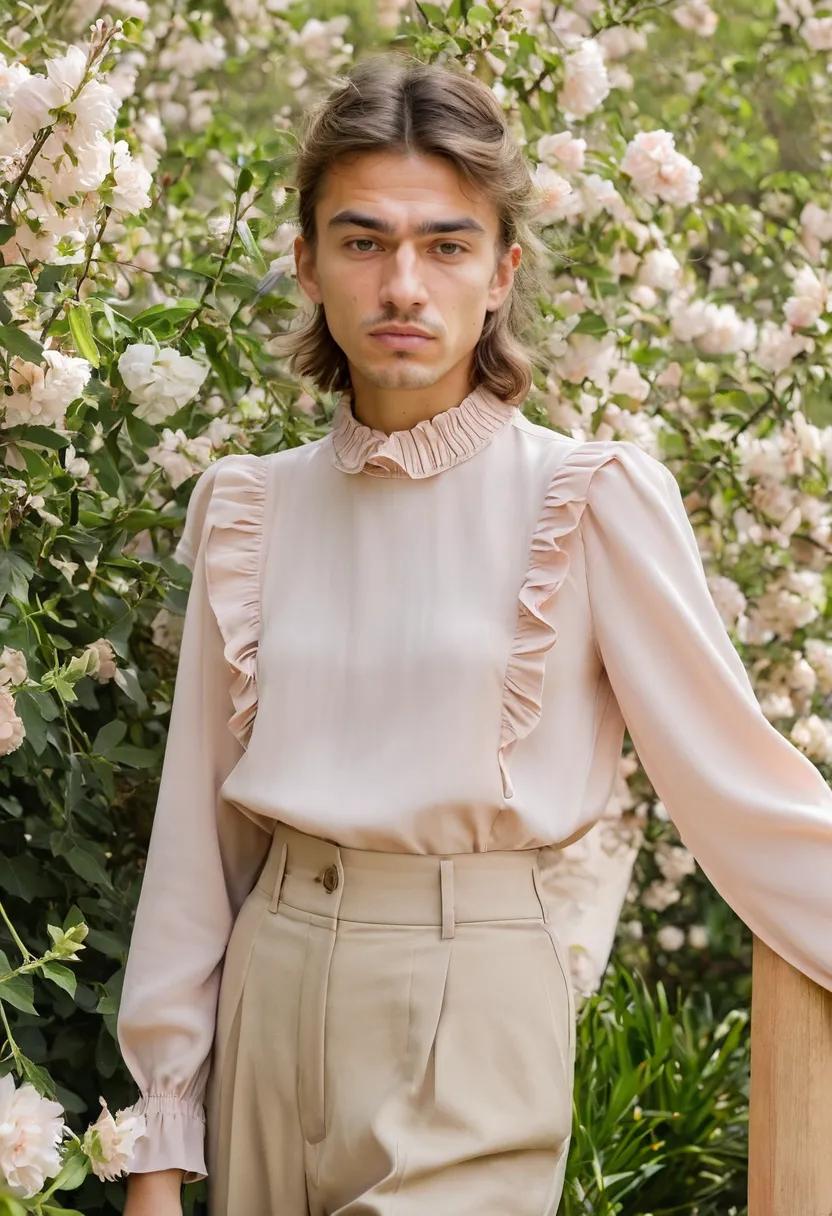
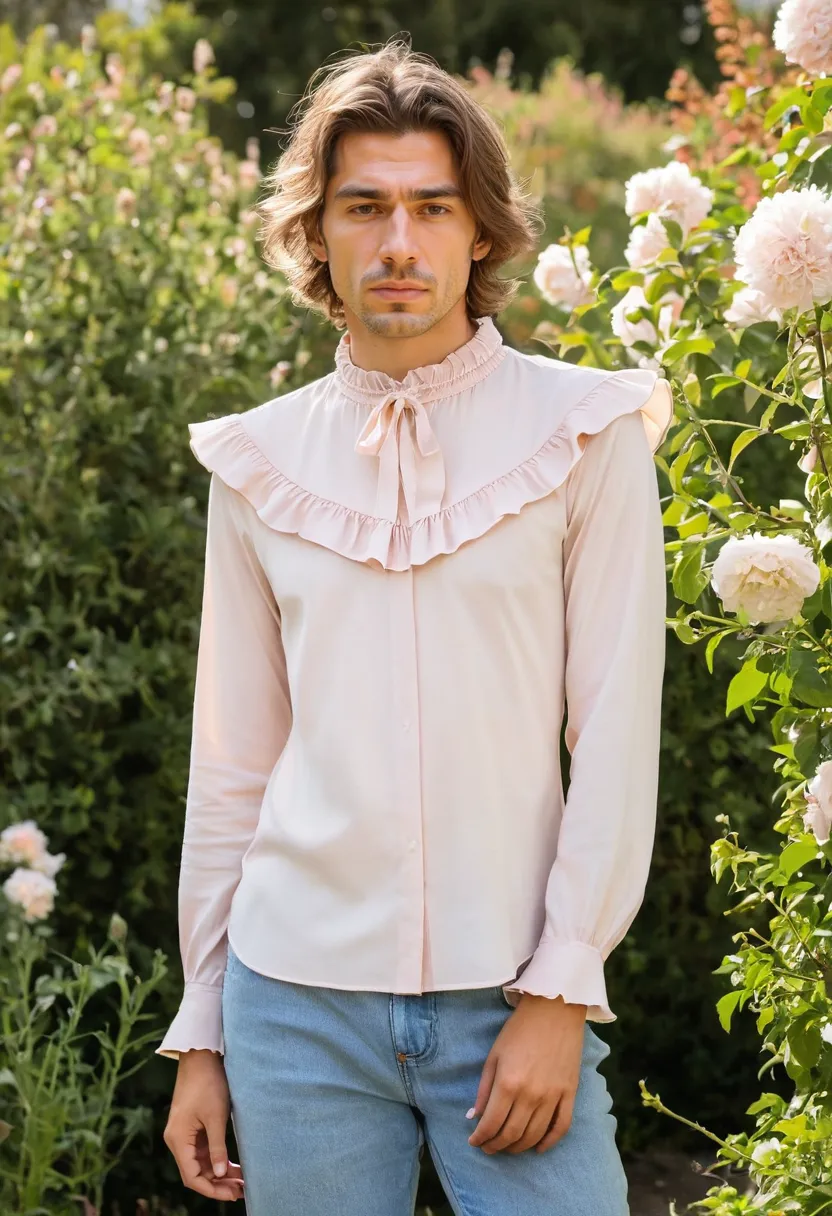
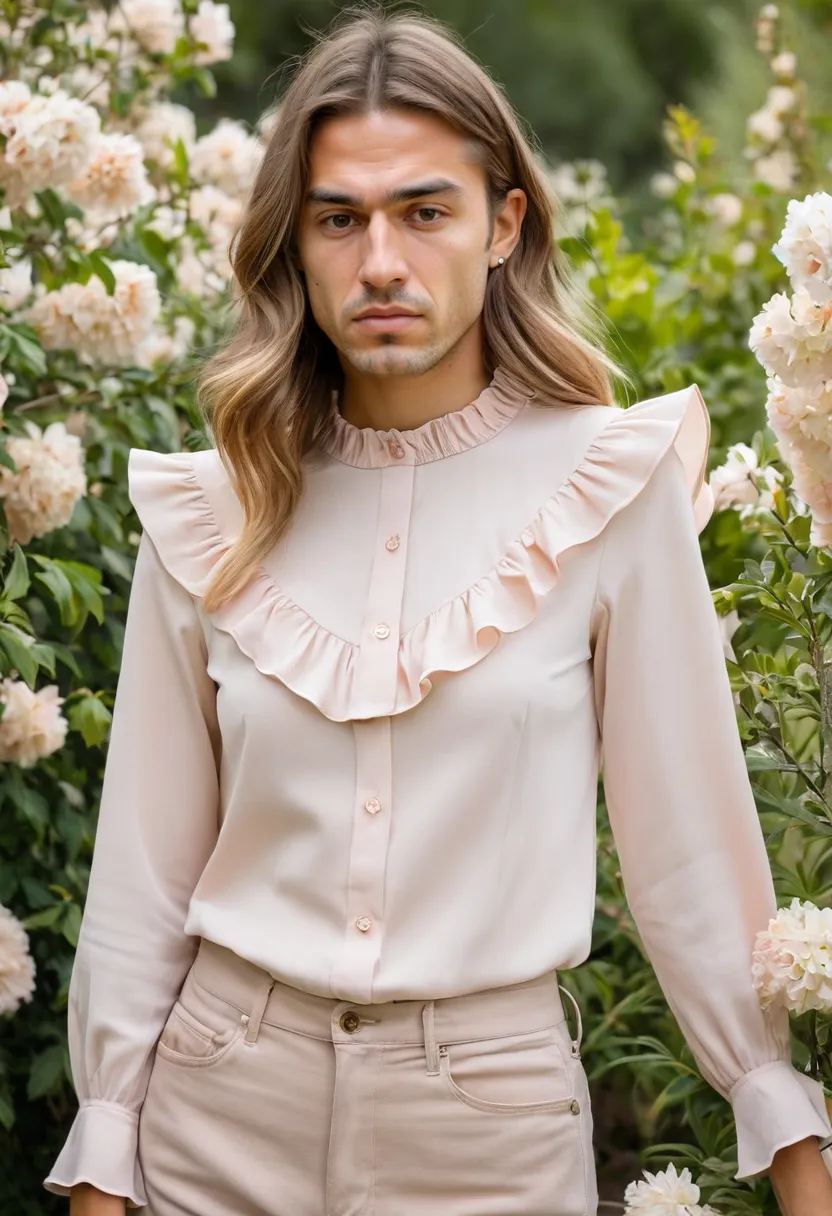
Consider a blouse in pale blush with ruffles placed at the collar, the cuffs, and the hem — but nowhere else. The body between these points stays smooth and fitted, so the ruffles act like punctuation marks rather than continuous ornament. The fabric is lightweight with a soft finish, and the ruffles themselves are delicately pleated, fine enough that they move with the slightest breeze. This kind of thoughtful distribution gives the shirt rhythm. Your eye travels from the frame around the face, down to the cuffs at the wrists, and finally to the hem at the hip, creating a visual flow that feels balanced.
When choosing a ruffle placement for yourself, think about what you want the shirt to emphasize. If you love your face and want it framed, go for a collar ruffle. If you use your hands expressively, cuff ruffles add charm to every gesture. If you want maximum drama and confidence, embrace the front jabot. And if you prefer softness distributed evenly, seek out shirts that balance ruffles across multiple points without overwhelming any one area.
Feminine Ruffle Shirts With Trousers, Skirts & Shorts
The ruffle shirt is one of the most versatile feminine-leaning pieces in a modern wardrobe because it pairs so fluidly with bottoms of every kind. Wide-leg trousers are perhaps the most flattering partner — their fluid silhouette echoes the softness of the ruffles while grounding the outfit in something structured and adult.
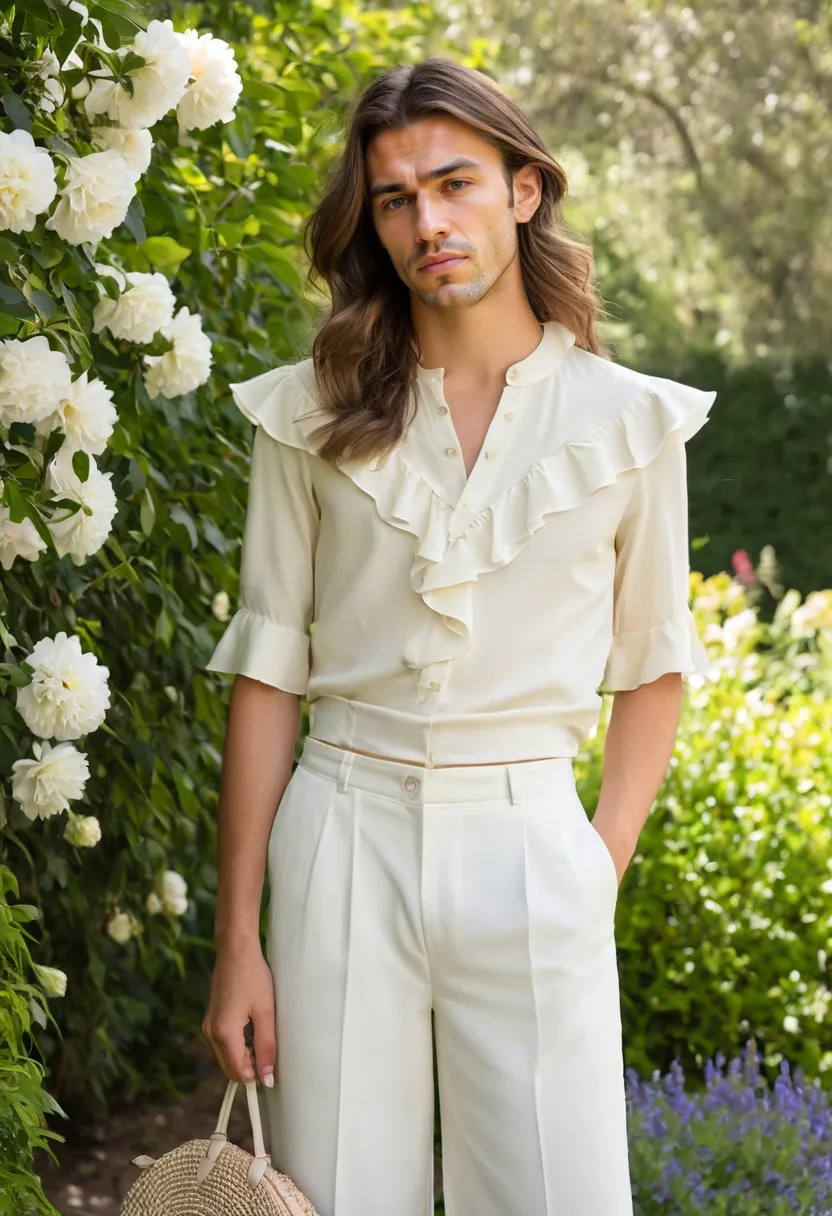
Picture a feminine ruffle blouse in soft ivory, tucked neatly into wide-leg trousers in a complementary tone. The shirt features a cascade of ruffles down the front placket, the crepe fabric catching light with a gentle sheen. The waist is fitted, so the ruffles rise proudly above the trouser waistband — a detail that makes the tucked look feel intentional rather than casual. This combination reads polished and slightly romantic, perfect for dinners, gallery openings, or days when you simply want to feel beautiful.
For men exploring skirts, a ruffle blouse is a natural companion. A long A-line skirt in a matching neutral creates a continuous soft silhouette, while a pleated midi skirt introduces additional movement that complements the ruffles. The proportions work because both garments prioritize flow over structure.
Shorts offer a more playful pairing — think tailored linen shorts in summer weights, worn with a ruffle blouse loose or half-tucked for an effortless, slightly undone feeling. This combination is ideal for warm weather and garden events, where the soft fabrics can move freely.
Across all these pairings, the rule is balance. If the top is ornate, let the bottom breathe with simplicity. If the ruffles are subtle, you can introduce more texture elsewhere. Boys wearing ruffled blouses have never had more options for styling — the key is finding combinations that feel like yours.
How to Wear a Ruffled Shirt Casually Without Overdressing
Not every ruffled shirt needs to be a centerpiece. Some of the most charming looks come from wearing frills casually — treating them as everyday details rather than occasion pieces. This approach opens up the style for everyday wear, allowing you to enjoy ruffles while running errands, meeting friends for coffee, or spending a quiet afternoon reading in a park.
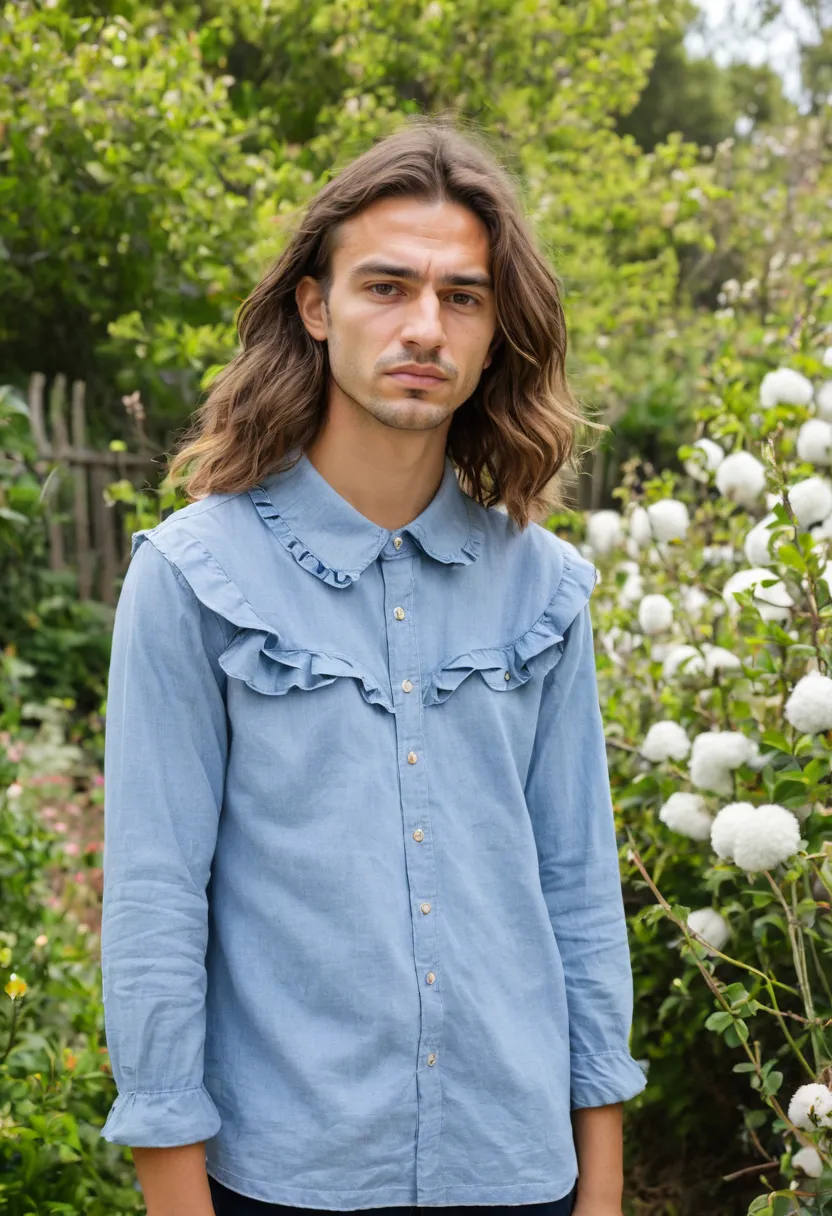
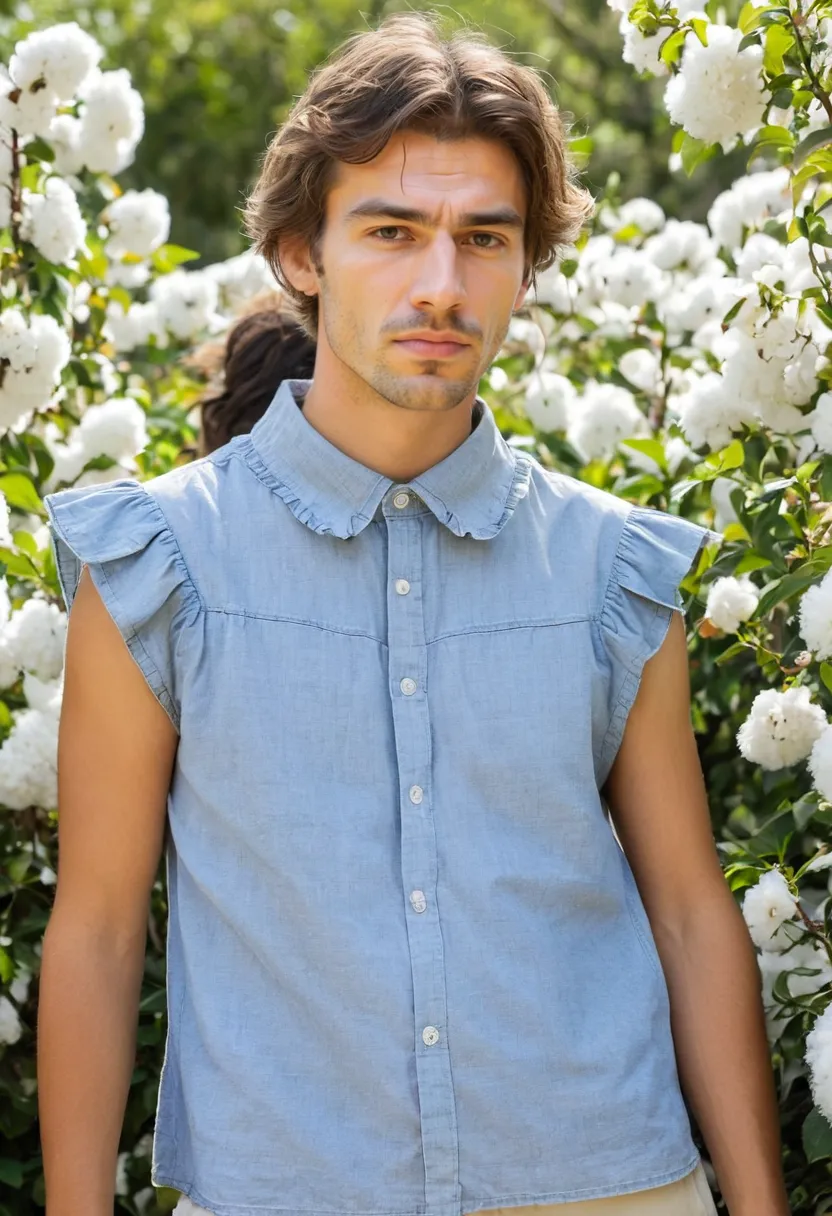
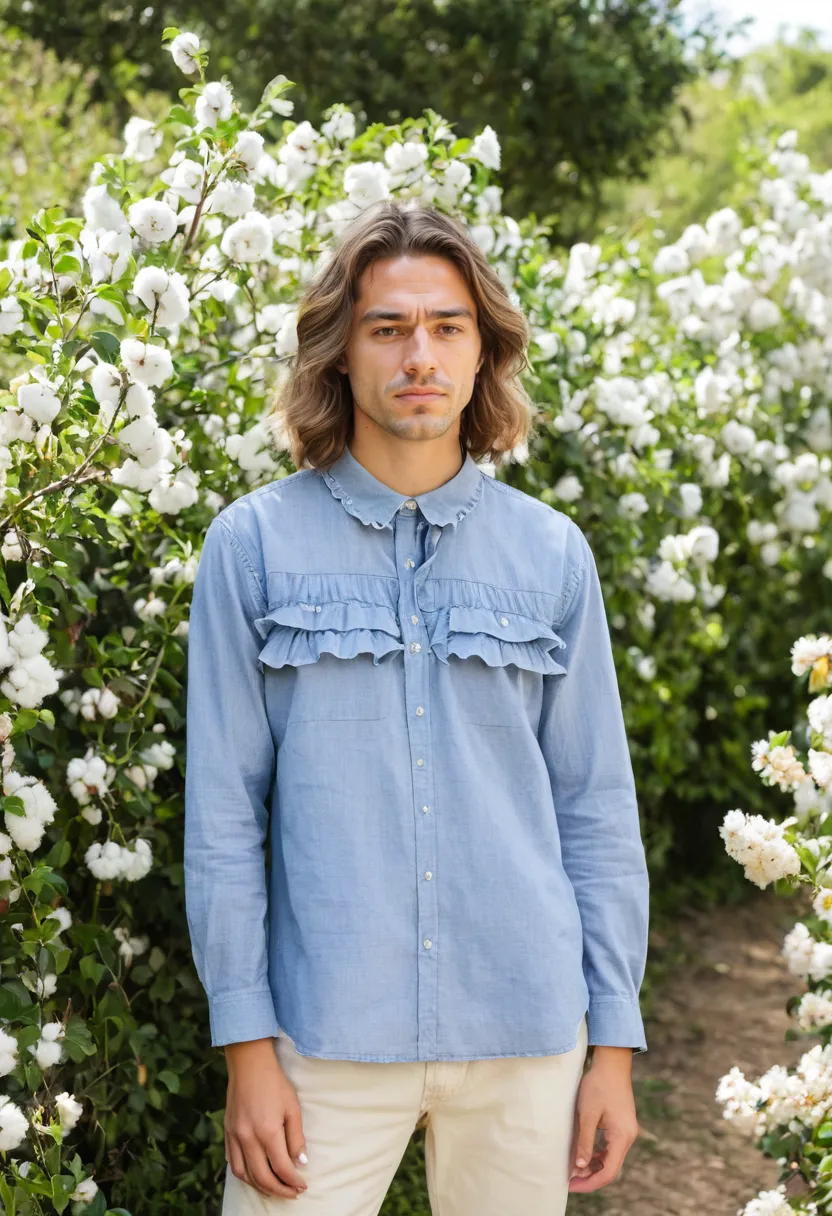
The ingredients for a casual ruffle shirt are specific. First, the fabric: soft cotton chambray, washed linen, or lived-in cotton with a slightly crinkled, lived-in texture. These materials reject formality by their very nature. Second, the cut: oversized and relaxed rather than fitted and tailored. A shirt that falls easily over the body, with roomy sleeves and a generous body, looks naturally casual even with a decorative element. Third, the ruffle itself: small, soft, and minimal — a single row at the collar is plenty, with the rest of the shirt left plain.
Styled with straight-leg jeans or drawstring cotton trousers, rolled at the ankle, and a pair of canvas sneakers or leather sandals, this kind of ruffled shirt feels almost thrown-on. The ruffle becomes a personality trait rather than a costume change. It’s the kind of detail a friend notices and smiles at, not something that demands comment.
For layering, a chunky cardigan or an unstructured linen blazer works beautifully over a casual ruffled shirt, leaving just the collar frill visible. This technique is especially useful in cooler months or for those easing into the style — you can enjoy the ruffle as your private pleasure while the outer layer does the public work.
The Best Colors for Ruffled Shirts That Look Effortlessly Soft
Color can amplify or soften the effect of a ruffled shirt, and choosing the right palette is almost as important as choosing the cut. While classic white remains the gold standard for formal ruffle shirts, softer pastel tones have become the signature of the modern, gentle take on this style. These colors complement the softness inherent in ruffles, creating a harmony between form and hue that feels effortless.
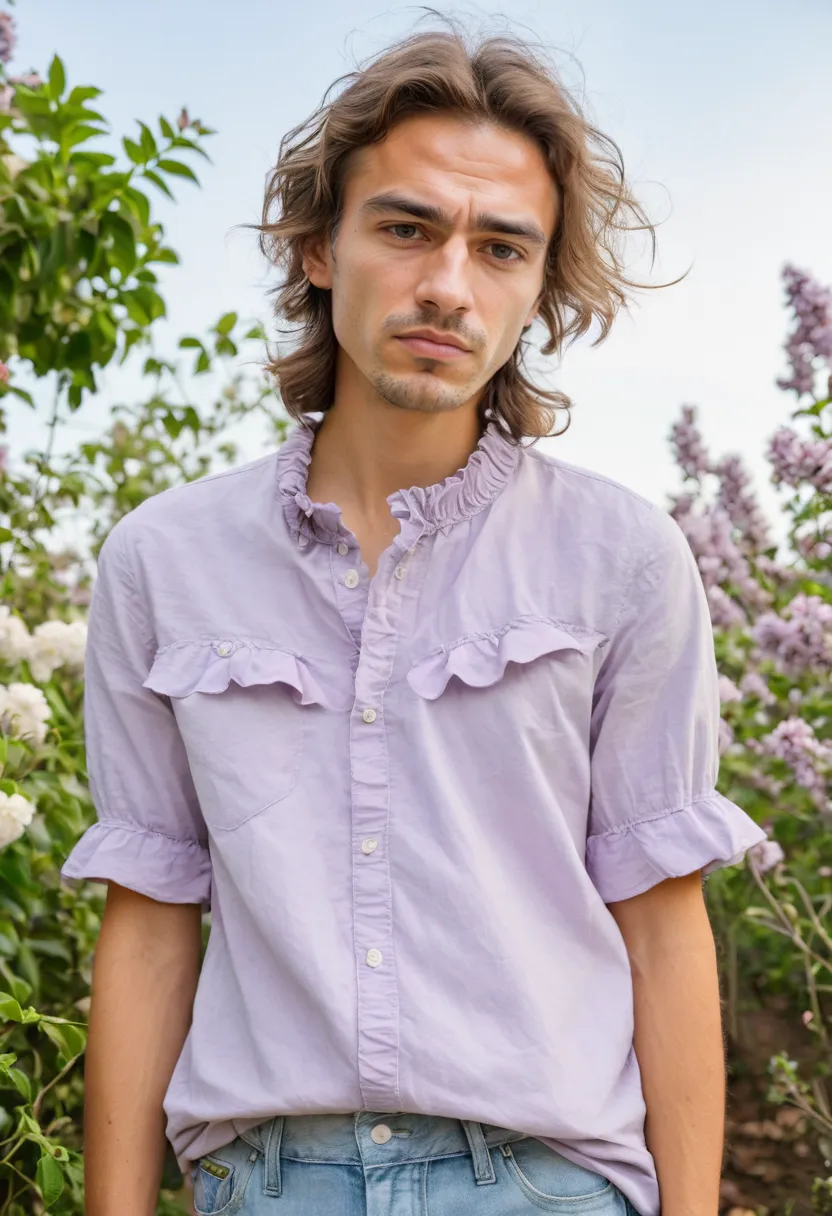
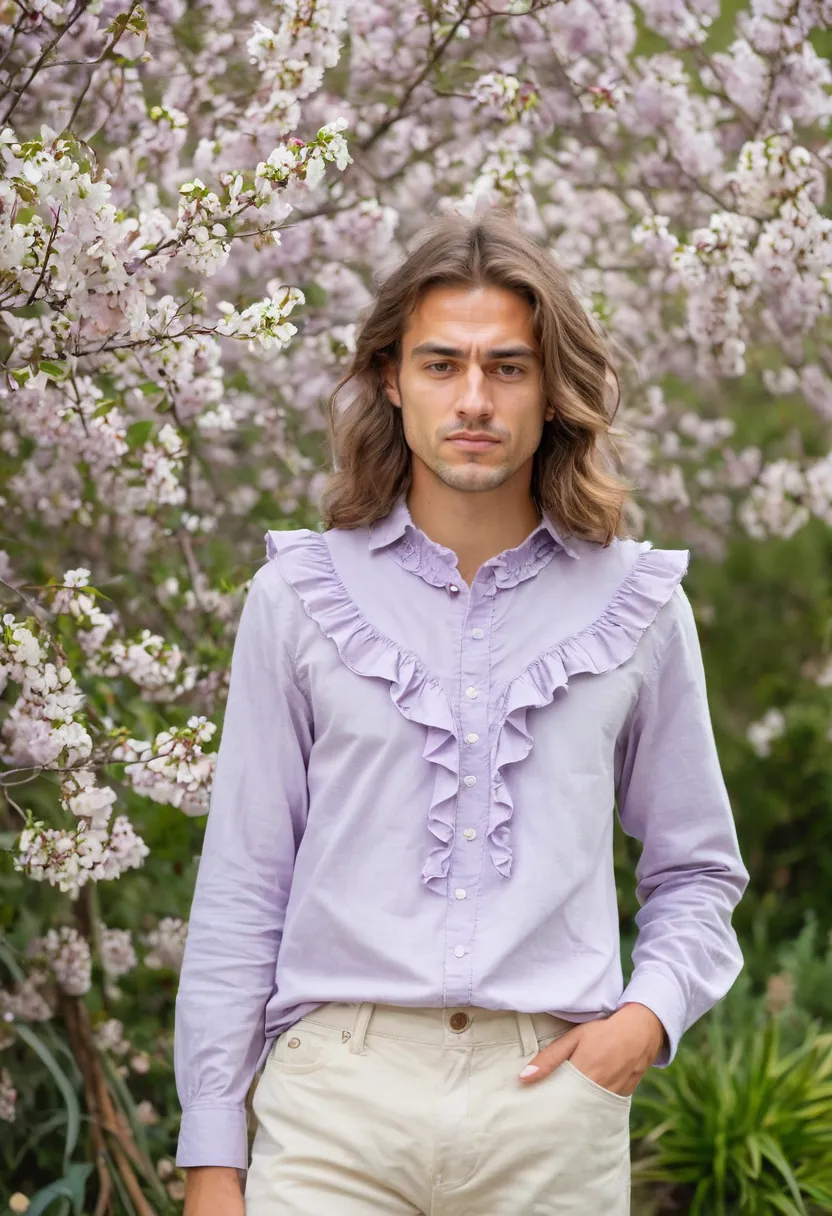
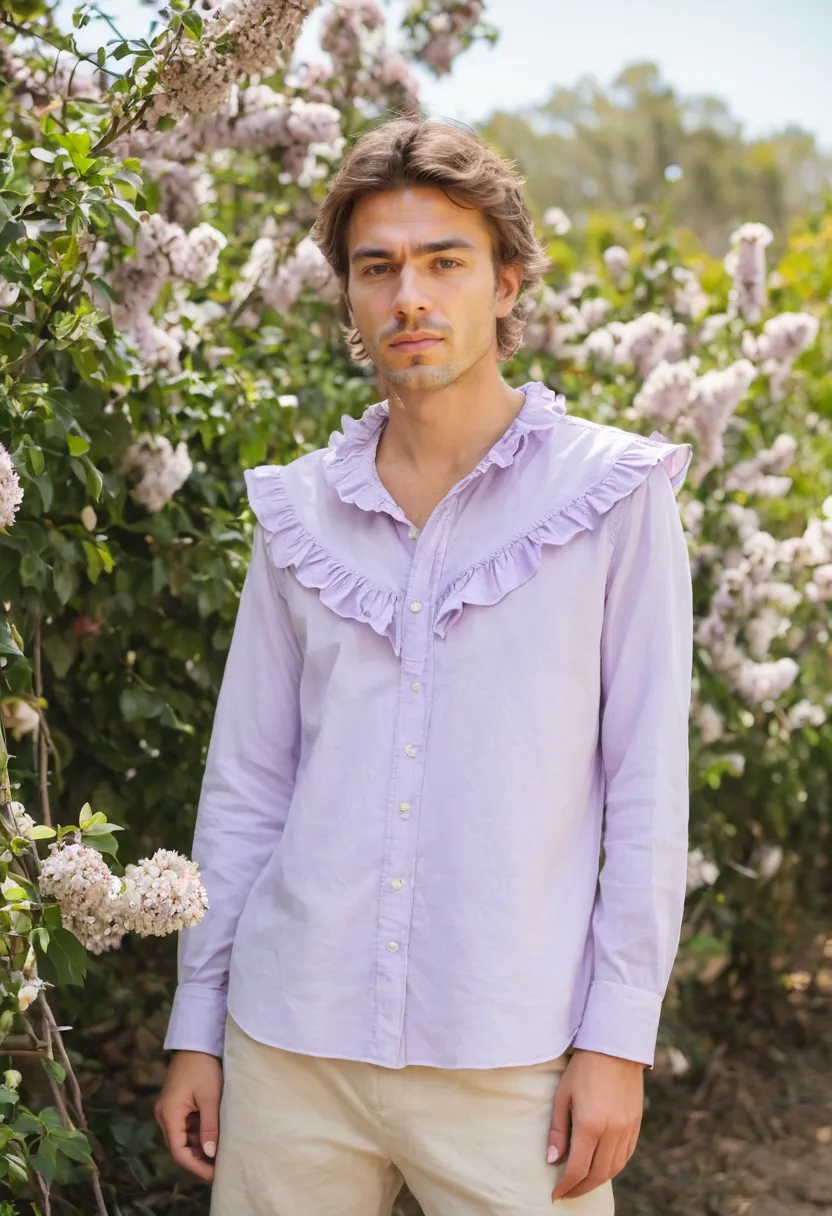
Pale lilac is a particularly beautiful choice. Imagine a soft cotton shirt in this gentle pastel, with delicate ruffles framing the collar and running down the placket. The fabric is lightweight and slightly crinkled, finished with a soft matte that absorbs light rather than reflecting it. The relaxed fit keeps the mood approachable, and the lilac itself walks a line between pretty and grounded — masculine enough to feel wearable, feminine enough to feel romantic.
Beyond lilac, the most successful colors for ruffled shirts tend to be soft and nuanced rather than bright. Blush pink, butter yellow, sage green, misty blue, cream, oatmeal, and dove grey all work beautifully. These tones support the delicacy of ruffles without competing with them. Deep jewel tones like burgundy or forest green can work for more dramatic evening looks, but they shift the shirt into formal territory.
Avoid very saturated primary colors — bright red, electric blue, or harsh orange — which can clash with the softness of frills and make the shirt read as costume. Similarly, very glossy fabrics can feel slick rather than gentle; matte finishes always photograph and feel better for this style.
When in doubt, hold the shirt up to your face in natural light. The right color for a ruffled shirt should make your skin look warmer and your eyes brighter, without overpowering either. Softness is the goal, always.
Ruffled shirt styles for men are having a moment, but they’re also much more than a trend. They represent a broader shift in how we think about menswear — a willingness to embrace beauty, softness, and decoration as valid forms of self-expression. Whether you choose a dramatic white jabot, a subtle lilac blouse, or a casual chambray with a single frill at the collar, you’re participating in a tradition that stretches back centuries and forward into whatever fashion becomes next. Wear your ruffles with confidence, pair them with the pieces that feel most like you, and remember that the most stylish thing anyone can wear is the joy of dressing like themselves.
Author: Emma. Photos: Alex Neuron. The material was prepared with the assistance of AI and has undergone quality review.